
*View accurate shipping rates and availability






626 Items


Up to 70% off across the store, plus free towels and mirrors up for grabs on orders over $800*


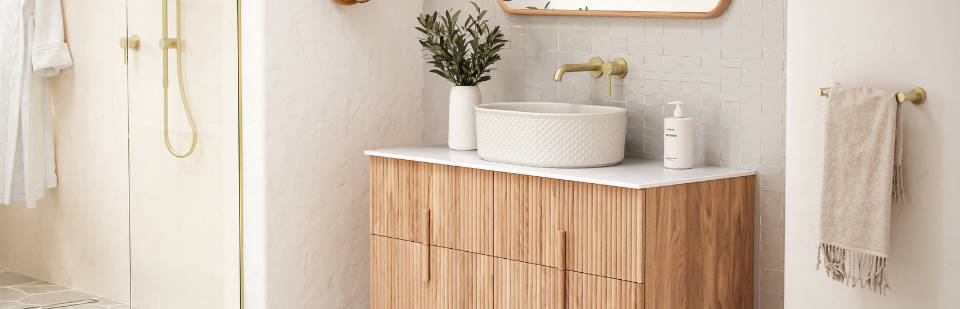


A basin mixer is the single tap on a bathroom vanity that blends hot and cold water through one spout and one lever. It is the standard tap for a modern basin, and this page holds the range we sell, from short mixers for an inset basin to tall mixers for a vessel basin, in every finish and from several brands. This guide explains what a basin mixer is, how it differs from separate basin taps and from a bath mixer, how to choose the height and reach, whether basin mixers come in a standard size, and what to check about the mixer itself.
A basin mixer is a single tap that combines hot and cold water through one spout, controlled by one lever or handle. It mounts through a hole in the vanity top or the basin deck. The lever works through a ceramic disc cartridge: lifting the lever increases the flow, and moving it from side to side changes the hot and cold ratio. Pillar taps and three piece sets work differently. They use two handles, often two spouts, and two or three tap holes, while a basin mixer needs a single hole and suits modern vanities. A lever mixer also suits people with limited hand mobility.
The choice between a mixer and separate taps is a style and plumbing decision. A mixer is the more modern and easier to use option, and it needs one hole and one fitting, where a three piece set needs three holes and three fittings. A three piece set suits traditional or heritage bathrooms and gives a more classic look, although it needs more bench space. Two tap systems can usually be replaced with a single mixer if the plumbing is compatible and the basin has a single tap hole, so check the basin before you order. See three piece bathroom taps for the other style, and bathroom basin taps for the wider group.
Basin mixers sit beside the basin, are usually smaller, and have a built in handle. Bath mixers sit beside the tub, are sometimes larger, have separate controls, and may include a hand shower or a diverter. Bath mixers also have higher flow rates for filling a tub, and basin mixers lower flow rates. If you want a tap for the bath, see bath fillers and shower mixers.
Mostly, but not always, and that is why the answer matters. Most modern basin mixers use a 35mm tap hole, and older or imported basins and vanity tops may use different sizes, with 32mm also common depending on the tap type. A few millimetres decide the fit, so do not rely on a standard figure: measure the hole in your basin or vanity top, or measure the old tap, and confirm the size before ordering. Each mixer shows its dimensions on the product page, so compare the hole you have with the one the mixer requires.
Height is the decision that most often goes wrong, and it depends on the basin. Identify the basin type first. Inset, semi-recessed and undermount basins suit a standard height mixer. Above counter and vessel basins need a tall mixer or a wall mounted tap, because their rims sit higher. As a guide, standard basin mixers are about 120 to 150mm high, and tall mixers typically 230 to 350mm. A short mixer is usually under 200mm tall and a tall mixer is around 300mm or more, with a spout of 180mm or more as the lower threshold for tall.
A short mixer on an above counter basin puts the spout below the rim, so the water runs into the gap instead of the bowl. A tall mixer on a standard basin splashes. Measure your basin rim height before you order. See tall basin mixers, and for the basin itself, bathroom basins. A mono mixer sits on top of the basin rather than through the stone or ceramic top. It is a standard size mixer, because height does not affect its use in that setup. A wall mixer needs a spout that reaches the centre of the waste hole so the water drains directly.
Reach decides where the water lands. It should fall in the centre third of the basin, not near the front edge or the back wall. A reach that is too short splashes over the edge, and one that is too long pushes the water awkwardly toward the drain. To measure, take the distance from the tap hole to the centre of the basin, and match the reach so the water lands inside the bowl. Deeper basins can take longer reaches and shallow basins usually cannot. Spout reach runs from about 105mm on compact mixers to 154mm and more on taller ones, and 135mm is common, so compare the figures on the product pages.
Pressure changes which mixer works. Low pressure systems, common in older homes with gravity-fed hot water, need mixers rated for low pressure, while mains pressure gives you more flexibility. Always check the product specification. Ignoring water pressure leads to weak flow and inconsistent temperature. The maximum water pressure is usually 1,000 kPa, so check the figure against your supply.
A wall mounted mixer comes out of the wall above the basin and leaves the vanity top clear. It needs the plumbing roughed in before tiling, so the decision is locked once the tiles go on. The rough-in height, where the water supply exits the wall, decides which tap fits, what spout length works and where the water lands. The most common mistake is choosing tapware before confirming the rough-in position with the plumber. Lock in the basin and the tapware together and give both to the plumber so they can check the clearances. The typical pipe centres are 150mm. See wall basin and bath mixer sets.
We recommend a solid brass body and a ceramic disc cartridge. A ceramic disc cartridge uses two ceramic plates to control the water, and it is smoother, holds its shut-off better over time and is less prone to dripping than older designs. The cartridge is the working core of a mixer, and a poor one causes drips, stiff handle movement, temperature fluctuations and early failure. Most mixers here have a 25mm or 35mm ceramic disc cartridge, with brass, lead-free brass, DZR brass or 316L stainless steel as the construction. Check that a local plumber can source replacement cartridges, aerators and handle parts before you buy. If a mixer starts to drip, the cartridge is usually the part to replace: the replacement has to match the original in size, so keep the model name and product code.
Chrome is the easiest to maintain and brushed finishes hide marks better than gloss. PVD, which stands for physical vapour deposition, bonds colour to the metal and is hardwearing. Brushed nickel, brushed gold, brushed bronze, gun metal and shadow are mostly PVD, chrome and matte black are electroplated, and white is powder coated. Matte black is a bold choice and suits rooms with good light, and in small or windowless rooms brushed nickel or brushed brass are softer options. See chrome taps, black taps, brushed nickel tapware, brushed brass taps, gunmetal tapware and white tapware. Buy the basin mixer and the shower mixer from the same range, because slight finish variations become obvious once they are installed.
The range includes a few types worth knowing. A cold start mixer sends cold water when the lever is in its centre position, so you only draw hot water when you move the lever to hot, and the temperature adjusts with forward handle movement. A sensor mixer starts the water when hands are placed under the spout, and the box includes a battery box. Sensor mixers are hygienic and suit shared powder rooms and high-traffic bathrooms. Care mixers have an extended handle for people who need assistance. A waterfall mixer gives a wide, flat stream as a feature. See electronic sensor taps and accessible taps.
The box contents differ by type. A standard basin mixer comes with the mixer, an installation kit and instructions. Mixers with flexible hoses include the hoses, and several come with 450mm braided hot and cold hoses. Vessel mixers include the hoses and an installation kit. Some include an aerator spanner, and the sensor mixers include the battery box. Read the box contents before you add the mixer to the cart, so you know if you need to buy hoses or fittings separately.
WELS is the Australian water efficiency label, from 0 to 6 stars, and all tapware sold in Australia must be registered. Higher ratings reduce water bills, especially for frequently used basins, and registration numbers can be checked on the WELS register. Look for more than four stars. Most mixers here carry 5 and 6 star ratings, with the litres a minute stated. Use the rating as a screening tool, because it does not tell you whether the mixer suits your basin or your pressure. The National Construction Code requires lead-free tapware at the point of installation in Australia from 1 May 2026. The limit is 0.25 percent lead for copper alloy plumbing products that carry drinking water, and a basin tap is one to check. See lead-free taps.
The tap is only one part of the vanity. See bathroom taps and mixers for the full group, Phoenix basin mixers for one brand's range, spouts for wall outlets, and the full taps collection for other rooms.


