Skip to content

1100mm Vanities

1 Item

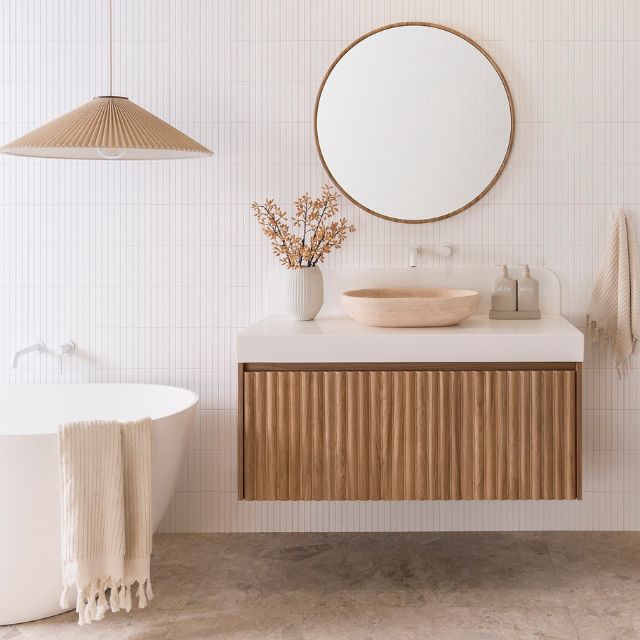
  • ADP Harper Wall Hung Vanity With Durasein BenchtopADP Harper Wall Hung Vanity With Durasein BenchtopADP Harper Wall Hung Vanity With Durasein BenchtopADP Harper Wall Hung Vanity With Durasein BenchtopADP Harper Wall Hung Vanity With Durasein BenchtopADP Harper Wall Hung Vanity With Durasein BenchtopADP Harper Wall Hung Vanity With Durasein BenchtopADP Harper Wall Hung Vanity With Durasein BenchtopADP Harper Wall Hung Vanity With Durasein Benchtop

    ADP Harper Wall Hung Vanity With Durasein Benchtop

    Checking delivery...
    $2,802
    $147 (-4%) OFF RRP of $2,949

An 1100mm vanity sits at the wider end of single-vanity sizing, giving you bench space, storage, and a basin footprint that works in a full-sized family bathroom or a generously proportioned ensuite. This collection covers freestanding, wall-hung, and floor-mounted 1100mm vanity units in a range of finishes, basin configurations, and storage layouts from brands stocked by The Blue Space.

What does 1100mm wide mean in practice?

An 1100mm vanity is 1100mm across the cabinet from one side to the other, not including any wall returns or side panels. At this width you can fit a single undermount or above-counter basin with around 300-400mm of clear bench on at least one side, or a stretched single basin that runs across much of the top. It is wide enough to feel generous in a standard bathroom but narrow enough to fit against a single wall without requiring a double-vanity layout.

Freestanding vs wall-hung 1100mm vanity units

Wall-hung 1100mm vanities are fixed to the wall with no floor contact, which makes the floor easier to clean and gives the bathroom a more open look. Freestanding (floor-mounted) units sit on legs or a full base and do not require as much structural wall reinforcement, which can simplify installation in a renovation where the wall framing is not easily accessible. Most 1100mm models are available in both configurations; the choice comes down to installation constraints and your cleaning preferences.

Single basin or double basin at 1100mm?

At 1100mm, most vanity units are designed for a single basin. A double basin at this width is possible but leaves very little bench space between the two bowls. If you need two separate sinks, consider a 1200mm or wider double vanity for a more comfortable layout. Single basin units at 1100mm give you more usable bench surface and typically a larger basin bowl than you would get in the same space split two ways.

What finishes are available for 1100mm vanities?

The most common cabinet finishes at this size are matte white, gloss white, natural oak, and concrete grey. Darker options such as charcoal, navy, and black are available from some ranges. Bench tops and basins typically come in engineered stone, vitreous china, or solid surface materials. Cabinet carcasses are usually moisture-resistant MDF or plywood with a thermofoil or lacquered finish. Drawer hardware finish should coordinate with your tapware finish for a consistent look.

Storage configurations to look for

At 1100mm wide, you typically have enough internal space for a mix of drawers and a door cabinet, or an all-drawer layout. Soft-close drawers and push-to-open mechanisms are common at mid-range and above. Look for at least one full-width drawer near the top for everyday items and a deeper cabinet section underneath for taller bottles. Some models include an integrated shaving cabinet above, though most are sold separately.

Which brands stock 1100mm vanity units?

Brands with 1100mm models available at The Blue Space include Fienza, whose Kaya and Tono ranges cover this width in multiple finishes, and Timberline, which offers solid timber-look cabinetry suited to warmer bathroom palettes. Meir and ADP also carry selected 1100mm configurations. Brand choice affects lead times, warranty terms, and whether the basin is included or sold separately, so check each product listing for what is supplied.

What to check before you buy an 1100mm vanity

Measure the full alcove or wall space including any door swing clearance before ordering. Confirm whether the basin and bench top are included or priced separately. Check the rough-in depth, which typically ranges from 380mm to 550mm, against your available floor space. Verify the taphole configuration matches your intended tapware style. Wall-hung units require a minimum 150mm structural stud or a wall-mounted rail system rated for the unit's weight plus daily load.

Frequently Asked Questions

What is the standard depth of an 1100mm vanity unit?
Most 1100mm vanity units have a cabinet depth of 450mm to 550mm, measured from the wall face to the front of the drawer or door. Shallower 380mm profiles exist for tight spaces. Always check the rough-in depth on the product specification, as it determines how much floor space the unit will occupy.
Does an 1100mm vanity need special wall reinforcement?
Wall-hung 1100mm vanities require fixing into structural studs or a horizontal rail system rated for at least 80-100kg. If your wall is tiled and the stud positions do not align, a steel mounting frame installed behind the wall during the rough-in stage is the standard solution. Floor-mounted units have no special wall requirement.
Can I fit a double basin in an 1100mm vanity?
Technically yes, but two basins in 1100mm leaves less than 200mm of bench between them, which most people find too cramped for daily use. A single basin at this width gives a better balance of bench space and bowl size. For a true double-basin setup, a 1200mm or 1500mm vanity is a more practical starting point.
What materials are 1100mm vanity cabinets made from?
Most 1100mm vanity cabinets use moisture-resistant MDF or plywood as the carcass, finished with thermofoil, two-pack lacquer, or a timber veneer. Bench tops are typically engineered stone, vitreous china, or solid surface. Plywood carcasses generally offer better long-term moisture resistance than MDF in high-humidity bathrooms.
How much should I expect to pay for an 1100mm vanity in Australia?
Entry-level 1100mm vanity units start around $600-$900 for floor-mounted models with a basic finish. Mid-range units with soft-close drawers and an integrated basin sit between $1,000 and $2,500. Premium engineered stone bench tops or solid timber cabinetry can push the price above $3,000. Prices typically exclude tapware and installation.

Frequently Asked Questions

What is a wall hung bathroom vanity and what are the benefits?

A wall hung bathroom vanity (also called a floating vanity or wall-mounted vanity) is a cabinet that is fixed directly to the wall rather than sitting on the floor. The key benefits for homeowners include a more spacious, modern aesthetic, because you can see the floor underneath, even small bathrooms feel larger and airier. Wall hung vanities are also much easier to clean, as you can sweep or mop straight underneath. They work particularly well in ensuites, powder rooms, and compact bathrooms where every centimetre counts.

Do wall hung vanities require special wall preparation before installation?

Yes. Unlike floor-standing vanities, wall hung vanities must be anchored to solid structural support, ideally wall studs or a solid timber blocking frame installed within the wall cavity. Because the vanity carries the weight of the cabinet, basin, benchtop, and everything stored inside it, standard plasterboard alone is not sufficient. If you are renovating, it is essential to discuss blocking requirements with your builder or plumber before the walls are lined. A licensed plumber or carpenter should always perform the installation to ensure it meets Australian building standards.

What height should a wall hung vanity be installed at?

The standard installation height for a wall hung vanity in Australia is approximately 850mm from the finished floor level to the top of the benchtop. However, this can be adjusted to suit the needs of your household, for example, lowering slightly for shorter users or households with young children, or raising to 900mm for taller adults. One major advantage of wall hung vanities is this flexibility: because height is set at installation, you can customise it to suit your family before the unit is fixed in place.

What size wall hung vanity do I need for my bathroom?

The most popular wall hung vanity sizes in Australian bathrooms are 750mm and 900mm wide, the 750mm suits a single ensuite or powder room, while the 900mm provides a generous benchtop and drawer space for one person in a main bathroom. For shared bathrooms or larger ensuites, consider stepping up to a 1200mm or 1500mm double vanity configuration. Always measure your available wall space and subtract approximately 100mm either side for clearance. Also check the depth, most standard vanities are 460–550mm deep, but slim 400mm options are available for tighter spaces.

What size mirror should I hang above a vanity?

As a general rule, your bathroom mirror should be the same width as or up to 50–100mm narrower than your vanity. For a 600mm vanity, a 550–600mm mirror works well; for a 1200mm double vanity, a 1100–1200mm mirror or two individual mirrors side by side suit the space. Height is flexible, most bathroom mirrors sit between 700mm and 900mm tall, depending on ceiling height and user preference.