
*View accurate shipping rates and availability






10 Items



Up to 70% off across the store, plus free towels and mirrors up for grabs on orders over $800*

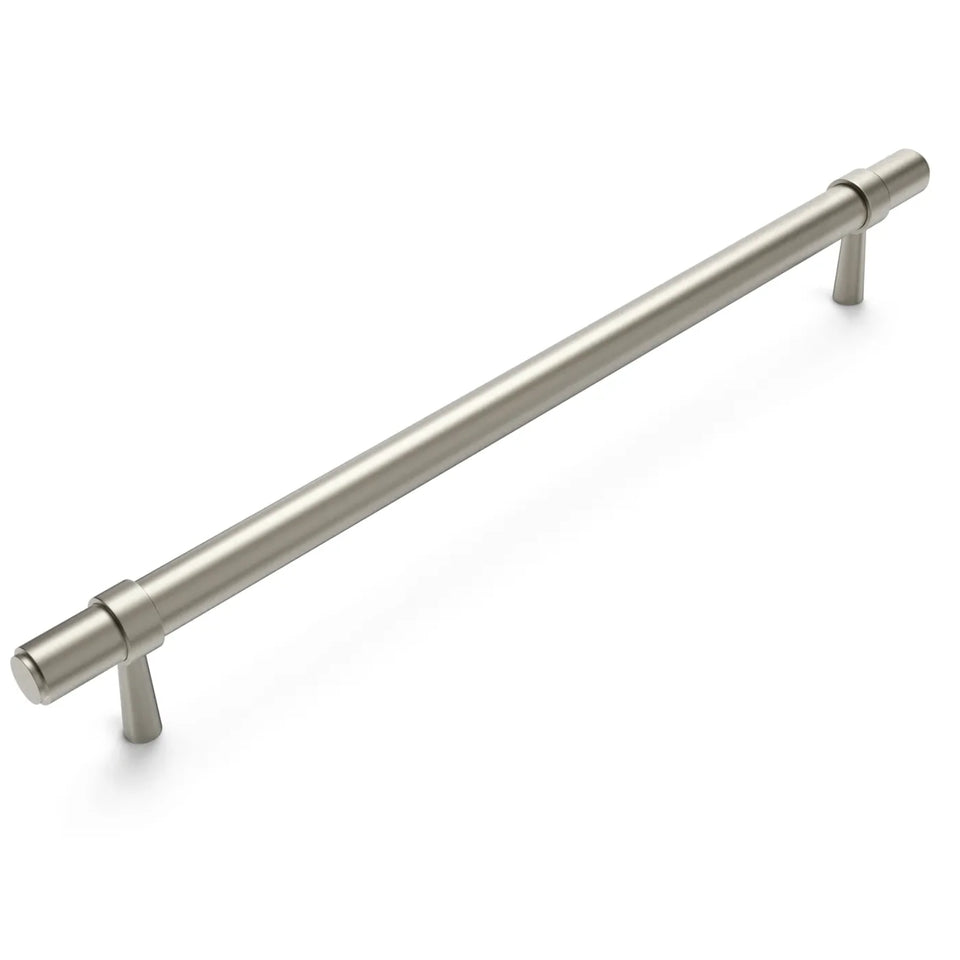

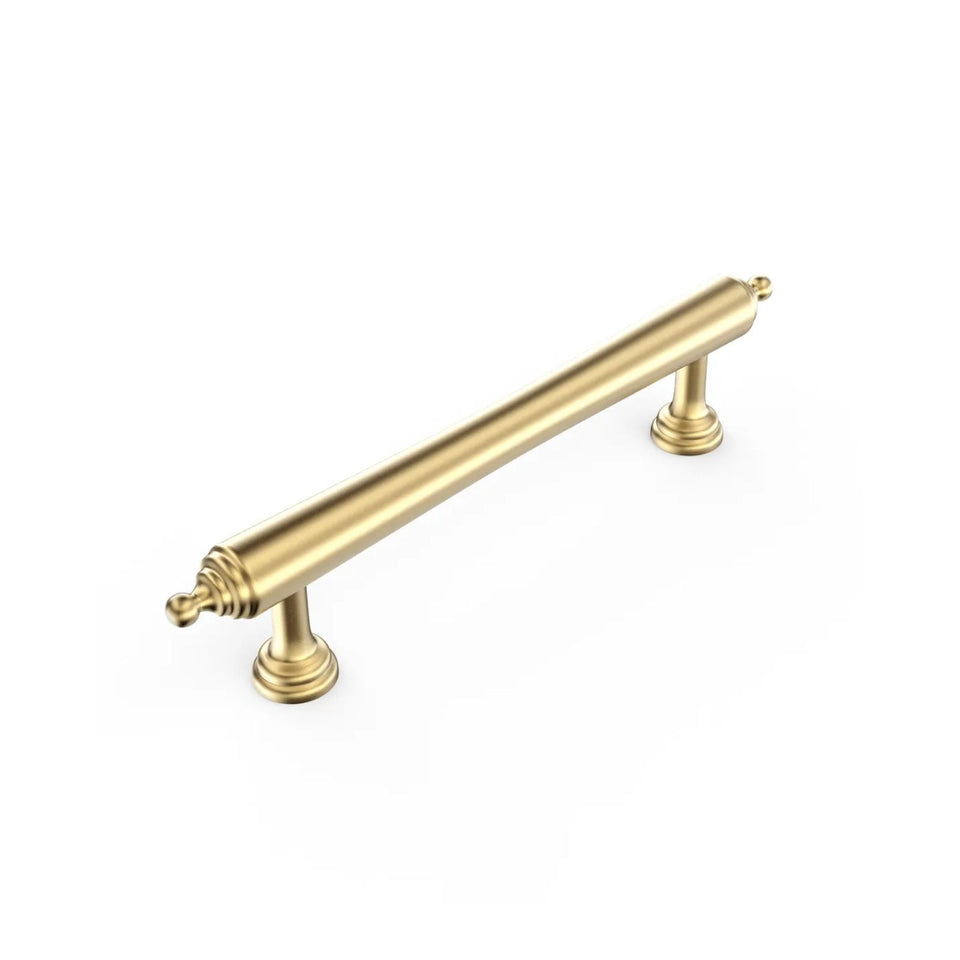
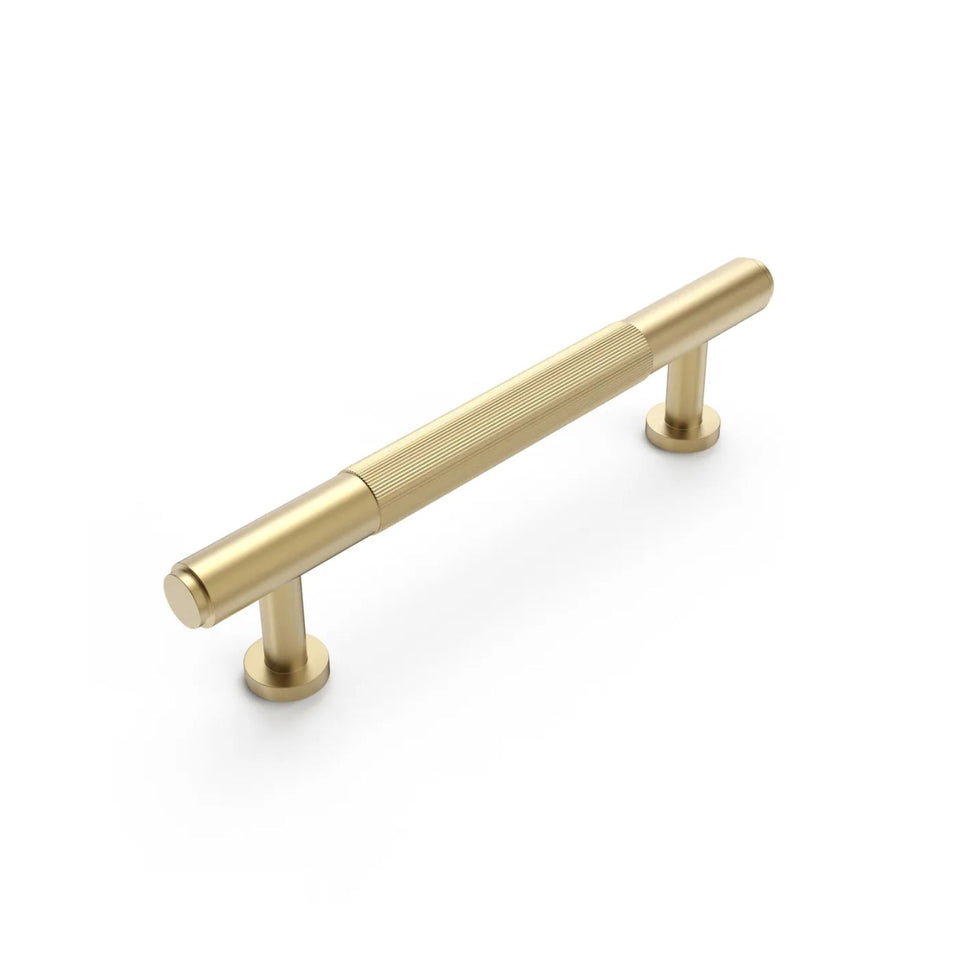
Otti handles are brass. The pulls on this page come in a satin brass finish, which the titles call brushed brass, and the Astor also comes in brushed nickel. The range includes the Nord and Soho pulls, the Astor and Heirloom pulls, a round Chloe knob and a Newport cup pull. Each piece has a length, a fixing distance and a projection, and this page lines those figures up side by side. The sections below explain what brass is, how satin brass and brushed nickel age on a brass body, and how the four pulls differ. They then show how to pick a size for a drawer or a door, fit a replacement and look after the finish. For handles in every material, start at cabinet handles. For the vanities these handles are made to sit on, see Otti vanities and cabinets.
The Otti spec lines give the finish as Satin Brass, while the product titles say Brushed Brass. Finish names are not standardised across the trade, and names such as brushed brass and satin gold are used almost interchangeably. Read the colour in the photographs, and keep every handle in a room from one range.
How a brass finish ages depends on what sits on top of it. Unlacquered brass is a living finish that oxidises and builds a patina, while a clear lacquer slows the process so the colour holds longer. Plated or lacquered options exist for owners who prefer a constant look. Unlacquered brass reacts to air and moisture as well as skin oils, so the parts touched most tend to brighten while recessed areas darken. Brushed brass is usually solid brass under a clear lacquer, so a scratch shows more of the same brass and reads as wear.
Lacquer has limits. The coating can eventually wear through where fingers touch most, and the spot then darkens. Lacquer can tarnish unevenly where it is scratched. Whether the satin brass on these Otti pulls is lacquered, plated or left bare is not stated, so expect the finish to change slightly at the touch points. If a perfectly even colour is the goal, check with us before ordering. For the colour family as a whole, see brushed brass cabinet handles.
The four Astor sizes in brushed nickel are solid brass. Brushed nickel is a nickel-based plated or coated finish over a base material, not solid nickel. It reads as a soft metallic silver with a slight warm grey undertone and a low satin sheen between gloss and matte, and that sheen disguises fingerprints and softens water spots. A brass handle with a nickel coating will not rust, while a steel handle can rust if the coating is scratched through.
Tarnish is the trade-off. Brushed nickel tarnishes over time unless it is lacquered, especially in humid rooms such as bathrooms, and a soft cloth with soapy water removes it. Prolonged moisture without drying can speed discolouration. For a vanity handle that means drying it after a wet hand has used it, which takes a second. For the colour family, see brushed nickel cabinet handles.
The fixing distance is the gap between the two screw holes, overall length is the whole handle, and projection is how far it stands off the door.
A pull is always a little longer than its fixing distance. On the Nord the difference runs from 34mm on the shortest size to 60mm on the longest, so a 160mm fixing distance gives a 200mm handle. When you measure existing holes, use the gap between the screws, not the length of the handle. For the pull family, see cabinet pull handles.
The Otti Chloe is a round knob, 32mm across, with a top disc 5mm thick and a 20mm projection. Knobs are gripped with the fingers, take a single screw and suit small to medium doors and drawers with lighter use. That makes the Chloe a match for upper cabinet doors and narrow drawers, with the Nord or Soho on the wider fronts below.
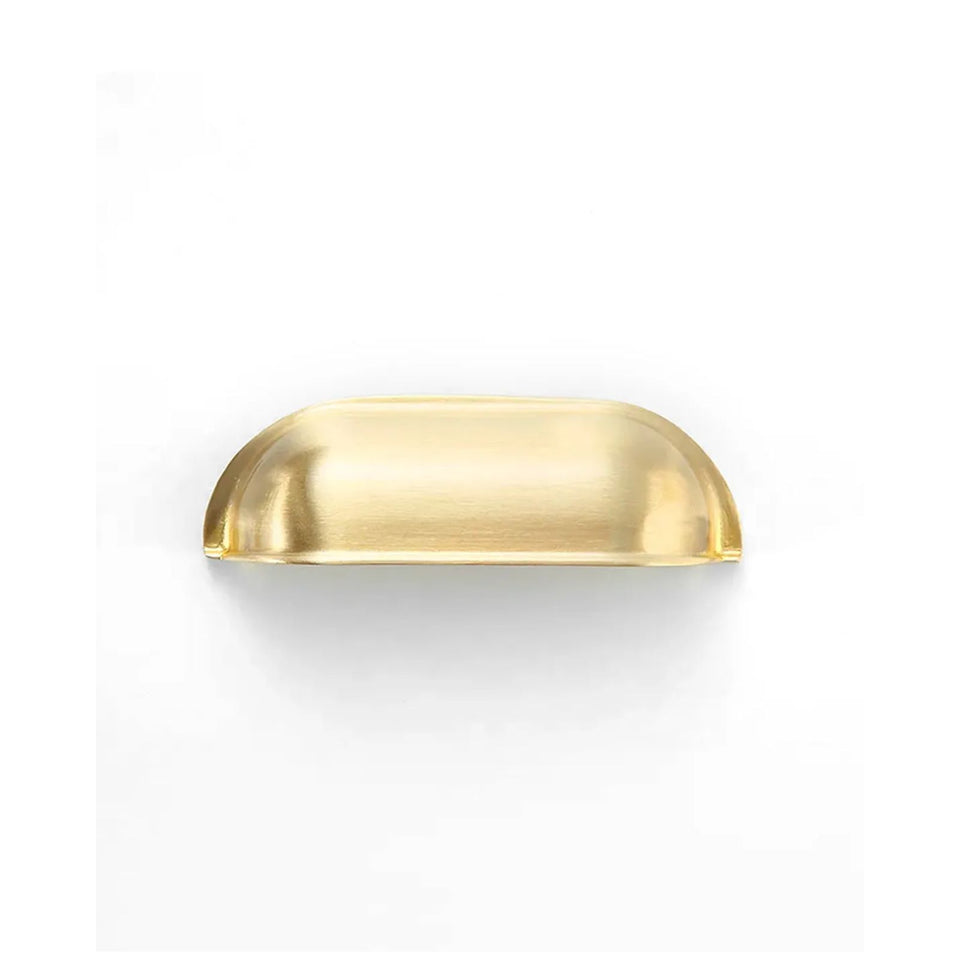
The Otti Newport is a cup pull measuring 90mm by 30mm. A cup pull is a small pull shaped like a half cup or a crescent that mounts flush to the cabinet face. The fingers curl under it to open the drawer, and it appears mostly in Hamptons and farmhouse kitchens, typically on lower drawers with knobs on the upper doors. Cup pulls were popularised in Victorian-era kitchens, the large surface is comfortable to grip from below, and they are sturdy enough for heavy drawers. No fixing distance is given for the Newport, so read the product page for the hole spacing before drilling. See cup pull cabinet handles and cabinet knobs for the wider choice.
Handle length is read from the fixing distance and not from overall length. Centre-to-centre is the key figure, and ordering by overall length is the first mistake buyers make. A pull is commonly about one third of the drawer or door width, as a rule of thumb and not a hard rule.
Width pairs with fixing distance. A standard drawer 450 to 600mm wide takes a pull on a 128 to 160mm centre, and a wide drawer of 600 to 900mm takes 256 to 320mm, or two 128mm pulls. A standard door takes a 96 to 128mm pull or a knob, and upper cabinet doors take a 96mm pull or a knob. Vanity drawers usually take 96 and 128mm centres. Against the Otti sizes, a 128mm Nord, Soho, Astor or Heirloom suits a vanity drawer, a 160mm Nord or Soho suits a mid-width kitchen drawer, and the 256 and 320mm sizes suit a wide drawer or a pantry door.
If the cabinet is already drilled, measure the distance between the existing holes. A 128mm handle will not fit 160mm holes without drilling new ones, which can leave marks on a painted or veneered front. The standard centres are 32, 64, 96, 128, 160, 192, 256, 320, 384 and 448mm, with 128mm the most common in Australia. Several Otti sizes sit off that list, namely 150mm, 193mm, 224mm and 225mm, so check them against your holes before you order.
The Astor brushed nickel pieces include screws. For the other Otti pieces screws are not mentioned, and no screw length is given, so check the panel thickness against the product page before fitting. For a first-time fit on new cabinets, plan the hole positions before drilling. Plan holes carefully, because finishes are easy to change and holes are not.
Brass handles suit warm palettes, timber and stone, and brushed brass pairs with white or navy cabinetry. On a vanity, a satin brass pull matches brass tapware, and a brushed nickel Astor sits well with chrome or nickel taps. Match handles to other fixtures or contrast them on purpose, and do not leave the choice to chance.
Bathrooms need more thought. Bathrooms are more humid, so solid brass, stainless steel or quality PVD suit, since thin electroplated zinc alloy can fail in splash zones. The brass Otti pieces suit bathrooms and laundries when they are dried regularly. Near the sea the picture changes. Within about five kilometres of the bay or ocean, salt corrodes standard metals, and 316 marine grade stainless steel is the choice there, as it is for salt air and pools. A lacquered brass handle on a coastal vanity is likely to need more frequent washing and drying, and lacquered satin brass is not suited to coastal areas. For a house on the water, see bathroom vanities and settle the material question before the finish.
Plain methods work for brass and nickel-coated brass. Dull handles are usually hand oil and cooking residue, and warm water and a soft cloth, followed by drying, clears them. Avoid brass polishes and abrasive pads on coated finishes. Wipe and dry bathroom hardware more often, because steam leaves marks, and put the cleaner on the cloth and not on the hardware. Avoid alcohol-based, acid or solvent cleaners on nickel finishes.
Polish only a piece you know is solid unlacquered brass. Metal polish on lacquered or coated brass can damage the coating, and since whether the satin brass is lacquered is not stated, a damp cloth is the safe default. If the finish does mark, start with a soft cloth and mild soap and water, and try anything stronger on the back of one handle before the rest.
Browse cabinet handles to compare other makers against these figures.


