
*View accurate shipping rates and availability






90 Items


Up to 70% off across the store, plus free towels and mirrors up for grabs on orders over $800*


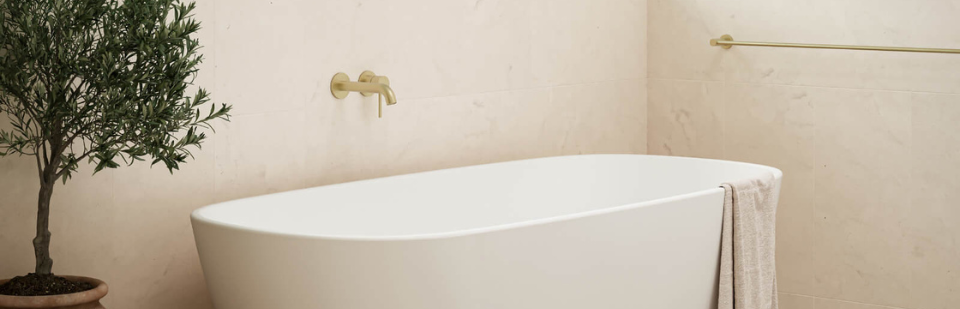


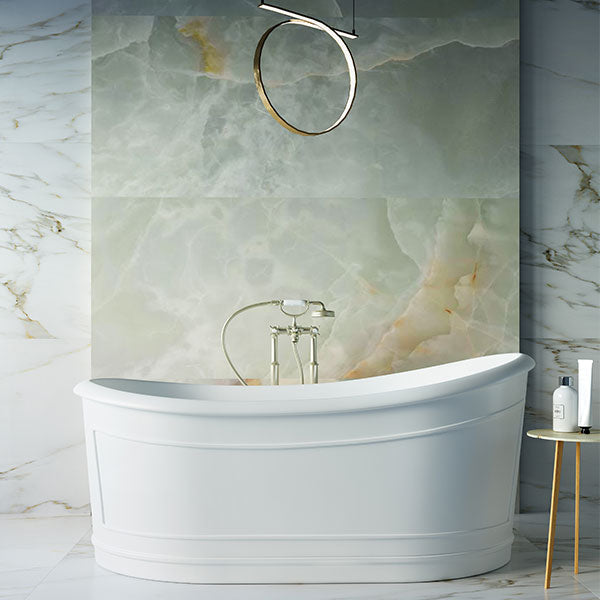
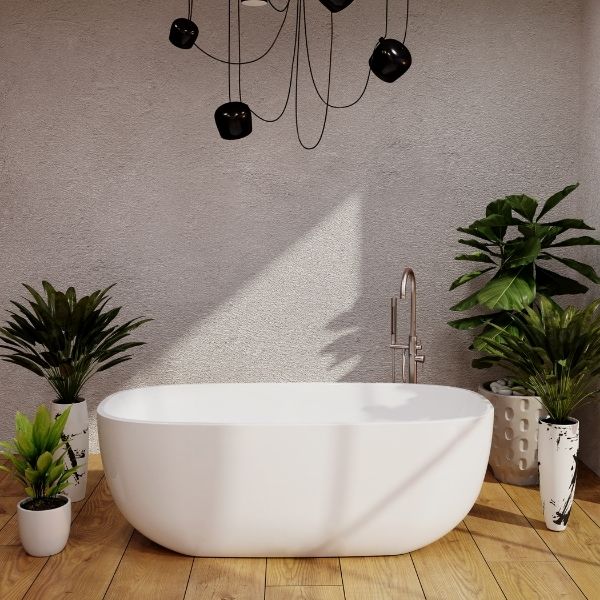
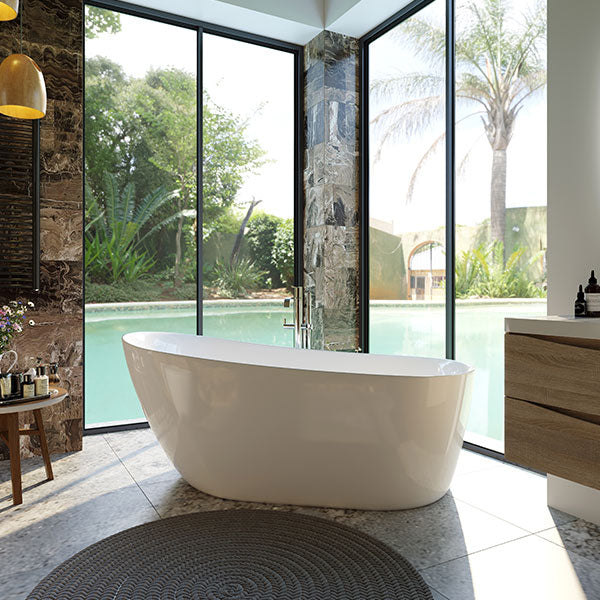
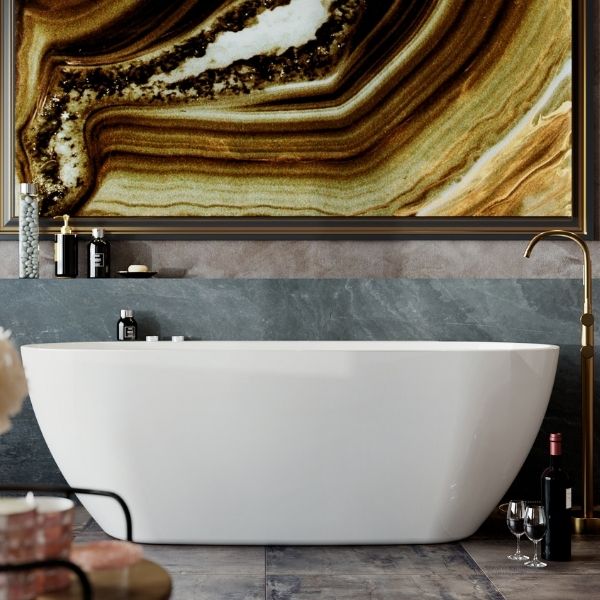

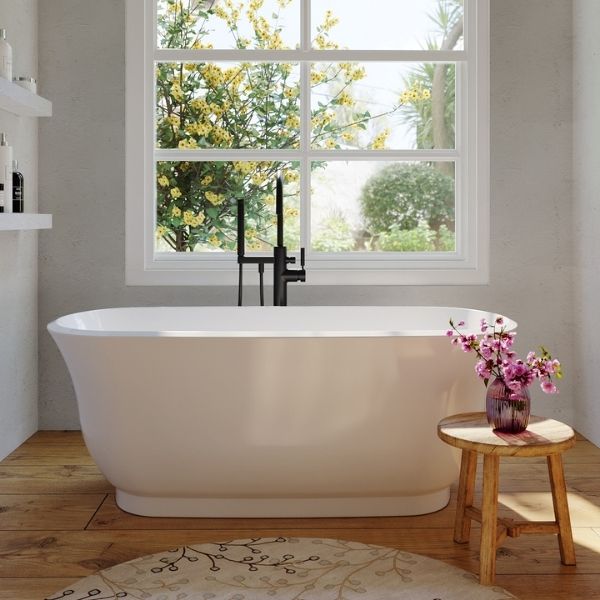


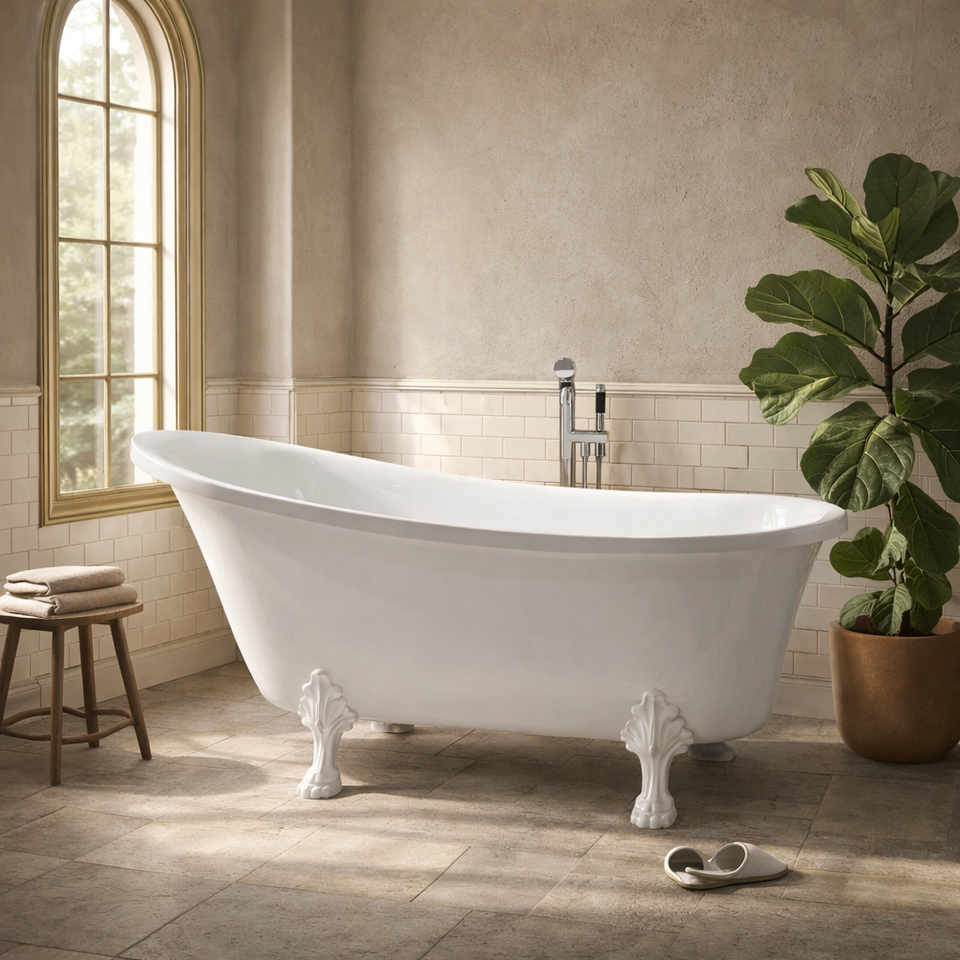
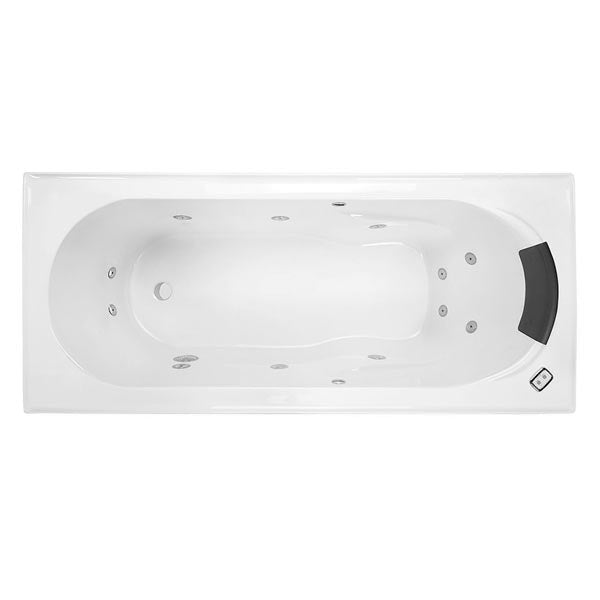


An oval bath has rounded ends and soft sides. The baths on this page are freestanding, back to wall, corner and spa baths in acrylic, with a few in stone and cast marble. They come from Decina, Bao, Caroma, BelBagno, Fienza, ADP, Otti and Kaskade. Oval bath, oval bathtub, oval tub, oval shaped bath and oval stand alone bathtub describe the same search. The sections below cover how comfortable an oval bath is, how it compares with a rectangular one, the sizes on offer, what each format needs, and what to check on waste, floor and care before ordering.
Yes, with a caveat. The oval shape's curved, lumbar-friendly form lets the body rest well when you soak, and the curve supports the body through a full-body soak. Soft, symmetrical curves give balanced support. Length matters more than shape, though, so a tall bather in a short soaking length is curled up the whole time. A gently sloped backrest is more comfortable than a vertical wall. Check the internal length, depth and backrest of the bath you are considering, and sit in a showroom bath if you can.
Oval baths usually win on comfort, and rectangular baths win on space and simplicity. Straight exterior lines are simpler to wipe down than curves, and rectangular shapes suit more installation types, normally back to wall. The rectangular baths page covers that outline, square baths covers the shape with four equal sides, and round baths covers the circle.
The page includes baths with an oval shape. Bao makes its Elegant, Bon and Fluted baths as oval in freestanding, back to wall and back to corner formats. Caroma makes the Contura II, Urbane II, Blanc, Noir and Cupid, and BelBagno the Berg and others. Decina makes the Valentina, Regent, Cosmo, Lola, Oxford and Natalia, as well as oval spa baths. Fienza makes the claw foot, Isabella and Keeto baths, and ADP the Submerge and the Placido. No bath on this page is egg shaped. The stone baths page lists the egg-shaped Kaskade Alice.
Standard baths are about 1500mm to 1700mm long and 700mm to 800mm wide. The Bao Elegant is 1500mm by 750mm by 580mm with an inner depth of 456mm, 307 litres and 38kg, and 1700mm by 800mm by 580mm with 392 litres and 41kg. The Bao Bon back to wall bath is 800mm wide and 600mm high at both lengths, with 307 and 337 litres and 50kg. The Caroma Contura II is 1500mm by 780mm by 580mm with an inner depth of 430mm, 285 litres and 46kg, and 1700mm by 790mm wide with 338 litres and 48kg. The Decina Regent is 1700mm by 790mm by 600mm with an inner depth of 470mm, 250 litres and 52kg. The 1500mm to 1700mm baths page lists the common band across every shape.
A freestanding oval bath stands clear of the walls, and it needs at least 50mm on each side and 50mm to 100mm around it for cleaning and plumbing access. A back to wall oval has a flat side against the wall, which leaves no gap behind it to clean. The Bao Elegant, Bon and Fluted come in both formats, as do the Caroma Contura II and Urbane II, and the Decina Oxford is a back to wall freestanding bath. The freestanding baths and back to wall baths pages cover each format across makers. A freestanding bath has nothing to hold when getting into or out of the bath, so think about the people who will use it.
A corner bath sits against two walls and comes in left and right hand versions, and the hand needs checking against the plumbing. The Bao Elegant, Bon and Fluted come as back to corner baths, the Fienza Isabella is a corner bath in left and right hand, and the Decina Natalia and Caroma Urbane II are corner back to wall baths. The Kaskade Eleni is a corner stone bath. A built-in bath is set in a surround, the most common and the most space efficient style. The corner baths and built in baths pages cover them.
Several oval baths here are Decina spa baths: the Adatto, Uno, Mintori, Duo and Elisi. A spa bath adds jets and a pump to an acrylic shell, and the pump has to be reachable for servicing, so the access panel is planned before the tiling. Capacity on the Decina spa baths is measured 200mm below the rim. The spa baths page covers how spa baths work.
The Caroma Contura II is stain-resistant sanitary grade acrylic with an elegant thin rim, available in matte clay, matte white or gloss white, with footlocker fittings included for stability and no overflow. The Fienza Isabella corner bath comes in 1500mm and 1700mm in left and right hand versions with an overflow, an ergonomic backrest and double-skin acrylic construction that retains warmth for longer baths. The Fienza Keeto is a back to wall acrylic bath in 1500mm and 1700mm with an overflow. The Bao Fluted ovals have a vertical V-groove on the outer face, and the fluted baths page covers that design. The Kaskade Eleni stone baths are a corner and a back to wall oval in 1700mm.
Oval baths can be freestanding, built in or roll-top. The Fienza claw foot baths are oval in a traditional slipper shape with a roll-top edge. The claw foot bath tubs page and the slipper baths page cover those styles.
Most baths here are acrylic, a non-porous plastic reinforced behind with fibreglass, resin or a steel frame. The Bao baths are high density acrylic over an inbuilt steel support frame with adjustable legs, and acrylic is the lightest of the common bath materials. Weights run from the 38kg Bao Elegant to about 53kg across the Bao baths, with the Caroma Contura II at 46kg to 48kg. Stone ovals are far heavier, often well over 150kg empty. Orders over 40kg are delivered kerbside by tail lift, and delivery does not include moving the bath into the property. The ADP Placido is cast marble.
A stone bath needs a level surface, correct waste alignment and proper sealing around the base, and a qualified plumber should connect it for secure installation and drainage. The Bao baths have an inbuilt steel frame with adjustable steel legs that lets the bath sit solidly and be levelled on a floor that is not quite true. Installation follows the maker's instructions in every case, and each bath comes with installation instructions and a specification sheet to download.
The plug and waste are sold separately on most baths here, so the bath, the waste and the tapware are three separate decisions. Some baths have an integrated overflow, such as the Decina Regent and the Caroma Urbane II corner bath, and others are non-overflow only, such as the Bao baths and the Caroma Contura II. A pop-down waste is the better choice for safety, service and maintenance, and the bath wastes page holds them. Australian building codes require fully removable bath wastes in some situations, so confirm with the plumber which waste suits the installation.
Two baths of the same length can sit very differently. Depth matters more than length in a small bathroom, and about 450mm to 480mm of internal depth is a good middle. The inner depths here are 430mm on the Caroma Contura II, 456mm on the Bao baths and 470mm on the Decina Regent, and the BelBagno Berg is 420mm high at 1500mm and 450mm high at 1700mm. Widths run from about 700mm on the Berg at 1500mm to 780mm and 800mm on the Contura II and the Bao baths. A 1500mm by 800mm bath gives extra shoulder room over a 700mm or 750mm one. A thick rim reduces the usable space inside, so check the internal dimensions as well as the outer ones.
A bath with a shower over it should be at least 1500mm long and at least 700mm wide. A freestanding bath is not the right base for a shower over it, because the bath is not fixed to a wall and cannot securely support a screen. Rectangular baths are well suited to shower over bath setups, and inset or back to wall models work well with it. The shower baths page holds the baths made for the job, and a back to wall oval is the nearest oval format.
A filled oval bath is heavy even when acrylic. A bath's weight must be properly supported during and after installation, and the floor checked. Timber floors usually need reinforcement for heavy baths, and a structural engineer should assess a timber floor where the combined load is high. A 1500mm bath can work in a room 1650mm or longer, and a 1700mm bath generally needs a wall of at least 1800mm.
Use mild, non-abrasive products and a soft cloth, no harsh chemicals, scouring pads or acidic cleaners, and rinse and dry after each use to prevent water marks. That applies to stone and to acrylic, which is non-porous and wipes clean. Lucite acrylic scratches more easily than standard acrylic and needs a polishing kit, and deeper scratches may need a professional. A freestanding bath has nothing fixed to hold when you step in or out, which matters for anyone who needs support getting in and out, and the surrounding floor should be dry and clear. The care sheet for the bath you buy decides which cleaners are safe.
Start with the room. Measure the wall, the door and the route in, then decide the installation type: freestanding, back to wall, corner or built in. Compare the internal length, width and depth, because they change the soak as much as the outline does. Then plan the waste and the tapware, and read the specification sheet and installation instructions before the tiler starts.
For the full range across shapes and materials, return to bathtubs.


