
*View accurate shipping rates and availability






7 Items



Up to 70% off across the store, plus free towels and mirrors up for grabs on orders over $800*

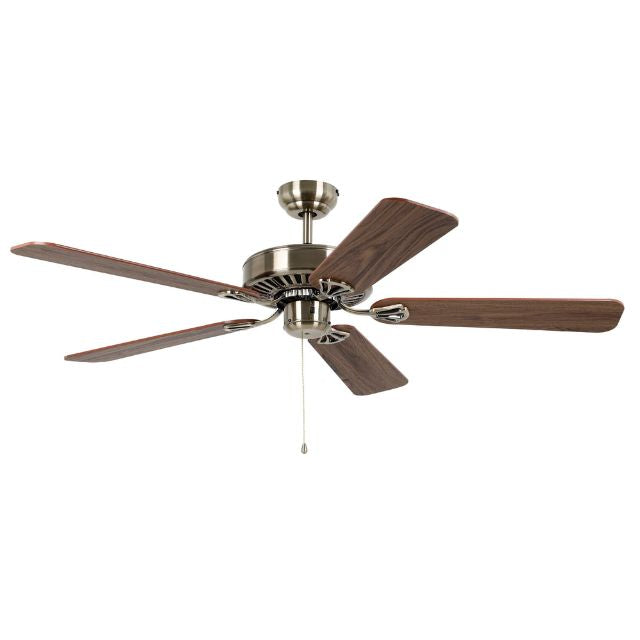
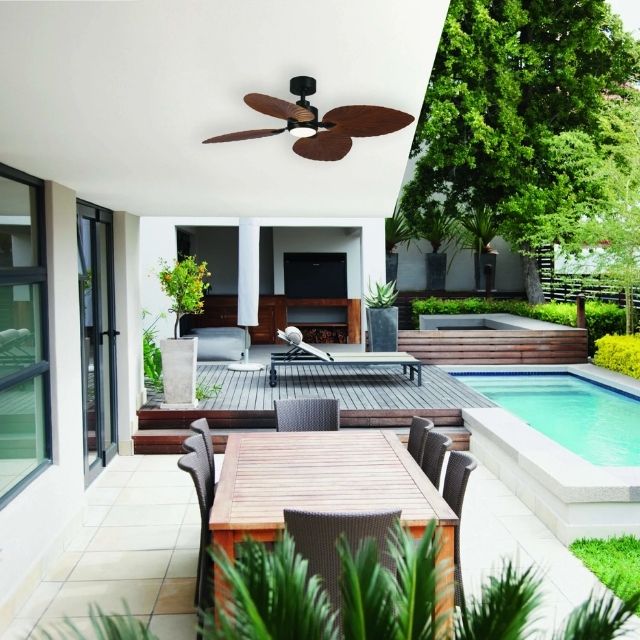
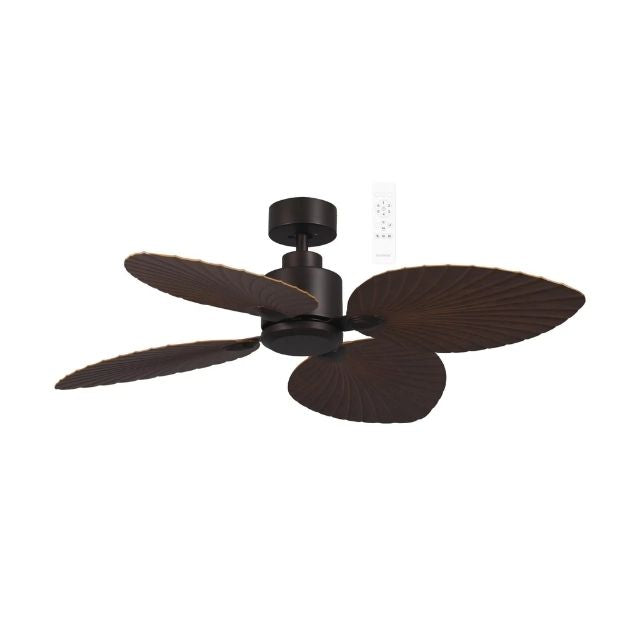
A bronze ceiling fan has a dark, warm metal finish on the body and often a timber or walnut-look blade. Shoppers searching for one usually want to see what the finish looks like, find out which fans come in it, and check whether there is a light. This guide explains the finish names, sets out the bronze fans in this collection with the specification of each, then covers size and height, the motor, and installation.
On a fan, bronze is a finish on a steel or metal body, not solid bronze. Makers do not standardise the names, so one fan's bronze can look different from another's. The common versions are these. Oil rubbed bronze is the darkest, a brownish-black with a slightly oily sheen that can develop a patina with use. Antique bronze is lighter: reddish brown with darker edges for an aged look, though some versions lean towards pewter. Brushed bronze is matte, reflects more light than oil rubbed and is easier to keep clean. Because the names are loose, a photo is a better guide than the label.
Martec Riviera has its own page at Martec Riviera. The finish also turns up under brass ceiling fans, black ceiling fans and brushed nickel ceiling fans for buyers comparing metals.
A 52 inch (132cm) fan is the standard size, 48 inch (122cm) suits smaller rooms and over 54 inch (137cm) suits larger square rooms of about 5 by 5 metres or more. By floor area, 6 to 12 square metres pairs with 48 to 52 inch and 12 to 20 with 52 to 60 inch. On that basis the 1260mm Kingston suits a small to medium room. The 52 inch Waikiki and Oasis suit a standard bedroom or living room, as does the Riviera. The 54 inch Wynd fits a larger living space. A long room does better with several 52 inch fans than one very large one. See medium size ceiling fans.
Blades need at least 2.1 metres from floor to blade, and blade tips should stay 50 centimetres from walls. The overall heights run from 273mm on the Waikiki to 340mm on the Kingston. Arithmetic from those figures: on a 2.4 metre ceiling the blades hang at about 2.13 metres on the Waikiki and about 2.06 metres on the Kingston, so the Kingston needs a ceiling a little above standard to clear the minimum. The electrician should confirm the numbers. Low ceilings are covered under low profile fans and high ones under ceiling fans for high ceilings.
Fans generally handle about 10 degrees of tilt without a kit, and 20 to 40 degrees usually calls for a raked ceiling kit and a longer rod. The Riviera takes 10 degrees, the Wynd 14, and the Kingston and Oasis 15. The Waikiki is 0, so it needs a flat ceiling. The Eglo 40 degree angle canopy is the part that lets a fan sit on a steeper slope, and it comes in oil rubbed bronze to match. Ask the electrician before fitting it to a fan from another maker, and confirm it suits the fan you own.
AC motors are the older type with usually three speeds, while DC motors are now the most common, more efficient and offer up to seven speeds. DC fans carry an internal rectifier, so they run on a normal supply, and they use less electricity than AC on average. The Wynd, Riviera and Kingston are DC. The Oasis and Waikiki are AC with three speeds, and the Waikiki works from a pull cord or wall switch, which suits a heritage room where nobody wants a remote. See DC motor fans.
The Riviera and the Kingston come with and without an LED light, at 1,885 and 2,420 lumens respectively. Warm white of about 2700K to 3000K suits bedrooms and lounges and neutral white of about 4000K suits task areas, and an adjustable colour temperature lets the light match a bronze finish. A fan light near downlights can strobe as the blades pass, and many models come as light or no-light versions only. A light adds to the overall height. See ceiling fans with lights and ceiling fans without lights.
Many wood-look blades are plastic, so the blade material line is the one to trust. The Wynd has solid timber blades, the Waikiki steel and plywood, and the Riviera and Kingston steel and ABS. Timber can warp or swell in moisture, so it belongs in rooms with stable humidity and not in bathrooms or open outdoor areas. No blade material has been shown to improve airflow and blade count does not matter, so the airflow figure and the span are the fair comparison.
The Wynd moves 14,782 cubic metres an hour at 28 watts, and the Oasis 9,900 at 63 watts. Motor and blade design explain the gap, and DC fans use less electricity than AC on average. The Riviera, Kingston and Waikiki have no airflow figure, so compare those on span and motor, and ask us if the number matters. Wattage is the maximum at top speed, and a fan seldom runs there. One more oddity: the Kingston shows a 40 watt motor in one place and 32 watts total in another. Check with us if running power matters.
The Wynd, Riviera, Kingston and Waikiki are all indoor fans. The Kingston reads indoor and covered outdoor in one place and indoor in another, so work from indoor and check with us before it goes outside. The Oasis suits indoors or enclosed alfresco areas not exposed to the weather. Covered does not mean dry, since sideways rain and sea air can reach a fan near a roof edge. Fans rated for outdoors are under outdoor ceiling fans.
Bronze is a warm, dark tone. The Kingston's palm leaf design suits British colonial or tropical interiors. The Wynd suits modern and rustic rooms, and Scandinavian and industrial ones. Match the finish to the metalwork already in the room, such as door handles or tapware, because bronze beside chrome can look mismatched. A white or light ceiling shows the fan clearly, while a darker one lets the bronze blend in. Colour has no effect on airflow. See white ceiling fans and woodgrain ceiling fans.
For a bedroom, listen at the lowest speed, because clicking or knocking irritates more than steady air noise. Humming can come from ripple control signals on the supply and is usually not a fan fault, and a conventional dimmer on a fan light can hum too. DC motors are the quieter type. The Wynd turns at 60 revolutions per minute at its lowest speed and draws 1 watt there. A heavier timber blade can keep a fan steady, but a loose fixing adds a knock, so the mount matters more than the finish.
The Riviera and Kingston use the Smart Life app as well as a remote, and the Wynd comes with a remote. The Oasis has a three speed wall controller and can take a remote sold separately. The Waikiki is sold with a pull cord and wall switch, and its remote kit and light kit are separate purchases. The usual controls are pull cords, wall switches, remotes and apps, and a wall-switch fan must be fitted by a licensed electrician. An app suits a bedroom, a wall control a shared space, and a pull cord a room whose style asks for one. See smart ceiling fans.
A hard-wired ceiling fan needs a licensed electrician, and wall-switch fans cannot legally be fitted without one. Dust the blades every few weeks with a soft cloth. Oil rubbed finishes can change over time, so abrasive cleaners that strip the surface are best avoided. A wobbling fan is louder and less efficient, and a balance kit fixes it.
For every style see ceiling fans. By brand, Martec ceiling fans and Fanco ceiling fans.


