
*View accurate shipping rates and availability






148 Items


Up to 70% off across the store, plus free towels and mirrors up for grabs on orders over $800*






A floor waste is the drain set into the floor of a bathroom, ensuite, laundry or wet room. It takes the water that reaches the floor and sends it to the drainage system. This page holds exposed grates, tile insert wastes and tile insert channel grates, made in stainless steel or brass and finished in chrome, matte black, brushed nickel, brushed brass, bronze, gold and gunmetal. Five decisions settle the order: whether the room needs one, which format suits the floor, what size matches the pipe, which material and finish to choose, and what comes in the box. The sections below follow that order. For every other drain type, start at wastes, traps and grates.
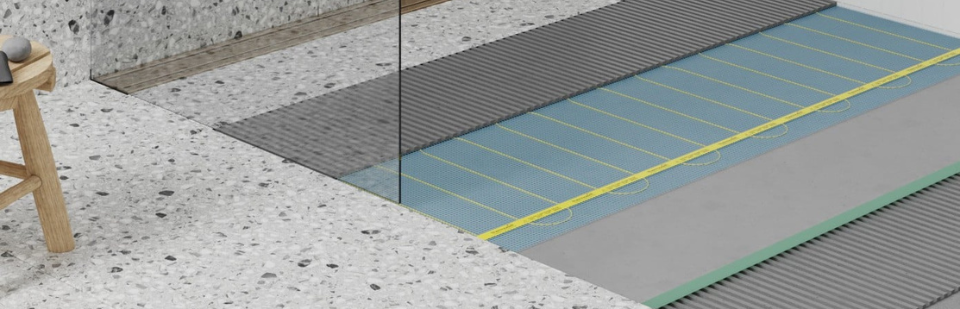
A floor waste serves the whole floor. A basin waste or a bath waste serves one fixture, while the floor waste catches whatever reaches the tiles from the shower, the fixtures and the occasional leak. It is the last link in a chain: the waterproofing membrane keeps water out of the structure, the falls in the screed carry water to the drain, and the waste lets it leave.
It cannot stand in for the other two links. A floor waste does not waterproof a room, correct poor falls or prevent mould, and it does not stop blockages on its own. A drain in the wrong place leaves water pooling on the tiles however good the grate is. The position is therefore settled together with the tile set-out, the falls, the waterproofing and the plumbing, before tiling starts.
For houses, the National Construction Code answers this. Under the Housing Provisions deemed-to-satisfy rules, a floor waste is required in shower areas, and a waste outside the shower is not required. If one is installed anywhere, required or not, the floor must fall to it under Clause 10.2.12. Confirm with your certifier or licensed plumber which reading applies to your build and your state.
An exposed grate shows its metal. A tile insert swaps the grate for a shallow tray that holds a piece of your own floor tile, so the pattern runs across the drain and only a thin frame shows. It sits in the centre of the floor like a point drain, covered by a removable tile. Grates break the visual flow of the tiling and tend to collect debris, while the tile cover makes cleaning simpler.
A point drain sits in one place on the floor, as a square or a round. A square tile insert suits straight lines, square tiles and geometric layouts. A round one gives a softer detail beside curved tapware or a round basin. Square against round is a design decision rather than a difference in performance, though square tiles around a round drain are best avoided.
A linear channel gives a longer line of drainage for walk-in showers and larger shower areas, with either a visible grate or a tile insert. A linear tile insert drain needs only one floor gradient, which can lower installation costs. The channels on this page run 600mm, 900mm and 1200mm, and the channel position, outlet position and length need checking against the fall plan before the order goes in. Channels and long grates have their own page at channel wastes and grates.
Three measurements get mixed up. The face size is what shows at floor level, the outlet size is the connection to the pipe below, and the hole size is what the waterproofer or plumber forms in the floor. Face sizes of 100mm and 115mm are the most common in Australia, and a 115mm face suits 300 x 300 and 600 x 600 tile modules. Outlets are typically 50mm, 80mm or 90mm, and the plumber specifies the outlet from the existing drainage. This range adds 100mm.
Measure the pipe first, because a new waste has to meet the pipe already set in the floor, and read the specification line as well as the title. The Caroma square floor waste with an 80mm outlet lists a 77mm outlet and suits 80mm pipe. The Nero channel grates list the hole they need as 50mm, 80mm or 90mm to match the outlet. The Radiant tile insert has a 90mm outlet that fits a 100mm waste puddle flange, and the Fienza tile bed waste takes a 90mm outlet.
The flange is the collar where the waterproofing membrane meets the drain. A waste flange has to be integrated into the membrane, and it is a licensed-trade detail rather than a do-it-yourself job. Whether a flange comes with the waste differs by product, so check before the waterproofer arrives.
The Nero channel grates fit a puddle flange of the matching size, and the flange is bought separately. The Radiant tile insert needs a puddle flange that is not included. The ART Australia Bermuda Megaflex wastes include an ABS Megaflex base, a leak control flange that engages with the waterproof membrane, and the Bermuda channel grates carry the same flange. If you are unsure what comes in the box, ask before ordering.
A tile insert has a fixed depth, and the tile that fills it has to fit. The Nero tile insert channel grates suit tile under 10mm thick. The Radiant square insert is 12mm deep and takes up to 10mm of tile plus adhesive. The Meir shower waste with tile insert takes a tile up to 95 x 95 x 10mm, in an insert area of 96 x 96mm inside an outer frame of 115 x 115mm. The adhesive layer counts toward the insert depth, so tile plus adhesive must fit inside it.
The Nero tile insert wastes and channel grates are 304 stainless steel. The Radiant tile insert, the ART Australia 316 wastes and Bermuda channels and the Phoenix V channel drain are 316 stainless steel, and the Phoenix is marine grade 316. The Caroma grates, the Meir wastes, the ART Australia Bermuda and Organics wastes and the Fienza tile bed waste are brass, while the Caroma tile insert versions are stainless steel.
A waste does not have to match the tapware exactly. A deliberate mix of metals can look chosen, and a waste in the finish of the tapware and towel rails reads as deliberate even when the drain is mostly hidden. Finish names differ between makers, so pair by the finish itself rather than the colour name. Tapware in the same finishes is at brushed nickel tapware and gunmetal tapware.
Identify the cover before forcing it, because the wrong approach can damage it. A tile or metal square cover usually lifts when the edge is levered gently with flathead screwdrivers, and some come away by hand. Under it sits a screen or grate that collects hair and soap scum, and that is the part to clear and rinse. The tile cover of a tile insert drain fits snugly and lifts out of its tray for cleaning. A slotted grate is gripped by its slats with small pliers and lifted gently. If it will not move, it may be threaded, pinned or screwed down.
Hair and soap are the usual cause of slow draining or water pooling in the tray. Remove the grate, clear the debris with gloves on, pour in hot water with vinegar or an enzyme cleaner, rinse and replace the grate. Vinegar and abrasive cleaners can damage PVD, so use mild soap on a PVD grate. The trap below holds a water seal, and the seal can break through evaporation, a blockage or poor design, which lets smells or backflow through.
Nero supplies tile insert point wastes in square and round, at 100mm and 130mm, in 304 stainless steel, and V channel tile insert grates in 600mm, 900mm and 1200mm. Its other drains are at Nero wastes and traps.
Caroma offers a square floor waste in two forms: a removable grate in brass with outlets of 50mm, 80mm and 100mm, and a stainless tile insert version with 80mm and 100mm outlets. Both come in six finishes. See Caroma wastes and traps for the rest of the range.
ART Australia, previously known as Bounty Brassware, supplies the Bermuda tile insert wastes and channels, the Organics slotted wastes in solid cast and forged brass at 112 x 112 x 21mm with five grate options, and the 316 stainless square wastes. The wider range is at Bounty Brassware.
Meir has a shower waste with tile insert in solid brass, finished in brushed nickel, Tiger Bronze, Champagne, Shadow and Lustre Bronze, and a square floor grate shower drain with a wide outer grate for tiling and sealing. See Meir wastes and traps. Phoenix supplies V channel drains in 316 stainless steel with a 30mm deep V base, at Phoenix wastes and traps. Fienza has a square tile bed floor waste. Radiant makes its square tile insert in 316 stainless steel, designed as a central bathroom floor waste, with the shower water flowing to it rather than directly above it. Radiant also has its own page at Radiant floor wastes.
A floor waste is the wrong part for a fixture. A basin takes a basin waste, a bath takes a bath waste, a sink takes a sink waste, and the trap under a basin is a bottle trap. Each connects to one fixture, where the floor waste sits in the floor and serves the room.
Confirm the rule with the certifier or plumber, plan the falls with the tiler, then choose the format. Measure the pipe for the outlet, read the specification line for tile depth and flange, pick 304 or 316 for the conditions, and match the finish to the tapware.


