
*View accurate shipping rates and availability






164 Items


Up to 70% off across the store, plus free towels and mirrors up for grabs on orders over $800*


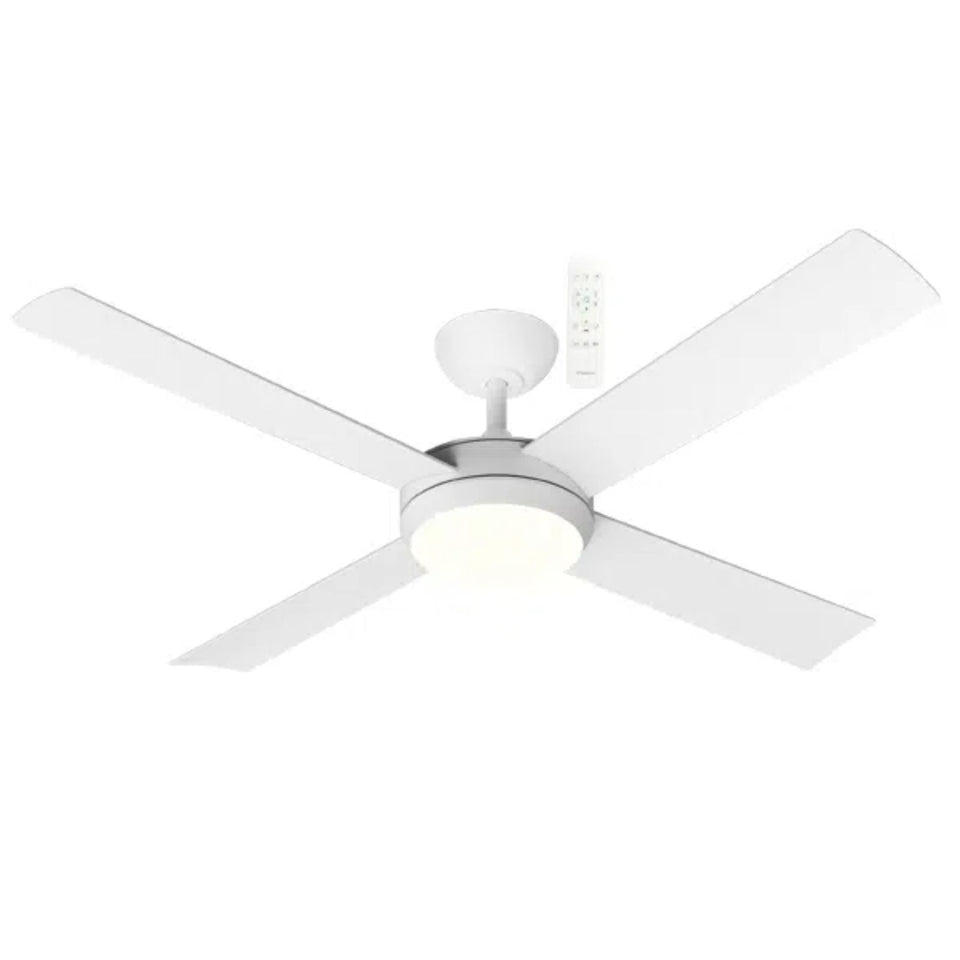
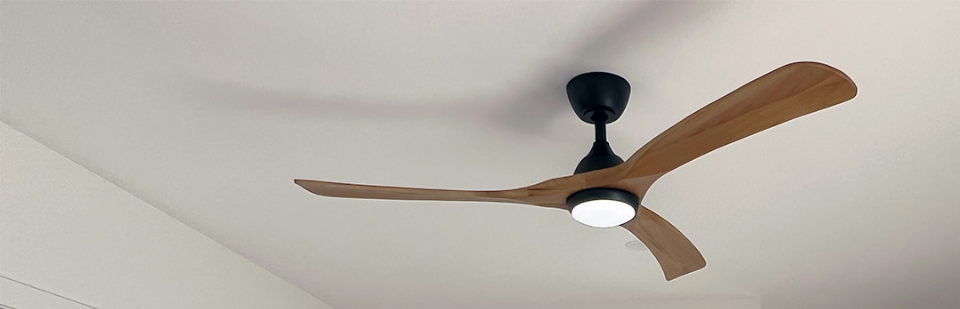


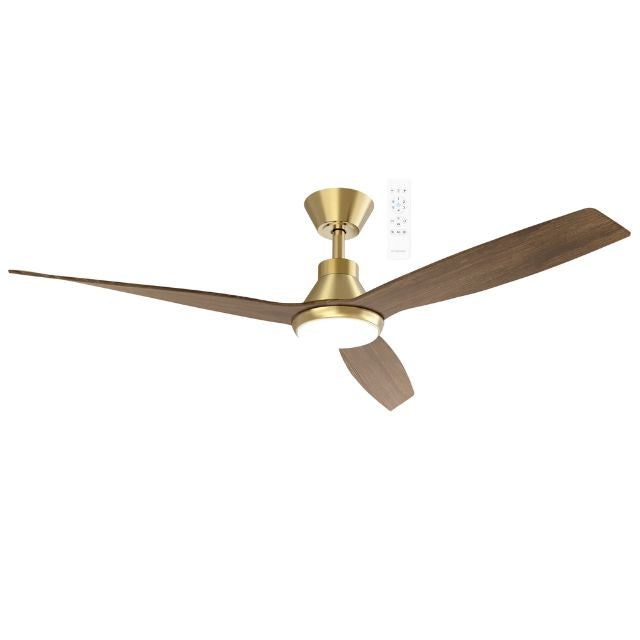


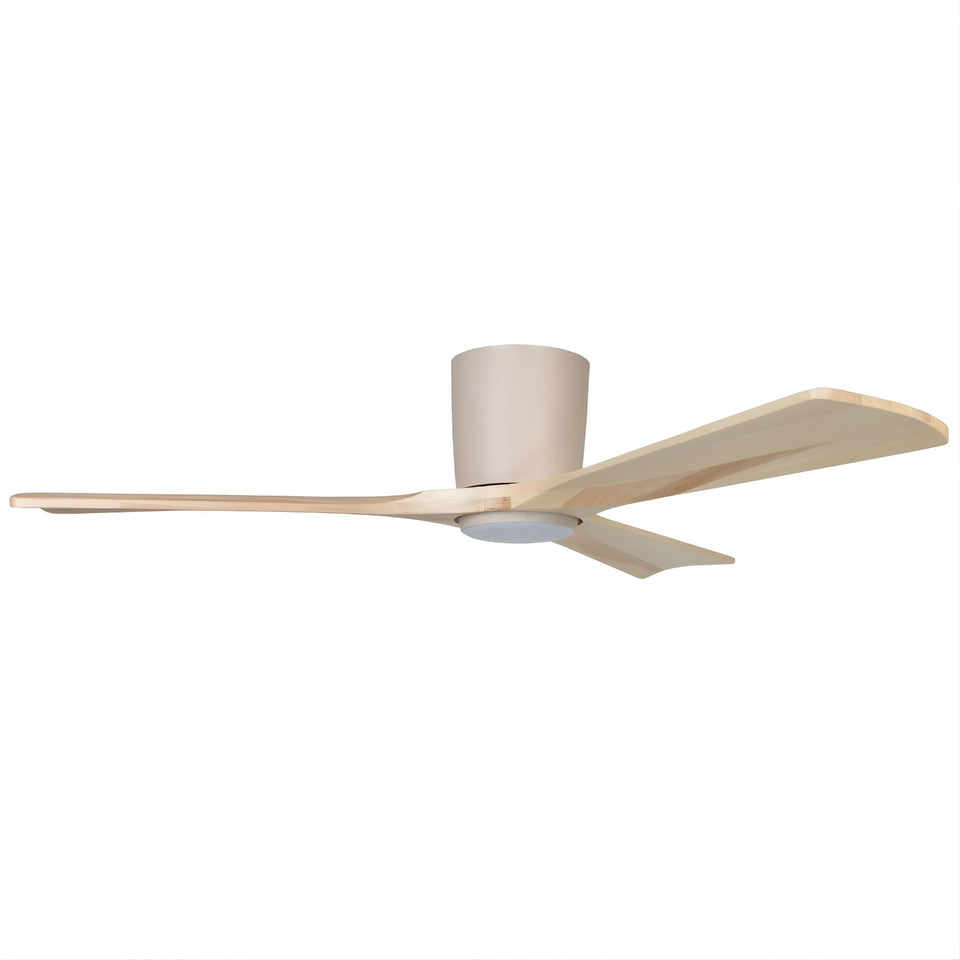


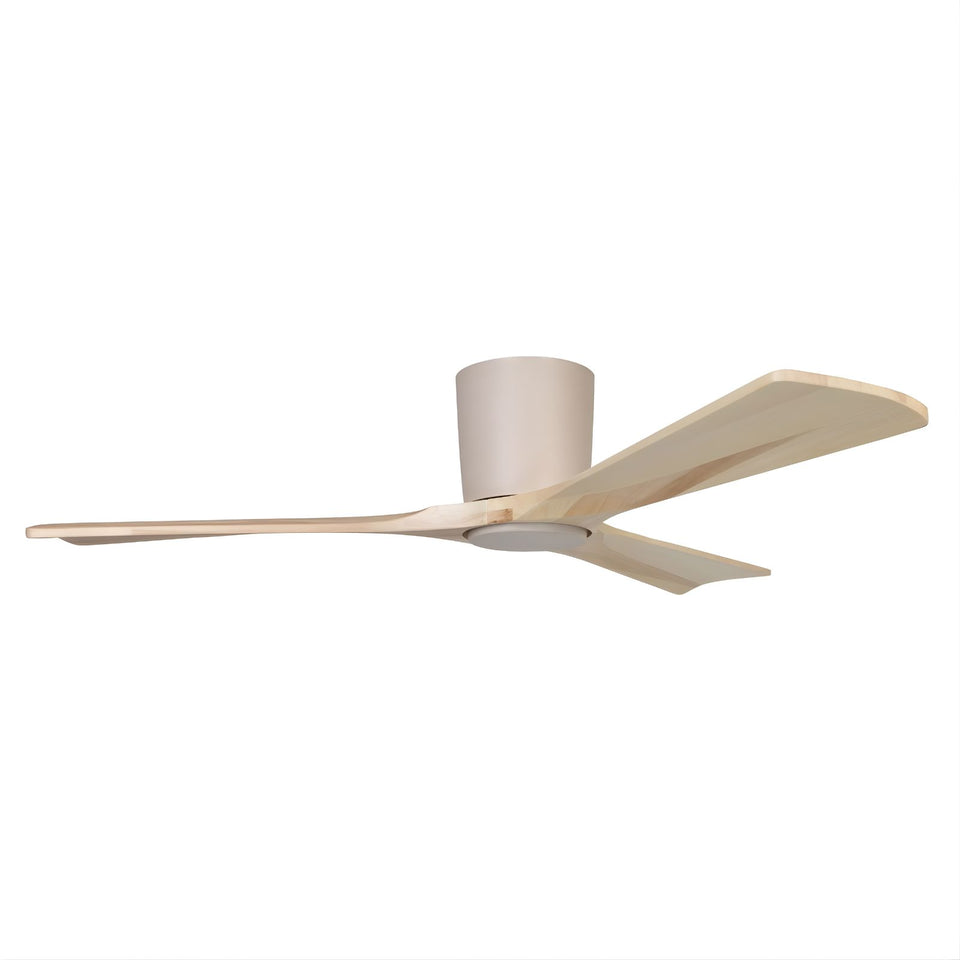


This collection holds ceiling fans in the middle of the size range: spans of 122cm (48 inch), 127cm (50 inch) and 132cm (52 inch). That is the size most Australian bedrooms and living rooms are fitted with, which is why people search for it as a medium fan, a standard fan or just a 52 inch fan. This guide explains what medium means, how to match a span to a room, what the clearances are, and how the ranges in the collection differ once the size is settled. The size bands overlap, so where they differ the text gives the range and not a single number.
There is no standard definition, and the line falls in different places. A 52 inch (132cm) fan is the standard size, 48 inch (122cm) suits smaller rooms and more than 54 inch (137cm) suits larger square rooms of about 5 by 5 metres or more. A fan of 107 to 132cm counts as medium for rooms of 13 to 17 square metres. A fan of 48 to 56 inch counts as medium for rooms from about 3 by 3 metres to 4 by 4 metres. The fans in this collection sit inside both ranges, at 122cm, 127cm and 132cm. So a medium fan here is a 48 to 52 inch fan, which counts as small to standard. See small fans and large fans for the two ends.
Room area and room dimensions land in much the same place. By area, under 7 square metres takes 70 to 90cm, and 7 to 13 square metres takes 90 to 100cm. A room of 13 to 20 square metres takes 100 to 112cm, 20 to 27 takes 112 to 137cm, and 27 to 34 takes more than 137cm. A typical Australian bedroom of about 3.2 by 3.0 metres suits a 52 inch fan, and a small bedroom of about 2.8 by 2.5 metres suits a 44 inch fan. By another reading, 6 to 12 square metres takes 48 to 52 inch and 12 to 20 square metres takes 52 to 60 inch.
Read together, a medium fan suits a room of about 10 to 20 square metres: a standard bedroom, a study, a kitchen, or a living room of ordinary size. Below about 10 square metres, a smaller fan is the better match. Above about 20 square metres, a larger span or a second fan is. In an open-plan or L-shaped room, size a fan for each zone where people spend time and not for the total area. A slightly larger fan on a lower speed can deliver the same airflow as a smaller fan on high, often with less noise, which is the argument for stepping up one size when a room sits between two.
A 1200mm fan is 48 inch (122cm) and a 900mm fan is 36 inch (91cm). By common size bands, a fan of 90 to 100cm suits a room of 7 to 13 square metres, while one of 100 to 112cm suits 13 to 20 square metres, so a 1200mm fan sits above both. A 1200mm fan is the smallest span in this collection, and it suits a bedroom or a compact living area. A 900mm fan belongs with the smaller rooms in those bands, and it is covered under small fans.
Blade count is not a factor in performance, and high-performing fans have two, three or four blades. Fewer blades move air faster and more blades are often quieter, though that is a tendency and not a tested result. No blade material has been shown to improve airflow, and blade shape and motor quality are what count. So judge a bedroom fan by its lowest speed and its noise, then by its airflow figure, and not by its blade count. See quiet operation fans.
The minimum blade height is 2.1 metres above the floor, which is the minimum legal requirement. A fan with a standard drop of about 30cm just meets it under a 2.4 metre ceiling. The best height for performance is 2.4 to 2.7 metres, and ceilings of about 2.7 to 3 metres or higher may need an extension rod. Each fan has a drop or overall height, and it varies widely across the medium ranges. The lowest here is about 205mm and the highest about 350mm, so the choice of range can decide whether a fan clears on a 2.4 metre ceiling. The arithmetic is simple: subtract the drop from the ceiling height and check the result against 2.1 metres. The figures for each range are on ceiling fans for ceilings under 2.7m, and ceiling fans for high ceilings covers the other end.
Wall and neighbour clearances matter. Blade tips should stay at least 50 centimetres from any wall, with at least 600mm on all sides, and Martec fans want about a metre. Leave at least 120cm between fans in one room and at least 60cm between the blades and any downlight. The larger figure is the safer one where the room allows it. A fan near downlights can also strobe as the blades pass in front of them.
Each fan has a limit on the steepest ceiling it accepts. In this collection the limits start at 0 degrees, which means flat and level only, and reach 15 degrees on most ranges. The Eglo Miami takes up to 38 degrees with an angle canopy that is sold separately. Fans generally handle about 10 degrees of tilt without a kit, 20 to 40 degrees usually needs a raked ceiling kit and a longer rod, and low profile fans may not suit angled ceilings. Sloped ceilings over 10 degrees may need a sloped ceiling kit. Check the pitch line before ordering for a raked roof.
Once the span is settled, the ranges differ in a handful of ways.
DC motors are now the most common type and are more efficient than AC. They offer up to seven speeds and run on a normal supply through an internal rectifier, and DC fans use less electricity than AC on average. DC fans often draw 20 to 40 watts at normal speeds and AC fans 45 to 75 watts at higher speeds. The wattages in this collection run from the low 20s to the mid 60s, which fits that split. The wattage is the maximum, at the top speed, and a fan seldom runs there. See DC motor fans.
Fans with a light replace a fitting, and many models are sold as light or no-light versions only, so decide before you buy. Warm light of about 2700K to 3000K suits bedrooms and lounges and neutral light of about 4000K suits task areas. A light adds height, so check the figure for the version you choose. Pull cords, wall switches, remotes and apps are the usual controls. A fan wired to a wall switch needs a licensed electrician. See ceiling fans with lights, ceiling fans without lights and smart ceiling fans.
Placement follows a few main points. Centre the fan over the main seating in a living area, over the table in a dining room, over the bed in a bedroom where possible, and over the working area in a kitchen, away from range hoods and cabinets. If an existing light is in the way, replace it with a fan and light combination. Too high a mount reduces airflow, and too low a mount is a hazard for tall people. Mount the fan 2.3 to 2.7 metres above the floor.
A medium fan on a standard mount hangs about 30cm below the ceiling, and that suits ceilings up to about 3 metres. Beyond that a downrod is usually needed. A short downrod gives a hanging distance of about 190 to 240mm, ceilings above 2.9 metres need a longer one, and rods come in lengths from 200mm to 1,800mm. The standard extension rod for Martec fans is 900mm, with 1,800mm available. Rods are sometimes included and sometimes sold separately, and not every model takes one, so check the rod code before ordering for a tall room. A rod that can be cut to length by a licensed electrician helps where the ceiling is only a little over the limit.
A ceiling fan is a fixed electrical appliance, and hard-wired fans must be installed by a licensed electrician. Fitting a wall-switch fan without a licence is illegal. The electrician checks the ceiling support, the wiring, the switch position and the circuit protection. Wipe the blades every few weeks, and have the fan inspected early if it hums, wobbles or runs slowly.
For every style see ceiling fans. For other sizes see small fans and large fans. By brand, Martec ceiling fans and Fanco ceiling fans.


