
*View accurate shipping rates and availability






17 Items



Up to 70% off across the store, plus free towels and mirrors up for grabs on orders over $800*


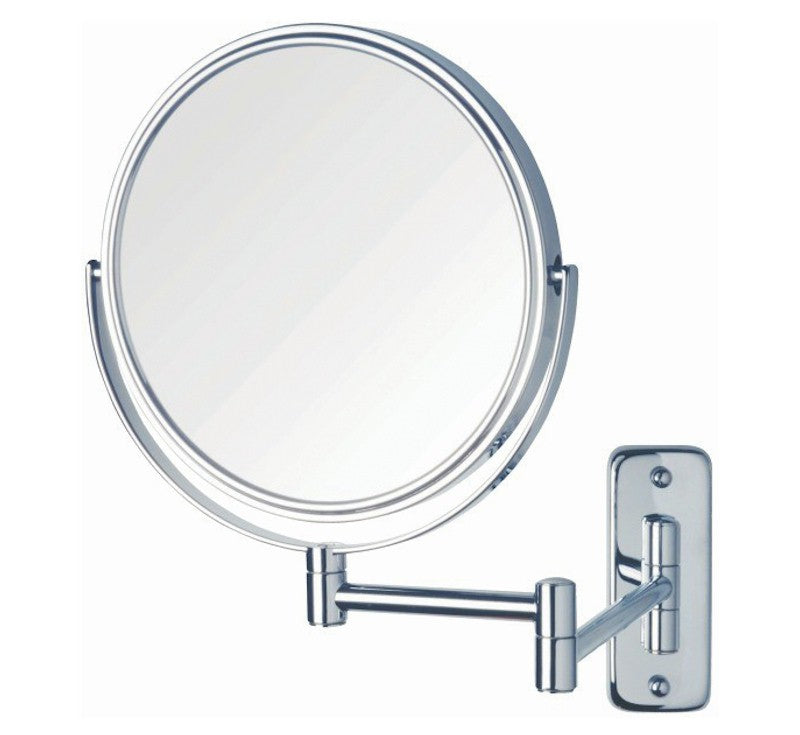


The number on a magnifying mirror is a trade-off: every step up shows more detail and less of your face, and it asks you to sit closer. The practical call for most people is 5x for everyday work with a 1x flip side for the whole face, moving to 7x or 8x for brows and fine detail only if your eyes need it. Every mirror in this collection is wall mounted on an extending arm, with levels from 3x to 10x, lit and unlit. The sections below cover what each level does, distance and field of view, why 15x is about the useful limit, eyesight, light, power and mounting.
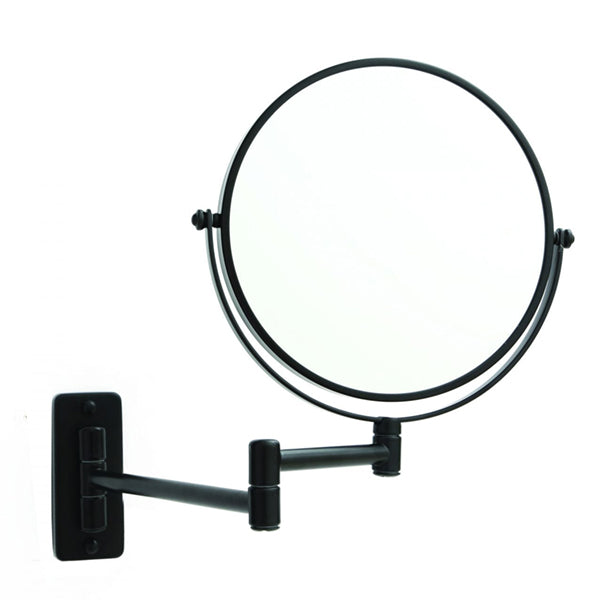
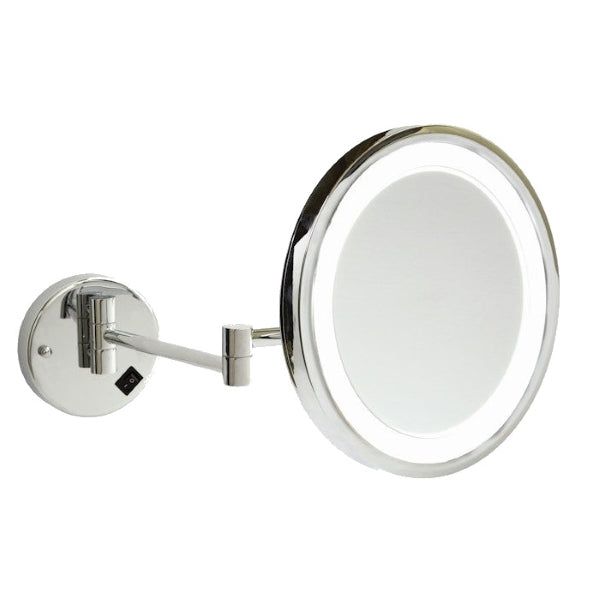
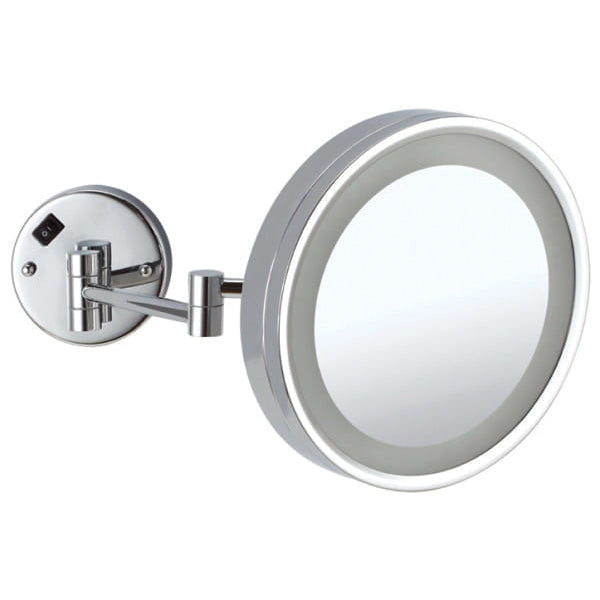
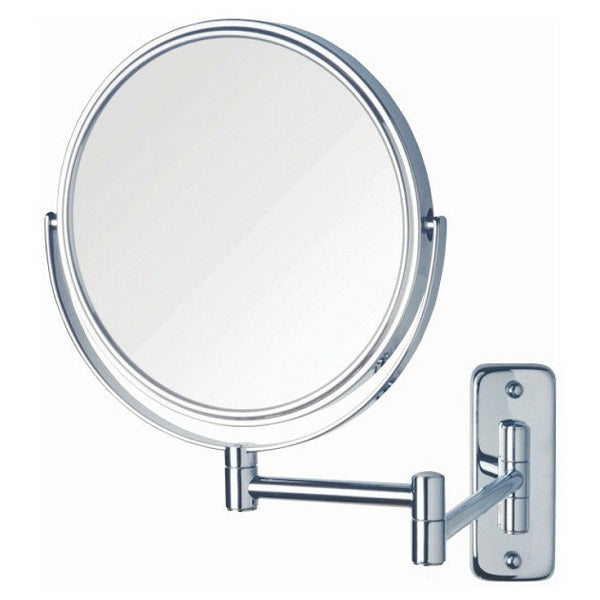
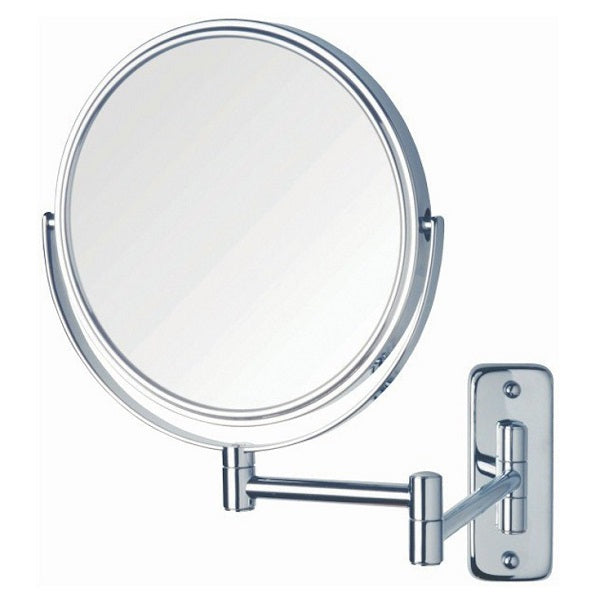
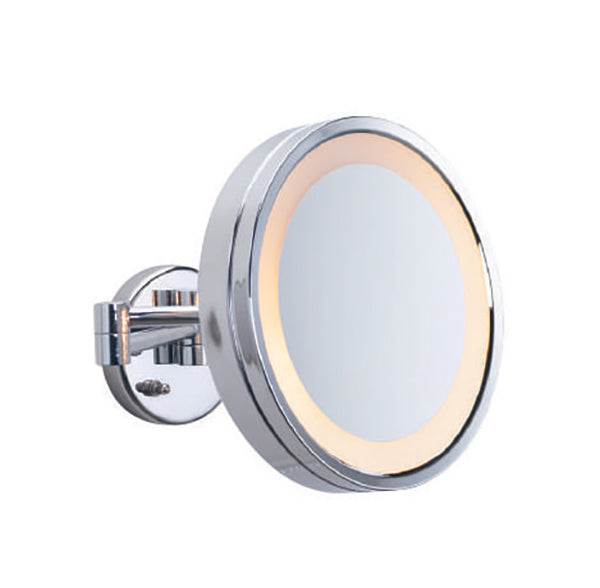
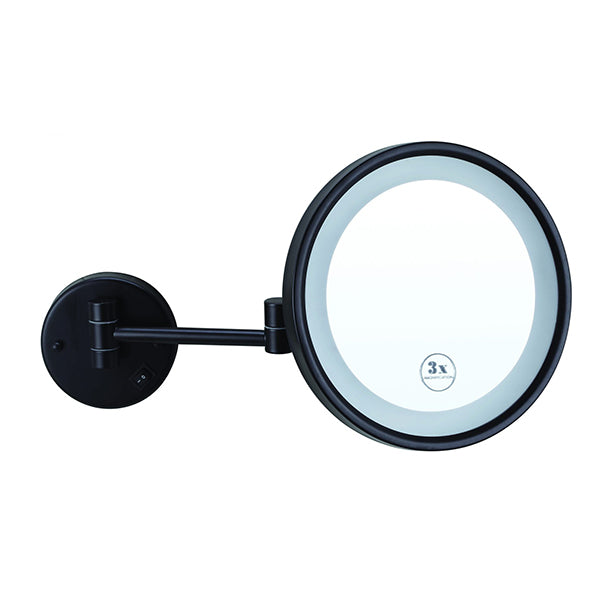
These are wall mounted magnifying mirrors on a swivel arm that pulls forward and folds flat. The range includes 3x single sided mirrors, double sided mirrors with a 1x side and a 5x, 8x or 10x side, and lit versions at 3x, 5x and 8x. Round mirrors are 200mm or 250mm across, one square mirror is 200mm by 200mm, and one hardwired model is 450mm by 340mm. For close shaving work at the basin, see shaving mirrors, which shows the same arm mirrors from the shaving side. For a lit full-size wall mirror with no magnification, see makeup mirrors.
The levels follow a clear pattern. 2x is a minimal increase, 3x is one of the most common levels and suits any eyesight, and 5x is the second most popular, used for makeup and putting in contact lenses. 8x and above is a very close view for small details. 1x is the everyday standard for the whole face, 5x is the most versatile choice and the sweet spot for most makeup, and 10x is the precision favourite for tweezing, eyeliner, mascara and contact lenses. 15x gives extra detail and 20x is the maximum.
5x keeps a wide view and does not make normal skin look dramatic. 7x is clearly stronger than 5x without the cramped view of 10x or 15x, and suits brows, lash roots, contact lenses, beard edges and lip lines. 10x shows one small area at a time and is best as a second mirror, not the main view. Taken together, they give this choice. For general application and a whole-face view: 1x and 3x. For everyday detail: 5x. For brows, lashes and edges: 7x or 8x. For tweezing and one small area at a time: 10x.
Distance is the cost of magnification. Viewing distance is arm's length at 1x, 4 to 8 inches at 5x, 2 to 4 inches at 10x, 1 to 3 inches at 15x and 1 to 2 inches at 20x. Those inches are about 10 to 20cm at 5x and 5 to 10cm at 10x. Other working figures give 20 to 25cm at 5x and 10 to 15cm at 10x, so the sets of figures overlap and the working range at 5x is about 10 to 25cm. At 10x, you are close enough to the glass that the arm needs to reach right up to your face.
Field of view shrinks as the number goes up. 10x and above are not meant for viewing the whole face, and 5x shows a larger portion of the face than the higher levels. You see roughly a third of your face at 5x. At 15x the view is like looking through a keyhole, and every pore looks like a problem, which encourages over-correction. The practical advice is the same at every level: keep a 1x view nearby and step back to it often, and limit high magnification to about two minutes before you step back.
Different jobs call for different levels. For tweezing, 10x suits fine work and 7x suits brows and stray hairs, so 8x is a sensible middle choice among the flip sides here. For contact lenses, 5x to 10x works, with 7x a common pick. For eyeliner and mascara, the range runs from 3x to 10x. For foundation, concealer and skincare, 5x is the figure. For shaving the whole face, 2x suits shaving and quick touch-ups.
If a magnifying mirror looks blurry or stretched, the usual cause is distance, not a defect. A blurry, stretched or distorted image is usually caused by standing too far from the mirror, and moving closer usually fixes it. The reason is that the magnification comes from the concave shape of the mirror, which concentrates light, so a higher level means getting closer, and the image may distort or appear upside down until you are close enough. That is also why a single high-power mirror is awkward as the only mirror in a bathroom, and why the double sided arrangement in this collection helps.
Size and magnification are linked. Magnification and lens size are inversely related, so a larger mirror generally gives a lower level. That matches the range here: the 250mm mirrors come at 3x and 5x, and the 200mm mirrors carry the 5x, 8x and 10x flip sides. The glass should be big enough to see both eyes at once, which at 5x or more is a real limit on how small a mirror can be. The collection offers 200mm and 250mm round mirrors, a 200 by 200mm square and a 450 by 340mm mirror, so check the size on the product page against how much of your face you need to see at once.
Many of the mirrors here are double sided, with a standard 1x reflection on one side and a magnified view on the other, and the glass flips through 360 degrees. That answers the main objection to magnification, which is that it is a poor view of the whole face. Use 1x for balance and symmetry and the magnified side for edges. The pairing makes sense because high magnification can make tiny details seem more important than they are. In this collection the flip sides are 5x, 8x and 10x, and the 3x mirrors are single sided.
The trade-off is simple. A lit magnifying mirror has light around the outside of the magnified surface, which shines onto your face and shows you in the actual light colour, warm and yellow or cool and blue. Lit mirrors help if eyesight is poor, but they need a power supply, and if power is not available an unlit mirror is the alternative. Light should be even, front-facing and at face level, because glare from a bare bulb is as unhelpful as dimness and a bright window behind you makes the face look darker. Daylight suits checking makeup colour and warm light suits evenings.
The lit mirrors here carry a 3W LED, most in cool white at 6000 to 6400K, with one 3x model in warm light. A 3x mirror with light suits quick checks and shaving, a lit 5x mirror suits makeup and everyday detail, and a lit 8x suits fine work for those who need it. The unlit double sided mirrors, at 5x, 8x and 10x, cost nothing to run and can be replaced with a lit one later, and that swap can be done at any time.
Wall mounting needs drilling. The lit mirrors are designed to be hardwired at 240V with the wiring concealed behind the mounting plate. Two lit models offer a version with a 1.6m lead and plug for retro-fitting, and the unlit mirrors need no power. Bathroom lighting is licensed work in Australia and an electrician confirms the wet-zone boundaries on site, and the lit mirrors carry an IP44 rating, the common bathroom benchmark. For the full guide to power in a bathroom, see mirrors.
Match the mirror to the job. For a quick shave or a touch-up at the basin, a 3x mirror with a 250mm face is easiest to live with, because you see enough of your face at a comfortable distance. For brows, liner and contact lenses, a 200mm double sided mirror with a 5x, 8x or 10x flip side gives the closer view, and the 1x side checks the result. If one bathroom is shared, put the arm on the side the main user stands.
Check the arm and the swivel after cleaning. Move the arm through its full reach and tilt the head, then wipe any water from the joint and the base of the arm. A joint that is left damp collects film, and a stiff swivel is easier to deal with early. If the arm drifts out of position, tighten it at the joint rather than leaning on the mirror, so the head stays where you set it for the next use.
The mirrors come in chrome, brushed nickel, brushed brass and matt black, and the brushed nickel is the one to pick to match brushed nickel tapware. For tapware to match, see brushed nickel tapware, black taps, brushed brass taps and chrome taps.
Clean the glass with a soft microfibre or lint-free cloth rinsed in warm water and wrung out, and avoid glass cleaner, window cleaner and chemical agents because they can damage the silver coating. Dirty glass or film scatters light and should be cleaned often, which matters at close range where marks look larger. Wipe the surface rather than spraying it, and dry the glass after use.
The short version:
The final check is the same for every mirror: level against the task, reach against your working distance, light against the room and power against your wiring. For other mirrors in the range, see Thermogroup mirrors and wall mirrors.


