
*View accurate shipping rates and availability






13 Items



Up to 70% off storewide, free metro shipping over $500, and free gifts from $800. Spend more to unlock luxury towels and mirrors.*


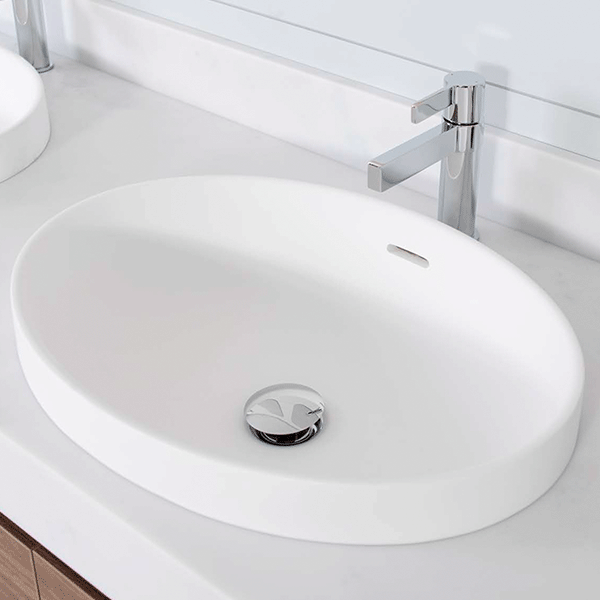
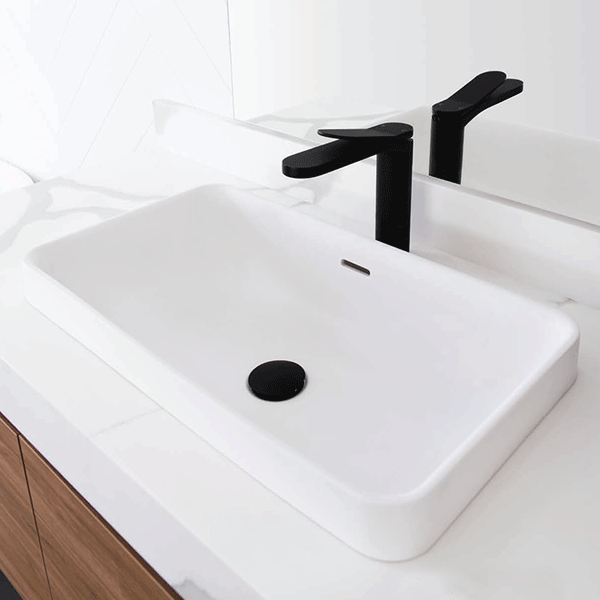
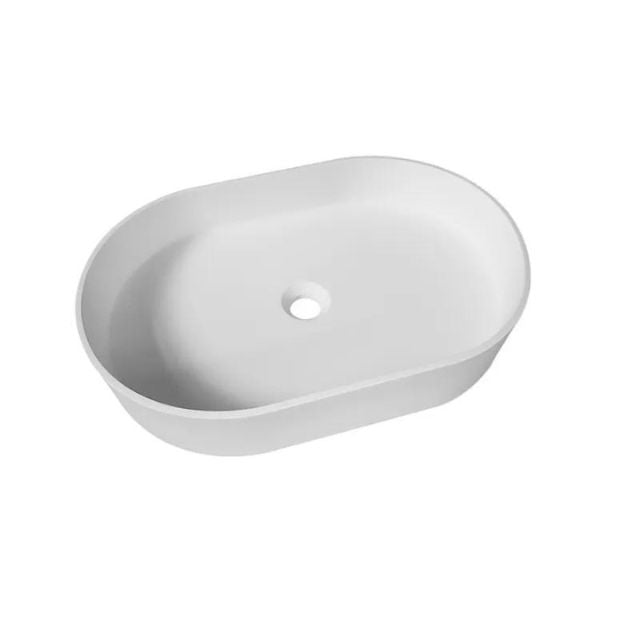
A solid surface basin is made from an acrylic based composite, and it gives a smooth, matte or gloss white bowl with a soft feel. This page holds ADP solid surface basins in under counter, semi-inset and wall hung forms, and the Otti Noosa above counter basin. The guide below covers what the material is, how to care for it, the mounting types and sizes, and the tap hole, overflow and waste lines to read.
The ADP basins are made from a durable mix of 100% acrylic resins. The material is non-porous, has better stain resistance than natural stone, and does not need sealing or treating. It can scratch more easily than quartz stone, which is why the care advice below matters. It is not cold to the touch the way natural stone is. The Otti Noosa is solid surface with a soft, tactile feel. See stone basins and ceramic basins to compare materials, and concrete basins for a sealed, varied surface.
Clean solid surface with warm soapy water and a soft cloth, and avoid metal scourers, abrasive products and harsh cleaners. The maximum water temperature is 65 degrees Celsius. A scratched surface is easy to repair, but the method depends on the manufacturer's finishing system, so check the care sheet before sanding anything. Ask us for the care sheet for the model, and keep strong chemicals away from the surface.
Most ADP solid surface basins here come in gloss or matte white, so the finish is a choice of look and not of shape. The ADP Zeya, Hope, Glory, Sincerity and Respect all come both ways. The Otti Noosa is matte white. See matte white and white basins.
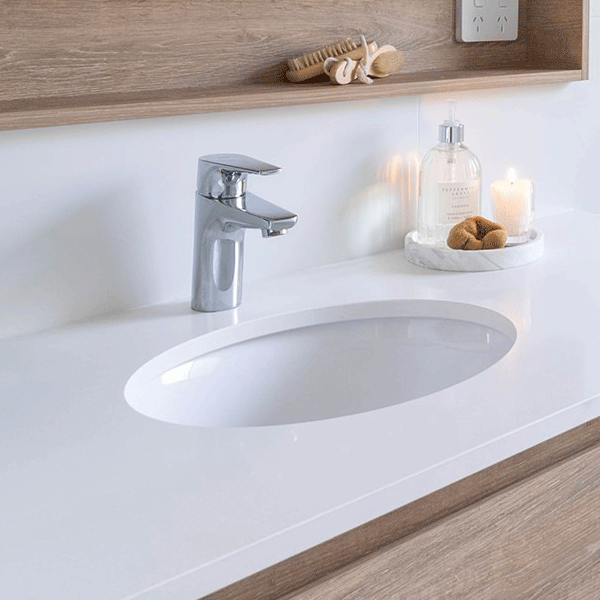
The ADP Hope is a 495mm by 255mm rectangle holding 4 litres, with a short projection that suits ensuite vanities. The ADP Sincerity is a 495mm by 365mm oval of 5 litres, and the Glory is 550mm by 360mm and 119mm high, holding 8 litres. Each has an under bench design that allows the bench to be wiped down easily. An under counter basin suits a stone, engineered stone or solid timber benchtop and not laminate. See undermount basins.
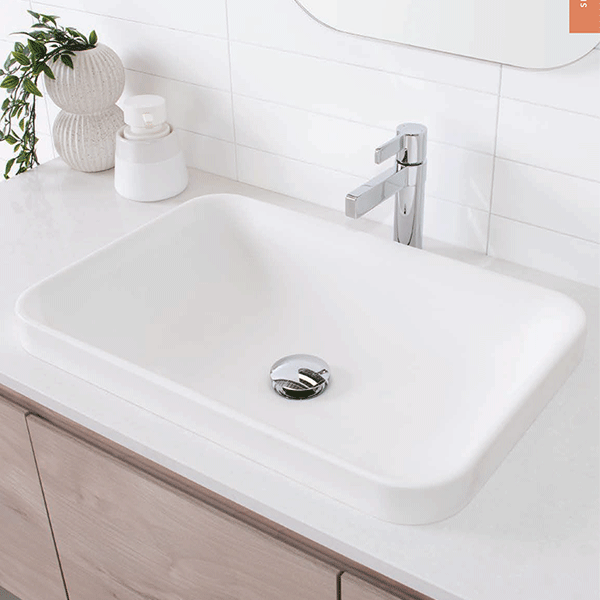
A semi-inset basin sits partly into the bench. The ADP Respect is a 395mm round of 6 litres that sits 45mm above the bench, and the Faith is a 495mm by 255mm rectangle of 4 litres that also sits 45mm above it. The ADP Zeya is 580mm long, holds 10 litres and sits 50mm above the bench. The ADP Pride is a 545mm by 365mm rectangle and the Ozera a 495mm by 385mm oval. See semi-recessed basins and inset basins.
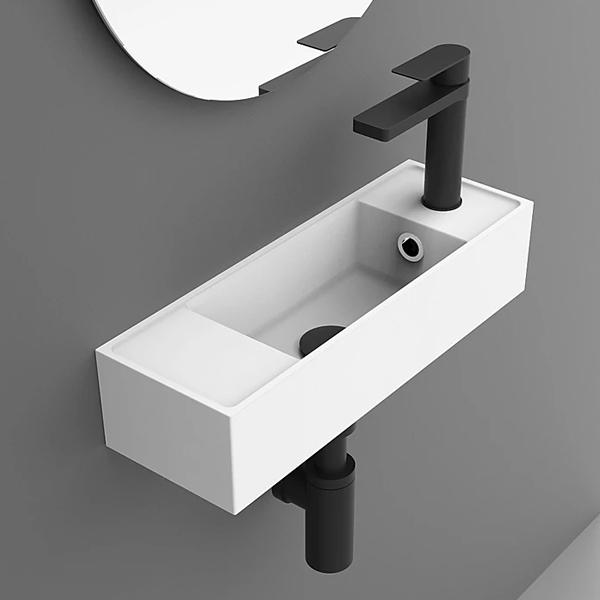
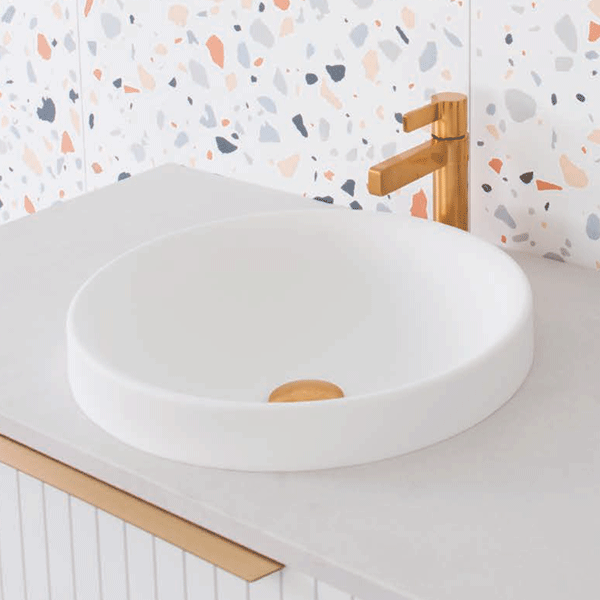
The ADP Eon is a 450mm wide wall hung basin that projects 150mm and is 100mm high, and the ADP Halo is 450mm wide, projects 160mm and is 100mm high. Choose plumbing fittings and bottle traps with care for the Halo because of its narrow depth, and note that wall fixings are not included with the Eon. Wall hung basins need fixing to a support beam behind the wall sheeting. See wall hung basins and small hand basins. The Otti Noosa is an above counter oval of 585mm by 385mm and 110mm high. An above counter basin pairs best with wall taps or extended mixers because of its height. See above counter basins.
Most solid surface basins here have no tap hole, so the mixer sits on the bench or on the wall. The Eon has a right hand tap hole only, and the Halo comes with a left or right hand tap hole. The Noosa takes a 12 o'clock tap hole or none, and is not recommended with a 10 or 2 o'clock tap hole. Choose the tapware before the bench is drilled. See basin mixers.
Check the overflow of each basin. The ADP Eon (with a chrome overflow supplied and a 32mm waste with overflow), Ozera and Zeya include an overflow, the ADP Glory is non-overflow only, and the Pride and the Otti Noosa have none. ADP and Otti basins are sold with the plug and waste separate, so match it to the basin or the tapware. The Noosa needs a 32mm waste. A basin's waste is tightened by hand only, with a foam washer sealed with neutral cure silicone, and water connections need a licensed plumber. See basin wastes.
Solid surface goes by several names, including stone resin and matte stone, and they mean the same thing: a non-porous composite of mineral powder bound with acrylic or polyester resin, with the colour running through the full thickness. Ceramic is different, being fired clay under a hard glaze. On scratches, ceramic wins: the glaze is harder, and solid surface is softer and can be scuffed, though the marks are less noticeable because the colour runs through. On impact, solid surface wins: ceramic is hard but brittle and a heavy drop can chip or crack it, while resin flexes more and cracks less readily, though severe impact can still crack it.
On repair, solid surface is the easier material. Light sanding and polishing can remove scuffs, whereas ceramic chips are essentially permanent and a ceramic crack usually means replacement. Cracks in resin are hard to repair invisibly, though. On cleaning, matte resin hides water spots and limescale well and needs gentle cleaners, with no abrasives or scouring pads, while a glossy ceramic shows limescale more clearly and tolerates harsher cleaners. Resin feels warmer to the touch because it does not conduct heat away from the hands as quickly.
Heat tolerance is the weak point of solid surface. It is less heat-tolerant than ceramic, so hot styling tools should be kept off it, and a hot pan can scorch it. The maximum water temperature for the ADP basins is 65 degrees Celsius, which is far below boiling and is the figure that matters for a basin. Do not rest a hot appliance on the rim, and do not run water hotter than that limit.
Ceramic's glaze is chemically inert and resists most bathroom products. For solid surface, the safe course is warm soapy water, a soft cloth, no metal scourers, no abrasive products and no harsh cleaners, and a check of the care sheet before using a stronger product. Keep bleach and strong acids away from the surface, since they can damage the resin.
The ADP Hope lists 4 litres at 495mm by 255mm with an inner bowl depth of 100mm, the Faith 4 litres at the same footprint, and the Sincerity 5 litres at 495mm by 365mm. The Respect, a 400mm round semi-inset basin, lists 6 litres. The Glory lists 8 litres and the Zeya 10 litres at 580mm by 345mm. The Halo, a wall hung basin, lists 1 litre. The Hope and Glory are under counter basins with non-overflow bowls, and the Eon, Ozera and Zeya include an overflow. The semi-inset basins sit 45mm to 50mm above the bench: the Respect and Faith 45mm and the Zeya 50mm. Add that to the bench height when checking the rim.
Some titles and descriptions differ slightly in size, so measure the real basin against the template before cutting. The ADP Glory is 545mm by 355mm in one place and 550mm by 360mm in another, a 5mm difference within the manufacturing tolerance. See undermount basins and semi-recessed basins.
The honest answer is that it depends on what you value. If durability against scratches is the top priority, ceramic is the safe choice. If you want a continuous surface that can be repaired and a lighter basin, solid surface is the stronger option. Natural stone is heavy, typically needs sealing against stains, and needs reinforced vanity support, and enamelled steel is light and very impact resistant but offers few designs and generally takes wall-mounted taps. With care, resin and ceramic both last fifteen to twenty years or more.
The Otti Noosa shows the other side of the range. It is a 585mm by 385mm above counter oval, 110mm high, in matte white solid surface with a soft, tactile feel, with no overflow. It takes a 12 o'clock tap hole or none, is not recommended with a 10 or 2 o'clock tap hole, and needs a 32mm waste. It is an above counter basin, so the mixer is a tall bench mixer or a wall mixer, with the spout clearing the rim by about 100mm to 150mm. For reference, two tall mixers on the store list a spout height of 216mm with a reach of 170mm, and 244mm with a reach of 180mm. See basin mixers.
The mounting type decides the bench and the cut-out. An under counter basin suits a stone, engineered stone or solid timber top and not laminate, and the join between basin and bench is visible from underneath, so it needs neat sealing. A semi-inset basin sits partly into the bench and projects above it, which lets a shallower cabinet carry a full-size bowl. A wall hung basin keeps the floor open and needs the wall prepared. An above counter basin sits on the bench with the rim high, so the vanity height matters. Floor-mounted vanities run at 850mm to 900mm and wall-hung vanities at 800mm to 900mm, with a depth of 460mm to 550mm. Accessible guidance puts the rim at 800mm to 830mm. See wall hung basins and above counter basins.
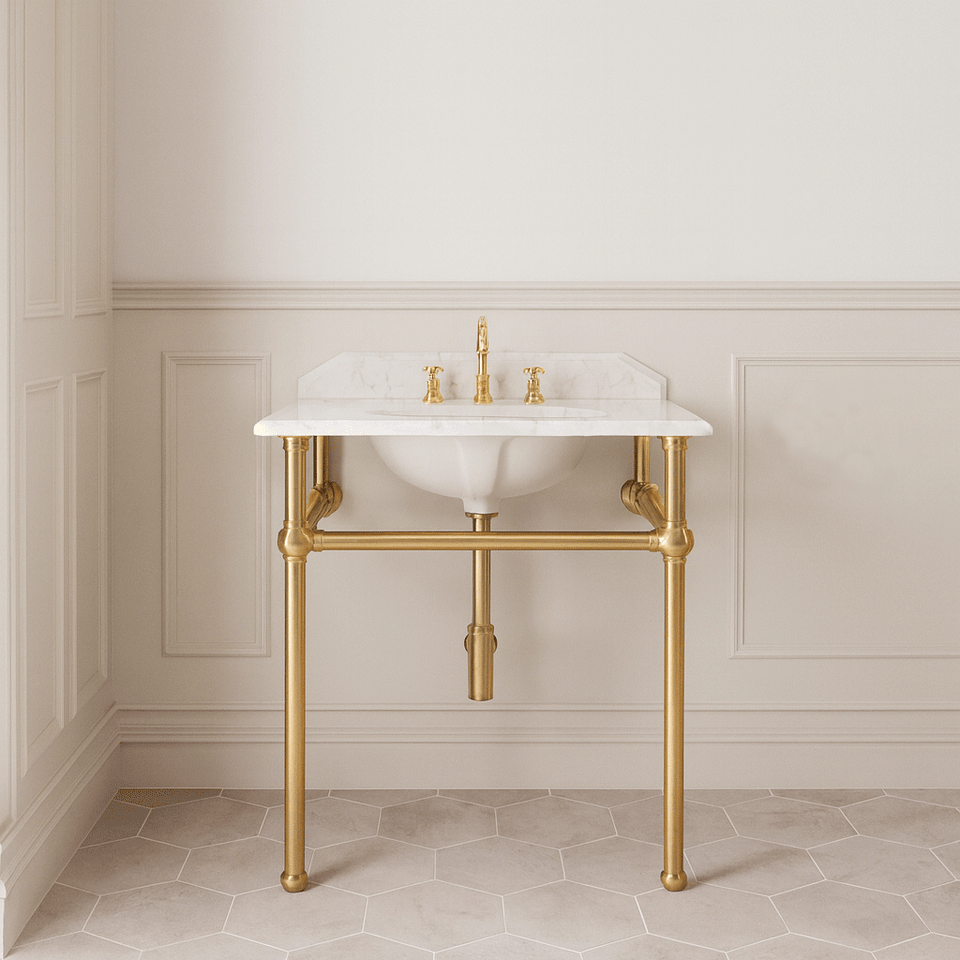
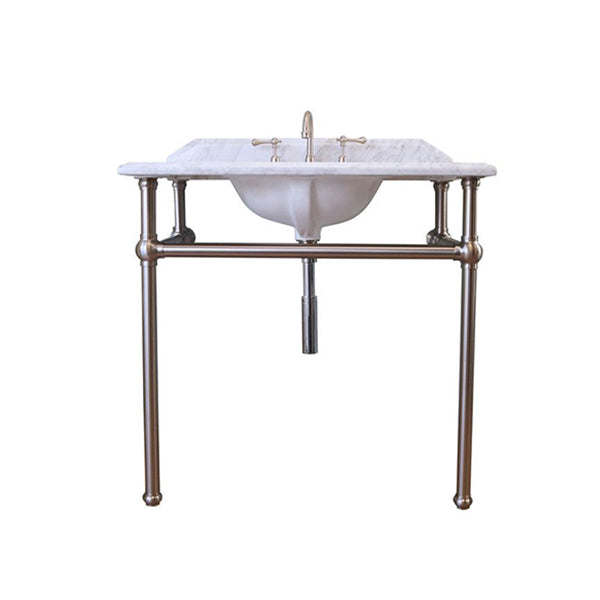
The two Turner Hastings Mayer washstands here have a ceramic basin under a Carrara marble top, so they are not solid surface. See Turner Hastings basins.
See ADP and Otti basins for each maker's full range, and bathroom vanities for the cabinets to pair with.
The bathroom basins page sets solid surface beside every other material and shape.


