
*View accurate shipping rates and availability






25 Items


Up to 70% off across the store, plus free towels and mirrors up for grabs on orders over $800*


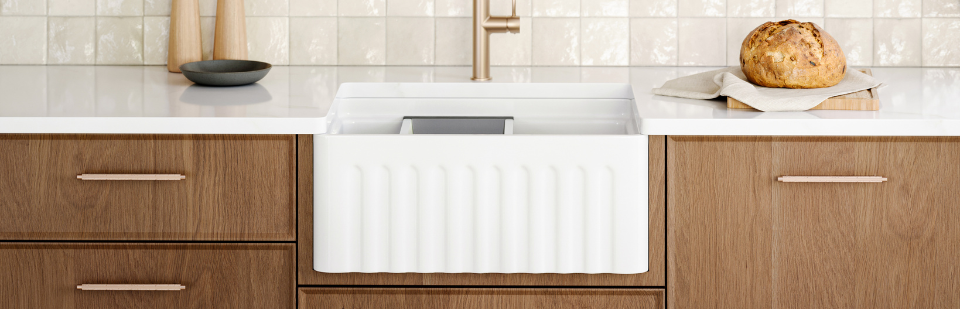


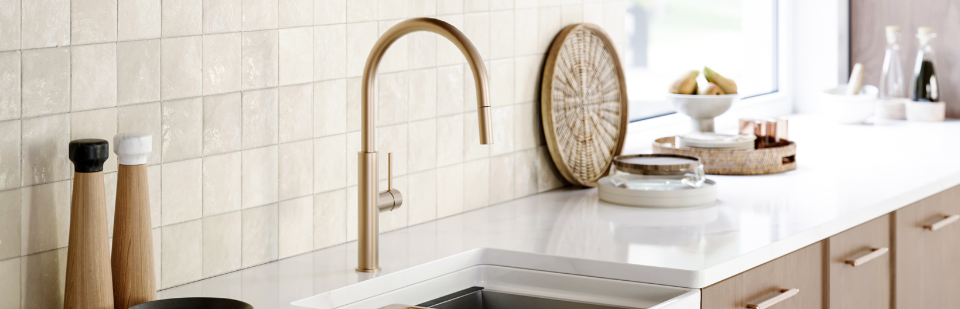


A kitchen sink waste is a basket waste: a deep, cup-shaped strainer that sits in the drain hole of the sink, catches food scraps and doubles as the plug. Push the strainer down to seal the sink and pull it up to let the water go. This page holds basket wastes in stainless steel, brass and plastic, in finishes that match sinks and mixers, for standard sinks, thick ceramic and butler sinks, sinks with an overflow and outdoor sinks. Four questions settle the order: the size, the thickness of the sink and the thread, whether the sink has an overflow, and the material and finish. For every other waste and trap, start at wastes, traps and grates.
Neither number applies. The 32mm and 40mm sizes belong to basins and baths, and a kitchen sink uses a larger waste. 90mm is the standard Australian kitchen waste diameter, and the wastes on this page follow it with 90 x 50mm basket wastes, a 50mm outlet and a G2 inch thread. The 90mm figure describes the hole in the sink, and the 50mm describes the outlet below it. The Fienza Hana basket waste has an outlet of 118 x 89mm with a 50mm outlet diameter and a G2 thread, and the Phoenix 50mm covered basket waste has a 50mm waste connection.
The standard drain opening is 3 1/2 inches, which is about 90mm, and some older or custom sinks have strainers slightly larger or smaller. That is the reason to measure before buying. Basin and bath wastes are at basin wastes.
Measure the diameter of the drain mesh or the underside of the existing plug before buying, because sizes vary and a plug that is too large or too small will not fit. Three measurements matter: the outer diameter of the drain flange, the outer diameter of the drain tubing, and the maximum thickness of the counter or sink where the waste passes through. Bring the old part to the shop or note its brand and thread length, because a mismatched thread will not seat flush.
If the sink came with its waste, measure the old waste before buying a replacement and keep its size handy for the order.
Thread length depends on the thickness of the sink where the waste passes through. Fireclay and ceramic butler sinks have thicker bases and need a longer thread, up to 70mm in some cases, while standard stainless steel or granite sinks use a shorter thread. The Turner Hastings 90 x 50mm basket wastes are built for this. They have an extra long thread for ceramic and concrete sinks, an extended 70mm thread for thick ceramic sinks, no minimum thickness, and suit stainless steel or granite sinks as well. The English bronze version suits sinks between 0 and 70mm thick. The Fienza Hana basket waste has an extended bolt, which allows easy installation. Butler sinks in fireclay and ceramic are the usual reason a standard thread falls short.
When in doubt, measure the thickness of the sink at the hole and compare it with the range for the waste. A mismatched thread will not seat flush, and the extended thread is what a thick sink needs.
Some kitchen sinks have an overflow slot and some do not. A sink with an overflow slot needs a compatible basket, a sink without one can use either type, and a plain waste without an overflow is simpler. Mismatches can block drainage or fail to seal, so check for an overflow slot before ordering.
Both cases are covered. The Seima kitchen sink basket waste is for sinks that do not include an overflow, and the Seima basket waste and overflow cover is for sinks that include a rectangular overflow, supplied with a matching overflow plate. Both come in white and black. The Phoenix 50mm covered sink basket waste and overflow adds a built-in overflow and a drain hose to the covered waste, for the 5000 Series sinks. Check the sink's own specification for the overflow before choosing a waste with an overflow plate.
A flat or grid strainer is a mesh disc that sits over the drain. It does not seal, and it only catches debris, so it is not a replacement for the sink's waste fitting. A stopper-only waste with a separate basket is a less common arrangement that lets you fill the sink without the strainer's seal. A basket waste does both jobs, which is why the Caroma and Meir strainers double as the plug, and the Clark, Otti and Turner Hastings wastes need no extra plug.
The materials on this page differ. The Turner Hastings wastes combine a stainless steel top with an ABS plastic base, in PVD finishes with a gloss lacquer to prevent scratches. The Caroma Urbane II basket waste and the Fienza Hana waste are 304 stainless steel. The Phoenix covered wastes are brass with a PVD finish. The Seima wastes are very high quality plastic made for sinks of all shapes and sizes. 304 is enough for freshwater and architectural use with minimal chloride exposure, and 316 suits seawater and chloride-heavy conditions.
The Clark 316 stainless steel basket waste is the marine-grade choice. It is more durable for outdoor conditions and suited to outdoor kitchens and alfresco sinks, in a 90/50mm size, with a pull-out strainer that doubles as a plug. Finishes on the other wastes are PVD, a vacuum process that bonds colour to the metal at a molecular level and is much harder than traditional plating. Check the finish process on the waste you choose.
Several wastes are made to match one sink series. The Fienza Hana basket waste suits all Hana sinks and the Charlton and Winston butler sinks, with a 50mm outlet. The Otti sink basket waste is designed to match the Otti sinks, including the Otti butler sink, the Axon sink and the granite sink. The Phoenix covered sink basket waste suits the 2000, 4000 and 5000 Series sinks, and the Phoenix overflow version suits the 5000 Series. The Meir sink strainer and waste plug basket is a brushed bronze gold PVD waste matched to the Meir kitchen sink collection. The Turner Hastings brushed brass waste is designed to match the Novi butler sinks and pairs with the Frances and Clasico kitchen mixers.
Matching a finish to the mixer is a design decision. A deliberate mix of metals can look chosen, and finish names differ between makers, so pair by the finish itself and not by the colour name. Sinks are at kitchen sinks, with butler styles at butler and apron sinks, and mixers are at kitchen taps.
The dimensions tell you whether the waste will sit right in the sink. The Fienza Hana basket waste has outlet dimensions of 118 x 89mm, a 50mm outlet diameter and a G2 thread. The Caroma Urbane II basket waste is 119.5mm long, 56mm wide and 60mm deep, in 304 stainless steel. The Turner Hastings 90 x 50mm English Bronze Basket Waste with Long Screw has a surface length of 114mm and an overall height of 66mm, with the extended 70mm thread. The Phoenix covered waste has an overall length of 118mm and a brass body. Compare these figures with the sink's drain recess and the depth of the cabinet below, because a waste that is taller than the space under the sink will not fit a tight cabinet.
The Phoenix covered waste has a removable cover and basket that lift out cleanly for quick maintenance, and the push down to seal, pull up to drain action keeps daily use simple. The Phoenix waste with overflow adds a drain hose, so the overflow connection comes with it. The Seima overflow cover is a matching plate for a rectangular overflow, so the sink and the waste must both have that overflow.
Below the waste sits a trap that holds a small water seal to block sewer gas, and for a kitchen sink the usual choice is a P-trap. Bottle traps are generally unsuitable for kitchen sinks, because the higher flow and grease can cause blockages and a P-trap is the usual choice. Bottle traps for basins are at bottle traps.
Fit the trap after the waste, and check the height of the outlet against the pipe in the wall before you cut anything. A P-trap under a kitchen sink needs room to hang straight, so look at what else is in the cabinet, such as a dishwasher hose or a waste disposal unit, before you commit to a size.
Empty and rinse the basket after washing up with hot water, and once a week scrub around the rim and the seal with dish soap and a brush. If the basket no longer seals fully, check the rubber seal first, because the seal is sometimes the only fault. Clear hair and debris from the strainer, and run hot water with an enzyme cleaner. Regular use of caustic drain cleaners can corrode metal and degrade PVC. Vinegar and abrasive cleaners can damage PVD coatings, so check the finish before using anything acidic.
A smell from a kitchen sink or slow draining that survives a clean points to something deeper than the strainer. The trap below may be blocked, or the seal may be failing. A smell can occur with a fully clear pipe if a seal has failed, and the cause may be siphonage or a venting problem, which is a job for a licensed plumber.
Each brand has its own page for drains: Turner Hastings wastes and traps, Phoenix wastes and traps, Caroma wastes and traps and Meir wastes and traps. Fienza sinks, with their matching basket wastes, are at Fienza kitchen sinks.


