
*View accurate shipping rates and availability






312 Items


Up to 70% off across the store, plus free towels and mirrors up for grabs on orders over $800*


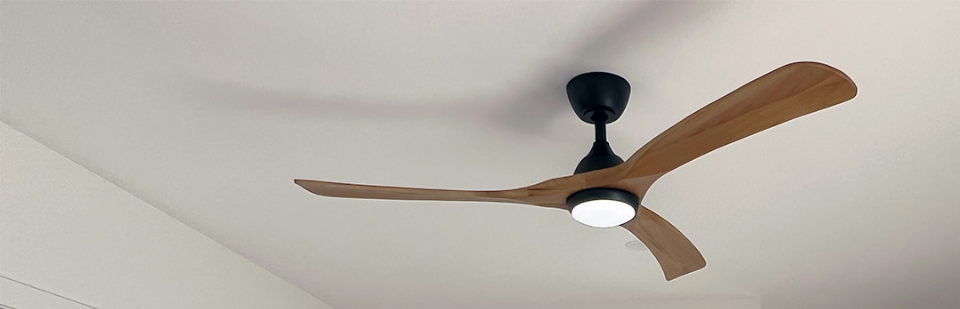


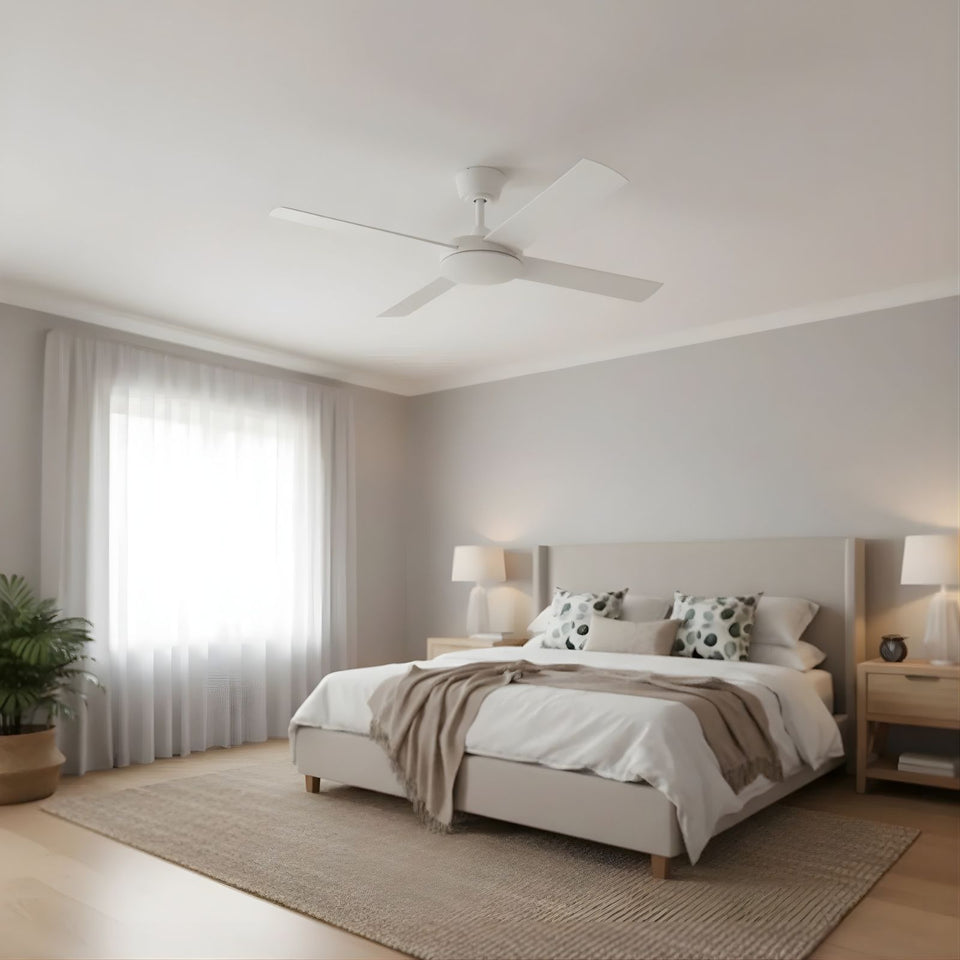
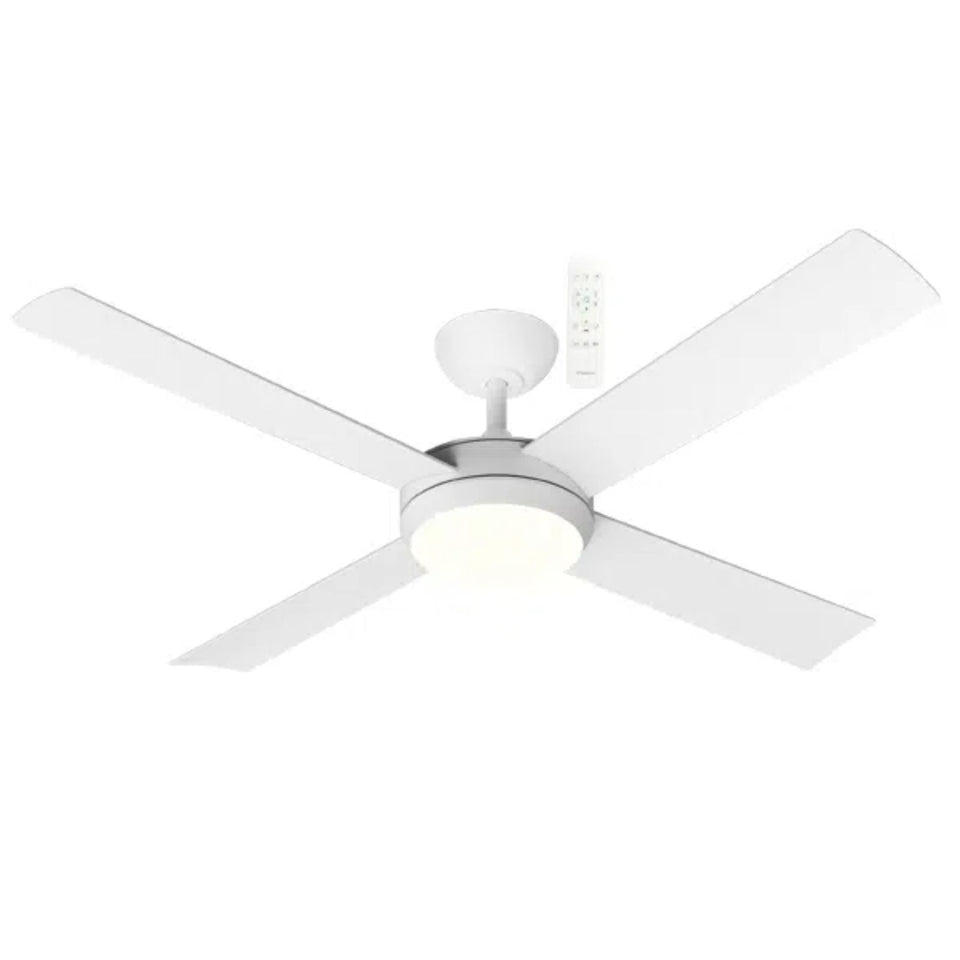


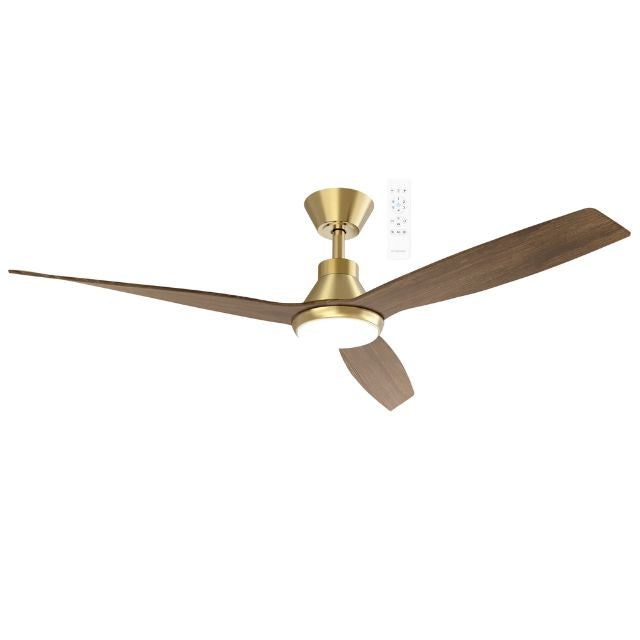


Most new ceiling fans now use a DC motor, and the choice between DC and AC is one of the first a buyer meets. The differences are real, but they are narrower than the marketing suggests, and a few of them are practical points that catch buyers out, such as how the fan is controlled and whether it works with an existing wall switch. This guide explains how the two motors differ, what stays the same, which of our DC ranges include what, and when an AC fan is still the sensible choice.
Household power in Australia is alternating current. An AC fan runs its motor directly from that supply, with the speed set in a few fixed steps. A DC fan has a brushless motor with electronic control, and it converts the household supply to direct current before the motor. The conversion happens inside the motor housing through an internal rectifier, so a DC fan works on a normal household supply. A DC fan uses magnets to create the rotating force. The result is that a DC fan plugs into the same wiring as an AC fan: both connect to the existing 240 volt supply and fixed wiring in the same way, and the installation labour is essentially the same.
For most rooms, yes, on four counts, with a few caveats. The sections below take them in turn, starting with energy and noise and finishing with speeds and controls.
DC fans use less electricity than AC fans on average, because DC motors are more efficient. AC fans typically draw 50 to 100 watts at high speed and DC fans about 25 to 40 watts at equivalent airflow. One example is 30 watts for a DC fan on high and 70 watts for an AC fan. The real draw depends on the model and the speed. Each DC fan states its maximum wattage, and for the fans in this collection it runs from the high teens into the 60s. Most sit between 20 and the low 40s.
The saving from one fan is modest, and it grows with more fans and longer running hours. It matters most where a fan runs for hours, such as overnight in a bedroom. Fans cool people, not rooms, so switch the fan off when you leave.
DC fans are generally quieter than AC fans, particularly at low speed. AC motors can produce a low-frequency hum that is most noticeable at mid speeds, while DC fans are very quiet. DC motors tend to be quieter and offer more speed settings, which can improve bedroom performance. A fair caveat: a premium AC fan can be quieter than a budget DC fan, and the comparison holds at the same level of quality. See quiet operation fans for what else makes a fan quiet.
DC fans typically have five to seven speeds, and AC fans three or four. DC fans offer up to seven speeds and AC motors generally three. More speeds give finer control, and a very gentle lowest setting. Most Eglo and Fanco DC ranges have six speeds, and many Martec ranges have six speeds plus sleep and breeze modes. The Eglo Kurrawa has eight speeds including a night mode and a natural breeze mode.
This is the practical difference that matters most. DC fans come with a remote as standard, and many also offer a wall control or app control. DC fans usually do not work with a standard wall speed controller, and some offer a wall controller, usually sold separately. Old AC speed controllers are usually not compatible with DC fans unless the maker confirms it. AC fans, by contrast, commonly use a wall control, and some offer a remote. So if you are replacing an AC fan and want to keep the wall control, check with an electrician and the maker before choosing a DC fan.
Every DC range includes a remote in the box. The Eglo Miami and two Fanco Horizon versions also come with a wall control in the box. Several ranges offer Wi-Fi and app control: the Martec Albatross II, Avoca, Elite, Hampton and Impact, the Scorpion, Seaforth and Viper, and the Fanco Horizon. Browse smart ceiling fans for the app-controlled range.
On a DC fan, reverse is usually on the remote. On an AC fan it is often a switch on the motor housing, or on a wall control for some models. Reverse mode runs the fan clockwise at low speed so it moves warm air from the ceiling down the walls without a cold draught, which helps in winter. A remote that reverses the fan without a ladder is one of the quiet advantages of DC.
AC fans suit a few situations well. They suit occasional use, such as a spare room. They suit a simple wall control, and replacing an old AC fan while keeping the existing wall control after checking with an electrician. They suit garages and sheds, and workshops. And they suit a buyer who simply wants a basic fan and light without smart features. The AC fans include the Eglo Bondi, with 3 speeds and a wall control, the Fanco Breeze, the Martec Link and Discovery II, and the Martec Precision. See Martec AC fans for that range.
For the ranges by brand see Martec ceiling fans and Fanco ceiling fans.
Many DC fans come with an LED light, switchable between warm, neutral and cool settings on a number of ranges, and dimmable from the remote. Some fans can have a light added later, but many are sold as light or no-light versions only. See ceiling fans with lights and ceiling fans without lights.
Three questions come up more than any others.
Does a DC fan need special wiring? No. DC fans connect to the same standard ceiling wiring as AC fans, the converter is built into the fan or its canopy so nothing extra needs to be run, and installation labour is essentially the same. AC fans are slightly easier to maintain because they have fewer parts inside the motor housing, while the installation process looks very similar from the electrician's side.
Will my existing wall switch work? Possibly not. The practical rule is that a DC fan is controlled by its remote or a compatible electronic wall control, and that an old AC speed controller usually will not work with it. A plain wall switch still turns the power to the fan on and off, but speed and reverse are set on the remote. Ask the electrician to confirm the wiring and control for your home.
Can I add a light or a remote later? Sometimes. Some fans can have a light added later and many are sold as light or no-light versions only. A remote kit can be added to some compatible fans after purchase. The box contents show what is included, and some products have a light or a remote sold separately.
Because a DC fan is controlled electronically, it adapts easily to smart control. Wi-Fi DC fans can connect to Google Home and Amazon Alexa, and apps and voice assistants can replace wall switches or remotes, run timers that change the speed overnight, and control the lights. Most fans also include a remote with basic dimmer and timer settings. Several Martec ranges and the Fanco Horizon work with Wi-Fi, and the Martec Avoca Smart is a 52 inch version built for it. These are the fans in smart ceiling fans.
The motor type does not decide whether a fan suits a damp place. Use IP, damp or wet-rated fans outdoors whatever the motor, and choose a tropically rated fan in humid regions such as North Queensland, with humidity-resistant blades and sealed motors. Several of our DC fans suit covered outdoor use, including the Eglo Miami and Noosa and the Fanco Eco Silent Pro, and the Eglo Kurrawa is IP55 rated. Read the application line on each product page, and see outdoor ceiling fans and coastal rated fans.
The motor does not change how you size a fan. A 52 inch (132cm) fan is the standard size, 48 inch suits smaller rooms and over 54 inch suits larger square rooms of about 5 by 5 metres or more. Blades must hang at least 2.1 metres above the floor, and ceilings of about 2.7 to 3 metres or higher may need an extension rod. Read the maximum canopy pitch and the drop on each specification. For large rooms see large fans.
A DC fan is installed like an AC fan: it is a fixed electrical appliance, and hard-wired fans must be installed by a licensed electrician. Fitting a wall-switch fan without a licence is illegal, and an electrician should confirm the wiring and control for your home. Wipe the blades every few weeks, and have the fan inspected early if it hums, wobbles or runs slowly.
For every style see ceiling fans, and for colour white ceiling fans and black ceiling fans.


