
*View accurate shipping rates and availability






312 Items


Up to 70% off storewide, free metro shipping over $500, and free gifts from $800. Spend more to unlock luxury towels and mirrors.*


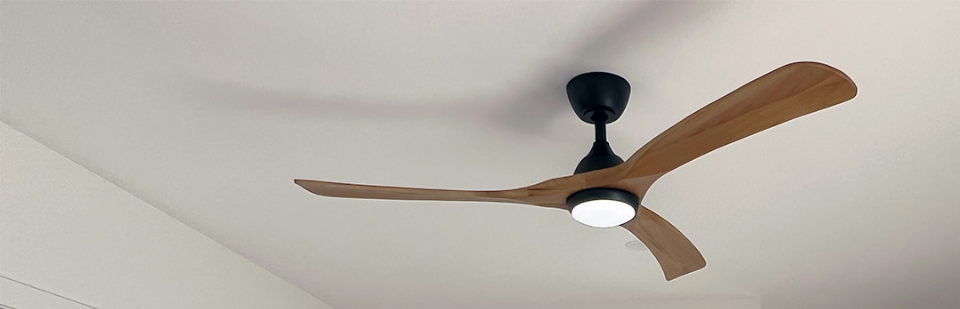


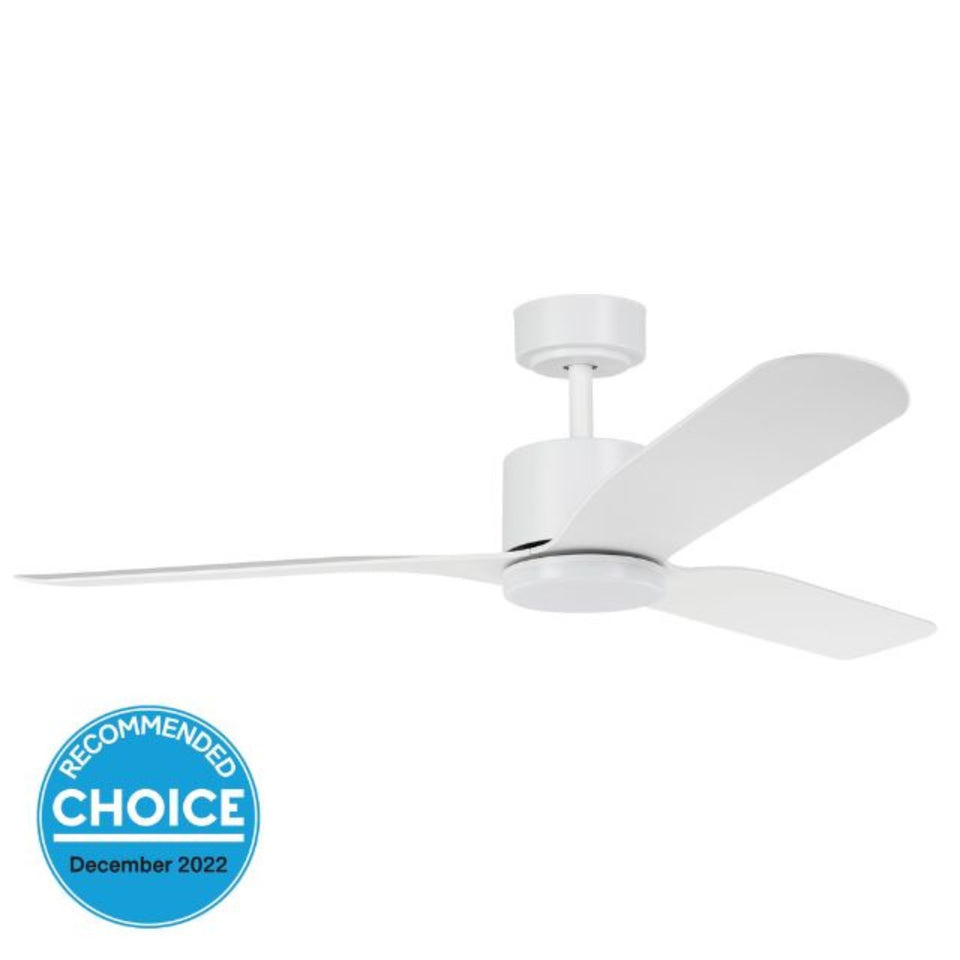

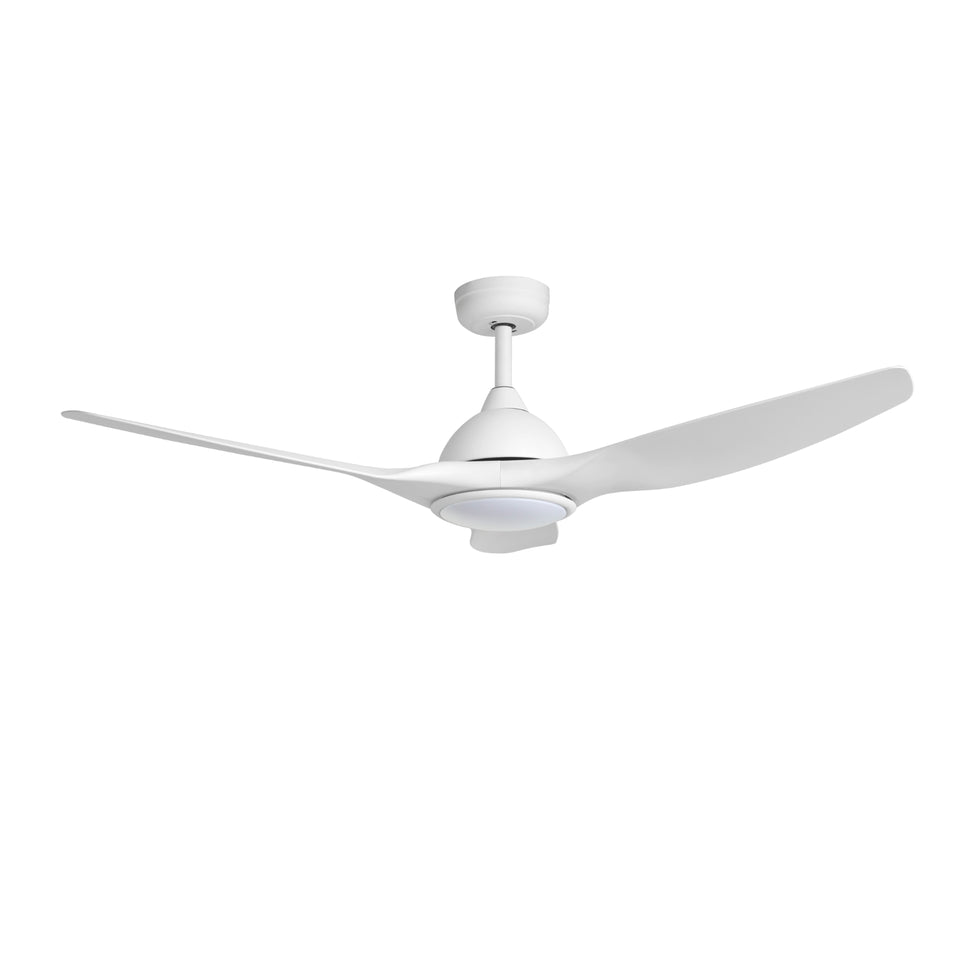
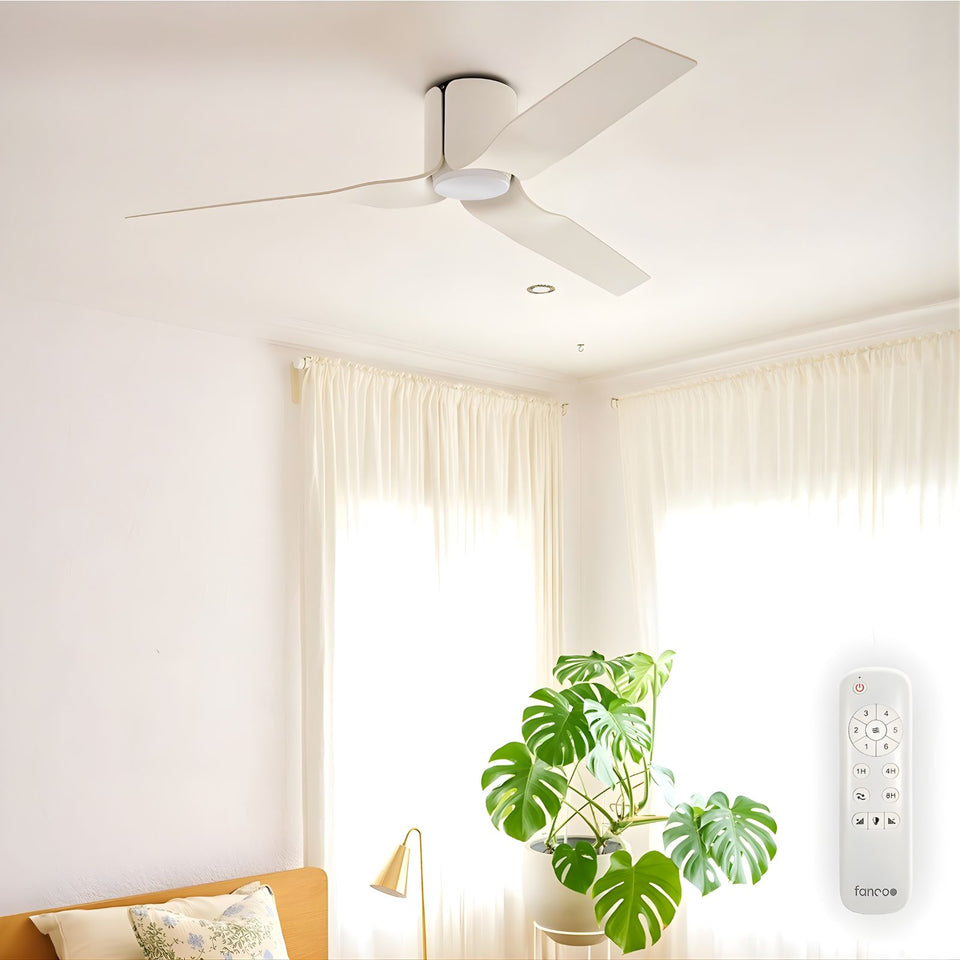


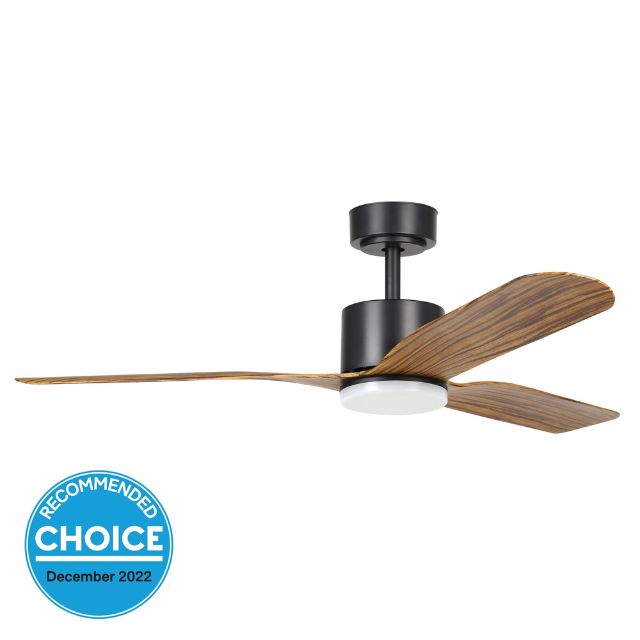


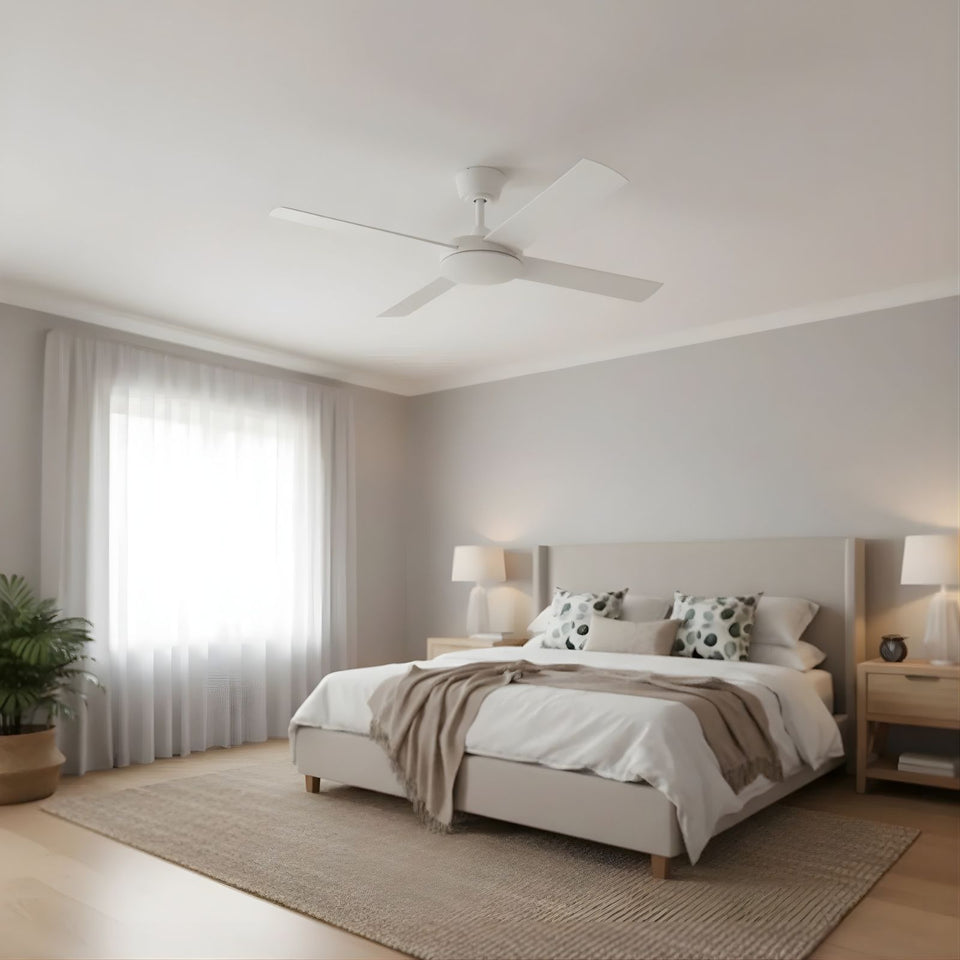
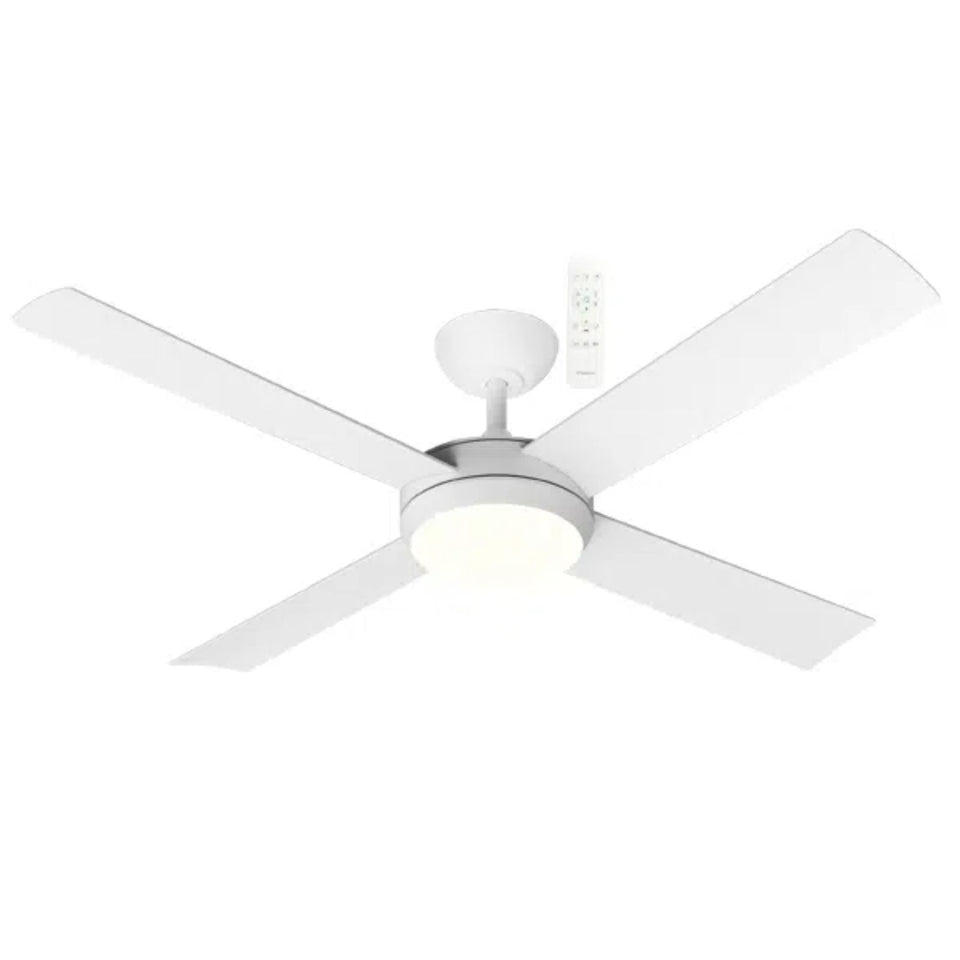


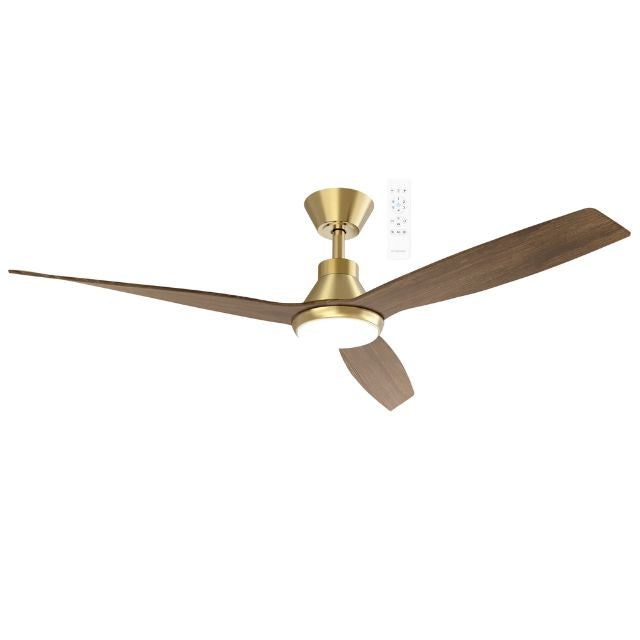




A quiet fan is one you stop noticing. In a bedroom that means a low hum at most. It should not click or wobble, and the sound should not change when the speed does. Quietness depends on several things at once: the motor, the speeds, how well the fan is balanced and mounted, the electricity supply and the controls. This guide takes them one at a time, tells you what the specifications do and do not state, and gives the reference points that matter.
Fans with DC motors tend to be quieter and offer more speed settings, which can improve bedroom performance. DC motors are brushless, with more speeds and a quicker start, and the quiet comes from precise components. Most of the fans in this collection are DC, with six speeds on most Eglo and Fanco ranges, six speeds plus sleep and breeze modes on many Martec ranges, and a few AC fans such as the Eglo Bondi and the Fanco Breeze at three speeds. Some fans offer seven speeds and the extra step gives finer control for sleeping. DC fans work on a household supply because they have an internal rectifier, and a licensed electrician should still fit them.
See DC motor fans for every DC fan in the range.
The number of speeds matters less than how low the lowest one goes. The Fanco Eco Silent Pro shows the figures to look for. On the 52 inch fan, speed 1 turns at 60 revolutions a minute and draws 1.3 watts, speed 3 at 130 revolutions and 7 watts, and speed 6 at 215 revolutions and 40 watts, with airflow rising from about 3,900 to about 13,300 at the top. A fan that moves air at 60 revolutions a minute is turning slowly enough to be near silent, which is why that setting suits sleeping. When you compare fans, look for a published low-speed figure and a sleep or night mode, which many Martec fans in this collection list.
Blade count does not decide how quiet or effective a fan is. Top-scoring fans use two, three or four blades, and airflow depends mainly on blade design and shape and on motor quality. Fewer blades move air faster and more blades are often quieter, though that is a tendency and not a tested result. What does cause noise is imbalance. A fan that wobbles is louder and less efficient, and a balance kit corrects it. Loose parts also make noise. Most ticking, squeaking and rattling comes from installation problems or loose blade nuts and screws, so check and tighten the mounting points, the bracket and the down rod.
The fan should be fixed to a ceiling box rated for it, and tightened. Flush-mounted fans, including DC models, are often quieter than fans on a long rod, which matters in a bedroom. A fan on a rod can still be quiet if it is balanced and mounted well. See low profile fans for close-fitting models and ceiling fans for high ceilings for fans on a rod.
A fan that is the right size for the room can run on a lower, quieter speed. A slightly larger fan on a lower speed can move the same air as a smaller one on high, and can be quieter and more energy efficient. For bedrooms, 52 inch (132cm) is the standard size and 48 inch (122cm) suits smaller rooms, and the Eco Silent range suits 48 inch for compact interiors, 52 inch for bedrooms and 56 inch for living areas. Do not oversize: a fan that is too large feels too strong on its higher speeds and moves too little air on its lowest.
Sometimes the noise is the electricity supply. A humming or buzzing fan may be reacting to ripple control signals, which some networks use to switch off-peak hot water, and that is usually not a fault in the fan. Contact your electricity supplier first. The effect shows as a hum, buzz or LED flicker in AC fans, mainly in NSW, south-east Queensland and New Zealand, and filters of 750 Hz or 1050 Hz must be fitted by a licensed electrician. A conventional dimmer switch can also cause humming in some fans with light mounts, so check with us before using one.
A fan that is quiet is only half the picture: you also want to set it without waking anyone. Apps and voice assistants can replace wall switches or remotes, some fans can run timers that change the speed overnight, and most fans include a remote with basic dimmer and timer settings. A sleep timer turns the fan off after a set period. Many of the fans here have a sleep or breeze mode and a timer, and the dimmable light can be controlled separately from the fan. See smart ceiling fans and ceiling fans with lights.
Light choice matters too. Many of the lit fans here switch between 3000K and 5000K, with 4000K in between. Choose warm white of about 2700K to 3000K for sleeping rooms. Some fans can have a light added later, but many models are sold as light or no-light versions only.
For other brand ranges see Martec ceiling fans and Fanco ceiling fans.
Because a decibel figure is rarely given, learn to read the fields that predict it. The first is the number and range of speeds: a fan with six speeds plus a sleep mode has more low settings to choose from than one with three. The second is airflow in cubic metres an hour at the top speed, which runs from about 9,000 to about 21,000. A larger figure means a more powerful fan, and strong airflow at low speed is what makes a fan good in a bedroom. The third is maximum wattage, which ranges from the high teens to the 60s across the collection; a lower figure at top speed usually means a gentler motor, though it does not decide how loud the fan is.
The fourth field is blade pitch. A pitch of 12 to 15 degrees balances circulation against quiet running and motor strain, since a steeper pitch moves more air but loads the motor harder. The specifications for these fans give blade pitch, and most fall in or near that band.
A fan that runs all night should be set with care. Start at the lowest speed and increase only if needed, because too fast a speed can feel cold or dry the eyes. Run the fan counterclockwise in summer to push air down, and clockwise at low speed in winter, and use a sleep timer. Centre the fan in the room and keep furniture clear of it, and dust the blades because dust build-up can reduce efficiency. Sleeping with a fan on can dry the mouth, nose, throat, eyes and skin, stir dust and pollen, and tighten muscles. Keep the fan from blowing directly on you, clean the blades and use a timer. Those are all easy with a ceiling fan on a low speed with a timer.
The specifications give more than a description, so here is what they say for three of the common ranges.
Compare these figures against the room: a ceiling that slopes more than the maximum pitch is not suited to the fan, and a drop that brings the blades below 2.1 metres from the floor is not allowed.
A ceiling fan is a fixed electrical appliance, and hard-wired fans must be installed by a licensed electrician. It is illegal to fit a fan with a wall switch without a licence. Wipe the blades every few weeks with a microfibre cloth, and check that screws and brackets stay tight, since loose parts are a common cause of ticking. If the fan starts to wobble, hum or run slowly, have it inspected early.
For every style see ceiling fans, and for colour white ceiling fans and black ceiling fans.


