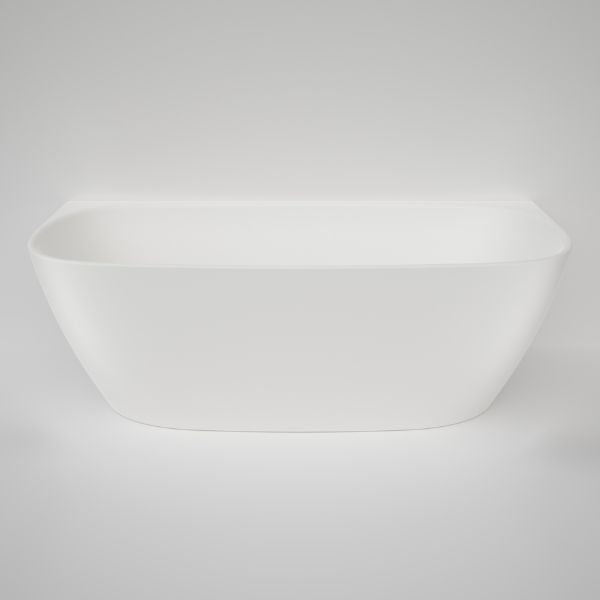
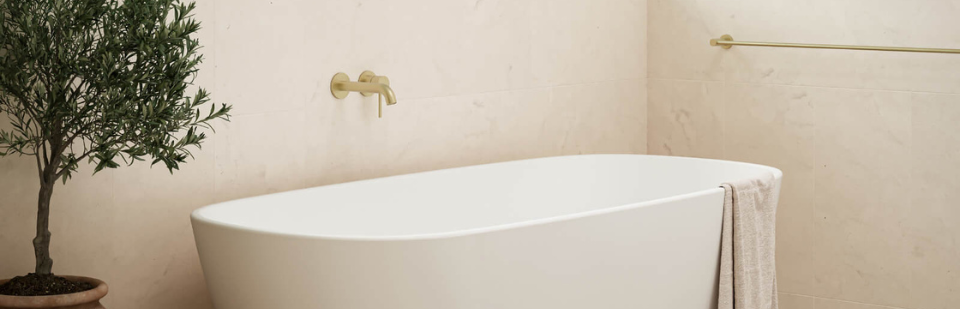
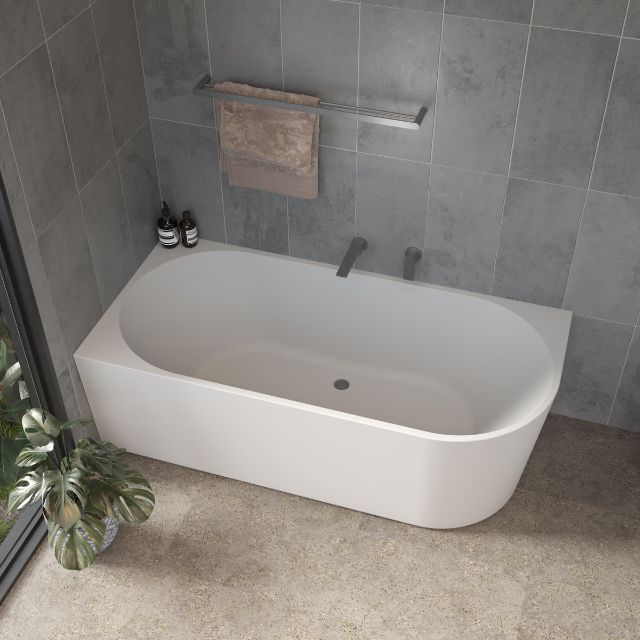
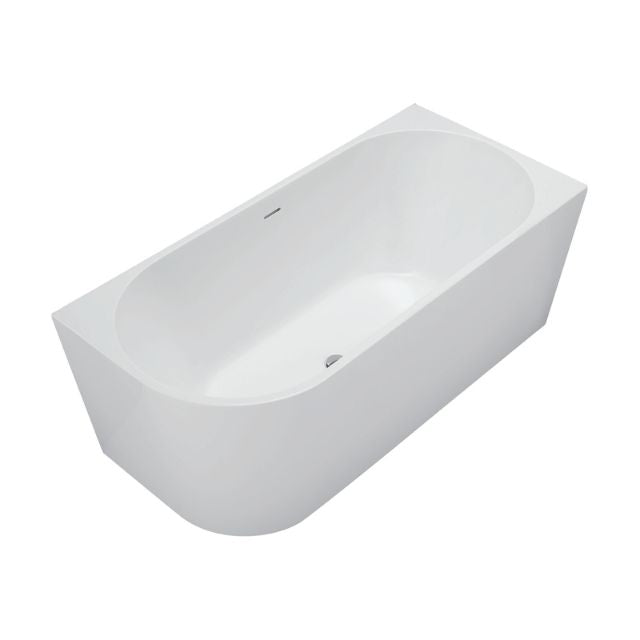
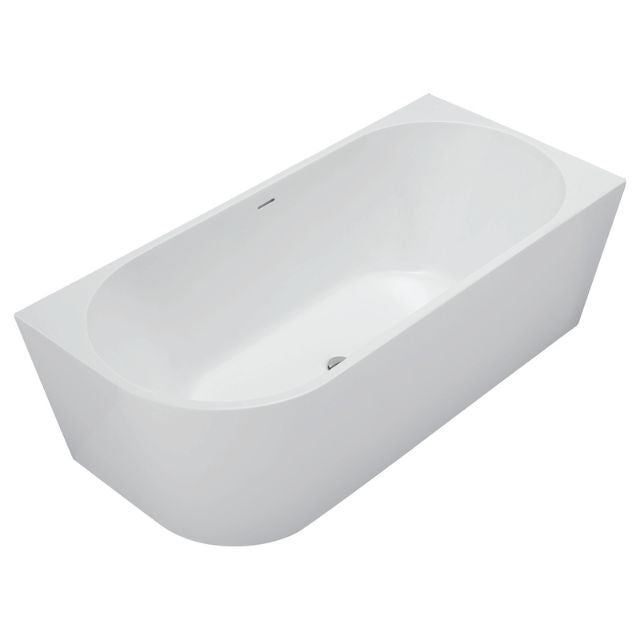
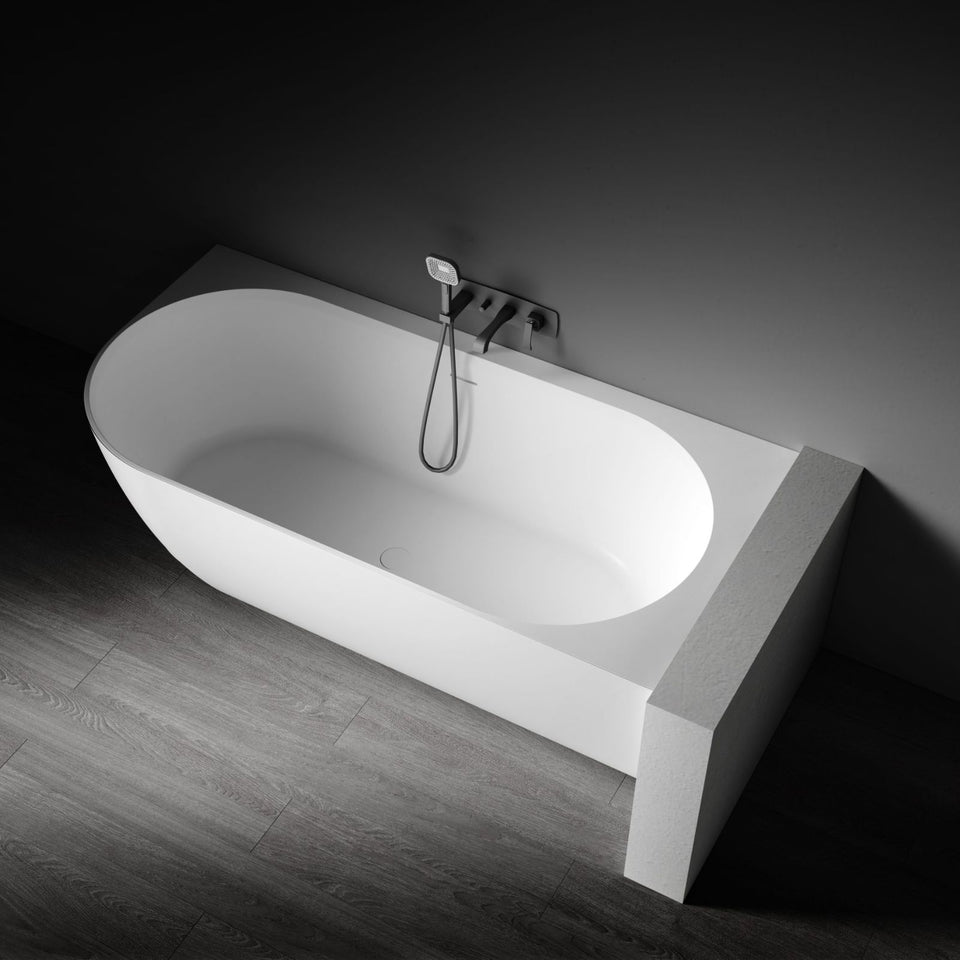
A back to corner bath sits flush against two walls with the overflow and tap deck facing outward, giving you the soaking depth of a freestanding bath while reclaiming the floor area a traditional freestanding model would otherwise occupy. These baths suit bathrooms where space is limited but you still want a feature centrepiece rather than a plain built-in alcove bath.
What is a back to corner bath?
A back to corner bath has a flat back and one flat side that press against adjacent walls, with the curved or sculpted apron facing into the room. The tap holes, overflow and waste are positioned on the exposed corner or front face. This configuration means the bath fits neatly into a corner recess without needing a tiled deck surround, which saves both labour and floor space compared with a full built-in installation.
Freestanding back to corner baths versus built-in corner baths
Freestanding back to corner baths stand on their own base or feet and do not require a tiled surround, making installation straightforward and relining easier in future. Built-in or drop-in corner baths sit inside a tiled platform and are harder to replace without retiling. Most buyers in compact bathrooms choose the freestanding back to wall version for its cleaner look and simpler installation.
Common sizes
Back to corner baths are most commonly available in 1500 mm and 1700 mm lengths, with widths typically between 750 mm and 900 mm at the widest point of the curved section. The 1500 mm option suits bathrooms where a 1700 mm run is not available along either wall. Both sizes generally have an interior soaking depth of around 380 mm to 440 mm. Measure the full diagonal of the corner recess before ordering, not just one wall length, as the bath occupies space on both axes.
Left-hand versus right-hand orientation
Back to corner baths are handed. A left-hand model has the waste and overflow on the left side when you are standing at the open face of the bath, and the curved apron sweeps to the right. A right-hand model is the mirror image. To determine which you need, stand in the corner the bath will occupy and note which wall your tap wall will be on. Ordering the wrong hand is a common and costly mistake, so confirm the orientation before purchasing.
Materials and finish options
Most back to corner baths sold in Australia are made from acrylic, which is lightweight, retains heat reasonably well and is straightforward to repair if scratched. Thicker acrylic with a fibreglass reinforcing layer provides better rigidity and a more solid feel underfoot. Stone resin composite baths are heavier (often 70 kg or more without water) and offer superior heat retention and a matt surface texture, but they require a structurally sound floor and cost considerably more. White gloss is the standard finish across acrylic models; stone resin options are also available in matte white and some neutral tones.
How to choose the right back to corner bath
Start with the floor plan. Mark out the two wall measurements available and the diagonal clearance so door swings and vanity positions are not compromised. Then confirm the hand orientation. After that, consider weight: a stone resin bath filled with water can exceed 300 kg, so check with your builder or structural engineer if the bathroom is on an upper floor. If you are keeping tap expenditure manageable, note that back to corner baths typically use a three-hole deck-mounted tap set or a wall-mounted bath filler, not a standard bath spout with separate taps.
Brands and ranges available
Caroma offers back to corner baths within its Urbane II range in both 1500 mm and 1700 mm lengths, with Caroma's five-star WELS compliance built in. Other options include freestanding back to wall corner baths from specialist bath manufacturers available through The Blue Space. For broader bathroom planning, explore our full range of bathtubs, or view bathroom vanities and furniture to plan the complete room layout. If you are selecting taps to pair with your new bath, see our taps collection for deck-mounted and wall-mounted bath fillers, or visit the Caroma brand hub if you are working within that range.
Frequently Asked Questions
What sizes do back to corner baths come in?
Back to corner baths are most commonly available in 1500 mm and 1700 mm lengths. Width at the widest point of the curved section is typically 750 mm to 900 mm. Interior soaking depth ranges from approximately 380 mm to 440 mm depending on the model. Always measure both wall lengths in the corner recess before ordering.
What is the difference between a left-hand and right-hand back to corner bath?
Hand orientation refers to where the waste and overflow sit when you face the open side of the bath. A left-hand bath has the waste on the left; a right-hand bath has it on the right. Stand in the corner the bath will occupy and confirm which side your tap wall falls on before purchasing, as the two versions are not interchangeable.
Are back to corner baths freestanding or do they need a tiled surround?
Most back to corner baths sold in Australia are freestanding back to wall models that stand on their own base and press against two walls without requiring a tiled deck or surround. This makes installation simpler and avoids the extra tiling costs associated with built-in platform baths. Some drop-in corner bath formats do exist and require a tiled platform.
What materials are back to corner baths made from?
The most common material is acrylic, often reinforced with fibreglass for rigidity. Acrylic baths typically weigh 25 kg to 40 kg and are straightforward to install on any floor level. Stone resin composite baths are also available; these weigh 70 kg or more empty and offer better heat retention and a matte finish, but require structural assessment for upper-floor bathrooms.
What type of tapware works with a back to corner bath?
Back to corner baths are designed for deck-mounted three-hole tap sets, which fit into pre-drilled holes on the exposed deck or corner face, or for wall-mounted bath fillers mounted on the adjacent wall. Standard bath mixers with a floor-mounted spout can also work if clearance allows. Check the tap hole configuration on the specific bath model before selecting tapware.