
*View accurate shipping rates and availability






17 Items



Up to 70% off storewide, free metro shipping over $500, and free gifts from $800. Spend more to unlock luxury towels and mirrors.*





A sliding door edge pull, also called an end pull, is the small pull fixed to the leading edge of a sliding or cavity door. It is the part you reach for when the door has slid fully into the wall and you need to pull it back out. This collection holds the Nidus Mardeco end pulls, sold singly, in a round radius shape and a rectangular shape, and the Zanda Duke flush pull kit in white, in zinc alloy. The Mardeco comes in brushed nickel, matte black, satin brass, brushed satin chrome, polished chrome and satin chrome. This guide explains why a cavity door needs an edge pull, how the radius and rectangular Mardeco differ, how to read the sizes, how to fit one to a timber or aluminium door, how to match it to your flush pulls and what to check before you order. For the full set of cavity door parts, see cavity slider hardware, sliding door passage sets and flush pulls.
A cavity door slides sideways into a space inside the wall. When it is closed, you grip the flush pulls on its face. When it is open, the face has disappeared into the wall, and the only part of the door you can reach is its leading edge. An edge pull sits there. You hook your fingers into it and pull the door out of the wall.
Without one, a fully open door can be hard to retrieve, and people end up scraping fingernails along the gap. A small recessed pull on the edge removes that problem. The end pull allows easier door handling, especially for fully recessed sliding doors, and makes it easier to fully close or retrieve doors from recessed positions.
The three names describe different parts. A flush pull is let into the face of the door. An edge pull or end pull is let into the edge. A cavity set usually has two flush pulls and one end pull, one for each face and one for the edge. Some searches use edge pull and end pull interchangeably. The pulls in this collection are the edge pieces.
If you want the face pulls as well, see flush pulls. Many cavity kits include all three.
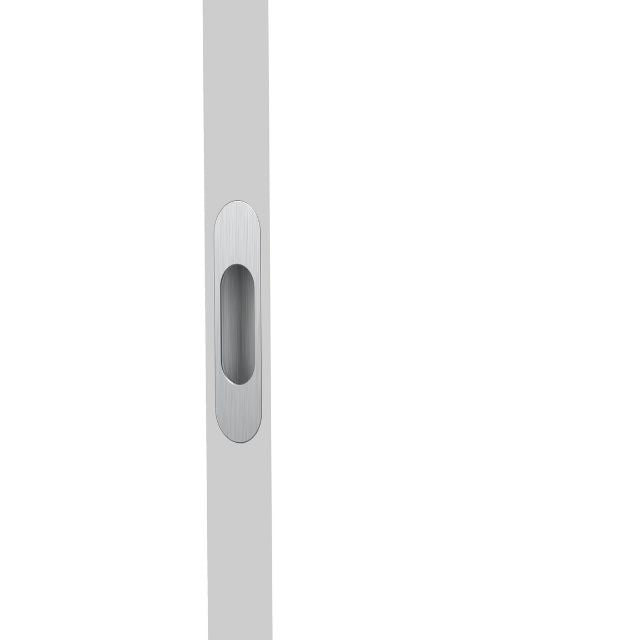
The Mardeco radius end pull has a round, softly curved outline. It is 96mm long and 26mm wide in zinc alloy, with an opening of 47 by 18mm, a face depth of just 2mm and an overall depth of 12mm. The 2mm face depth means the pull sits almost level with the edge of the door, giving a minimalist, flush look. The 47 by 18mm opening is spacious enough for a comfortable and secure grip.
It is designed for sliding doors, timber or aluminium, and for kitchen cabinets, so it is a multi-purpose piece. It comes with a fixing set and instructions, and is sold singly.
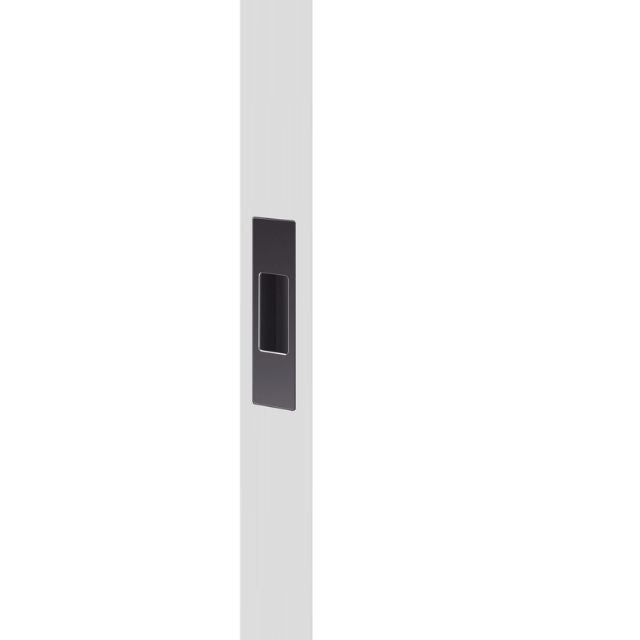
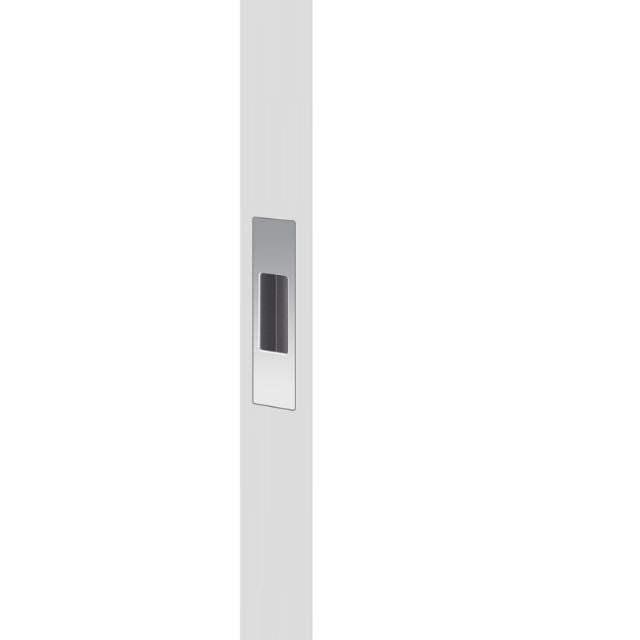
The Mardeco rectangular end pull has a squared outline. It is 92mm long and 26mm wide, with an opening of 38mm high by 18mm wide and a 12mm overall depth. The 12mm depth lets the pull sit flush against the door, offering a sleek and unobtrusive appearance. It suits timber and aluminium sliding doors as well as kitchen cabinets.
The opening is smaller than the radius pull's, so the grip is more discreet. Choose the rectangular pull for a very restrained look, and the radius pull when you want a slightly more generous finger space.
The choice is mostly about the shape of the other hardware. If your flush pulls are rounded or radius shaped, the radius end pull matches. If they are rectangular, the rectangular end pull matches. The Nidus Mardeco range has both shapes in both flush and end pulls, so you can match.
If the edge pull will be seen only when the door is open, the shape matters less than the grip. In that case, choose the radius pull for its larger finger opening.
The Zanda Duke flush pull kit is a complete cavity slider set in an oval style, 250 by 40mm. It is a complete cavity slider solution with all essential components included, available as individual components for flexible replacement or upgrades, and compatible with the full Duke flush pull range for home-wide matching. It is zinc alloy with a powder coated finish, with a 12mm projection. The kit in this collection is white. The box holds a sliding door hardware set with a fixing kit and installation instructions.
A Duke kit gives you the face pulls and the edge pull from one range, so everything matches. See Zanda Duke door hardware for the Duke range.
The Mardeco end pulls come in brushed nickel, matte black, satin brass, brushed satin chrome, polished chrome and satin chrome. The Duke kit here is white. Brushed nickel and satin chrome are neutral. Matte black is flat and strong. Satin brass is warm. Polished chrome is bright. White recedes on a white door.
Match the end pull to the flush pulls and to the other hardware in the room. The edge pull is seen less often, but it is touched every time the door is used, so a finish that wears well is worth choosing.
An edge pull is let into a recess cut in the leading edge of the door, so the door must be thick enough to take the depth. The Mardeco pulls have a 12mm overall depth, and the Duke kit has a 12mm projection. A door that is 35mm thick has room for that, with wood left around the recess. A thinner door may not.
The width of the recess must also fit the door edge. The Mardeco pulls are 26mm wide, which fits comfortably in a standard 35mm edge. Check the door edge width before you cut.
The Mardeco suits timber and aluminium sliding doors. On a timber door, the recess is cut with a router or a chisel, and the pull is fixed with the screws supplied. On an aluminium door, the recess may already exist in the frame section, or the maker may cut and tap it. Check the frame and use the fixing components in the box.
If the door is a hollow core or a thin frame, check that the fixings will bite. A pull that is only held by veneer will pull out.
Fit the edge pull before the door goes into the cavity. Lay the door flat on trestles. Mark the outline of the pull on the leading edge, centred at the height you want, usually the same height as the flush pulls. Cut the recess to the depth on the product page, test fit the pull, then fix it with the screws supplied. Check that the pull sits flush with the edge and does not catch on the cavity or the frame.
Slide the door through its full travel and check that the pull clears the guides and the track.
In a tight cavity, the clearance around the edge of the door is small. Test fit the pull before you cut: hold it against the edge and slide the door into the wall to check the clearance. If the pull catches, it may need to sit lower in the recess or be a different shape. Ask the supplier of your cavity system about clearances. A pull that is a millimetre too proud can stop a door entering the wall.
An edge pull is one part of a cavity door's hardware, and the best result comes from planning the whole group together. The flush pulls on the face, the edge pull on the leading edge and a lock or privacy latch if needed all share a finish and a design. Choose the lock first, since it decides the case size, then the flush pulls, then the edge pull. See sliding door privacy sets and sliding door entrance sets for kits that include an edge pull and a lock.
If the swing doors in the house have levers in a certain finish, use the same finish on the cavity door pulls, so the doors read as a family.
Wipe with a soft damp cloth and dry. Avoid abrasive pads and strong chemical cleaners. Brush dust out of the recess from time to time. Check the fixings now and then, since a pull that is used every day can loosen.
The first mistake is leaving out the edge pull on a cavity door. The second is choosing a shape that clashes with the flush pulls. The third is cutting the recess before checking the door thickness. The fourth is setting the pull at a different height from the flush pulls. The fifth is forgetting that the pulls are sold singly. The sixth is fixing into veneer or thin skin.
A short list avoids all six: edge pull, shape, thickness, height, count and fixing.
For a cavity door, choose an edge pull in the same finish and shape family as the flush pulls. Choose the radius end pull for a generous finger space and the rectangular for a discreet grip. Choose the Duke kit if you want the face and edge pulls in one set.
Check the door thickness, cut the recess to the product page and fit before the door goes into the wall. Then the door will always have something to pull.
It sits on the leading edge of a cavity door so you can pull the door out of the wall when it is fully open.
The radius pull is 96 by 26mm with a 12mm overall depth, and the rectangular is 92 by 26mm with a 12mm depth.
Yes. The Mardeco end pulls are sold each.
Yes. They suit timber and aluminium sliding doors, and kitchen cabinets.
A sliding door hardware set with a fixing kit and installation instructions, in a 250 by 40mm oval style.


