
*View accurate shipping rates and availability






49 Items


Up to 70% off across the store, plus free towels and mirrors up for grabs on orders over $800*
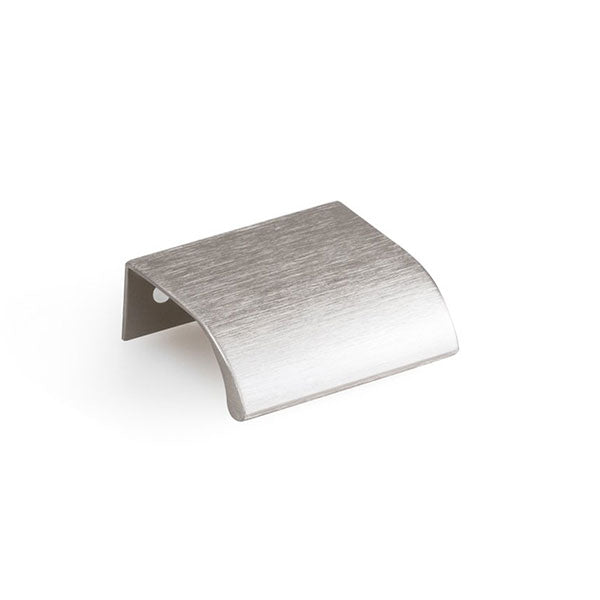
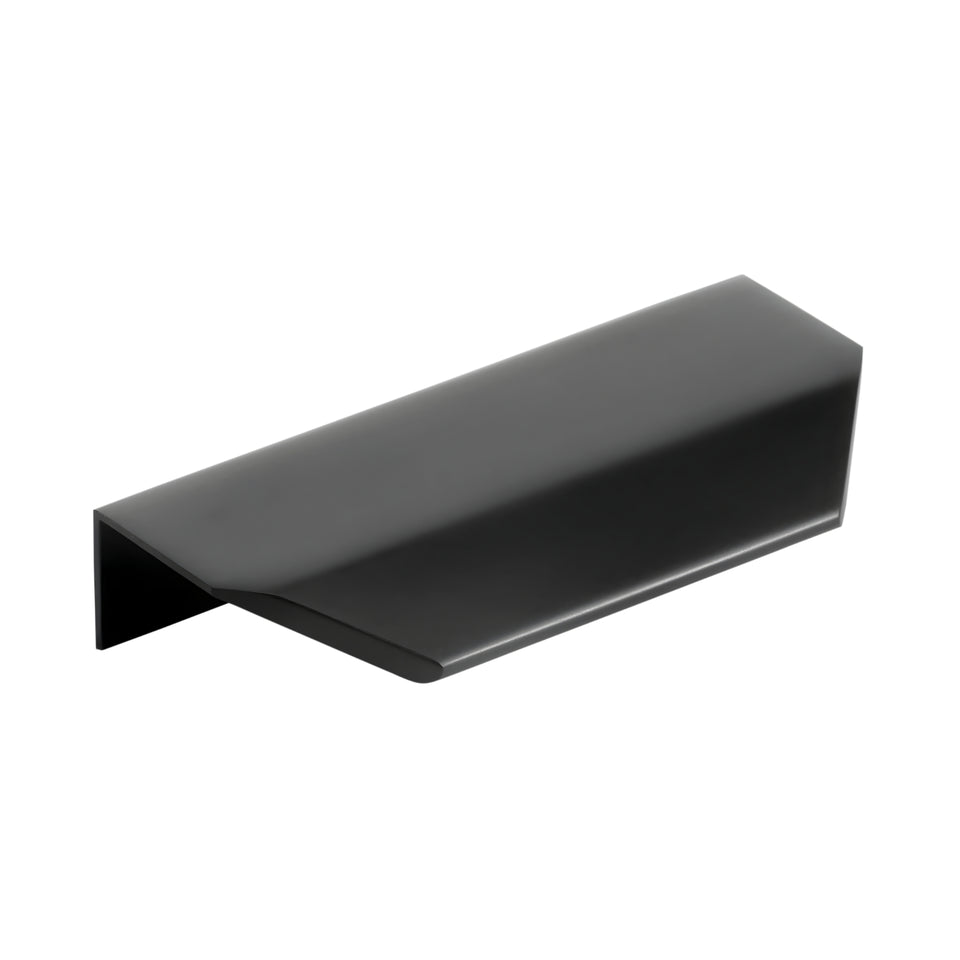




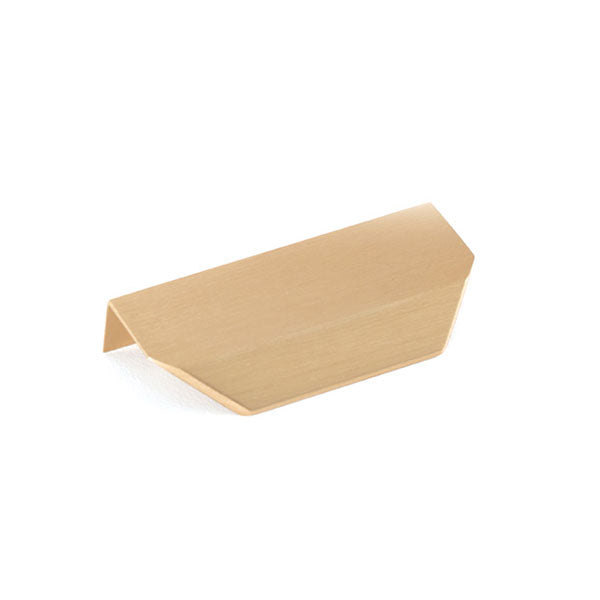
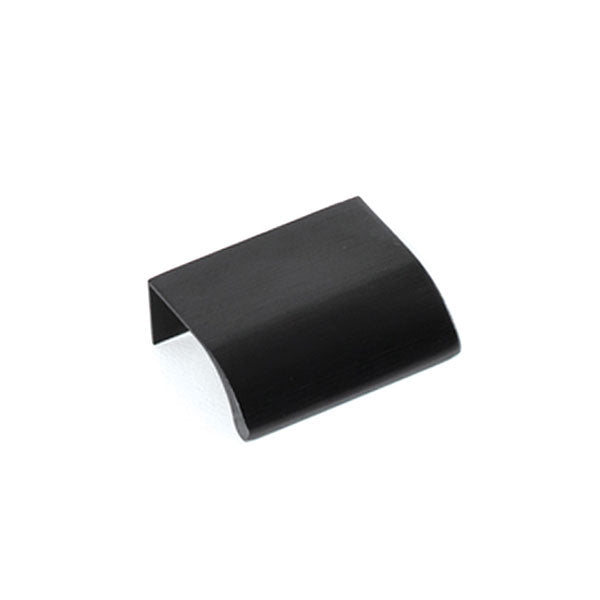


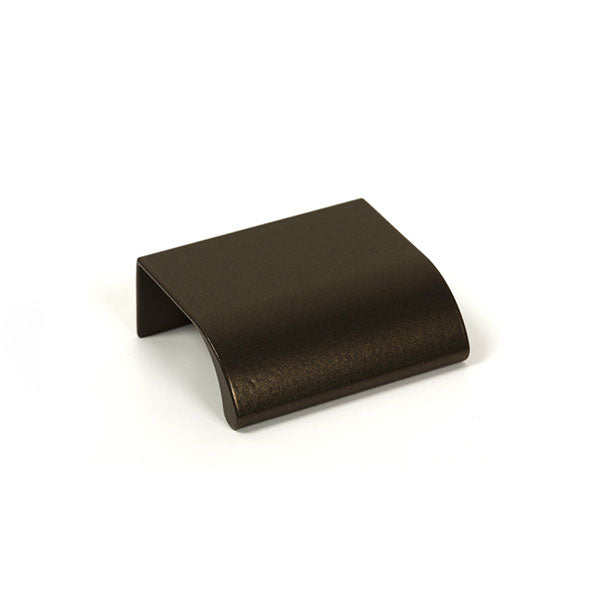


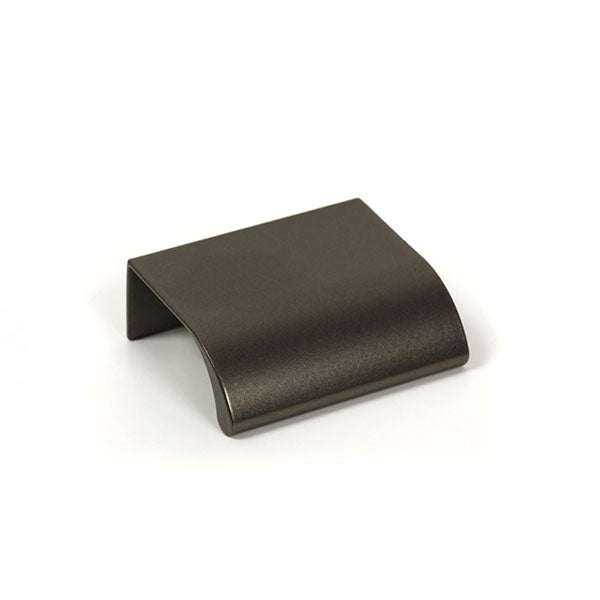




A lip pull is an edge-mounted handle. It fixes to the top, side or bottom edge of a drawer or door, and it is shaped like a shallow U with one side shorter than the other. The longer side sits against the back of the panel, and the shorter side forms a small lip that you hook your fingers under to open the door. That is why a lip pull is also sold as a lip handle, an edge pull or a finger pull, and why it gives the clean, handle-free look of flat-panel cabinetry without push-to-open hardware. The sections below cover what a lip pull is, how it differs from related types, which size suits which drawer, how it fixes, and which material and finish to choose. For every type of handle, start at cabinet handles.
The names overlap. A lip pull is a surface-mounted handle on the edge of the door or drawer. The half moon lip pull sits flush with the bottom edge of a door or drawer so that you hook your fingers underneath. Edge pull and finger pull are names for the same family of handles, a group that sits flush against the cabinet edge. A recessed finger pull is different. It is a small channel or round recess cut into the door or drawer front, just big enough to hook a finger into, and it normally has to be routed during manufacture, so it is planned into the cabinetry and not screwed on later. The panel must be thick enough to form the recess cleanly, and very thin panels may not suit.
Everything on this page is the surface-mounted kind that screws onto the cabinet, which makes it a practical choice for a replacement or a new run of joinery alike. For a visible bar or a knob instead, the sibling pages cover them: cabinet pull handles, cabinet knobs, cup pull handles and appliance pull handles.
Lip pulls suit handleless or near-handleless cabinetry: fluted, Shaker and contemporary profiles. They sit along the top edge of base units and along the side or bottom edge of wall units, so the hand reaches the lip from the direction it naturally approaches. They work on kitchens, wardrobes and bathroom vanities, and on small drawers as a discreet alternative to a knob.
The advantages come from the shape. The face of the door stays clear, which is why flat-panel cabinetry looks cleaner with lip pulls than with bars. Nothing protrudes to catch clothing or bump knees, which matters in a narrow galley kitchen or a small bathroom, and the channel shape wipes clean quickly. Grip is the point to plan for. A lip pull gives a smaller hold than a conventional handle, so it can be less comfortable on a heavy drawer or a large door that is opened often. For pan drawers and pantry doors, a bar pull from the cabinet pull handles page is the stronger choice, or a long lip pull in place of a short one.
Lip pulls are sold by overall length, and they come much shorter and much longer than a bar handle. Lengths run from about 30mm to 40mm up to 500mm and 600mm, and some profiles run to very long lengths for full-width drawers. This page includes the Castella Ledge brass lip pull in 30mm, 100mm, 200mm, 300mm and 400mm lengths, the Castella Cove semi-circle pull at 90mm, and the Meir Oppen edge pull in 75mm, 150mm and 300mm.
Lip pulls come on centre spacings from 32mm up to 700mm, and a single range can come in three sizes, for example 80mm, 160mm and 240mm. Where a product gives a fixing distance, treat it as the figure that decides the fit. Centre-to-centre spacing, not overall length, is the number to order by, and the standard centres are 32mm, 64mm, 96mm, 128mm (the most common in Australian kitchens), 160mm, 192mm, 256mm, 320mm, 384mm and 448mm. If you are replacing handles, measure your existing holes first.
A sizing table works for lip pulls as much as bars. A standard drawer 450mm to 600mm wide takes a pull with a 128mm to 160mm centre, and a wide drawer of 600mm to 900mm takes a 256mm to 320mm pull, or two 128mm pulls. A standard door 600mm wide takes a 96mm to 128mm pull or a single knob, and an upper cabinet door takes a 96mm pull or a knob, because overhead doors are usually narrower. Vanity drawers and doors are usually narrower again, and 96mm and 128mm centres are most common. The one-third rule gives a starting point: choose a pull about one third of the width of the drawer or door front, so a 600mm drawer points to a handle near 200mm. It is a rule of thumb and not a strict rule.
To test a size before you buy, tape a strip of the handle's length to the cabinet face and live with it for a day. A short pull that looks right in a photo can look lost on a wide drawer, and the tape shows it.
A lip pull is fixed from the back with a small screw through the panel, and a standard small wood screw suits. The Momo Handles Sola half round lip pull screws to the rear of the door or drawer, and the Momo Handles Ona is a rear-screwed aluminium profile 1mm thick. The Castella Cove semi-circle comes with M4 screws, and the Castella Tullah timber lip pull is rear-mounted with screws included.
Some lip pulls sit in a rebate. The Castella Ledge comes with screws, and a flush finish needs a rebate, which means cutting a shallow recess in the panel edge so the pull sits level with the surface. That is a job for the joiner or kitchen fitter, and it is worth deciding before the doors are made. The Meir Oppen edge pulls suit a cabinet wall thickness of 13mm to 18mm, so check your panel against that line. Mark the positions with masking tape or a cardboard template and look at them before you drill.
Every lip pull has its material on the spec line. Aluminium is the lightest and the most common for slim profiles, and the Momo Handles Ferrara lip pull is aluminium in matte white and matt black while the Momo Handles Ona is aluminium with a brushed finish. Stainless steel is the stronger choice for a wet room. The Momo Handles Sola is stainless steel in a brushed brass finish, and the Meir Oppen edge pull is 304 grade stainless steel in a range of finishes and suits bathroom and kitchen cabinets. Solid brass gives weight and a finish that can age, and the Castella Ledge is brass in bronze and other finishes. Brass is a living finish that oxidises and develops a patina over time, especially in humid or coastal places, and stainless steel or zinc die-cast pulls are the more durable options for anyone who does not want it to change. Timber brings warmth, and the Castella Tullah is a lip pull in reclaimed Tasmanian Oak, in a semi-circle shape.
Bathrooms are more humid than kitchens, so look for solid brass, stainless steel or a quality PVD finish. Avoid thin electroplated zinc alloy handles in shower splash zones, where they may fail within a few years. See stainless steel, aluminium and timber cabinet handles for each material in full.
Lip pulls come in a few shapes. The straight lip pull runs along the edge in a short or long bar, while the half-moon or semi-circle lip pull is a rounded profile. The Momo Handles Sola half round pull and the Castella Cove semi-circle pull are examples, and the Sola forms a full circle when two are mounted side by side. The half-moon cabinet handles page sorts the rounded profiles together. The Castella Tullah semi-circle is available in a round version too, in 90mm and 140mm diameters.
Two ranges are worth naming because shoppers ask for them by name. The Momo Handles Ferrara is a slimline aluminium lip pull with a minimalist profile for drawers and doors, and the Momo Handles Ona is a minimalist aluminium profile designed to fit a variety of furniture widths. See Momo premium cabinet handles and Meir Oppen cabinet handles for the two makers with the widest lip pull choice.
Lip pulls come in the same range of finishes as other handles. The common ones are matt black, white, brushed brass, gold, stainless steel, bronze, gunmetal, chrome and dull brushed nickel. The finish pages sort the whole collection by colour: black, white, brushed nickel, brushed brass, gunmetal grey and bronze.
In a bathroom, the vanity doors and drawers are narrower, so shorter lip pulls usually work. The bathroom vanities page covers the vanity side.
The general rule for any handle is a soft microfibre cloth and a mild detergent or soap solution, followed by a thorough dry. Abrasive cloths, cleaners and chemicals can damage a finish, so keep them away. The edge channel of a lip pull collects dust and crumbs along its length, so run a soft cloth or a soft brush along the lip. Stainless steel should be dried after cleaning to prevent water spots, and a regular rinse with fresh water helps in coastal or humid areas. PVD finishes are tough but benefit from gentle handling, so leave out bleach and metal polish. Timber lip pulls take a soft damp cloth and an immediate dry, and a good furniture wax every six to twelve months.
For door handles, see door hardware. For other makers, the Castella cabinet handles page shows the Ledge, Cove and Tullah ranges together.


