
*View accurate shipping rates and availability






20 Items


Up to 70% off across the store, plus free towels and mirrors up for grabs on orders over $800*


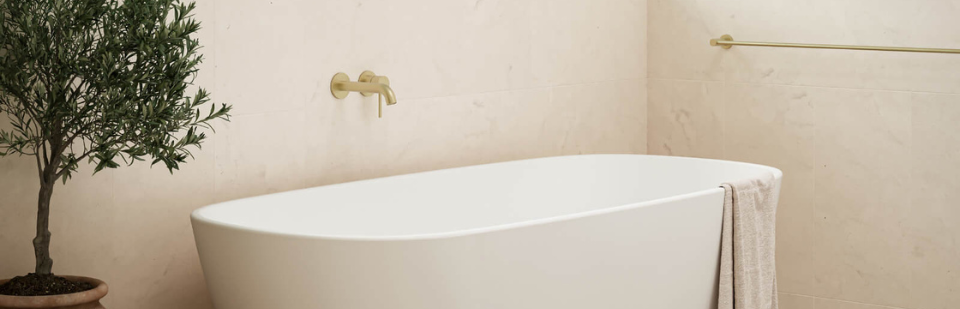


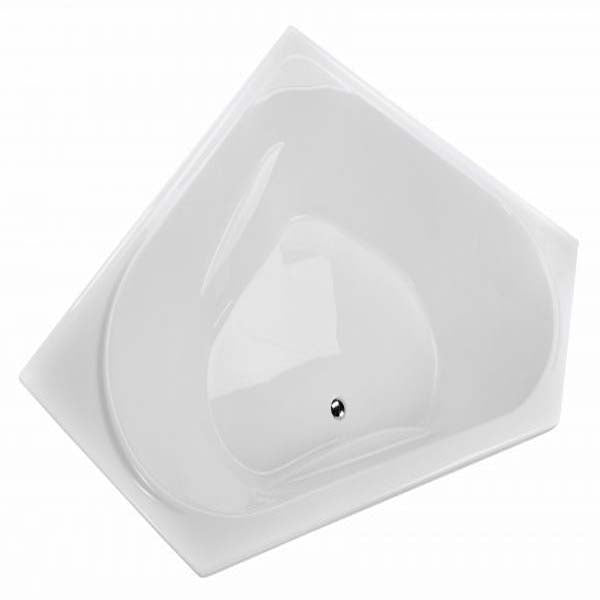
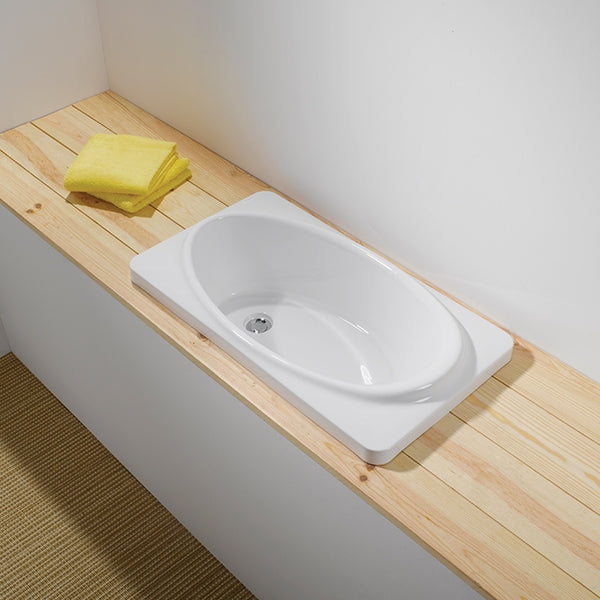
A built in bath is set into a frame or hob and finished with tiles, so the bath and the room read as one surface. It is also called an inset bath, a tile flange bath or, when it sits in a hob away from the walls, an island bath. The baths on this page are Caroma tile flange and island baths, Decina inset baths with a tile bead, a few inset spa baths and a pressed steel bath. The sections below cover the three types, the sizes, what a bath needs underneath it, the waterproofing and tiling order, and what to confirm before the tiler is booked.
An inset bath is the traditional style, updated with extra length and a wider range of shapes. A tile bead around the edges lets the bath be fully integrated into the tiled wall for a watertight seal, and inset baths suit bathrooms with limited space and shower over bath installations. An island bath is built in like an inset bath but sits in its own hob, away from the walls, and the raised rim can serve as seating, storage or display. A tile flange bath is the third type: the flange runs under the rim and the wall tiling runs over it.
The Caroma tile flange baths are the Luna, Maxton, Newbury and Vivas, and the Stirling is a steel bath with a four tile flange. The flange design suits a traditional bathroom layout and lets the bath sit right up against a wall and be tiled over the flange to create a water and dust tight seal. The Caroma island baths are the Luna, the Urbane, the Vivas and the Newbury Island Plus. The Decina inset baths, the Fabrino, Bambino, Shenseki and Angelique, carry a tile bead. See baths for tile edge and island baths for each type in its own collection.
The case for it is mostly space and use. A freestanding bath needs a 150mm to 300mm gap around it for access and cleaning, while a built in bath sits against the walls. For tight spaces a back to wall or corner bath is the better call, and an island style with a wide edge gives a place for bath oils and candles. Shower over bath designs are another reason. A shower bath is an inset bath with extra width and anti-slip patterning on the entry and exit zones, and a glass panel or screen can attach directly to the tile bead. The shower baths page covers that combination.
Built in baths here run from about 1210mm to 1800mm long, with many between 1500mm and 1700mm, in rectangular, oval and round shapes. A standard built in bath is about 1500mm to 1700mm long and 700mm to 800mm wide, and the baths here sit inside that spread. The Decina Angelique corner bath is 1295mm or 1465mm square, the Shenseki compact inset bath comes in 1395mm and 1515mm, and the Bambino in 1510mm and 1650mm. The Fabrino is 1525mm or 1675mm, 765mm wide and 400mm high. The Caroma Luna, Maxton and Vivas baths come in 1525mm and 1675mm, and the Newbury in 1525mm, 1675mm and 1800mm.
The small baths page covers the shorter ones, and 1500mm to 1700mm baths covers the main band. The longest baths here, the Maxton 1800 and the Newbury 1800, are in the length range that baths over 1700mm covers.
A built in bath has to fit its recess. Measure the alcove between the finished walls and compare it with the bath length, leaving a small gap at each end for sealant. A compact built in bath is about 1200mm to 1400mm by 700mm to 750mm, a standard one is 1500mm to 1700mm by 750mm to 800mm, and a large one runs 1700mm to 1800mm by 800mm to 850mm. Depth grows with the size, from about 380mm on a compact bath to about 450mm to 500mm on a large one.
Depth is given in different ways across these baths, and the difference matters. The Decina Fabrino is 400mm high, and the Bambino is only 380mm deep with moulded arm rests and a lumbar support. The Caroma Stirling steel bath is 1525mm by 770mm by 330mm deep. The Decina Angelique has a depth of 480mm with armrests, lumbar support and space around the outside for soaps and shampoo bottles. The Caroma Urbane island bath has dual reclined ends and a central waste, which make it comfortable enough for two. The Newbury takes an optional headrest or backrest, and the Maxton has integrated armrests.
The flange or bead is the detail that decides how the bath meets the wall. On the Caroma baths it is a four tile flange. On the Decina baths it is a tile bead, which integrates the bath into the tiled wall for a watertight seal. A tile bead is also the point where a shower screen attaches. Check what comes in the box, because a tile bead strip is not always included with a bath. The flange lets the bath be positioned against a wall and tiled over, so the tiler needs the flange position before the wall is tiled.
An island bath sits in its own hob and can be placed anywhere in the bathroom, which also puts the tile choice on view. The Luna island bath comes in 1525mm and 1675mm, the Urbane is 1675mm, the Vivas anti-slip island bath has a gently reclining end in 1525mm and 1675mm, and the Newbury Island Plus is 1800mm. Because an island bath has finished sides in the hob, the hob is built and tiled around it, and it is the biggest building job of the three types.
A built in bath needs a frame that carries the weight when it is full. Set the bath on a sturdy frame before any waterproofing starts. The Decina Fabrino takes an optional EZI frame or base support frame. Only two support methods suit a Decina bath, a full mortar bed or an EZI Frame, because scrap timber, bricks and foam do not support a bath structurally when it is full of water and bathers. The Fabrino and the Bambino also have a base reinforced with timber and fibreglass.
A built in bath is a wet area, and the order of work matters. Prepare the surfaces, set the bath on its frame, and seal the wall junction, corners, pipe penetrations and bath edge with wet-area silicone. Prime, then apply the membrane in coats at right angles to each other, with tape at the junctions, rising well above the bath rim behind the bath and higher in splash zones. Let it cure for the time the membrane maker gives, then tile with a compatible adhesive and slope the tiles slightly toward the bath. Seal the perimeter with a flexible, mould resistant silicone after grouting, and test with water along the tiled areas and the bath edge.
Plan any access before the tiles go on. A removable access panel can be made from backerboard fixed with magnets, with a tile layout that keeps the panel from ending in partial tiles. The access panel is worked out at the hob stage, before the tiling. It matters most for the Decina Turin spa baths, whose pump needs servicing access, and for any bath where the waste sits under the hob. The spa baths page covers the pump and the access question in more detail.
The plug and waste are not included with the Caroma baths. A pop-down waste is the better choice for safety and easier servicing, and Australian building codes require a fully removable bath waste in some situations. The Decina inset baths take an end waste, and the Fabrino and Bambino are sold without the plug and waste. The bath wastes collection has the options. A built in bath's waste sits under the bath and the hob, so it should be chosen and fitted before the surround is closed.
The Decina Turin is an inset spa bath with a tile bead in 1520mm, 1665mm and 1790mm, with twelve jets, a 750 watt pump, a rim mounted touch pad and a listed standard of AS3861/1991. The Angelique is an inset corner bath with a spa version. See corner baths for the corner format.
A built in bath is the usual base for a shower over bath. The bath should be at least 1500mm long and 700mm wide, with a screen of at least 1400mm. The waterproofing membrane runs well up the shower walls and past the bath edges, and it needs its full cure time before tiling. The Decina Fabrino is a shower bath solution with a Cascade shower bath panel, and the Caroma Vivas baths have an anti-slip surface.
The Caroma Stirling is the one steel bath. The shell does not flex or bend, and the porcelain enamel finish is hygienic and resists scratches and stains. Enamelled steel baths are strong and durable, heavy and cold at first, and they heat quickly. A bath that heats quickly and cools quickly is a different soak from an acrylic or stone bath, so choose the material with that in mind. The steel baths page lists the others.
Rinse after each use and wipe with a soft sponge or microfibre cloth and a pH neutral cleaner, avoiding bleach, ammonia, abrasive powders and steel wool. In a built in bath the seals matter more, so look at the waste, the overflow and the silicone seals each month. Built in baths sit flush against the tiles, which makes them easy to clean, and the Caroma baths leave no gaps behind for dust to collect.
Decide the type from the room: a tile flange or inset bath for a recess, an island bath where the room has the space for a hob. Pick the length from the wall, check the depth, and confirm the flange or bead, the support method and the waste. Plan the frame, the waterproofing and any access panel with the plumber and tiler before the bath is ordered. If the tile flange or bead is not shown, ask us. If the specification and the description differ, follow the specification sheet. The full range of baths is on the bathtubs page.


