
*View accurate shipping rates and availability






153 Items




Up to 70% off across the store, plus free towels and mirrors up for grabs on orders over $800*


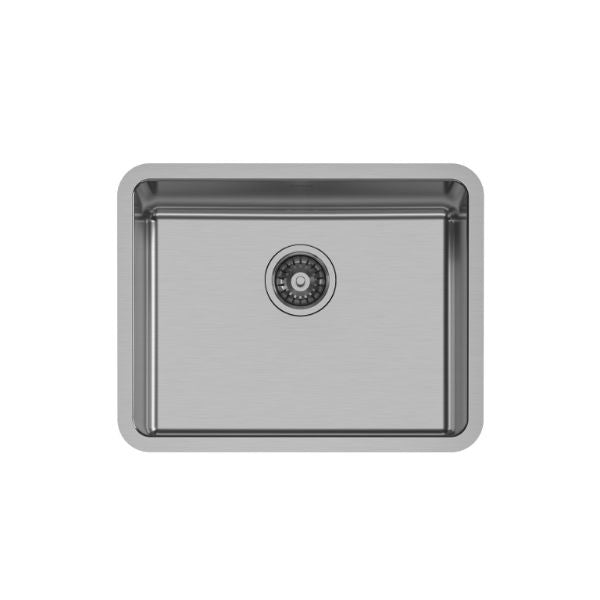



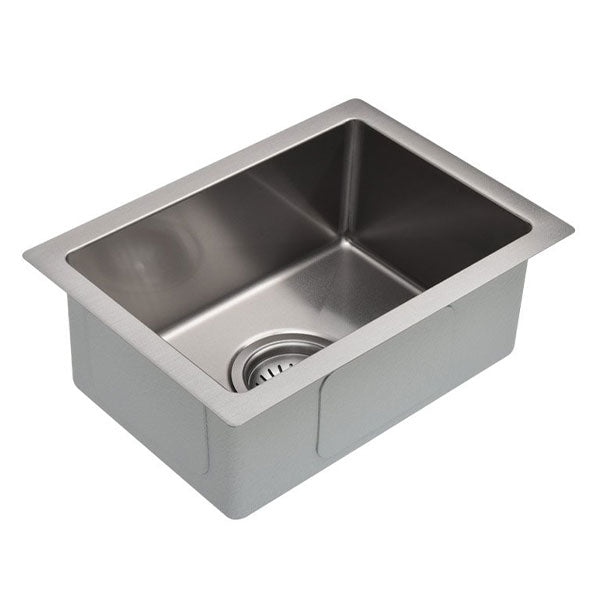

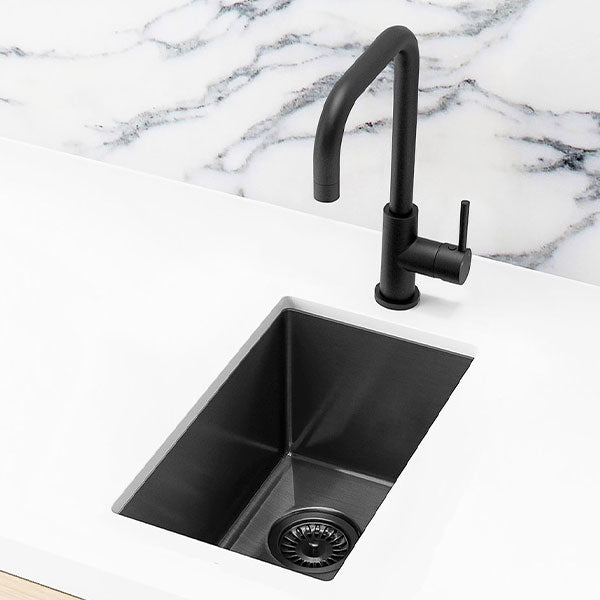


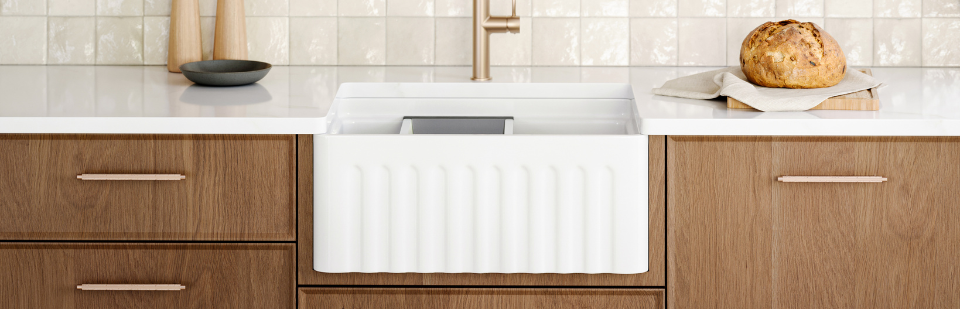


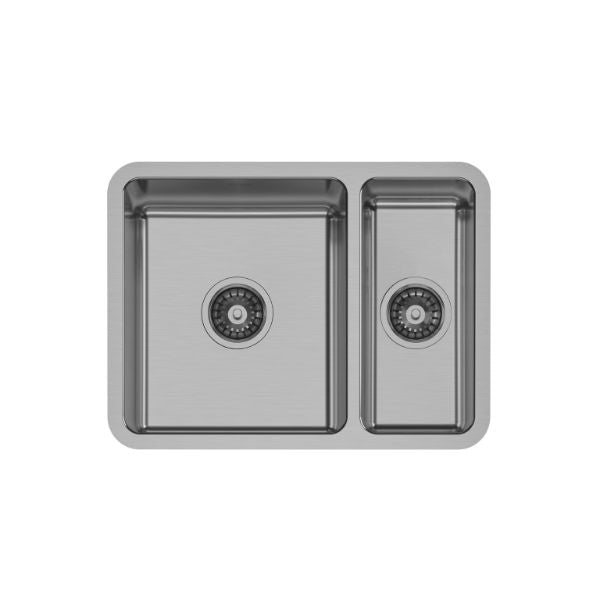


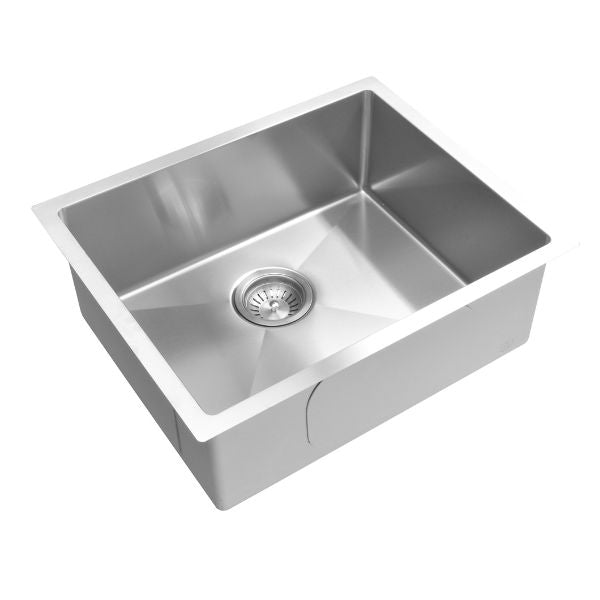


Stainless steel is the most common sink material in Australian kitchens, and two sinks that look alike on a shelf can differ a lot in how they sound, dent and age. The differences sit in four places you cannot see in a photo: the grade of steel, its thickness, how the bowl was formed, and what lies under the bowl. This page covers those four, then finish, bowl shape, mounting, care, and what comes in the box. For most kitchens, the practical choice is 304 grade steel at 1.2mm or thicker, with sound deadening underneath, in a brushed or satin finish. The sections below give the reasons and say when to choose something else.
Three grades matter for sinks: 201, 304 and 316. Grade 304 is one of the most commonly used for kitchen applications, with good corrosion resistance, durability and a hygienic surface that is easy to clean. Its make-up is about 18 percent chromium and 8 percent nickel, sometimes written 18/10, so expect to see either notation. Nearly every sink in this collection is 304.
Grade 316 adds molybdenum, which gives more resistance to chlorides. It suits exposure to salt, chlorides, harsh cleaning chemicals or acidic and high-moisture conditions, and coastal use within about a kilometre or two of salt air. Grade 304 is corrosion resistant but not completely rust-proof, so both grades can mark in harsh conditions, and 316 has more margin. The Caroma Compass Alfresco sink is 316 marine grade for outdoor kitchens, with a bamboo chopping board, a multibowl, a barbecue tray and a basket waste in the box, and with the tap sold separately.
Thickness is the second quality marker. Gauge is a scale in which a lower number means thicker steel. Good quality kitchen sinks are usually 16 to 18 gauge, and heavier gauge reduces noise when items strike the bowl and makes the sink more resistant to denting and bowing. In millimetres, 16 gauge is about 1.6mm, 18 gauge about 1.2mm, 20 gauge about 0.95mm and 22 gauge about 0.8mm. Ask for the actual thickness rather than relying on grade alone.
The lighter range suits a rental, a laundry or a light-use kitchen. For a household kitchen that is used daily, choose 1.2mm or more.
How the bowl is formed changes its corners. A pressed bowl is formed from one sheet, so its corners are broad and rounded and it wipes clean quickly. A handmade bowl is cut and welded, with straighter walls, sharper geometry and smaller corner radii, which need more attention when cleaning. A well-made pressed sink can outperform a poorly welded handmade one, so judge the grade, thickness, finish and drainage together. The Phoenix 1000 and 2000 Series are machine pressed and the 4000 Series is hand welded.
A thin bowl drums when a tap runs into it. Two remedies are common. A rubberised undercoating or foam pad absorbs sound, and the same layer reduces condensation on the underside, which matters when the sink sits above a cabinet. The Fienza Hana has sound and vibration dampening panels and an anti-condensation coating underneath that prevents mildew, along with a nano treatment on the surface for scratch resistance. The Meir sinks use sound absorbing technology to reduce noise and vibration. Check for pads and an undercoat on any steel sink, because thickness and underside treatment are the two main fixes for noise.
Finish controls how a sink looks after a year of use. Brushed finishes hide scratches better than glossy ones, and a satin finish hides scratches and water marks better than a mirror polish. Matt, untreated finishes let limescale settle more easily than polished sinks, while polished finishes are the easiest to wipe clean. A polished bowl is easiest to wipe and shows every mark, and a brushed bowl hides marks and holds onto some limescale.
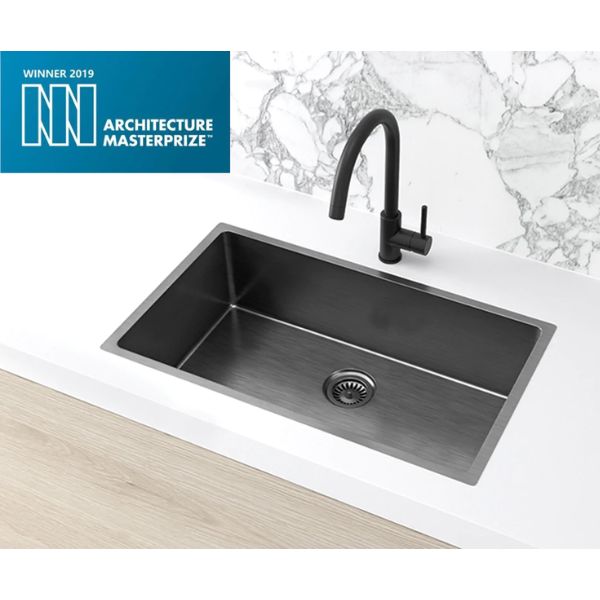
Coloured finishes are PVD, a coating process in which colour is bonded to the steel. Gunmetal, brass, gold and brushed nickel in this collection are PVD finishes; see gunmetal kitchen sinks, brass kitchen sinks, bronze and gold kitchen sinks, brushed nickel kitchen sinks and black kitchen sinks. The Meir PVD sink is not recommended for a laundry installation, because of the chemicals that may be present there.
Stainless steel stands up to a busy kitchen. It will not chip like porcelain or crack like composite when a heavy pot is dropped, and its non-porous surface does not absorb liquids. Care is simple: keep abrasive tools such as steel wool away from the bowl, and dry it after use to keep water spots and fingerprints off a polished finish. If a warm, heritage look is the priority, see butler and apron sinks and ceramic kitchen sinks. For a dark, stone-like surface, see granite and stone composite sinks.
The call: choose stainless steel when the kitchen is used hard every day, when you want the widest range of sizes and layouts, or when the benchtop is laminate or timber and a top-mount fit is needed. Choose ceramic or composite when the look of the sink matters more than its forgiveness. See ceramic kitchen sinks for the first and white sinks for a lighter surface.
Bowl layout is a matter of what you wash. Choose at least one large bowl that fits your biggest oven trays, roasting dishes and chopping boards. A second bowl is optional, and should be about half to three-quarters the size of the main bowl, for emptying pots and pouring liquids. The Caroma Urbane II 1.5 bowl pairs a main bowl of 340 x 400 x 217mm with a half bowl of 210 x 340 x 197mm, and the Fienza Hana double has a 40 litre and a 27 litre bowl with a 2mm divider. See single bowl kitchen sinks, double bowl kitchen sinks, 1.5 bowl kitchen sinks and 1.75 bowl kitchen sinks.
A built-in drainer adds length and is handed, left or right. The Oliveri Sonetto single bowl with drainer is 1035 x 510 x 211mm with a 470 x 405mm bowl, and the Clark Horizon 1.75 end bowl has a drainer pattern designed to send water back into the bowl. The alternative is drainer grooves cut into the benchtop. For a small kitchen, the Fienza Tiva round bowl is 430mm across, 180mm deep and holds 19 litres, and the Meir mini is 272 x 382mm and 150mm deep. See small sinks.
Steel sinks are made for every fitting method, so confirm the method for the model you choose. A top-mount sink sits on the benchtop and is held from underneath by clips. The cut-out is covered by the rim, so it works with any benchtop material including laminate. An under-mount sink sits beneath the benchtop and suits solid surfaces such as granite or engineered stone, where the cut-out can be polished and sealed. Installation and sealing decide whether it stays watertight. See inset sinks, drop in kitchen sinks and undermount kitchen sinks. A third option is an all-in-one stainless benchtop with the sink formed into it and no joins.
The Phoenix 1000 Series is overmount only, while the Phoenix 2000 and 4000 Series suit undermount and overmount. The Fienza Hana suits topmount or undermount and includes mounting brackets and screws. The Fienza Tiva includes sealing tape and mounting clips. For the full guide to fitting methods, see kitchen sinks.
Many steel sinks are sold with no tap hole, so the tap goes on the benchtop or the wall. Others have one. The Oliveri Ultraform comes in 1 tap hole, 3 tap hole and no tap hole versions, and the Clark Horizon is available with one tap hole in a left or right bowl configuration. Match the tap hole count to the tap before you order. See kitchen taps, sink mixers and pull out sink mixers.
Clean with mild detergent and warm water on a soft cloth, wiping along the grain. Rinse thoroughly and dry the bowl to prevent water spots. For tough marks, use a stainless steel cleaner, or a baking soda paste as a gentle alternative. Keep steel wool, abrasive pads and harsh chemicals away from the bowl. Different finishes may need different cleaning methods, so check the maker's care note for a brushed, polished or coloured finish before using anything strong.
Measure the internal width, depth and height of the base cabinet, and the benchtop cut-out, before you choose a model. The sink should be at least 70 to 80mm narrower than the internal width of the cabinet, which leaves room for the plumbing and the fixings around the bowl. If a splashback is going in, leave 50 to 100mm between the back of the sink and the wall.
Brand collections hold each maker's kitchen sinks: Meir kitchen sinks, Fienza kitchen sinks, Oliveri kitchen sinks, Clark kitchen sinks, Phoenix kitchen sinks, Caroma kitchen sinks and Seima kitchen sinks.
Whatever you choose, read four numbers on the product page first: grade, thickness in millimetres, radius and depth. They tell you more about the sink than the photo does.


