
*View accurate shipping rates and availability






2 Items
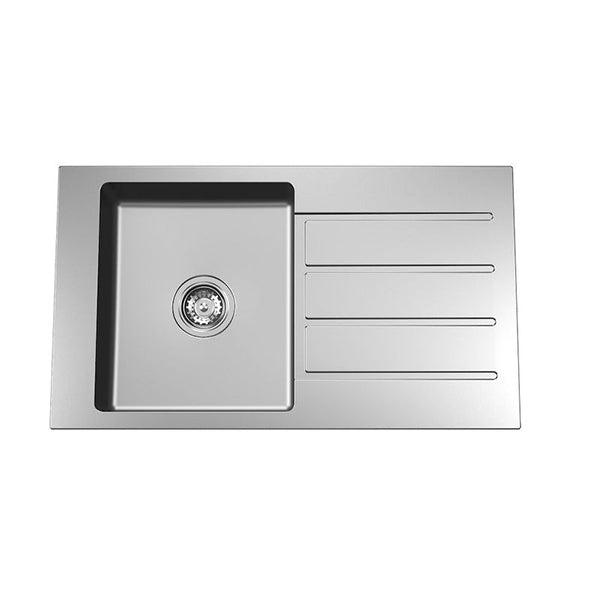
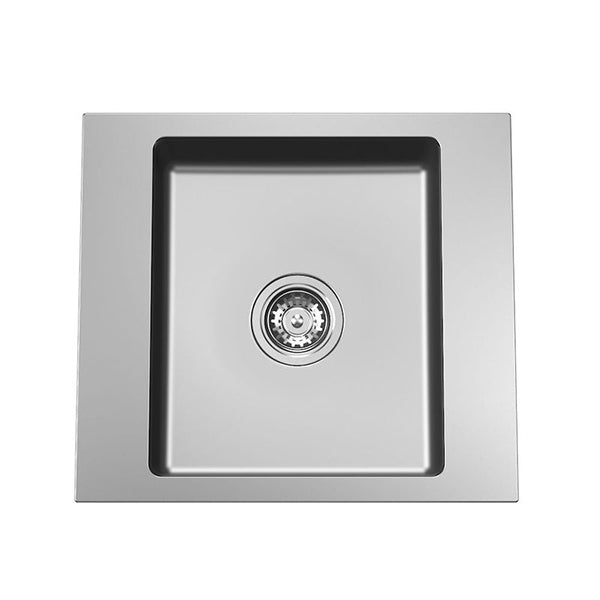
This collection holds the Caroma Evolution Care kitchen sinks, which Caroma makes for home care and assisted living kitchens. There are two: a single bowl sink, and a single end bowl sink with a drainer. This page explains what each one offers, how the sinks relate to accessibility standards, and what to check before you order. It also covers the questions people search: which sinks suit a person who needs the tap within easy reach, how to confirm that a sink meets the standard your project names, and how an accessible sink fits into a standard cabinet. One point first, because it matters for a buyer with a specific requirement: the bowl depth and the overall size of these sinks are on the maker's drawings, so those figures have to be checked before you order.
Both sinks are made of 304 grade stainless steel and fitted above the benchtop, which Caroma calls overmount. Each design can accommodate both a sink mixer and an instant boiled or chilled drinking water appliance, and comes with a stainless steel basket plug and waste. They have a side tapware landing, which allows the tap to be installed within 300mm of the front edge of the bench, to increase accessibility. The range is an exclusive Australian design. Neither sink has an overflow.
The two sinks differ in layout:
The single end bowl is designed to comply with home care installations and is suitable for kitchen installations needing to comply with AS1428.2-1992. The single bowl complies with access and mobility standards. The range also suits AS1428.2 installations when fitted with the optional heat protection pads, product A0152. The sink is only one part of a compliant kitchen, and AS1428.1 and AS1428.2 are different standards with different requirements. If your project names a standard, for example for a home care or disability modification, check the sink against the standard's text and the compliance field for the exact product code, and ask the person certifying the work. The question "how to tell if a sink is ADA compliant" is about a United States standard. An Australian project uses the Australian standards, and the US figures do not apply.
Reach is the first thing to settle. The Evolution Care sinks address the tap position, with the side landing putting the tap within 300mm of the front edge of the bench. A person seated at the bench, or one with limited reach, can then operate the tap without leaning over the bowl. The side landing also means the tap is not blocked by the sink or the splashback. Beyond the tap, the bowl depth, the height of the rim and the knee space under the sink are separate decisions, so ask for the drawing for the product code and plan them with the person who will use the kitchen and with whoever certifies the work. The optional heat protection pads, product A0152, protect against burns from the bowl.
The side landing puts the tap near the front of the bench. Match the sink's size and depth with a mixer that has the right reach and swivel range. The two landings can take a mixer and an instant boiled or chilled drinking water appliance. The single bowl comes with one tap hole or none, so check the hole count against the tap. For taps made for accessibility, see accessible taps, and the kitchen taps collection covers other options.
Depth affects both what the bowl holds and how far a person reaches into it. A standard bowl is 180 to 200mm deep and a deep one 220 to 250mm, and a deep bowl needs a tall or pull-down mixer to reach the base. A bowl that is too shallow splashes while one that is too deep strains posture, so the comparison is between depth, reach and what the person washes in the bowl. The depth of the Evolution Care sinks is on the maker's drawing, so ask for the drawing for the product code and compare it with the way the sink will be used.
Some general clearances apply to any kitchen sink, and they are a starting point and not an accessibility standard. A standard benchtop is 600mm deep, and a sink 450 to 500mm front to back leaves 50 to 100mm behind the bowl for the tap and the silicone bead. Keep at least 50mm between the cut-out and the front edge, and 50 to 75mm to the back edge, with stone sometimes needing 75mm. For a drainer, allow at least 300mm of clear bench on each side of the bowl, and allow at least 250mm of clear vertical space under the sink. Approach space for a wheelchair is a separate figure, set by the standard your project names. Measure all of these in the actual kitchen.
Both sinks are 304 grade stainless steel. Grade 304 contains about 18 percent chromium and 8 percent nickel and resists corrosion, though it is not completely rust-proof, and a thicker sheet limits flex, noise and denting. Ask us for the thickness if it matters to your project. For any stainless sink, check an even brushed grain, consistent edges and corners, clean weld joins, a sloped base and channel, and dimensions that match the cabinet. Accessible basins should have smooth edges or rounded corners to reduce injury, so check the edges of the sink and the cut-out on arrival.
The Evolution Care collection suits a range of commercial and home care applications, and the single bowl suits home care applications. Check which standard your project names before you order, because the choice of sink does not settle that. Keep the compliance field, the installation instructions and the drawing for the product code with the project record.
A single bowl is one uninterrupted basin with room for trays and large pots. It works well with a dishwasher, and without a second bowl you soak and rinse in the same basin, so a drainboard alongside helps. The single end bowl has the drainer built in, on the side opposite the bowl, in left-hand and right-hand versions. Most drainer models are handed, and a flat or shallow drainer pools water, so deep grooves and a slope are worth looking for. The Evolution Care draining board has deep etched grooves. Choose the hand that suits the person using the sink and the position of the tap. See Caroma kitchen sinks for the other Caroma sinks.
Pick the single bowl when the bench is short, when the dishwasher does most of the washing, or when the tap needs to sit on either side, since the reversible bowl and the dual landings give the most flexibility. Pick the single end bowl when hand washing is regular and dishes need to drain beside the sink, and decide the hand first: the bowl on the left with the drainer on the right suits one bench, and the reverse suits another. Both can take a mixer and a drinking water appliance on the two landings, so the tap decision is the same either way.
A short list keeps an accessible kitchen on track. Confirm the product code for the layout you want, and for the single end bowl the hand of the bowl, left or right. Choose between one tap hole and none on the single bowl, to suit the tap or the drinking water appliance. Ask whether the optional heat protection pads, product A0152, are needed for your project. Get the drawing for the product code, and read the bowl depth, the rim height and the tap landing position from it. Check the benchtop thickness against the clip length, since extension clips are available for a thicker bench and special clips for a thin one. Finally, confirm the cabinet width and the cut-out template with the person cutting the benchtop.
A few habits keep an accessible sink safe and tidy. Keep the area under the sink clear so the plumbing and the knee space stay accessible. Wipe up water around the rim promptly, since a wet bench and a wet floor are the main slip risks near a sink. Check the clips and the sealant every few months, replace the caulking every three to five years, and keep abrasive pads and strong chemicals away from the bowl. If the person using the kitchen changes, revisit the tap position and the drainer hand, because the right setting for one user is not always right for the next.
The routine for stainless is short: rinse with warm water after use, wash with mild dish soap and a soft cloth following the grain, and dry with a microfibre cloth to stop water spots. Keep abrasive powders, bleach, ammonia cleaners and steel wool away. Look under the sink once a month for leaks, moisture and mould, and check the rim sealant and the mounting clips and screws on the same visit.
For the wider range of products for assisted living, see the assisted living collection. If you have not settled on a sink, the main kitchen sinks page lists every range. A kitchen sink is used 20 to 30 times a day, so for a person who uses the kitchen daily, the tap position, the depth and the drainer are worth getting right before you order.


