
*View accurate shipping rates and availability






6 Items


Up to 70% off across the store, plus free towels and mirrors up for grabs on orders over $800*

A shower base is the tray a shower stands on, with a built-in fall to the waste and a raised edge that keeps water in the shower area. This page holds six products from Decina and Caroma. Three are Decina Luna shower bases, the 900 and 1000 centre outlet bases and the 1000 curved base. The other three are acrylic baths made to take a shower over them: the Decina Modena, the Decina Bambino and the Caroma Vivas. Shower base, shower tray, shower basin and bathroom shower base describe the same product in searches. The sections below cover what a base is made of and the sizes and outlet positions on offer. They also cover entry height, slip resistance and installation on the Luna bases, what goes under a base, and how a base differs from a shower bath.
Shower bases come in several materials. Acrylic is lightweight, durable, easy to clean and resistant to staining and scratching. Other bases are acrylic fibreglass, thickened acrylic with a slip-resistant texture, solid stone resin, SMC or a lightweight urethane marble. Polymarble is a blend of marble dust and resin, and slate-finished SMC has a natural, textured look. The specification sheet for a particular base is the document to follow. The baths for tile edge page covers baths made to be tiled to the rim.
The three Luna bases are the acrylic bases on this page. They are a slimline range of shower bases made in Australia from premium sanitary grade acrylic. The base is steel rod reinforced and also reinforced with resin, timber board and fibreglass for extra strength, and the surface is easy to clean and warm underfoot. The Luna has high slip resistance, a low entry height of 49mm, self supporting feet for easy installation, and no mortar bed required. Each includes a chrome plated, friction lock removable waste cover and a contemporary square chrome waste outlet. The 900 and 1000 are centre outlet bases, and the 1000 curved base has a curved shape. Follow the specification sheet and installation instructions that come with each base.
Standard shower base sizes are 900mm by 900mm, 1000mm by 1000mm and 1200mm by 900mm, with non-standard sizes such as 820mm by 760mm and 1220mm by 780mm. Bases run from 800mm by 800mm up to about 1515mm by 915mm, with long runs of 1000mm, 1200mm, 1500mm, 1800mm and 2000mm. The Luna 900 and the Luna 1000 are the 900mm and 1000mm sizes, so they sit in the square standard range. Check the exact footprint before you order.
To choose a size, measure the length and width of the shower area, allow for existing fixtures and door swing, make sure there is room to move comfortably, and check the product specifications. A deep shower base is another common search. There is no standard depth for one, and the Luna entry height is 49mm.
A base has to drain, and the fall is built in. Fall, thickness and outlet position are linked: a size and outlet position that need more fall are made on a thicker base. The Luna has an entry height of 49mm, and the specification sheet is the place to confirm the fall.
A walk-in shower base is a low step. Ultra low profile trays are roughly 3cm to 5cm thick. They suit accessibility and quick installation and are made from resin, ceramic, acrylic or reconstituted stone, with non-slip resin models for reduced mobility. Walk-in trays are 35mm or less in depth, and conventional trays are over 5cm. Low profile trays are commonly only available in white. The Luna has a 49mm entry height, which sits inside that range. Preformed bases usually have a fixed height, so the exact figure on the specification sheet is the one to rely on.
Tile trays come in sizes such as 895mm by 895mm, 995mm by 995mm and 1200mm by 895mm, and are paired with slider, bi-fold, standard and curved screens. Screens are matched to the bases, so order the base and the screen together and confirm the match. Square sizes sit slightly under and over 900mm, such as 895mm and 905mm, so check the exact footprint.
The waste outlet position decides how the base meets the drain. Positions include rear waste, centre waste and angled rear waste, and some bases have the waste on the 900mm side. The three Luna bases are centre outlet bases. Confirm the position with the plumber before the base is ordered. Most bases have a built-in drain.
The Luna bases have the two features that matter for getting in: a low entry height of 49mm and high slip resistance. A non-slip surface improves grip and reduces the risk of slips and falls for children, older people and others. Add a hand shower rail, properly anchored grab rails with the stud positions confirmed first, and thermostatic mixers for children and seniors. A bath mat should have a non-slip backing, and tiled floors should use tiles rated P4 for slip resistance. The plumber and the product instructions settle the details for a given base.
Some bases are made to be tiled. A tile tray is designed to be tiled over so the shower floor matches the rest of the bathroom, and it provides a solid and waterproof foundation so the tiles stay in place. A 900mm by 900mm by 40mm tile tray is one example. Accessories such as flashing are specific to the base they are made for. The Luna bases are not tile trays. They are finished acrylic bases, so the surface you stand on is the acrylic itself. If you want a tiled shower floor, a tile tray is the type to look for, and follow the installation instructions for how it is fixed and waterproofed.
This is the most common question in search, and the answer depends on the base. The Luna bases need no mortar bed and have self supporting feet for easy installation, so they stand on their feet. For any other base, the maker's installation instructions decide what goes under it, and each base comes with instructions to download. One base's method may not apply to another.
The floor still matters. All baths and bases need waterproofing at the base and along any walls they touch. The specification sheet and installation instructions are the documents that apply to the base you choose.
Connecting the waste is plumbing work, so ask a plumber about the waste before the base is ordered. Altering or extending existing plumbing is a task for a licensed plumber, and Australian building codes require fully removable wastes in some situations. Check the rules in your state.
The Luna bases include a removable waste cover and a square chrome waste outlet. Australian building codes require fully removable bath wastes in some situations, so consult a plumber before purchase. The three baths on this page do not include a plug and waste, and Pop-Down wastes are the better choice for safety, service and maintenance. The bath wastes page holds them.
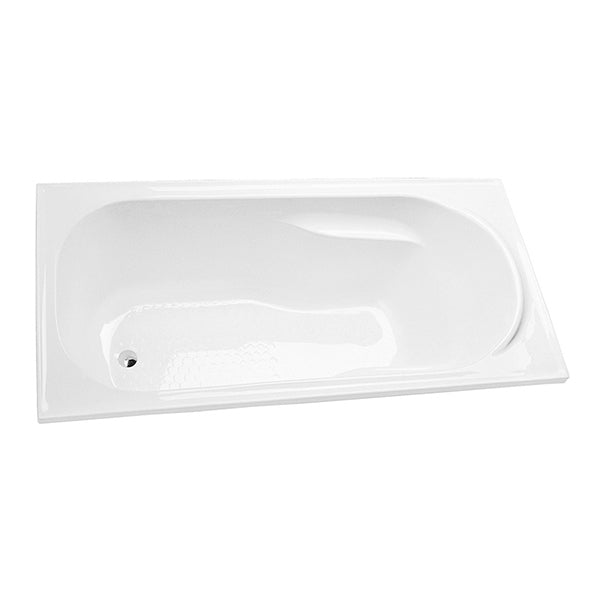
A shower over a bath is the other way to get a shower into a small footprint, and three baths here are made for it. The Decina Modena is a shower bath in 1205mm, 1515mm, 1650mm and 1790mm lengths, wider and deeper than traditional shower baths, with a base reinforced with a timber and fibreglass coating and a slip resistant pattern. The Decina Bambino is an inset bath with a tile bead, a depth of 380mm, moulded armrests, lumbar support, an end waste and a slip resistant pattern at the entry and exit points. The Caroma Vivas is an anti-slip bath with a gently reclining end and a four tile flange, in 1525mm and 1675mm lengths. A bath for a shower over it should be at least 1500mm long and at least 700mm wide. The 1205mm Modena is below that minimum, and the longer sizes meet it. The shower baths page covers the choice in full.
The choice is between a shower alone and a shower with a bath. A base gives a shower in the smallest footprint, and the Luna bases are low enough to step into at 49mm. A shower bath keeps the bath and adds a shower, with the step over the rim that comes with it. A guide to bath and shower combinations says stepping over the edge can be risky and that access is limited for elderly people or anyone with reduced mobility, so a base is the other option for them. If the main bather is a child or a busy family, the combination earns its place. The built in baths page holds inset and tile flange baths.
Bases resist mould and mildew, and smooth surfaces make soap scum and grime easy to wipe away. The Luna acrylic is easy to clean. A soft cloth and a mild, non-abrasive cleaner are the safe default, and the care sheet for the base decides which cleaners are safe. For a cracked or damaged base, contact us and we will check repair options with the maker.
Start with the space. Measure the shower area, the door swing and the fixtures, and confirm the outlet position with the plumber. Then pick the material: acrylic where weight and a low entry height matter, a tile tray where the shower floor should match the tiles, and stone resin where the extra weight is acceptable. Check the entry height and slip resistance, and read the specification sheet and installation instructions before ordering. Decide the screen and the mixer with the base, because they depend on it.
For the full range of baths, return to bathtubs.


