
*View accurate shipping rates and availability






132 Items



Up to 70% off storewide, free metro shipping over $500, and free gifts from $800. Spend more to unlock luxury towels and mirrors.*









An outdoor ceiling fan has to do two jobs: move enough air over the place where people sit, and survive the weather that reaches it. Most buying mistakes come from the second job. A fan that is fine under a solid roof can fail under an open pergola, and a fan sold for "outdoor" use can mean anything from a covered patio to a rain-lashed deck. This guide starts with exposure and the damp, wet and IP ratings, then moves on to sizing, blades and motors, and ends with lights, controls, installation and care.
Outdoor spaces sort into three groups, and the group decides which fan you can use.
Two other conditions sit on top. Coastal air carries salt, which attacks metal parts faster than rain does. Tropical and very humid areas load a fan with moisture all year. A tropically rated fan is the right choice in humid regions such as North Queensland, with humidity-resistant blades and sealed motors.
A roof keeps off rain that falls straight down. It does not stop wind-driven rain, sea air, mist, condensation or storm spray. A fan near the edge of an alfresco roof can still get wet in heavy weather, and a fan can be damaged without ever being soaked, by repeated moisture and condensation, fine spray or salt air. Ask whether wind pushes rain under the roof, whether the fan is near a pool, spa or sprinkler, and if the site is near the coast. If so, step up to a higher rating or move the fan further in from the open edge. On wind, install the fan far enough from the edges of the area, or enclose the sides enough that the weather cannot reach it.
Two sets of words describe weather protection, and they overlap a little.
A damp-rated fan is built for a covered area where humidity is present but direct rain does not reach it. A wet-rated fan can take direct exposure to the weather. Damp-rated suits covered outdoor areas, and fully wet-rated suits more exposed areas.
An IP rating, short for Ingress Protection, is a two-digit code. The first digit covers dust and solid objects, and the second covers water. An X in place of a digit means that property was not tested. The common steps run like this:
The minimum varies by exposure. Covered areas need at least IP44 and exposed areas IP55 or higher. IP65 or higher suits outdoor installations in general, and a covered but open alfresco needs no IP rating at all as long as the fan is made for covered outdoor use. Match the rating to your exposure and take the more cautious figure when unsure. One more point: an IP rating does not measure corrosion. A fan can be well sealed against water and still have steel fixings that rust in salt air, so the materials matter as much as the number.
Read the application line on each product page before you decide. The fans here fall into a few groups.
The Eglo Kurrawa is the most weather-ready range here. It is IP55 rated for dust and water protection and suits tropical areas and places where the rain goes sideways. It comes in 60 and 72 inch sizes with or without a light, and the maximum canopy pitch is 0 degrees, which means it is for flat ceilings only. Its controls include eight speeds with a night mode and a natural breeze mode.
The Eglo Miami has UV-resistant ABS construction, and it is a better choice for coastal homes exposed to salt air. It suits indoor and covered outdoor use, and the IP rating is IPX0, meaning no water rating is claimed. Read it as a fan for covered areas in coastal settings, not for an open pergola. For raked ceilings an angle canopy takes pitches up to 38 degrees, sold separately.
The Eglo Bondi, Surf, Noosa and Tourbillion carry an application line that says suited to indoors or covered or enclosed alfresco areas not exposed to the weather, and so does the Martec Precision. They are good fans for a roofed alfresco with walls or a screened side, and the wrong choice for an open deck.
The Fanco Breeze, Eco Silent Pro and Horizon High Airflow ranges suit use indoors and in undercover outdoor areas, and several versions also suit coastal environments. The Martec Cordoba suits indoor and covered outdoor use. If the area is fully exposed and the fan has no wet-area rating, choose a different fan, or look at the coastal rated fans to compare the product pages.
The bands overlap slightly, so treat them as ranges. A fan around 122cm suits a balcony up to 10 square metres, 132 to 142cm suits a patio of 10 to 20 square metres, and more than one fan, or one larger than 152cm, suits above 25 square metres. Another reading gives 102 to 122cm up to 15 square metres and 122 to 142cm from 15 to 35 square metres. A 56 or 60 inch fan suits a large alfresco or deck, and 80 or 84 inch fans suit above 30 square metres or under high raked ceilings.
As a rule: under about 10 to 12 square metres, 48 inch (122cm). From there to about 20 square metres, 52 to 60 inch (132 to 152cm). Beyond that, a larger fan or a second fan.
A simple rule: divide the area in square metres by 20 and round up. A 3 by 4 metre area (12 square metres) takes one fan, and a 4 by 8 metre area (32 square metres) takes two. Two smaller fans can give more even airflow than one large fan across several zones, and a long rectangular area does better with several 52 inch fans than one very large fan. Do not buy the biggest fan "just in case": it feels too strong on high and moves too little air on low. The large fans collection has the bigger spans, and small fans covers the compact end.
A fan needs room above and below. 2.1 metres from the floor is the minimum and 2.4 to 2.7 metres is the ideal. Mounting at 2.3 to 2.7 metres, centred over the seating or the barbecue area and away from tall walls, works well. Each fan has a drop, the distance from the ceiling to the bottom of the fan, in millimetres, so you can check the figure against your ceiling height: the Eglo Bondi has a 334mm drop, the Martec Precision 300mm and the Eglo Tourbillion 413mm.
A higher mount means the air has farther to travel before it reaches people. Ceilings of about 2.7 to 3 metres or higher may need an extension rod, rods are sometimes included and sometimes sold separately, and not every model takes one. Our ceiling fans for high ceilings collection groups the options.
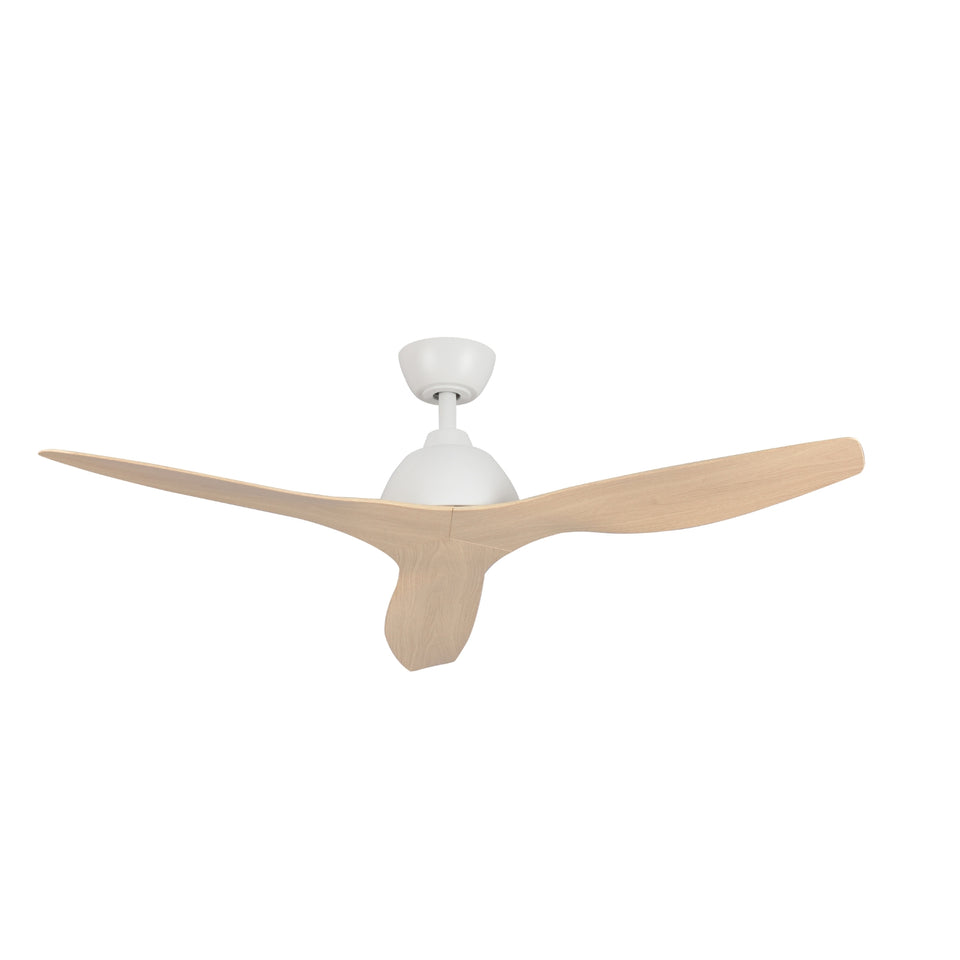
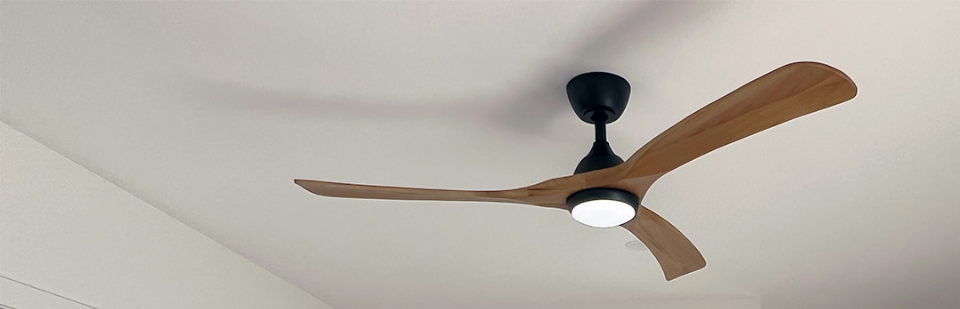
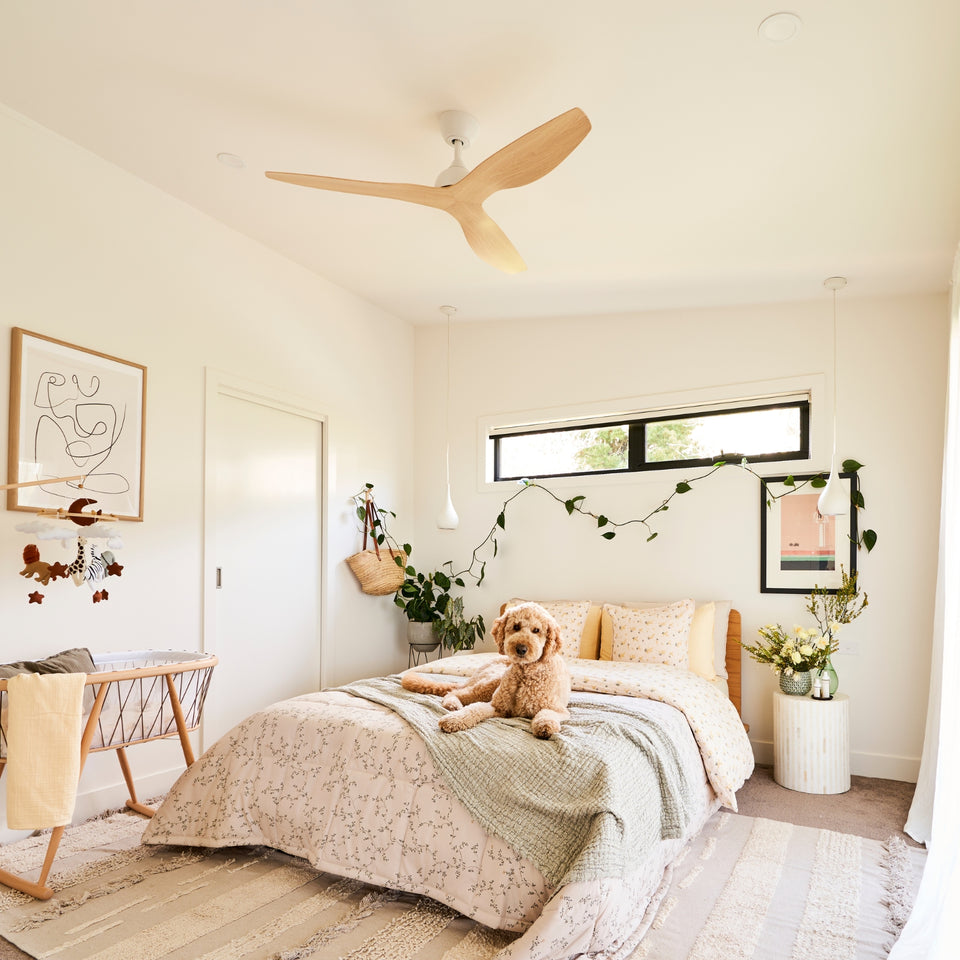
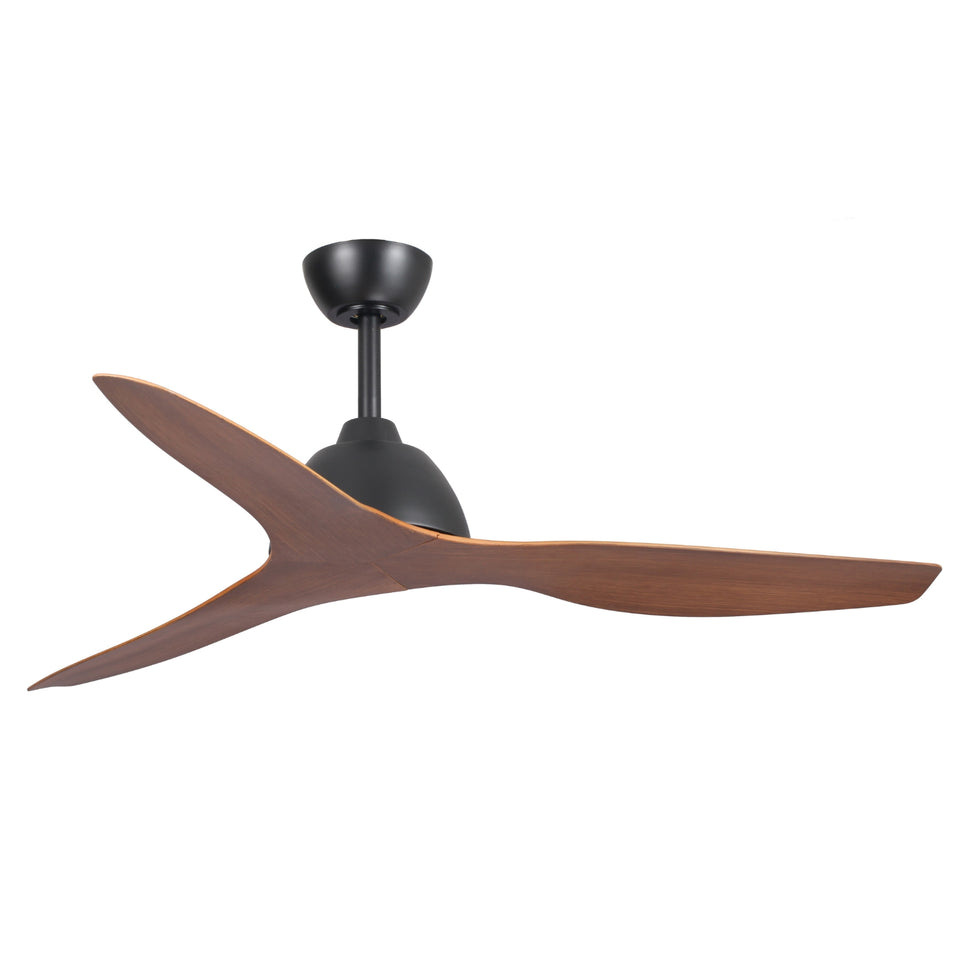
ABS plastic is the common outdoor blade. It resists moisture, warping and rust, cleans easily and can be moulded into almost any blade shape. UV-stabilised ABS also resists fading and cracking in sun. Timber blades are the usual warning. Timber blades can warp or swell in moisture, and sealed wood suits only covered, low-humidity spaces. Many woodgrain blades are plastic with a printed or moulded grain, so a woodgrain finish does not mean timber. The woodgrain ceiling fans let you compare finishes, and the blade material is on the product page.
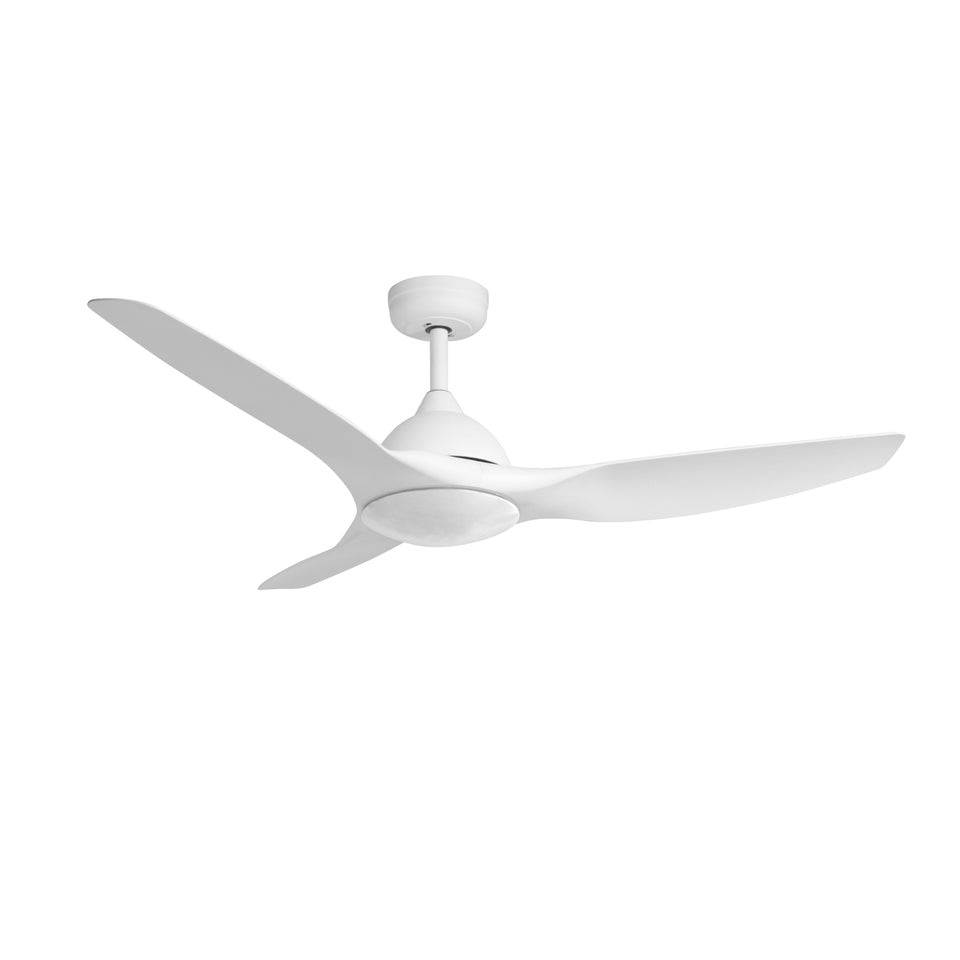
A light on the fan lets one fitting do two jobs and extends use of the area after dark. It also avoids a problem: a fan under or beside downlights can produce a strobe effect as the blades pass in front of the light. Many fans here offer switchable colour temperature, from 3000K through 4000K to 5000K. Universal fittings take standard E27 or B22 bulbs, proprietary LED kits usually cannot take standard bulbs, many models come as light or no-light versions only, and a separate control lets you change the lights without changing the fan speed. A light kit should match or exceed the fan's moisture rating, and fully enclosed globes help where insects are a problem. Browse ceiling fans with lights and ceiling fans without lights to compare.
A ceiling fan is a fixed electrical appliance hung above people and furniture. Hard-wired fans must be installed by a licensed electrician, and it is illegal to attempt a wall-switch fan without an electrician's licence. Outdoor electrical work has to meet AS/NZS 3000, which also covers pool and spa zones. A licensed electrician must install every fan here.
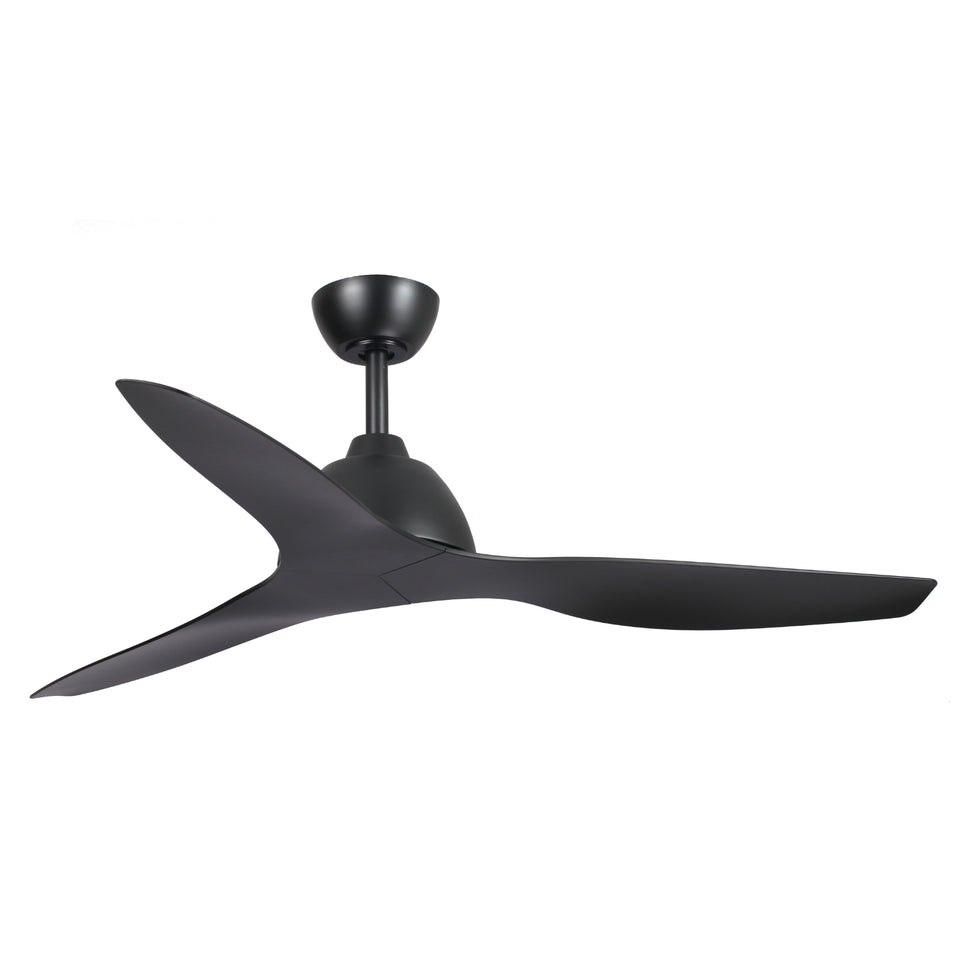
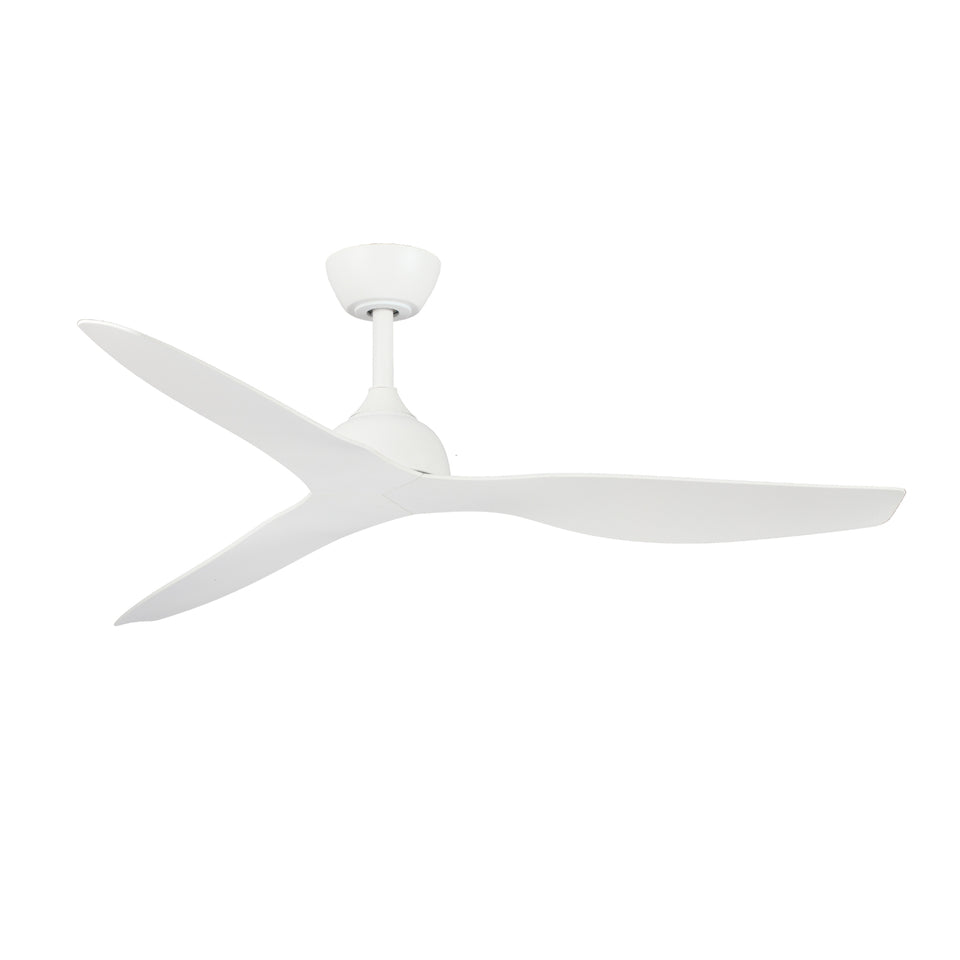
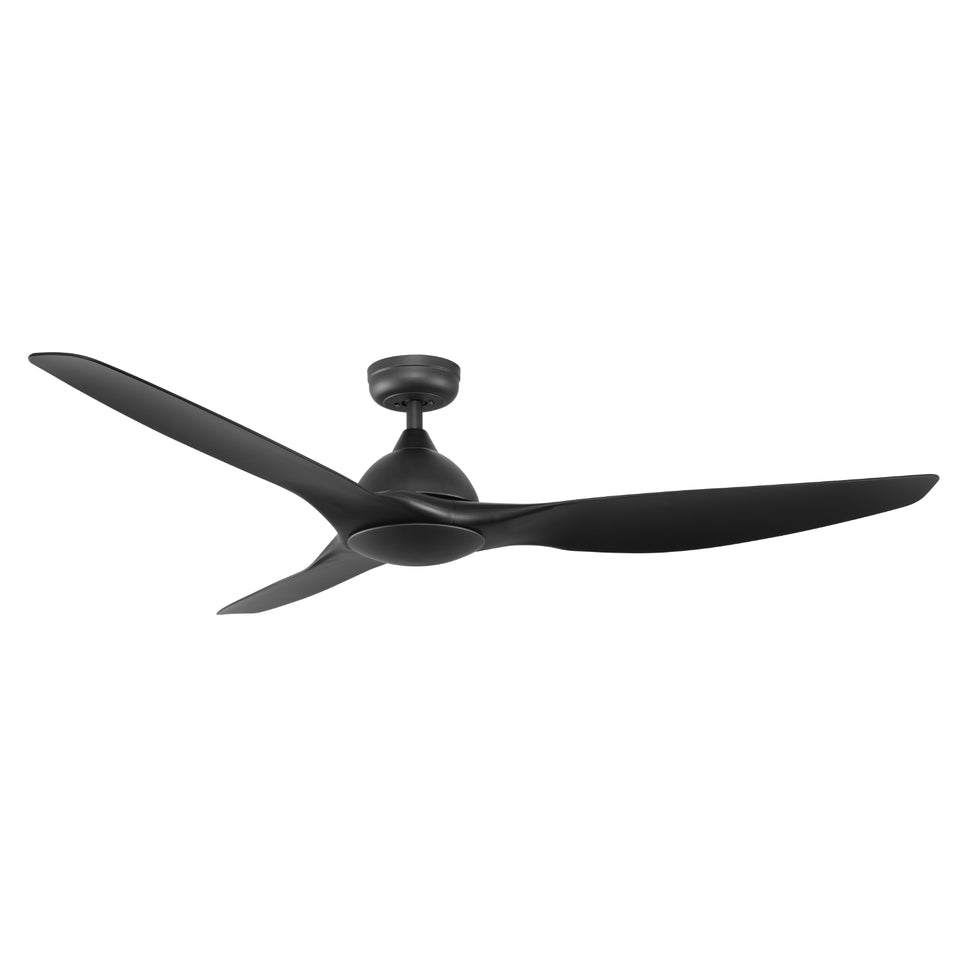
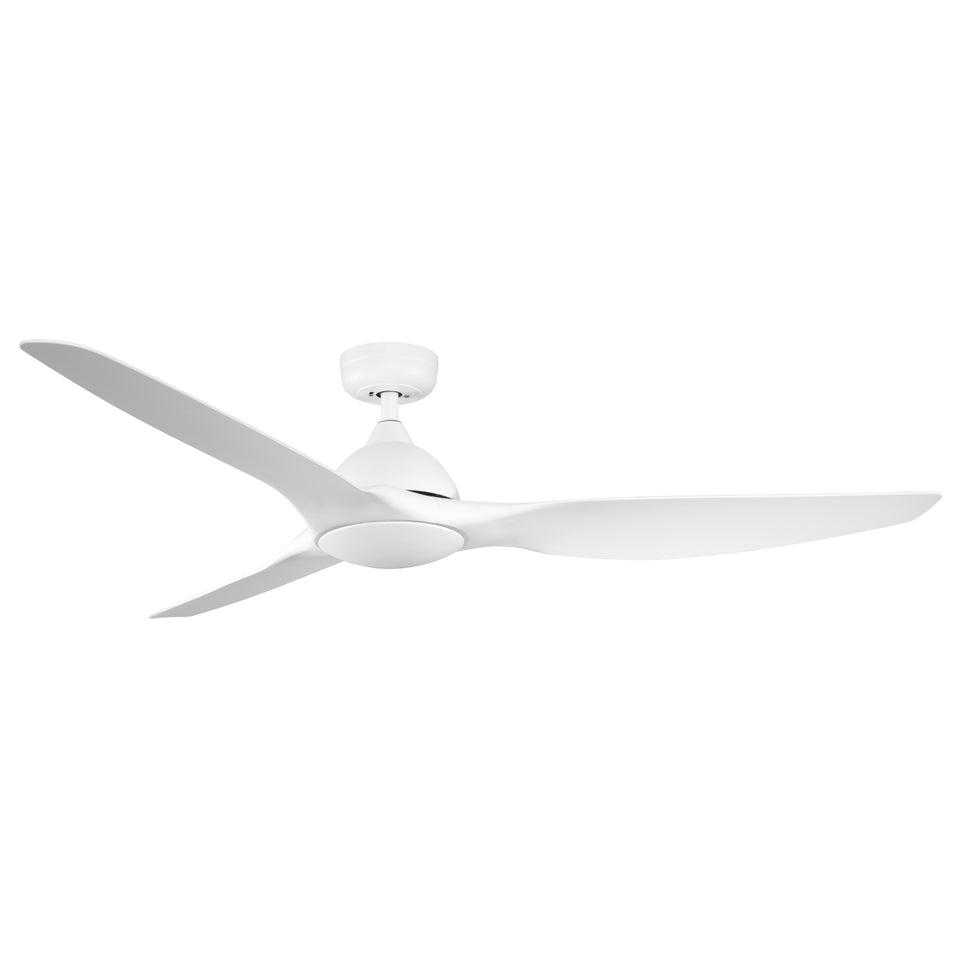
White and black are the usual outdoor finishes, and woodgrain blades give a timber look on an ABS blade. Both colours come as a black ceiling fan and a white ceiling fan. For low ceilings see low profile fans, and check that the fan allows outdoor use. For the full range, see ceiling fans, and for ranges by brand, Martec ceiling fans and Fanco ceiling fans.


