
*View accurate shipping rates and availability






199 Items



Up to 70% off across the store, plus free towels and mirrors up for grabs on orders over $800*
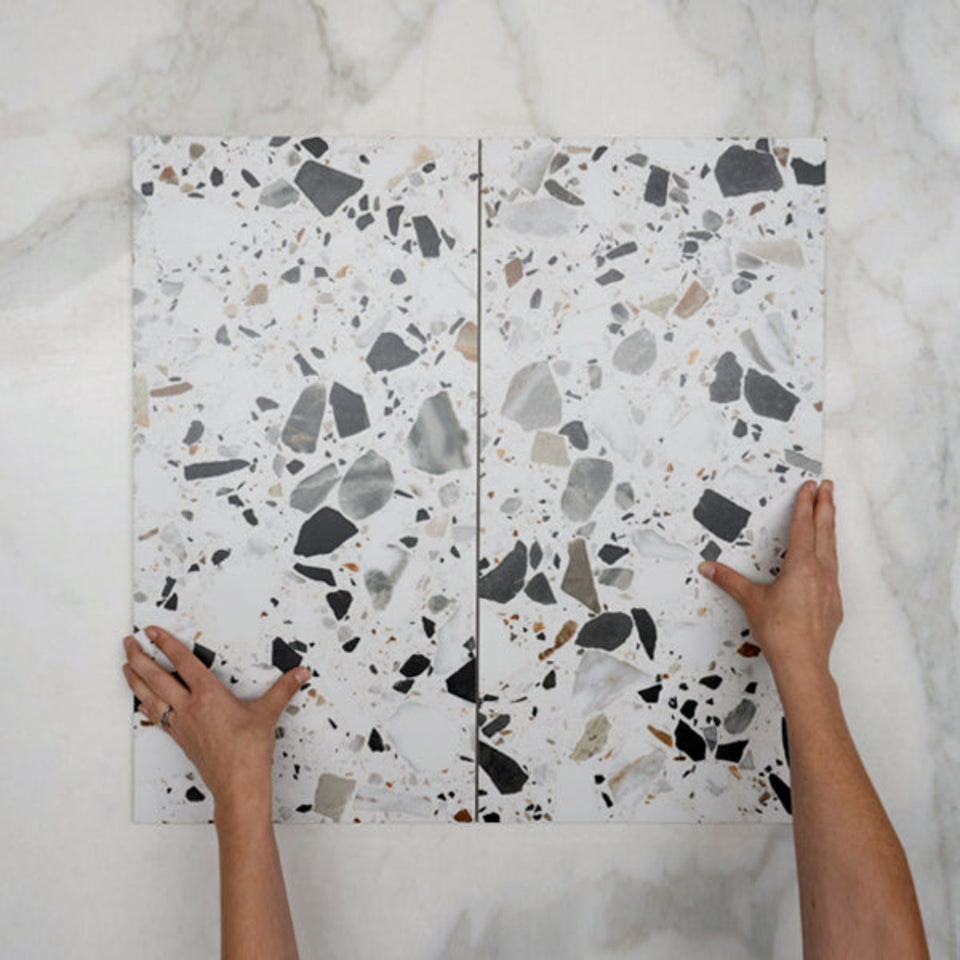
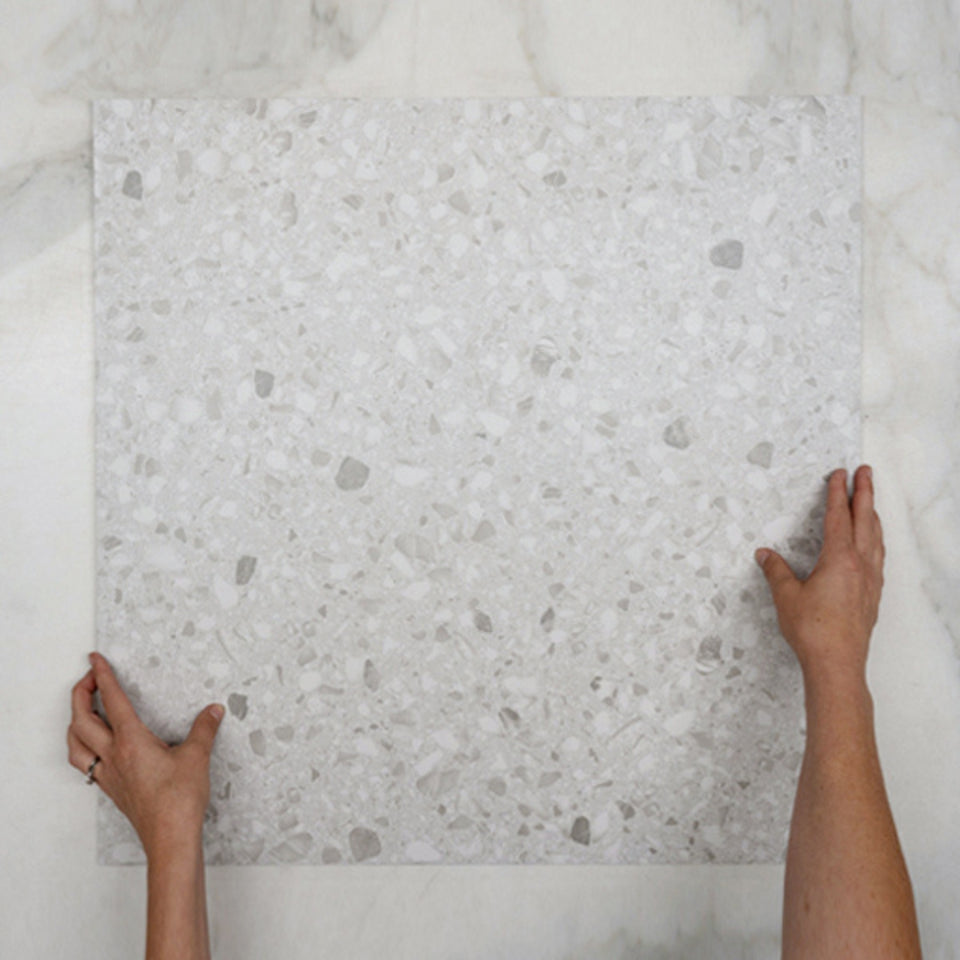

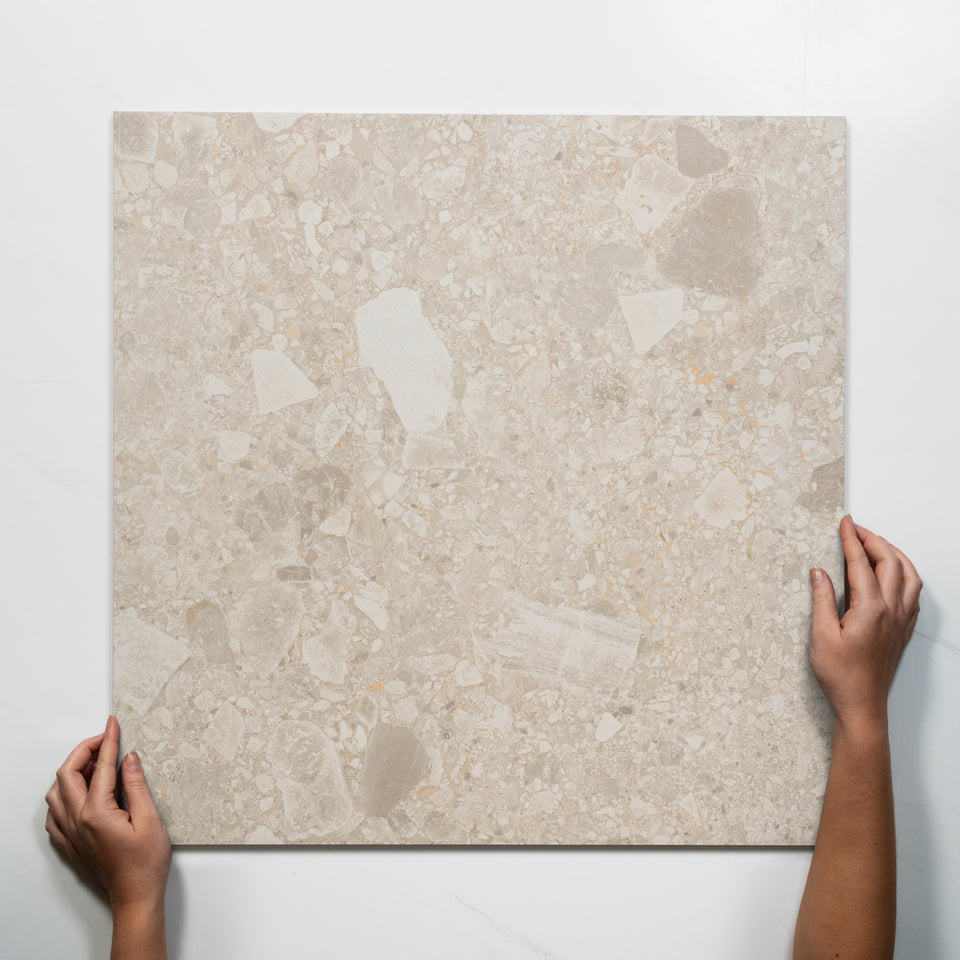
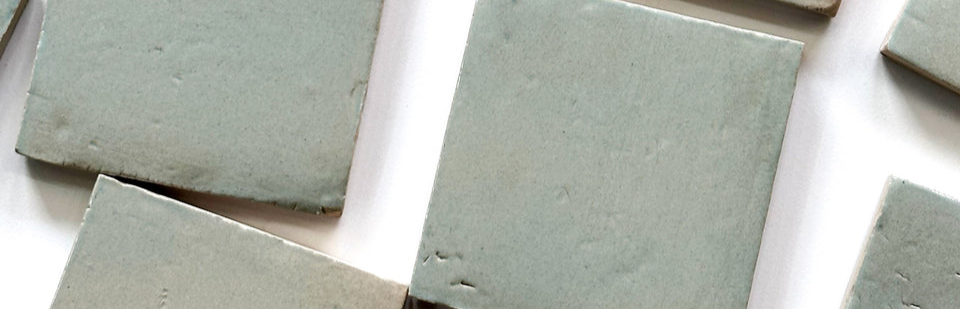
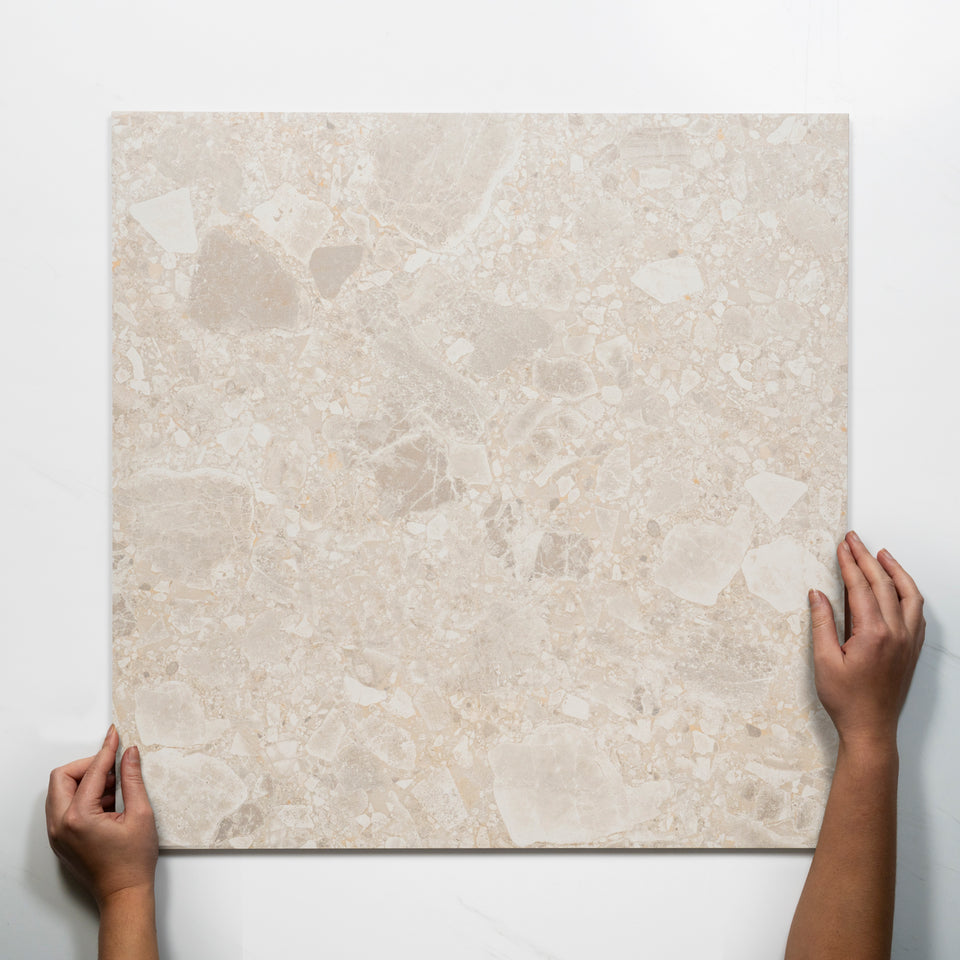


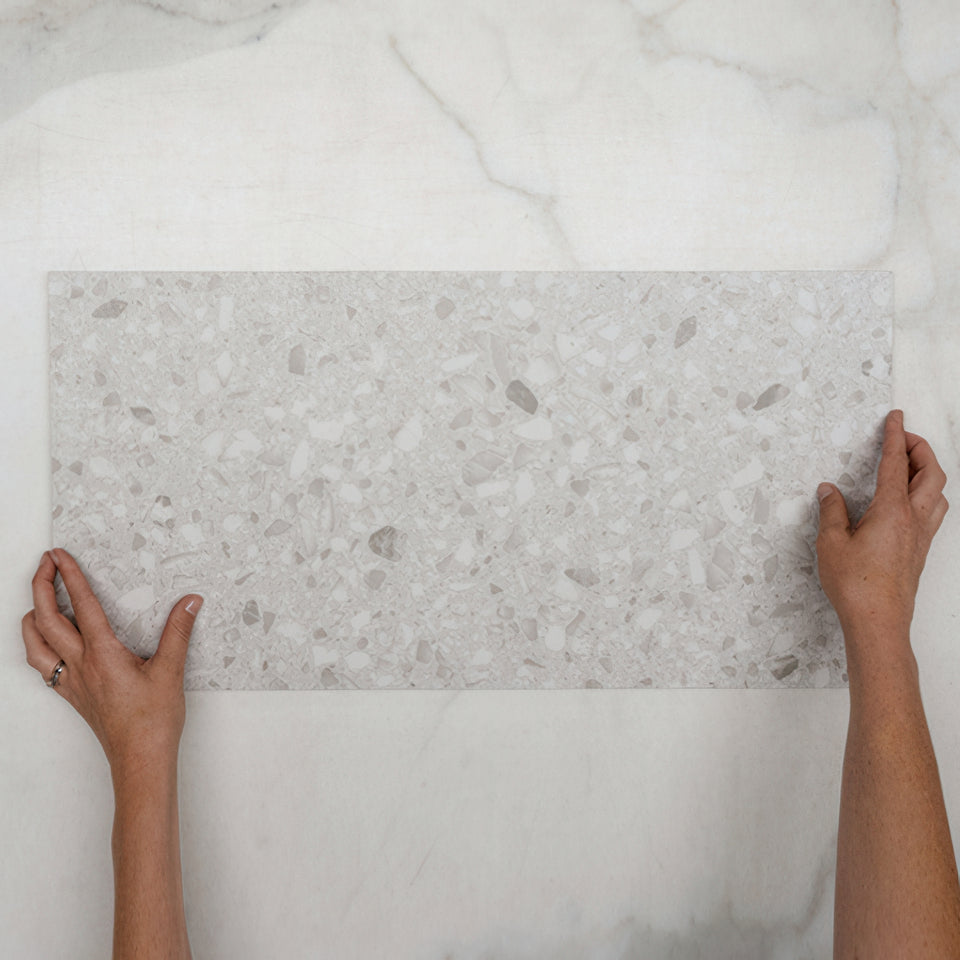


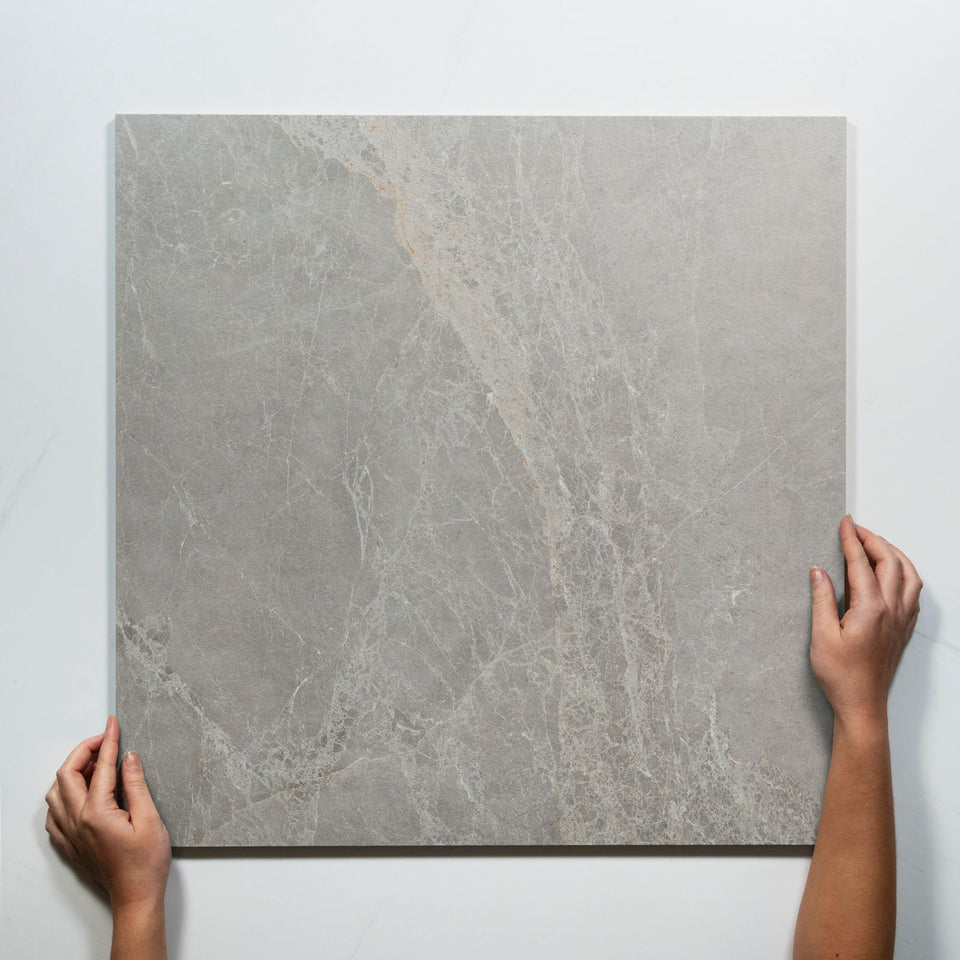

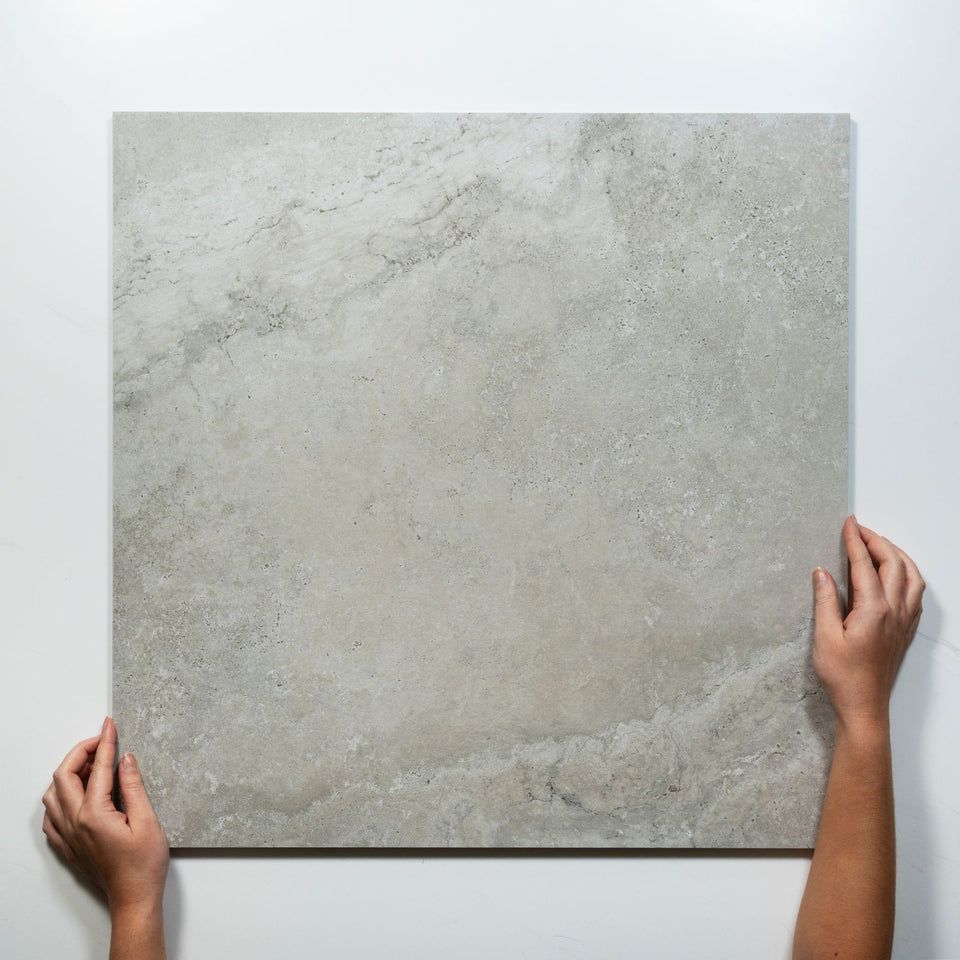


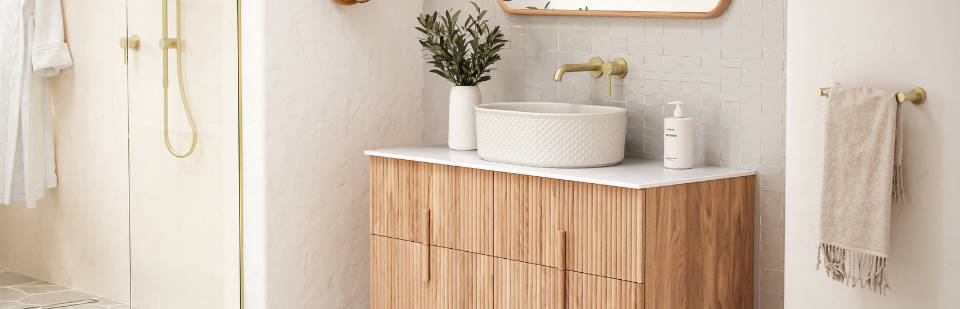


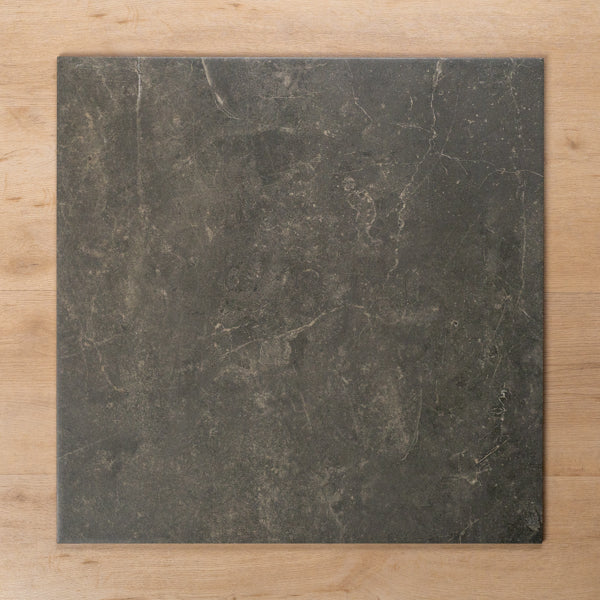


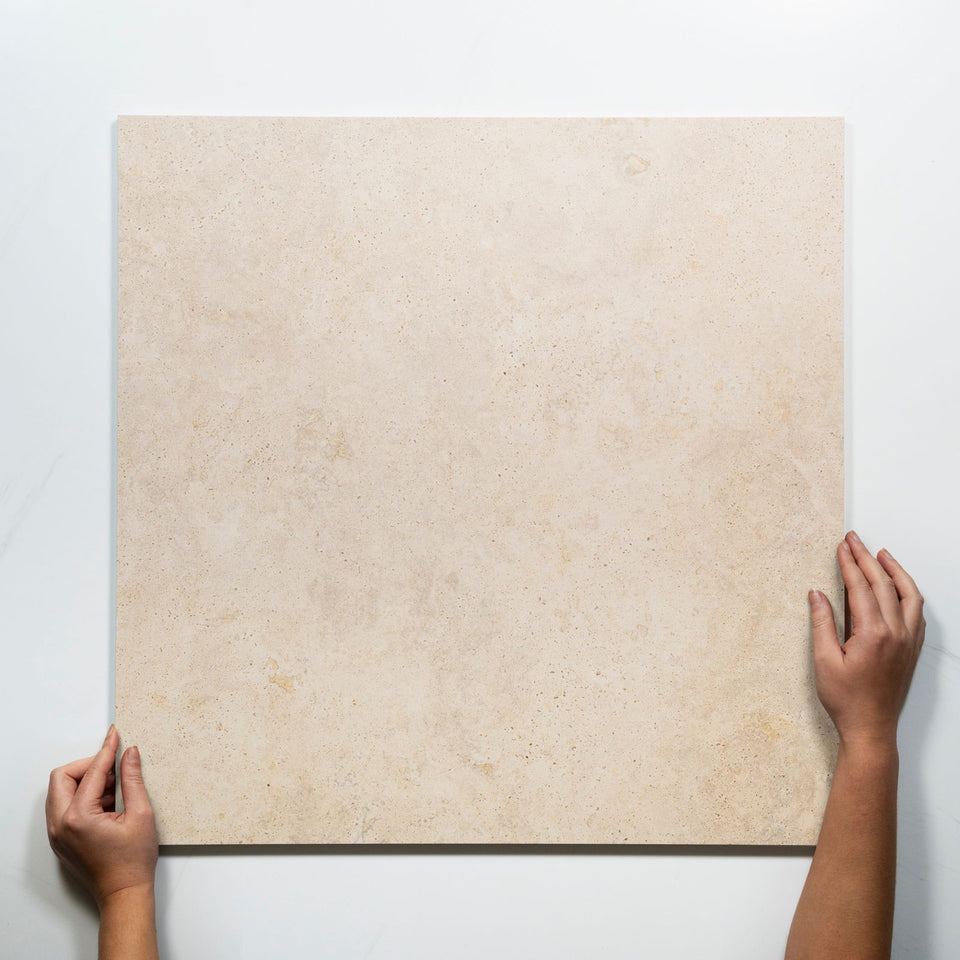
A large tile changes the scale of a room. With fewer joints, the surface reads as one continuous plane, and there is less grout to clean. This collection holds the larger formats in the TBS range: 300 x 600mm and 450 x 900mm rectangles, 600 x 600mm squares, 600 x 1200mm rectangles and a pair of 22.5 x 900mm plank formats, mostly in porcelain, in stone, travertine, terrazzo and concrete looks.
The sections below cover why people choose large formats, how they behave in small bathrooms and on shower floors, what the slip and Area lines print, and what to plan for in the layout. For the whole range of floors, see the floor tiles collection, and for rooms, the bathroom tiles collection.
The reasons are consistent. Large format tiles change the scale of a room so the design shows in its best form, with less interruption from grout lines and less cleaning to worry about. They give a flowing, open look with fewer grout joints and easy maintenance, and that is why people are embracing big tiles. Large formats were once mainly used in commercial settings, such as lobbies and entryways, and are now common in homes.
Fewer grout lines reduce visual clutter, so the surface reads as one continuous plane and the room feels larger, especially with light, low-contrast tile and grout. Large-format tiles give a sleek, contemporary look with fewer grout lines and a more continuous appearance.
Sizes are moving upwards from the norm of 600 x 600mm. They now reach 750, 800 and 900mm squares and 600 x 1200mm and larger rectangles, with panels of up to 1620 x 3200mm at the top. 600 x 1200mm is the standout choice for consumers. The tiles in this collection run up to 600 x 1200mm, with the Dimensions lines showing 300 x 600mm, 450 x 900mm, 600 x 600mm and 600 x 1200mm as the main formats.
Most of the range sits at 600 x 600mm and 300 x 600mm, with a smaller group at 600 x 1200mm. For the size handles on their own, see the 600x600mm tiles collection and the 600x1200mm tiles collection.
Large-format floor tile is mostly porcelain. Porcelain is dense and strong, so manufacturers can produce larger tiles that stay flat. Ceramic is less dense, so large-format ceramic is generally used for walls and not floors. That matches this collection: porcelain makes up most of it, and the one ceramic range, White Gemma in 300 x 600mm, is the smaller format.
Edge matters more on a large tile than a small one. Large-format porcelain is fired and cut to exact size, so the edges are straight, which allows narrow joints. Check the rectification before buying, and the Edge line in this collection prints it.
A common worry is that large tiles overwhelm a small room. Tile size should not be determined by bathroom size, and a small bathroom can look striking with large format tiles. A 12 x 24 inch tile is the most flexible choice. It is large enough to cut down grout lines and small enough to limit waste and awkward cuts. A 24 x 24 inch tile gives a calmer, modern feel. Both can go on floors and walls, with the layout planned to avoid thin slivers at the edges.
The right size balances the look with the needs of each zone: large bathrooms suit large tiles and very small bathrooms sometimes suit medium tiles better, to keep the cuts easy. Small rooms benefit from medium to large tiles for fewer grout lines. In this collection, 300 x 600mm is the smaller option, and 600 x 600mm and 600 x 1200mm are the larger ones.
The shower floor is the place for small tiles. Shower floors perform best with smaller tiles, from mosaics to small squares, because they allow the surface to slope properly to the drain, and because the extra grout lines provide traction. Small tiles are well suited to curved surfaces, shower pans and accent details, and are the preferred choice for shower floors and niches.
So a bathroom with a large-format floor and walls usually pairs them with a mosaic in the shower. The mosaic tiles collection covers the small formats. Mixing sizes also works, such as a large-format floor tile with a smaller subway tile on the walls, or a mosaic band to break up a large field of tile, with a consistent grout colour to hold the design together. The subway tiles collection holds the subway shapes.
Orientation changes how a room reads. Laying rectangular tiles vertically can make ceilings feel higher, and laying them horizontally can widen a narrow bathroom. For plank-size timber-look tiles, offsetting the tiles by about 150 to 200mm gives a natural-looking finish. The collection includes the 450 x 900mm and 22.5 x 900mm plank formats, which suit that kind of layout.
For a shape with more movement than a straight lay, the herringbone tiles collection covers the zigzag.
Large tiles ask more of the installation, and done correctly they perform for years. They need a flat, well-prepared substrate and professional installation to keep the edges level. Large porcelain panels need very specific handling and installation techniques. Large format tiles installed correctly should not crack or suffer from settlement issues.
The practical step is to involve the tiler early. Ask about the state of the floor or wall, whether it needs preparation, and how the tiler plans to handle and fix the size you choose. This body does not set out installation methods, which depend on the tile and the substrate.
Layout planning matters more with large tiles. It is worth mapping where each tile will fall before work begins, so that thin slivers are not left at the edges. The grout lines should also land where you want them, which you plan before the first tile goes down.
A large-format layout in a smaller bathroom generally works best when it stays simple, with few pattern changes, borders or visual breaks that shrink the space.
The slip lines run across a wide spread. P4 and P5 are the largest groups, with P3 and some Not rated lines, and the wording varies. Some P3 tiles are moderate risk and recommended for indoor wet areas, including bathrooms, kitchens and laundries, and others are moderate to high risk and suited to dry areas. P5 tiles are a very low slip risk suitable for outdoor use.
Matte or textured finishes reduce slipperiness compared with glossier options, so verify slip ratings and local requirements for wet areas. The finishes in this collection are mostly matte, with a large group in grip, and smaller groups in 3D, lappato and polished. The floor tiles collection explains the P and R scales in detail.
The Application line says where each tile can go. Most print Walls and Floors, a smaller group prints Floors, and a few print Walls only. The Area line adds the setting: Indoors, Indoors (wet and dry areas), Indoors and covered outdoor areas, Indoors and Outdoors, and Outdoors. Matching indoor and outdoor floor tiles give continuity, and the collection has examples: the Avalon charcoal and greige external tiles print P5, and the Clio terrazzo in 300 x 600mm prints Indoors and Outdoors.
For the outdoor side, the outdoor tiles collection compares the full external range, and the wall tiles collection sorts the wall formats.
Neutrals dominate. Beige, grey and white are the three largest colour groups, with black, cream, greige, brown and ivory in smaller numbers. For colours across the store, see the beige tiles collection, the grey tiles collection and the white tiles collection.
Order more than the measured area. Add 10 percent for cuts and spares, or 10 to 15 percent in general, rising to 20 percent for large formats such as 600 x 1200mm and bigger. Valerie needs 15 percent. Rooms with more cuts need more again, so confirm the quantity with your builder or tiler before ordering.
A worked example: a living room floor of 5.4m by 4.2m is 22.68 square metres. A 600 x 1200mm tile covers 0.72 square metres, so the room takes 32 whole tiles, and with 20 percent for the large format the order is 38. A 600 x 600mm tile covers 0.36 square metres, so the same room takes 63, and 73 with 15 percent. Start the layout from the centre of the main wall and dry lay the first row, so the cut tiles at each side match and no sliver lands at a doorway.
The product pages print the full details for each range. These show the spread.
Clio is a large-grain terrazzo in 600 x 600mm with a Tech Grip finish, Island is a small-chip terrazzo in 600 x 600mm, and Southside is the Australian made terrazzo look. Tundra is a stone look in 600 x 600mm with a Tech Grip finish, Casuarina is a stone look including 600 x 1200mm, and Avalon, Burleigh and Myra are the stone and limestone looks. Tuscan, Valerie and Josie are travertine looks, and Avorio is a warm ivory travertine. White Gemma is a ceramic tile in 300 x 600mm.
Start with the room and the surface. For a bathroom floor or wall, a 600 x 600mm or 600 x 1200mm tile gives the fewest joints, and a 300 x 600mm tile suits a very small room. For the shower floor, choose a mosaic. For any floor, read the slip line, the wear line and the Application line before the colour.
Talk to your tiler about the substrate before ordering, choose a tonal grout for a continuous surface, and order extra for cuts. The tiles collection sits above this one for the whole range.


