
*View accurate shipping rates and availability






93 Items



Up to 70% off across the store, plus free towels and mirrors up for grabs on orders over $800*






White tapware is a clean, quiet finish that sits into a bright bathroom or kitchen rather than standing out from it. This page holds white taps for the basin, bath, shower, kitchen and laundry, mostly in matte white, from several brands: wall basin and bath sets, basin and bath spouts, shower and bath mixers, basin mixers, pull out sink mixers and three piece sets. The guide below sets out what the finish is, how to care for it, what it suits, and what to measure and check before you order each type of tap.
White tapware is a brass or stainless steel tap with a white coating. Most of the white taps here are powder coated, which means a dry powder is baked onto the body to give a flat, even matte surface. A smaller number are electroplated or have another white finish. The look is soft and uniform, with no shine, and it reads as paint more than metal. That is its appeal: it blends with white fittings and light walls, and it brings a crisp, modern feel without the weight of black.
Yes, in the right room. White suits bathrooms and kitchens that are light, simple and bright, and it suits families who want a calm look that does not date. It is less suited to a very busy, high wear setting where the tap will be knocked often, because a coating is the thing that wears. If you want a finish that resists knocks and marks better, a PVD finish such as brushed nickel is tougher. If you want the brightest and easiest to match, see chrome taps.
White taps work in a few distinct ways. On a white basin or a white vanity, they disappear, so the room reads as one clean surface and the tap shape carries the design. Against dark tiles, a dark vanity or a deep wall colour, white taps stand out as a bright accent. In Scandinavian, coastal, Japandi and farmhouse bathrooms, white taps sit with light timber, natural stone, linen colours and soft greens. They look at home in a kitchen with white cabinets, a white sink and a light bench.
If you want to mix, white pairs well with a black accent such as a towel rail or a cabinet handle, and with chrome for a classic look. Keep to one white across the room, because whites differ in warmth from maker to maker, and a cooler white beside a creamier one will look mismatched. Hold a sample or a close photo beside your basin and tiles before you decide, and limit a room to two finishes with one leading. For the dark alternative, see black taps.
A powder coating is baked-on paint with no protective topcoat, so it needs gentle care. Wipe the tap with a soft microfibre cloth and warm water, and add a little mild soap if needed. Dry it so water does not set on the surface, because hard water leaves a chalky film on a matte white finish, and drying after use prevents most of it. Avoid steel wool, scourers, abrasive creams, bleach, strong bathroom sprays and acidic or alkaline cleaners, which can scratch, dull or stain the coating. If limescale builds up, a weak mix of white vinegar and water on a cloth, followed by a thorough rinse, will lift it, and it is worth testing any cleaner on a hidden spot at the back of the tap first.
A powder coating can chip if it is knocked hard, and a chip shows as a dark spot against white. At installation, wrap a cloth around the tap body before gripping it with a wrench or multigrips, because tools mark a coated finish. In use, keep rings, razors and cleaning brushes away from the surface. A small chip can be touched up with a matching paint pen, but a large chip means replacing the part, so handle white taps with a little more care than a PVD finish.
White is not one colour. Matte white is flat and soft, and it hides glare under downlights. A gloss or satin white has a sheen and looks closer to a ceramic basin. Some whites lean cool, with a blue tint that suits a modern bathroom with grey tiles, and others lean warm, with a cream tint that suits timber and natural stone. Search terms such as cream, ivory and matt white all describe versions of the same idea, so read the colour name on the product page and compare it with a sample beside your basin or bench before you buy.
The hole matters more than the style. Keep the existing layout where you can: a mixer replaces a mixer in the same hole, and a three piece set replaces a three piece set at the same spacing. Measure the hole, the spacing and the height under the bench for the hoses. A bench mounted or basin mounted tap is among the quickest bathroom updates, because a plumber can work from under the vanity. In a shower or bath, check whether the existing in-wall body suits the new trim before you order, because bodies differ between makers.
White taps are an easy way to lift a laundry or a bathroom without a full renovation. A standard mixer or a tap set at a laundry trough in white looks clean beside a white tub and white cabinets, and it costs less to swap than the basin or the tiles. Choose a tap that suits the existing hole and the spout reach over the trough, and check the washing machine outlet separately.
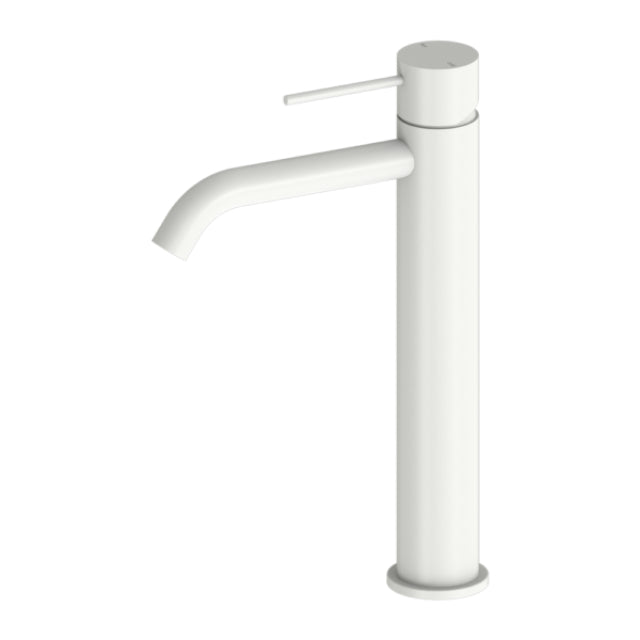
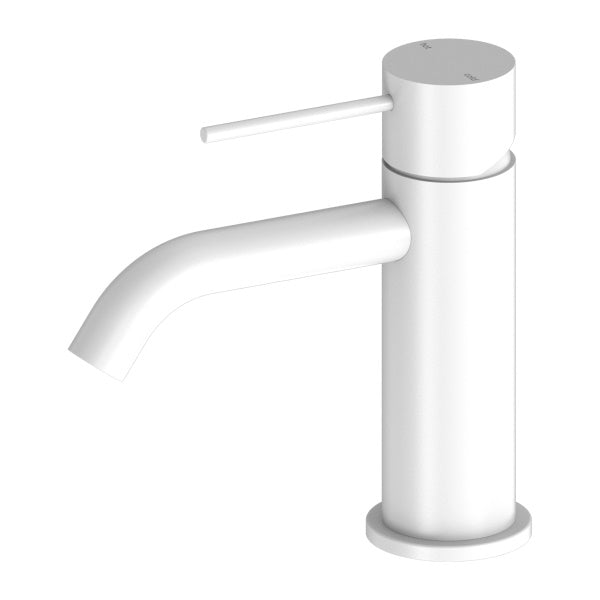
A basin mixer is the main choice: one lever sets temperature and flow, and most basin mixers fit a single tap hole of 35mm. See basin mixers for the full group. The stream should land near the centre of the bowl, not on the rim, so match the spout height to the basin: a standard mixer for an undermount or inset basin, a tall mixer for a bowl that sits on the bench. Reaches on this page run from about 115mm on compact mixers to about 253mm on long spouts. For a traditional vanity with three holes, three piece sets pair a central spout with separate hot and cold handles.
A wall basin and bath mixer set keeps the bench clear and suits a wall hung basin or a floating vanity. The pipe centres have to match the set, and the plumbing is roughed in before tiling, so settle the choice early.
For the bath, a wall mounted spout or a swivel spout serves a built-in bath, and a floor mounted filler serves a freestanding one. See swivel bath spouts. A freestanding filler needs a pipe position that matches the bath and a clear run to the floor. For the shower, a mixer controls temperature and flow with one handle, and the plate is round or square. See shower mixers. Confirm that the trim matches the in-wall body, because bodies differ between makers.
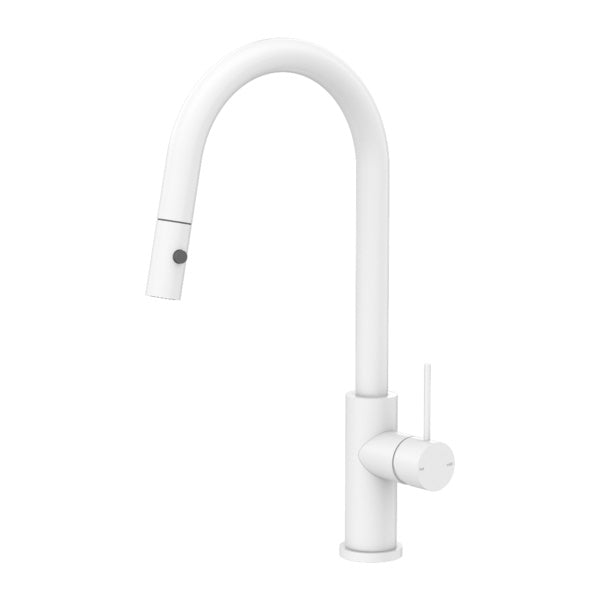
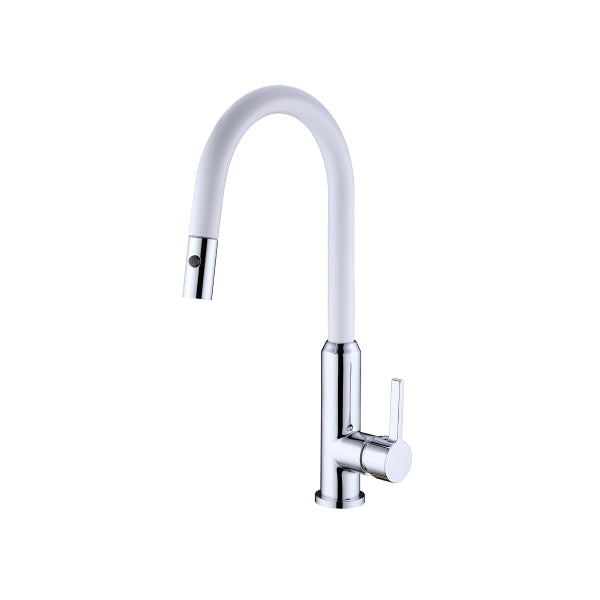
White suits a kitchen with white cabinets, a white sink and a light bench, and a white pull out mixer keeps the tap from breaking the line of the room. A pull out sink mixer draws the hose toward you and suits cooks and large bowls. Check the spout height against any overhead cabinet and the reach against the sink, and leave room under the sink for the hose. A kitchen tap takes more splashes and wipes than a basin tap, so keep the cleaning gentle and dry it after use.
Choose the mounting first, then how easily the tap can be serviced, then the look. Hob mounted taps sit on the basin or bench and are the easier fit in a renovation. Wall mounted taps keep the bench clear and need the in-wall plumbing planned before tiling, and floor mounted fillers need the floor outlet in the right place. Measure the hole size, the pipe centres on a wall set, the basin depth and the clearance to the mirror before you order.
We recommend a solid brass body and a ceramic disc cartridge. A ceramic disc cartridge uses two ceramic plates to control the water, resists wear and shuts off cleanly for years. The cartridges here are 25mm or 35mm, depending on the range, and the bodies are brass, lead-free brass or DZR brass, with some stainless steel. DZR means dezincification resistant, which is brass made to resist corrosion from the inside. The National Construction Code limits lead in plumbing products that touch drinking water to 0.25 percent from 1 May 2026. Check WaterMark approval on the product page, and use a licensed plumber to fit the tap.
WELS is the Australian water efficiency label, and more stars means the tap uses less water. Most white taps here carry 5 or 6 stars, and the rating is on each product page. Mains pressure gives you the most choice. Low pressure and gravity fed systems need a tap rated for it, and a plumber can check the pressure at your tap. Some spouts include a second aerator without a flow restrictor, so you can choose the flow that suits your supply.
The contents depend on the tap. A basin or sink mixer comes with the mixer, installation instructions and usually an installation kit. A wall set comes with the spout and the mixer or taps, a fixing kit and instructions. A shower or bath mixer may come as an in-wall body with a trim kit, or as the trim only, so the in-wall body may be sold separately. Read the product page for the exact list before you order.
The white taps on this page come from Nero taps, Fienza taps, Phoenix taps and Dorf taps. Whites differ between makers, so staying with one brand and range keeps the shade and the handle shape consistent through the room. The full group is on our taps page.


