
*View accurate shipping rates and availability






6 Items



Up to 70% off storewide, free metro shipping over $500, and free gifts from $800. Spend more to unlock luxury towels and mirrors.*

A round bath is as wide as it is long, so it takes a square of floor and sits best in a room with space to spare. The baths on this page are a small, mixed group. Two are round: the Decina Florencia in acrylic and the Fienza Shinto in cast stone. One is a square corner bath, the Decina Angelique, sold as an inset bath and as a spa. Two are Caroma Contura II baths, a rectangular oval. The sections below say what each is, how a round bath fits a room, and what to confirm before ordering.
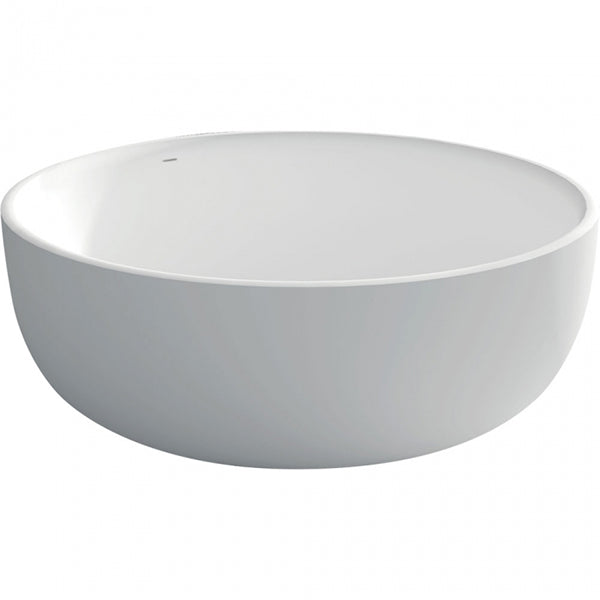
The Decina Florencia is the clearest round bath here. It is 1400mm by 1400mm and 600mm high, in premium sanitary grade acrylic with a thin lip and a raised base. It can be freely located in the bathroom, with self-supporting feet and an integrated overflow. The Fienza Shinto is a circular cast stone bath of 1350mm, in matte white, with an overflow.
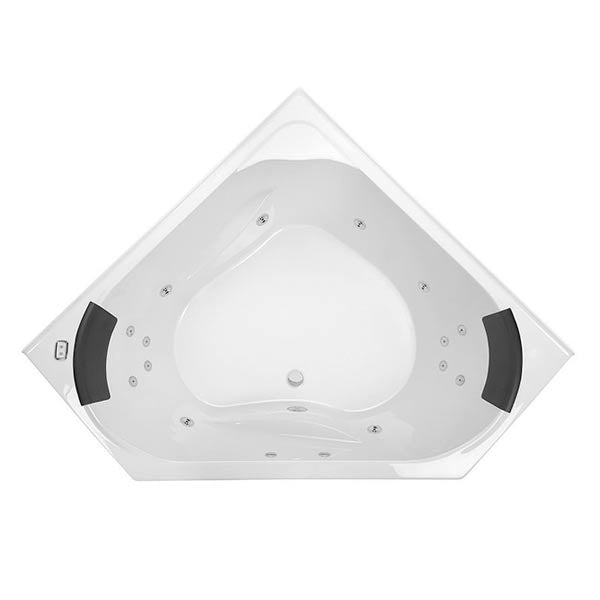
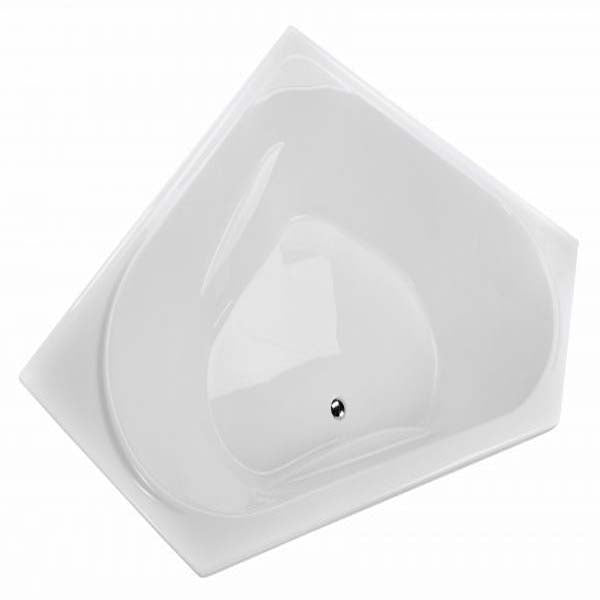
The Decina Angelique is 1295mm by 1295mm in the smaller size and 1465mm by 1465mm in the larger, 480mm deep. It is a square corner bath with moulded armrests and lumbar support, and it suits two bathers. The Caroma Contura II comes in 1500mm and 1700mm, with a thin rim, in gloss or matte white. It is rectangular, not round, so the true round baths on this page are the Florencia and the Shinto.
Round baths come in a wide range of sizes. Small Japanese-style soak tubs run from 850mm to 1300mm, acrylic round baths from 1300mm to 1500mm, and stone and polymarble round baths go up to 1700mm. Quoted sizes for round baths are not always consistent, so measure from the specification sheet of the bath you choose.
The typical size is therefore a range, and most round baths fall between 1200mm and 1500mm. The two true round baths here, at 1350mm and 1400mm, sit in the middle of it. No bath on this page is 1200mm, so for a 1200mm round bath the small baths page has the compact options.
A round bath uses its width in both directions, which is the cost of the shape. A 1400mm round bath needs a 1400mm square of floor before any clearance is added. A freestanding bath needs at least 100mm clear around it for cleaning, and the total footprint adds 200mm to 300mm to the bath's length and width. For a 1400mm round bath that gives a space of roughly 1600mm to 1700mm square. Plan on the larger figures and treat the smaller ones as the least a room can allow.
Also measure the way in. Standard doors are about 820mm wide, and a heavy bath may not fit through one. Check the door, the hall and the stairs before choosing a bath that is 1350mm to 1400mm across.
Round and oval baths share one continuous surface with no harsh corners, which makes dirt easier to remove. Square baths can work in a corner or an alcove, and circular bathing wells can align and support the body better. The trade is that a square bath needs a bigger tub and more floor, and it is harder to get in and out of because the sides are further apart. That last point applies to the Angelique, which is square in plan, so check the step and the rim width before ordering.
The Florencia and the Shinto have no stated inner depth, so the soak depth is a question for the specification sheet. The Contura II has 430mm of inner depth and the Angelique is 480mm deep, which sits at or above the 450mm to 480mm range that makes a good middle.
The curved interior of a round bath supports the body for a deeper, more comfortable soak, and acrylic keeps the water warm for longer. Compare the measured figures. The Florencia holds 290 litres measured 200mm below the rim. The Contura II 1500mm holds 285 litres and the 1700mm holds 338 litres. These litres are not directly comparable unless the fill line is the same, and the Florencia states it where the Contura II does not.
For a Japanese style soaking bath, which is a short, deep bath for sitting upright, the nearest bath in the range is the Decina Cosmo at 1300mm with a raised backrest, covered on the small baths page. None of the baths here is a Japanese style bath.
A Japanese style bath is short and deep, built for sitting upright in water up to the shoulders. A bath only 1000mm to 1300mm across can be deeper than a long bath, with internal depths of 500mm or more for seated use. Check the depth against the person who will sit in it.
The nearest bath in our range is the Decina Cosmo, a Japanese style soaking bath only 1300mm long. The increased internal depth allows full body immersion, with a raised backrest, and the smaller internal surface area helps the water stay warm. It is an oval bath, so it sits on the small baths page and not here.
The Angelique is also sold as a corner spa bath, with fourteen jets: six flush centro jets and eight flush mini jets. It adds two air controls, a flush suction, a rim mounted touch pad and a 750 watt pump. It is an inset design with a tile bead, a steel rod reinforced rim, a double reinforced base and black Sia headrests. It is available in 1295mm and 1465mm. The spa baths page covers the jetted range, and corner baths covers the corner format.
The Florencia is acrylic and weighs 75kg, built to AS 1172.5:2019. The Contura II is acrylic at 46kg for the 1500mm and 48kg for the 1700mm, with a stain-resistant sanitary grade finish and footlocker fittings supplied but not fitted. The Shinto is cast stone solid surface, moulded in one piece with no joins. It does not yellow or crack and can be sanded and refinished, and stone baths weigh in excess of 150kg.
The weight difference is large. Acrylic baths weigh roughly 20kg to 40kg empty and stone baths 200kg to 400kg. Read the weight for the bath you choose and not just the material. Stone and cast iron baths may need a reinforced floor, and a large stone bath filled with water can weigh over 500kg, so a timber floor needs a check by the builder before a stone bath is chosen. The stone baths page covers the heavier end and acrylic bathtubs the lighter.
The Florencia has an integrated overflow, a centre waste, and the plug and waste sold separately. The Shinto has an overflow. The Contura II is non-overflow only and the plug and waste are sold separately. Choose the waste to suit: an overflow bath takes an overflow waste, and a non-overflow bath takes a waste without one. The Angelique is sold without the plug and waste, and a pop-down waste is the better choice for safety and easier servicing. Australian building codes require a fully removable bath waste in some situations, so ask a plumber before buying. The bath wastes collection has the options.
A centre waste suits a round bath, because nothing about a circle favours one side. The Florencia and the Contura II both have the waste in the centre. Both fit a floor waste directly below the bath. The waste system sits below floor level, so decide the position before the floor is finished.
A freestanding bath takes a floor mounted spout or mixer, or a wall mounted set if the bath sits close enough to a wall. Leave at least 100mm clear around the edge for a freestanding mixer, and position a floor mounted spout precisely before the tiling goes down. A freestanding bath placed near a wall can need a spout arm of nearly 350mm. A round bath in the middle of a room therefore points to a floor mounted mixer. The freestanding bath mixers page lists the floor mounted options, and freestanding baths covers the type across every maker.
The Florencia has self-supporting feet for easy installation, the Contura II includes footlocker fittings for extra stability, and the Angelique is an inset bath with a steel rod reinforced rim and a double reinforced base. Level a freestanding bath on its feet before the water connections are made, and do not seal the feet to the floor so the bath can still be adjusted. Follow the instructions that come with the bath.
The round baths here are white: gloss on the acrylic baths and matte on the Shinto. The Contura II comes in gloss or matte white. The Angelique is gloss white. Rinse after each use, wipe with a soft sponge or microfibre cloth and a pH neutral cleaner, and avoid bleach, ammonia, abrasive powders and steel wool. The Shinto's cast stone can be sanded and refinished, which is worth knowing for a scratch. White baths covers the finishes across makers.
Round baths make a statement and work well in larger bathrooms, large master bathrooms and luxury accommodation. Compact round soaking tubs suit small bathrooms and holiday homes, because a small diameter can still hold a deep soak. A round bath asks for floor in exchange for its shape. If the room is narrow, a back to wall bath or a corner bath will give more bathing for the same floor, and back to wall baths and built in baths cover those.
Measure the room for the square, not the length. Add the clearance around the bath, check the door and the route, and plan the waste and tapware before the floor is finished. Choose acrylic for a lighter bath and cast stone for a bath that holds heat, after checking the floor. If the room cannot give a square of that size, square baths and the bathtubs page show the other shapes.


