
*View accurate shipping rates and availability






137 Items


Up to 70% off across the store, plus free towels and mirrors up for grabs on orders over $800*




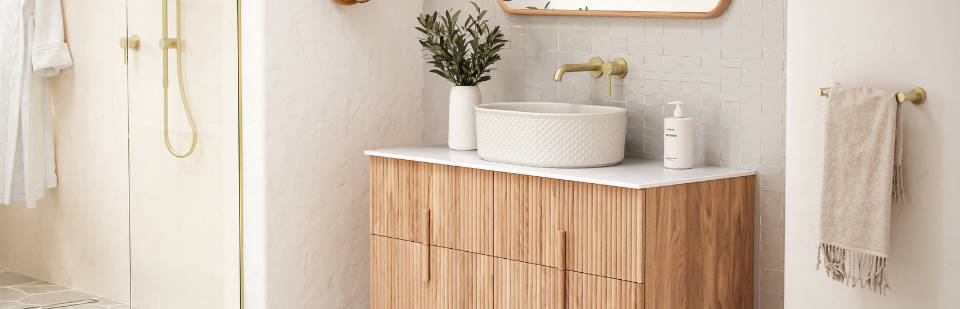

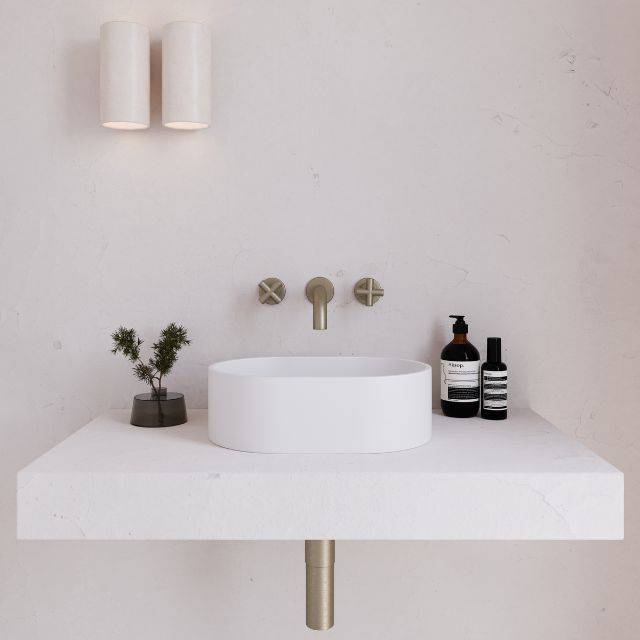


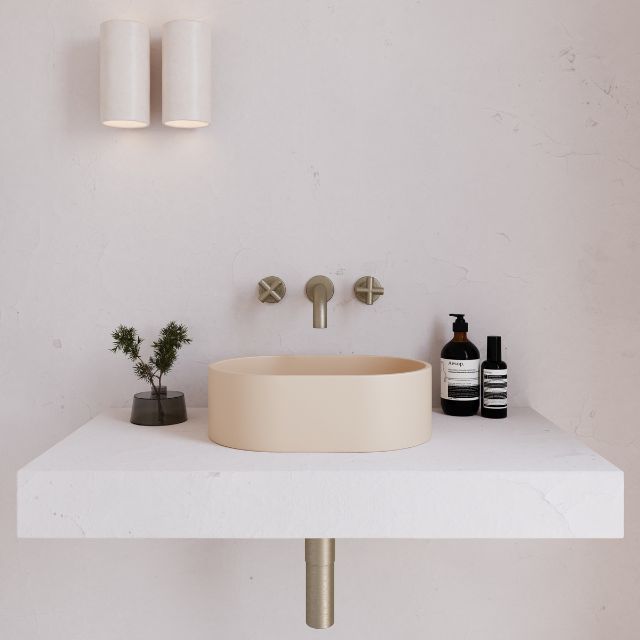
An oval basin has an elongated, rounded bowl with no corners, and it is one of the most common basin shapes on a bench. This page holds oval basins from Caroma, ADP, Otti, Timberline, Eight Quarters, Turner Hastings, Fienza, Kaskade and Bao, in above counter, under counter, inset, wall hung and freestanding forms, in ceramic, concrete, stone composite and solid surface. The guide below covers what the shape gives you, how it compares with round and rectangular basins, the sizes, and the tap hole, overflow and waste to check.
An oval is a soft shape that breaks up the straight lines of rectangular tiles and a boxy vanity. It has no sharp internal corners, which suits handwashing and is easier to wipe clean, and ribbed oval ceramic basins add texture and a relaxed feel. For a smaller bench, a 400mm oval fits a tighter vanity, and larger ovals need more bench depth. The Mini Pod from Eight Quarters is a 400mm by 280mm oval concrete basin, and the ADP Oval under counter basin is 420mm by 350mm.
The shapes differ in how they use the bench. Pill and oval basins run longer than round ones, and rectangular basins are usually wider and deeper. A round basin needs less bench length than a rectangle of similar capacity, so it suits the narrowest benches, as the round basins page explains, while an oval gives more wash space along its length. Rectangular basins and square basins have strong, clean lines for minimalist or industrial rooms, and their corners need more attention when cleaning. The pill shape basins sit between oval and rectangle. If the bench is long and you want a soft line, oval is the better call; if the bench is narrow, round is.
There is no standard size, so check the dimensions of the basin you want. The oval basins here run from about 400mm to 600mm long. The ADP Patty is 450mm by 280mm, the Otti Artis O'96 comes in 455mm and 480mm lengths and is 320mm wide, and the Otti Quay is 500mm by 340mm and 120mm high. The ADP Ollie is 500mm by 340mm. The Caroma Contura II above counter basin is 530mm by 360mm with a 9.2 litre bowl, and the Riviere is 530mm by 370mm and 182mm high. The Turner Hastings Fino is 550mm by 380mm and holds 9 litres, and the Caroma Liano II pill under or over counter basin is 580mm by 330mm and holds 6.7 litres. The Kaskade Barcelona stone basin is 590mm by 250mm and 160mm high, and weighs 8kg. The Kaskade Lucia is 600mm by 320mm with a 17 litre bowl, and the Otti Hudson fluted oval is 600mm by 320mm. Test the dimensions with painter's tape on the vanity before you order.
Most oval basins here are above counter basins. They sit on the bench and take a tall mixer or a wall mixer. The total height is the vanity plus the basin rim, so a tall vanity can make a high bowl awkward. Oval under counter basins fit beneath a solid benchtop, and undermount basins are not compatible with laminate or timber tops. Inset ovals include the Caroma Riviere. Wall hung ovals include the Caroma Opal and Liano II hand basins and the Turner Hastings Claremont, and wall hung basins need fixing to a support beam fitted between the studs. The freestanding basins page covers the ones that stand on the floor.
Most oval basins here have no tap hole, so the mixer mounts on the bench or the wall. The exceptions are the inset Riviere with overflow, which has one tap hole, the wall hung hand basins with one tap hole, and the Claremont, which comes with one or three. Offset or wall mounted mixers often suit pill and oval basins better than centre-set tapware. Read the tap hole line, then choose basin mixers or bathroom basin taps to suit.
The overflow decides the waste. The Turner Hastings Fino and Claremont take a 32mm waste with overflow, sold separately. The Otti basins need a 32mm pop-up waste sold separately, the Eight Quarters concrete basins take a 32mm plug and waste sold separately and the Kaskade stone basins take a 32mm waste. The Caroma Liano II includes a matching ceramic pop-up plug and waste and the Contura II includes a flush fitting waste. Ceramic basins have a 45mm drain hole that fits a 32mm waste. See basin wastes. A ceramic basin's waste is tightened by hand only, with a foam washer sealed with neutral cure silicone.
Oval basins here are ceramic, fine fire clay, MagnaCast mineral composite, concrete and stone. Fluted basins collect dust and soap scum in the grooves and need more detailed cleaning, and concrete needs regular sealing and gentle cleaning. Wipe ceramic with a soft cloth and a weak non-abrasive detergent and dry spills. See fluted basins for the ribbed ovals. The colours include matte white and black, with grey, green, pink and beige.
Check the bench cut-out and the 32mm waste size before ordering, to make sure the basin fits. The Oval Flute works best with a high basin mixer or wall mounted taps, which fits the rule for any raised bowl that the spout must clear the rim. See basin mixers for tall and wall options.
The Timberline care routine is short: clean with a soft cloth and a weak solution of non-abrasive cleaner, and avoid harsh abrasive cleaners and heat. The basin is fragile and has sharp edges, so unpack and handle it with care, and inspect the glaze and the rim before the bench is cut. See ceramic basins for the material.
The oval basins that go under the bench have the most steps, so the fitting method is worth reading before a stonemason or carpenter cuts the top. Two maker methods cover under counter basins of oval proportions: one for a 530mm by 365mm basin with no tap hole and one for a 460mm by 305mm basin with an overflow. They agree on the order of work. Cut the benchtop to the template supplied with the basin. Fit the waste to the basin and silicone it right around the rim. Position the basin under the bench and mark the fixing clips. Apply sealant to the rim, fix the basin, install the clips and remove the surplus sealant.
The method differs by bench material. For a timber bench, position the basin under the bench, mark the clips, apply sealant or adhesive to the rim and install all four securing clips. For a stone bench, fix the basin to the stone with a suitable adhesive before the benchtop is installed, and use timber lining or blocks to take the screws for the clips. Do not use epoxy glues. The wording differs between the two methods, so follow the sheet that comes in the box.
Both methods have one note on the tap, and it applies to every shape. If a wall mixer is planned, consider the length of the spout outlet and the position of the basin in the bench together. If the mixer mounts on the bench, the bench has to be wide enough behind the bowl to take it. The 460mm basin takes a plug and waste that suits a 32mm by 40mm overflow waste, with the overflow at the front of the basin and no overflow dress ring, and the 530mm basin has no tap hole. The products must be installed by licensed and registered trade people, and the plumber should leave a copy of the instructions with the owner. See undermount basins for the full range of under counter styles.
The plainest cleaning rule for a vitreous china basin is also the best. Do not use steel wool, scourers or any abrasive material, and do not use corrosive or abrasive agents that contain acids or scouring agents. Bleach can discolour the product and should not be used. A soft cloth with a weak solution of non-abrasive cleaner does the job, and an oval has no sharp internal corners, which makes a soft cloth easy to use. A ribbed or fluted oval needs a soft brush for the grooves.
The oval basins on this page range from the 400mm by 280mm Eight Quarters Mini Pod to the 600mm by 320mm Kaskade Lucia, so the choice of length spans 200mm. The 400mm Mini Pod is 280mm wide and the 500mm ovals are 340mm to 360mm wide. Check the depth of the bench against the width of the basin first, because the mixer sits behind the bowl. Then check the length against the vanity, and leave a margin at each side, since a bowl crowded to the edge looks awkward and is harder to use.
For a small bench or a powder room, see small hand basins. For the elongated shape that sits between oval and rectangle, see pill shape basins, and for the narrowest benches the round basins page lists the shorter diameters.
Browse Caroma basins, ADP basins, Otti basins, Timberline basins, Turner Hastings basins, Kaskade stone basins and Eight Quarters for the full ranges.
The bathroom basins page sets oval basins beside the other shapes, and small hand basins lists the compact sizes. For the cabinet that carries the bench, see bathroom vanities.


