
*View accurate shipping rates and availability






62 Items


Up to 70% off storewide, free metro shipping over $500, and free gifts from $800. Spend more to unlock luxury towels and mirrors.*


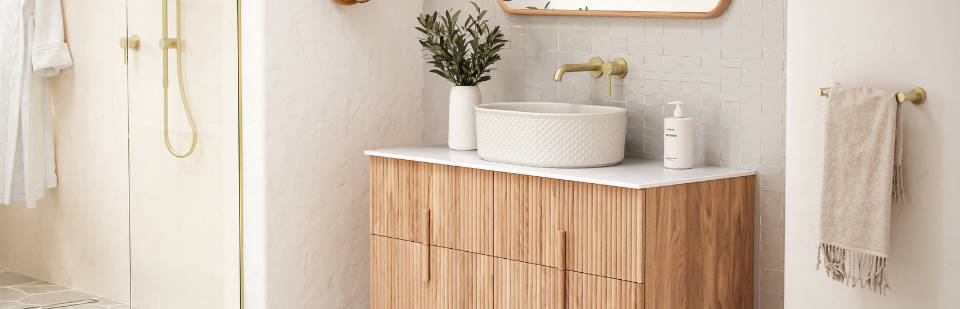


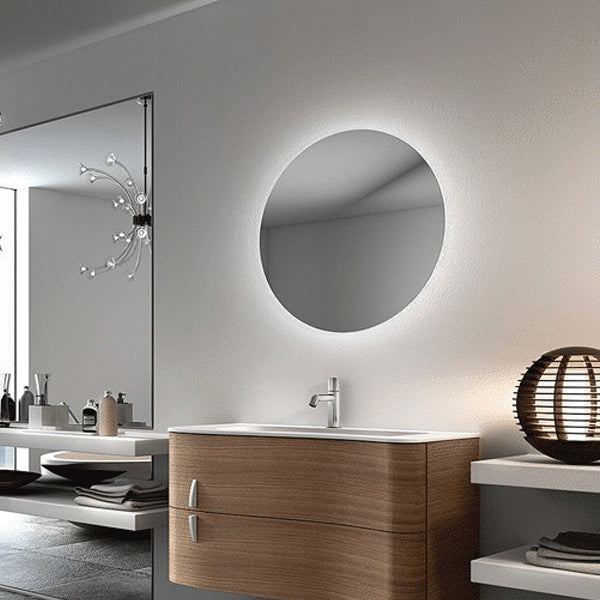


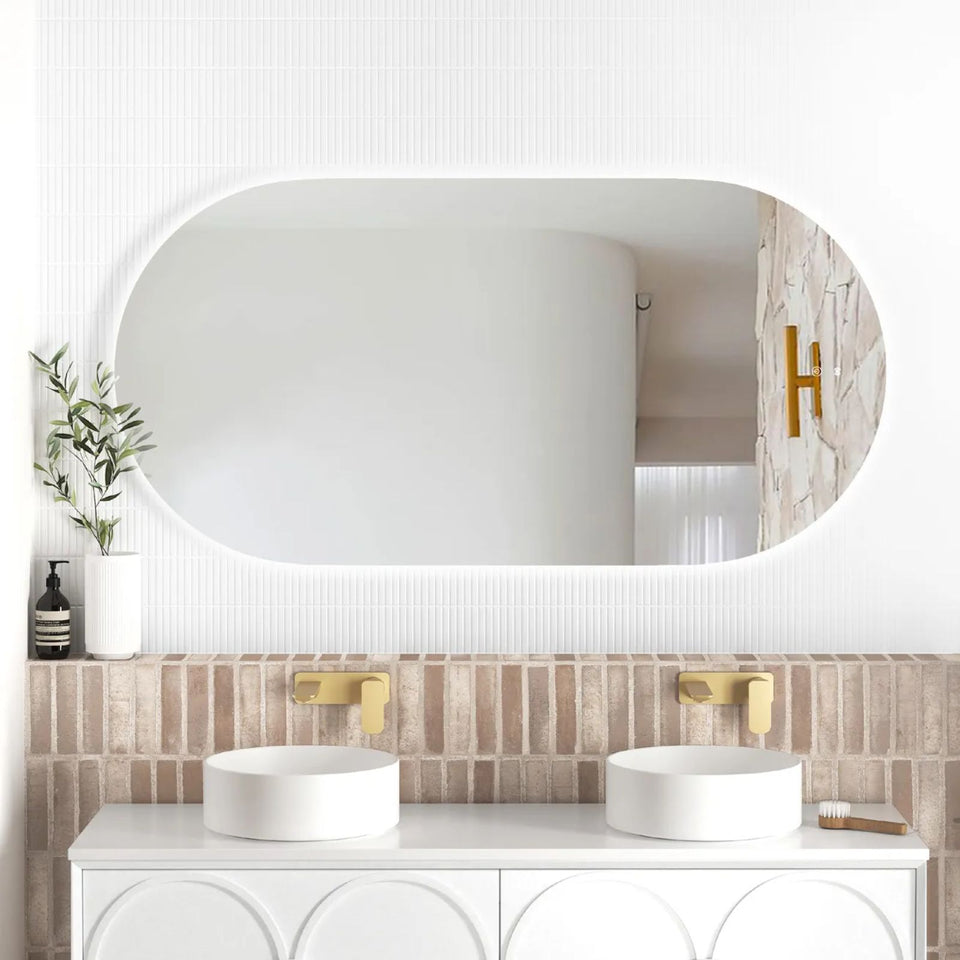
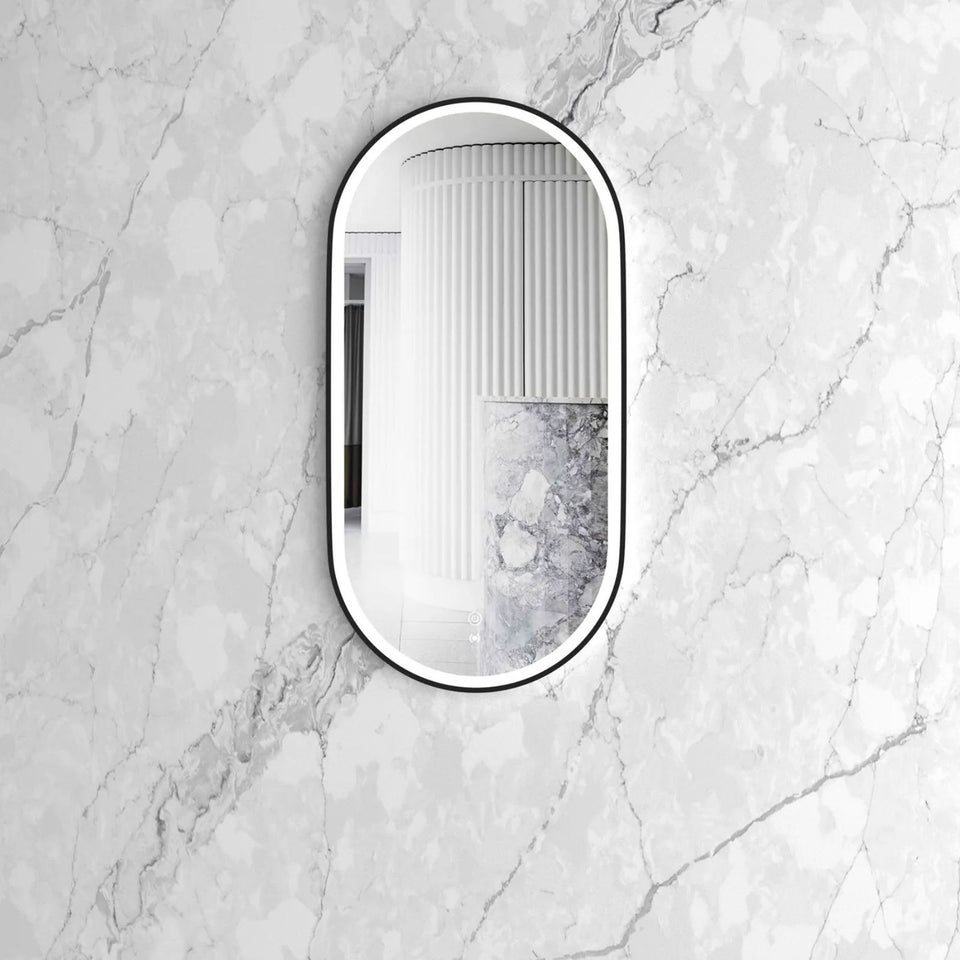
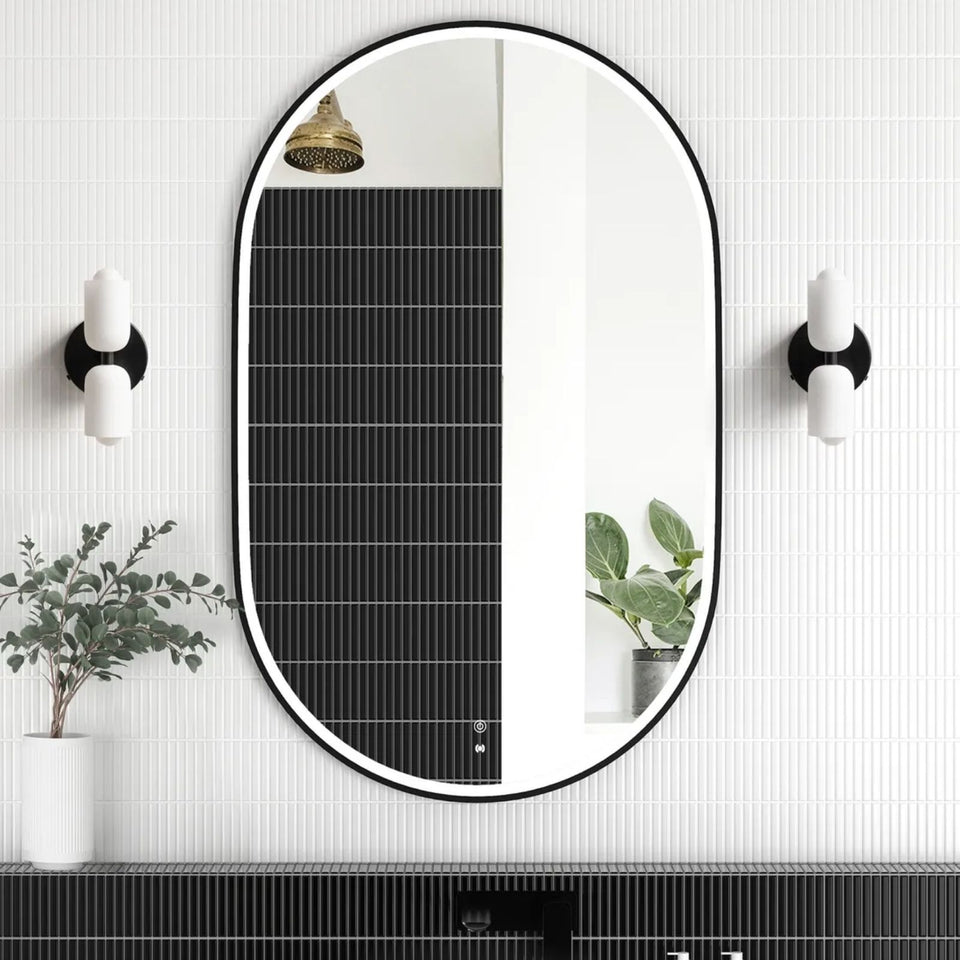
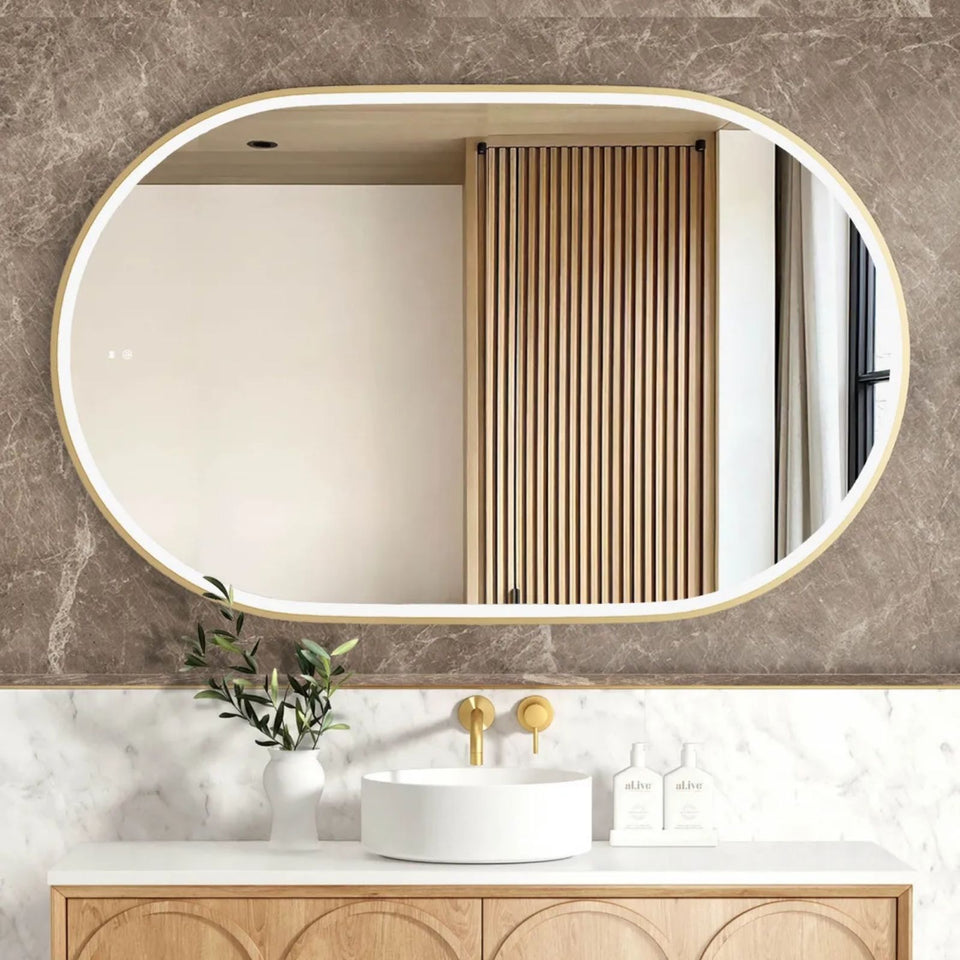
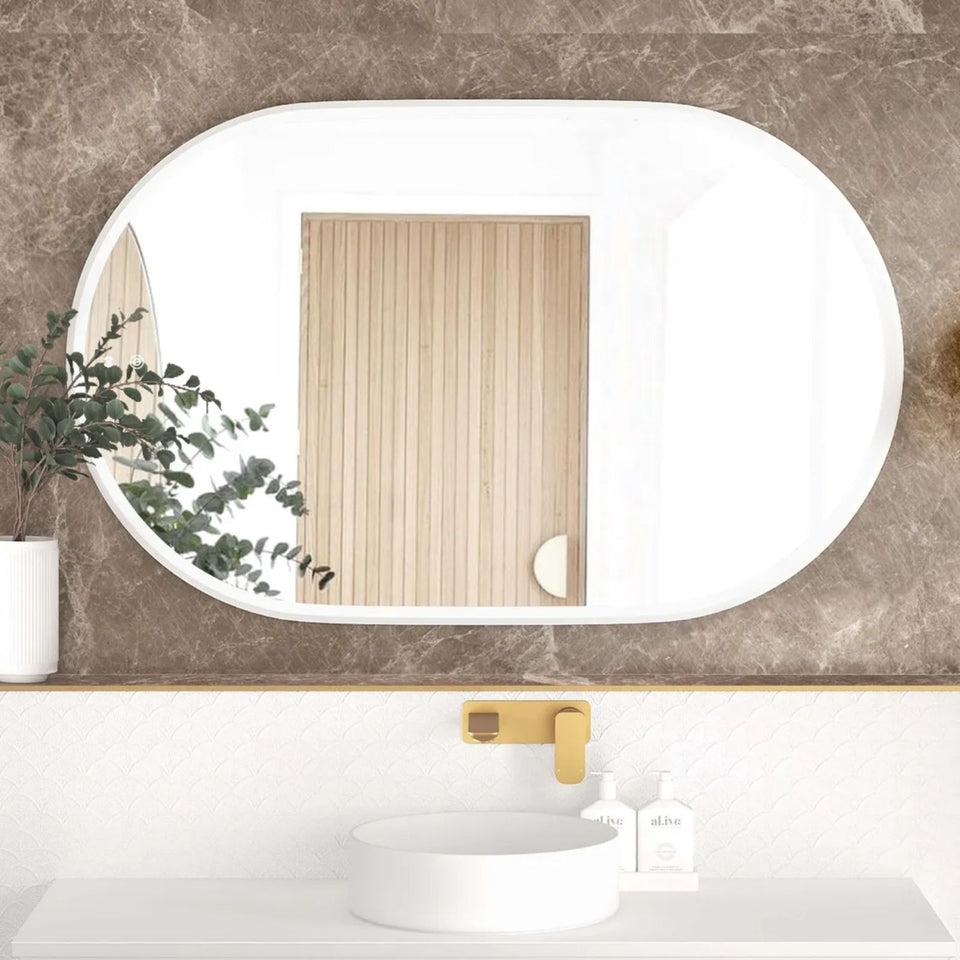
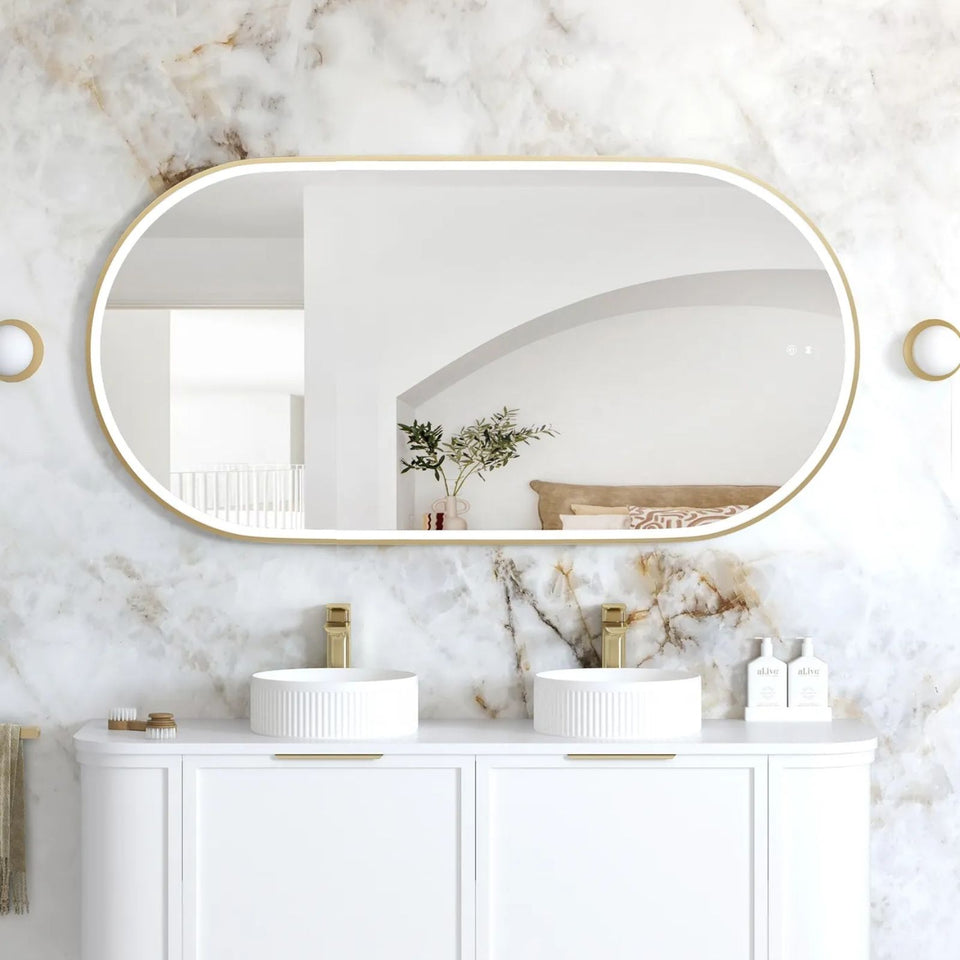
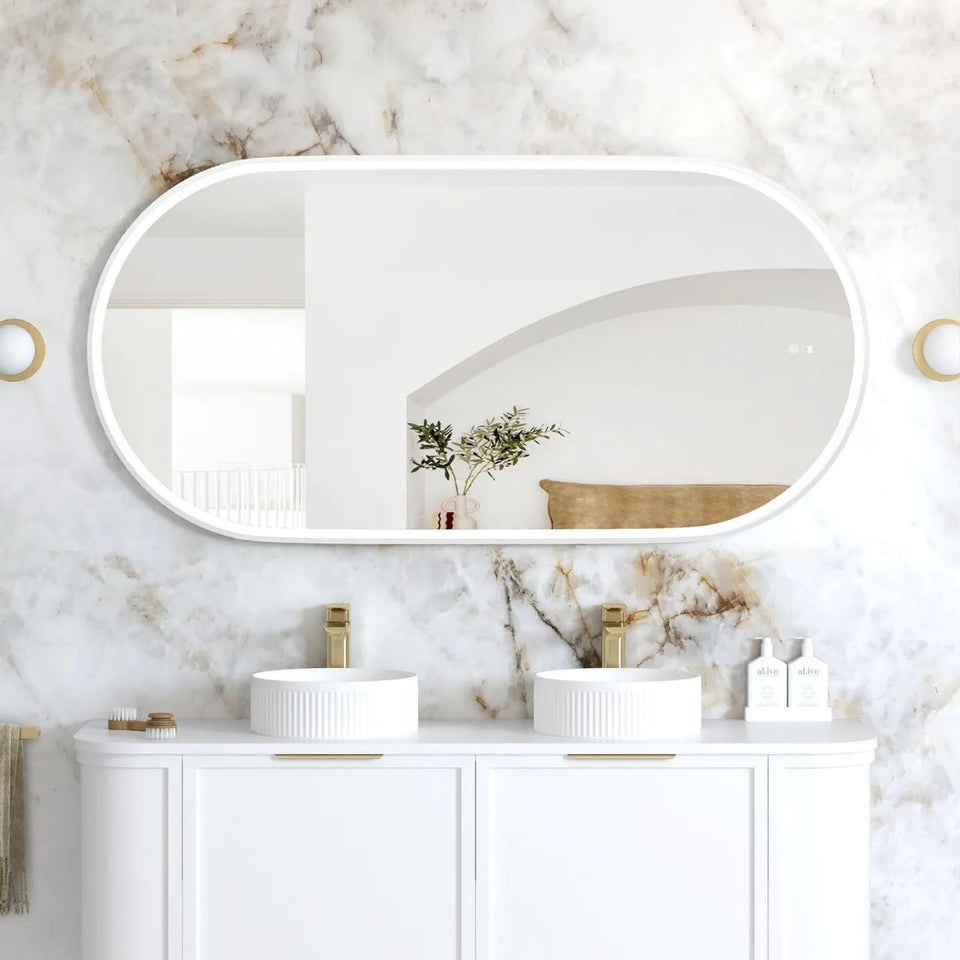
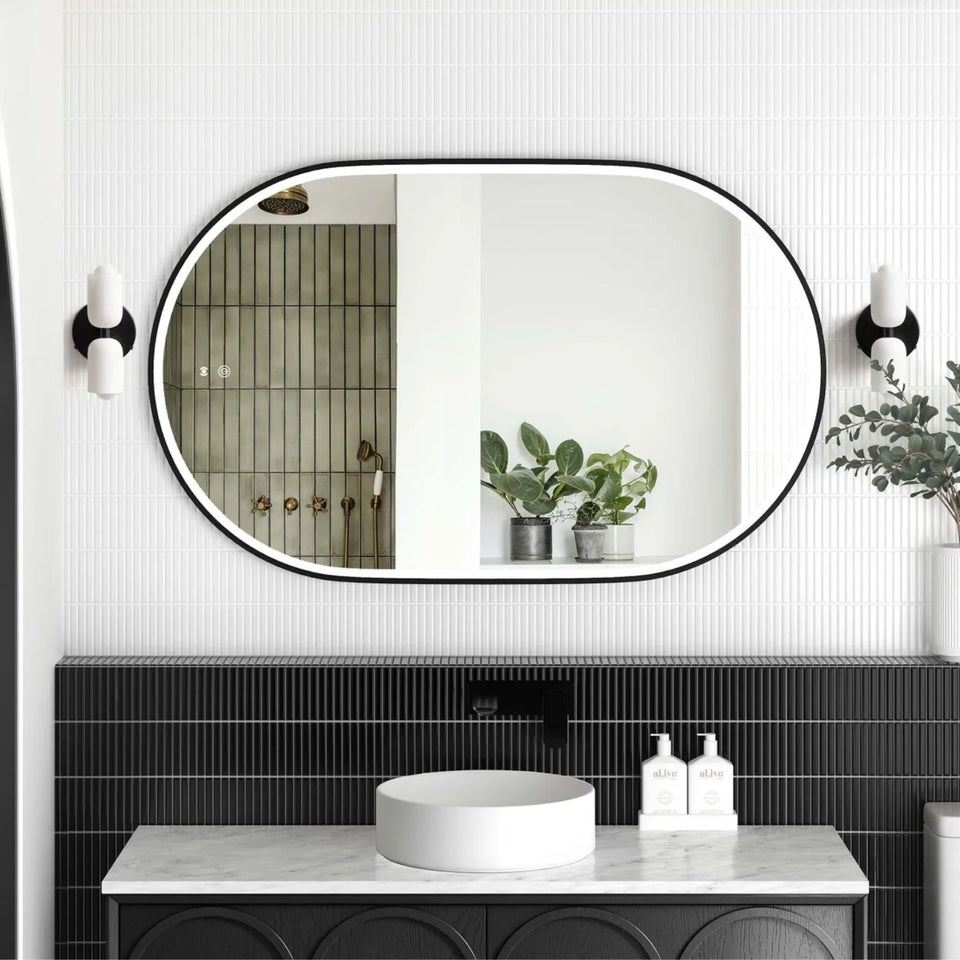
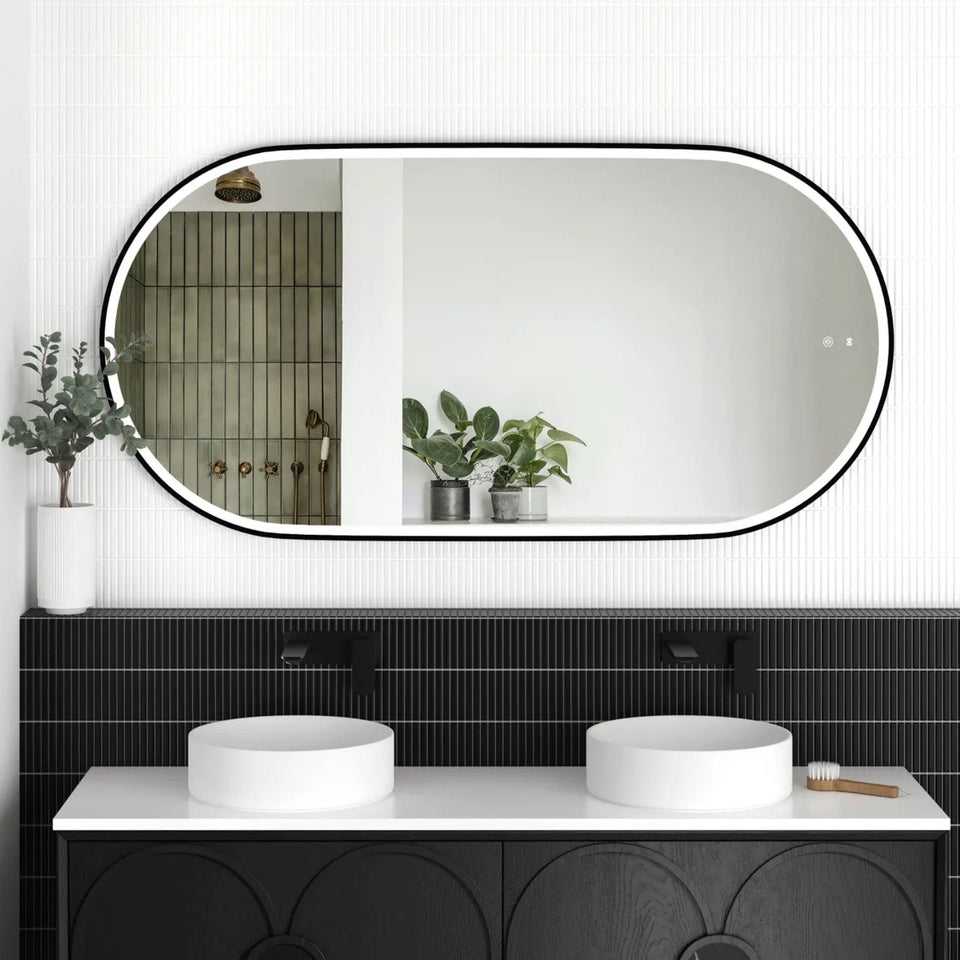
A demister is a thin heating pad fixed to the back of a mirror, and it stops the glass fogging when the bathroom fills with steam. Most of the mirrors in this collection have one built in, alongside LED light, so you buy a single product that is ready to wire. The practical call is to decide three things in order: which mirror shape and size fit the wall, how the light and demister will be switched, and if a mirror with the pad already fitted suits you better than a pad to retrofit. The sections below take each one.
A mirror fogs when the glass is colder than the air around it, so steam condenses on the surface. A typical mirror fogs because of the difference in temperature between the mirror and a bathroom warmed by the shower, and a demister warms the mirror to reduce that difference. The pad keeps the mirror at least 10 to 15 degrees warmer than the ambient temperature of the bathroom.
That answers the question people ask first, whether demister mirrors work. They work by heating the glass a little, not by moving the steam. They do not replace ventilation, and a bathroom with good extraction still helps the whole room. Heat pads or good extraction avoid condensation, and running the exhaust fan after a shower protects any mirror. A demister clears the glass; the fan clears the room.
Most mirrors here are a lit mirror with a pad already bonded to the back. The Ingrain and Radiant mirrors carry an integrated demister, and the Otti LED Noosa and Newport have an anti-fog mirror. The Thermogroup Ablaze Premium back-lit mirrors include a pad, and the Thermogroup Backlit Arch Shape LED Mirror has an integrated pad that turns on automatically with the lighting.
For a mirror you already own, the Thermogroup Thermomirror Demister Pad is sold on its own. It is an ultra-thin, fully self-adhesive pad with a single 240V connection point, which sticks to the back of the mirror. A pad can be fitted to any mirror it can stick to directly. The size matters, so the rules below are worth reading before you order.
Demister pads run on mains power. A demister must be hard-wired to a standard switch by a qualified electrician. The wiring must follow AS/NZS 3000, the circuit should be protected with an RCD, any metal surround must be earthed, and the pad must not be accessible once installed. Several pads can be wired in parallel on one large mirror, but they must not overlap, and the pad must never be cut or pierced, because that can damage the insulation.
For a built-in mirror the same rules apply to the mirror. The Ingrain mirrors are hardwired by a licensed electrician, and the Radiant mirrors are hardwired. The Otti LED Noosa and Newport come plug-in, hardwired or both depending on the model, so read the installation line. Lit mirrors are rated IP44, so they suit bathroom zones where splashes are possible.
Four rules cover the pad. The pad must be smaller than the mirror. For a glue-to-wall mirror, leave at least 100mm clear around the pad so the adhesive can grip. For a screw-to-wall mirror, the pad has to sit clear of the screws and brackets. The pad only needs to cover the main viewing area, because the heat spreads a little beyond it.
Work it through. The Thermomirror Demister Pad is 580mm by 680mm and suits mirrors of 680mm by 780mm or larger. A 900mm by 750mm mirror hung horizontally is only 750mm high, so this pad is too big for it. For a glue-to-wall mirror with 100mm clear all round, this pad needs a mirror at least 780mm wide and 880mm high. A 1200mm by 750mm mirror is wide enough and not high enough, so check both dimensions before ordering.
The electrical rating of each lit mirror is the figure the electrician needs. The Thermogroup Ablaze Premium SO is 39W and the back-lit arch is 47W, both with the demister included. The SR range is 51W and 66W for its two sizes with the demister attached, and the D-shaped Ablaze is 100W for the demister version. The Otti LED Noosa and Newport are 40W. Read the wattage line, the voltage line and the installation line, because they set the circuit and the switch.
The Ingrain range is the largest group with an integrated demister here. The shapes are round, rectangle at 600mm by 800mm, arch at 500mm by 900mm and pill at 500mm by 850mm and 500mm by 900mm. Each shape comes frameless, or framed in matte black, brushed nickel or brushed gold. The lighting is frontlit, backlit, or both, with touch sensors, dimming, and 6500K light. Frontlit mirrors put the light on the face for grooming, and backlit mirrors put a glow behind the glass for the wall. For the whole range see Ingrain mirrors.
The Otti mirrors come in 900mm by 450mm, 900mm by 600mm, 1200mm by 750mm and 1500mm by 750mm, with black, white or brushed gold metal frames or frameless. The Newport adds a 900mm by 450mm soft square. They have a 5mm anti-fog copper-free mirror, a motion sensor, adjustable colour temperature at 3000K, 4000K or 6000K, IP44 and SAA approval, at 40W. Some versions are tough glass, called Tuffi. For the range see Otti mirrors.
The Radiant mirrors are frameless or framed with touch controls, four brightness levels and a defogger. The Radiant Kapsel is 500mm by 1000mm, the Olek runs from 600mm to 1200mm, the Ark runs from 1000mm to 1800mm, and the Roek is 600mm by 800mm. They are hardwired, with the supply planned before the wall is closed. For the group see Radiant LED mirrors.
The Thermogroup Ablaze Premium back-lit mirrors include a demister and come in cool white 6400K or warm white 2700K. The SO is 1000mm by 500mm, the RS runs from 600mm to 900mm, and the SS runs from 900mm to 1200mm. The Thermogroup D-shaped, Church and pill polished edge mirrors can take a demister as an option. For the whole Thermogroup range see Thermogroup mirrors.
The clearest width rule is this: when the mirror is not the same width as the vanity, make it 70 to 80 per cent as wide, and 60 to 70 per cent when sconces share the wall. On a 600mm vanity that is a mirror about 420mm to 480mm wide. On a 900mm vanity it is about 630mm to 720mm, and on a 1200mm vanity about 840mm to 960mm.
Turn the rule around for the widths here. A 500mm pill or arch suits a vanity about 625mm to 715mm wide. A 600mm mirror suits one about 750mm to 855mm, a 900mm mirror suits one about 1125mm to 1285mm, and a 1200mm mirror suits one about 1500mm to 1715mm. A 1500mm mirror suits a vanity about 1875mm to 2145mm. Treat these as starting points, mark the outline on the wall with masking tape, and look at it from the doorway before you decide.
Hang the mirror so its centre meets your eyes. Put the centre at 1500mm to 1650mm from the floor, with 100mm to 200mm between the tap and the base of the mirror and the top edge at least 100mm below the ceiling. A mirror needs to reach about 30cm above and below the eye line of its users. Leave at least 100mm between two mirrors over a double vanity.
A mirror 600mm to 900mm tall suits most single vanities, and 150mm to 200mm should stay clear above a mirror from cabinets or exhaust fans. In a small room steam builds quickly, so the demister earns its place, and a 500mm wide pill or arch fits a compact vanity without crowding the corners. Allow for wall lights: when sconces share the wall, the width falls to 60 to 70 per cent of the vanity.
The fixing differs for each mirror. The Ingrain mirrors hang on screws and hangers, the Radiant mirrors have brackets built in, the Thermogroup back-lit arch has a wall bracket, and the Otti mirrors come with brackets and fittings. The fixing carries the whole load, so choose it for the weight of the mirror and the wall behind it. Studs are the most secure fixing and cavity anchors suit plasterboard without a stud, and a mirror over 100cm should be lifted by two people.
Switch the pad off at the wall and let the glass cool before cleaning, so a damp cloth never meets a warm surface.
Clean the glass with a soft microfibre or lint-free cloth rinsed in warm water and wrung out, then wipe gently with a soft dry cloth. Avoid glass cleaner, window cleaner and chemical agents, because they can damage the silver coating. Keep liquid off the edges, and do not scrub the glass over the pad. For Thermogroup mirrors, use a mix of 30 per cent methylated spirits and 70 per cent water, and avoid water on the sides or back. Check fixings once a year.
The final check is the same for every demister mirror: width against the vanity, height against the eye line, wiring and switch position against the wall, and the fixing against the weight. For the whole lit group see LED mirrors, and for the full overview of light and power see mirrors.


