
*View accurate shipping rates and availability






203 Items


Up to 70% off across the store, plus free towels and mirrors up for grabs on orders over $800*





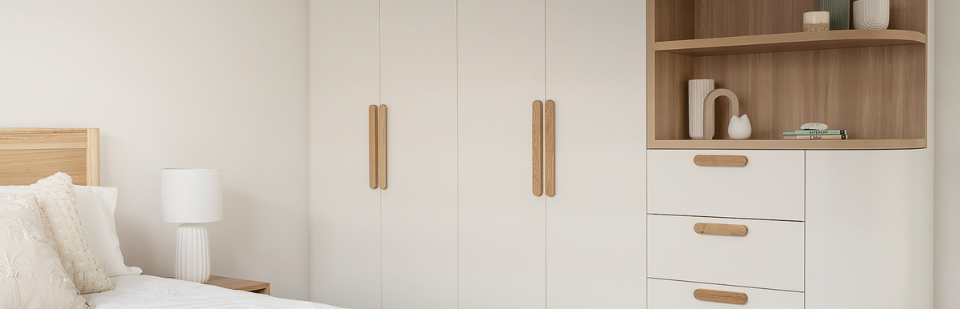






A sliding door needs different hardware from a hinged one, because the door travels past the frame and a standard handle would catch on the jamb or the wall. This collection holds flush pulls, edge pulls and complete handle sets for sliding doors, including the cavity sliders that disappear into the wall. This guide sets out the types, how a cavity door differs from a surface door, how privacy and entrance sets work, which measurements to take before you order, and what each kit includes. For hinged doors, see door handles and door hardware.
The first question is how the door slides. A cavity door slides fully into the wall, so any handle on it must be low-profile and sit within the door, and a flush pull is the usual answer. A surface door runs across the wall face, and a projecting pull gives a better grip. Surface pulls need clearance from the walls, the architraves and the frame as the door opens. Two mistakes are common: using a flush pull on a barn-style door, where a surface pull is easier to use, and ignoring projection, which can clash with the jamb or wall. The collection is built for cavity sliders and also covers other sliding doors.
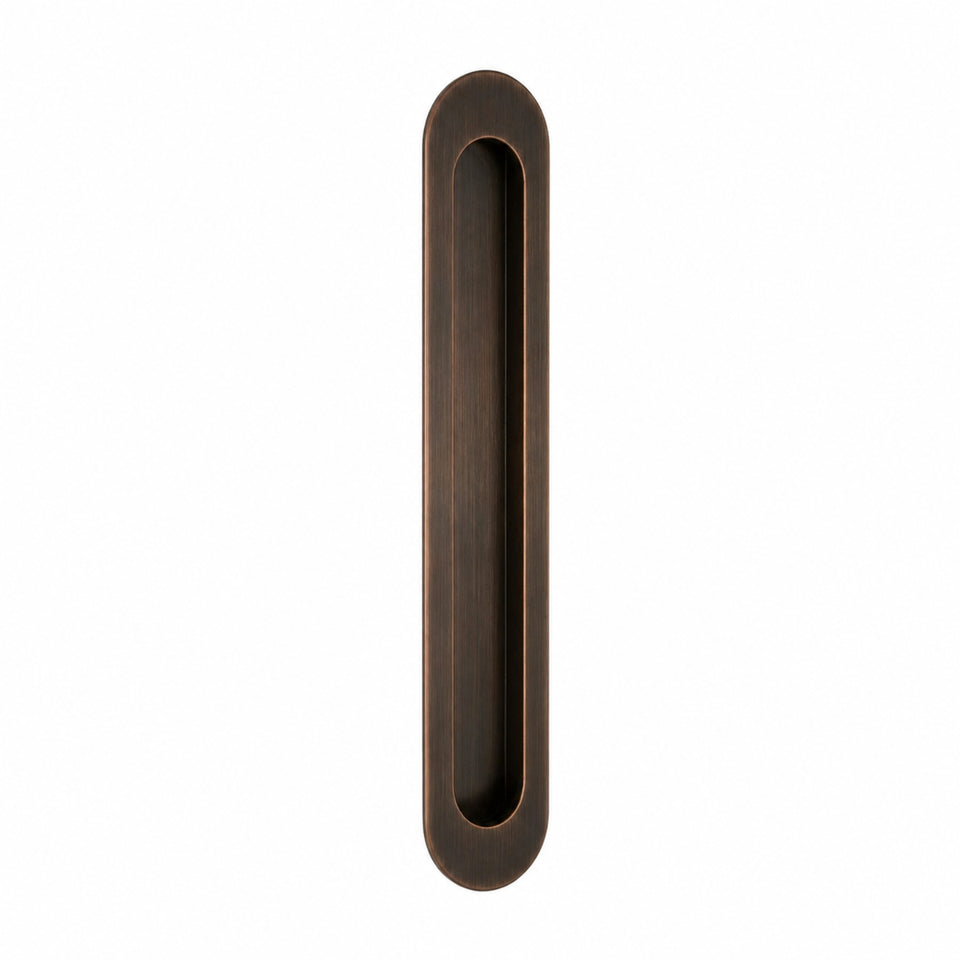
A flush pull is a recessed grip set into the face of the door. A privacy slide or turn is the part that locks the door, and a sliding set usually has a flush pull on each face. An edge pull is a small pull on the leading edge that lets you draw the door out of the cavity when it is fully recessed. Some kits include one, and some do not, so check. The Zanda Visca sets include a complimentary edge pull, the Nidus round backplate sets include an end pull, and the Lockwood Vivid edge pull is sold on its own. See flush pulls and sliding door edge pulls.
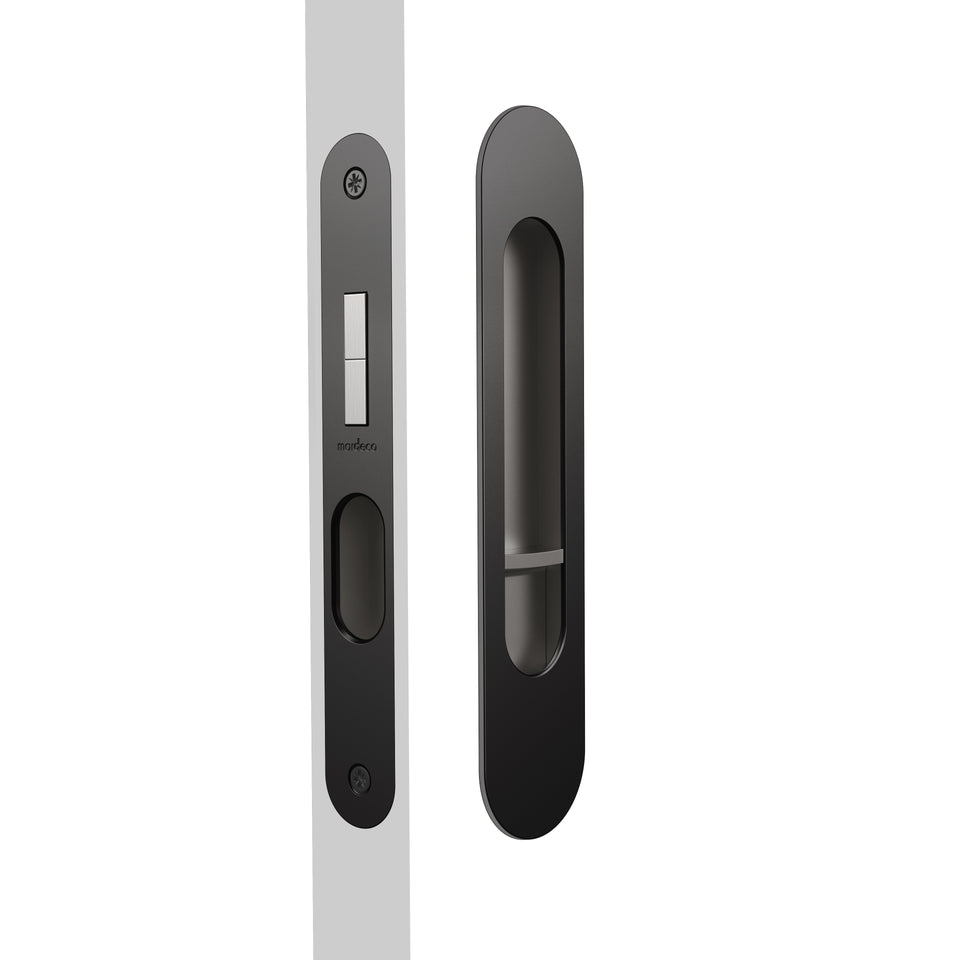
A passage set has no lock. A privacy set gives low-security locking for bathrooms, toilets and bedrooms, and it should be designed for sliding doors. Check whether it includes an emergency release, which opens the door from outside. The Nidus Mardeco privacy sets include a flush pull emergency release, and the Lockwood Symmetry round cavity privacy set has an outside emergency release button that opens with a coin or screwdriver, and a turn-plate on the inside. An entrance or keyed set suits a suitable external sliding door and needs the full locking arrangement and the door construction confirmed. See sliding door privacy sets, sliding door passage sets and sliding door entrance sets.
No universal hole pattern applies to every sliding handle, so measure what is on the door. Measure the cut-out height, width, diameter and depth, the centre-to-centre distance between the screw holes, and the door thickness, which matters most for paired handles, privacy sets and mortice locks. Check the handle projection against the jamb or hand clearance, and check the backset and the lock position if a lock is involved. Confirm that the new plates will cover any old holes or marks you do not plan to repair. If you are fitting a new door, choose the hardware before the joiner prepares the cut-out. The main warning is that overall handle size does not confirm fit.
The Lockwood Symmetry round set fits a standard 54mm door preparation with a 60mm backset and takes doors 32 to 40mm thick, using a spacer ring for the thinner end. The Lockwood Vivid cavity slider is 63mm across with a 54mm prep hole for doors 32 to 45mm thick. The Zanda round cavity set has a 65mm face and a 50mm inner diameter for doors 35 to 45mm thick, the Zanda square set suits 32 to 38mm doors, and the Zanda Visca round flush pulls suit a 35mm sliding door. The Nidus round backplate sets fit standard 54mm holes and take doors 32 to 47mm thick. The Nidus Mardeco sets suit doors 34 to 50mm thick with a 35mm or 50mm backset, and the Iver sliding pulls take doors 35 to 60mm thick.
The Nidus Mardeco range is a low-profile flush pull with a face depth of just 2mm, designed for both timber and aluminium sliding doors. The privacy kit includes a flush pull privacy slide, a flush pull emergency release, a sliding door lock, a striker plate and box, and the fixing components. The Euro lock sets in the range are sold with the cylinder separately, so add one if you want the set to lock with a key. See Nidus Mardeco sliding door hardware and Nidus sliding cavity door hardware.
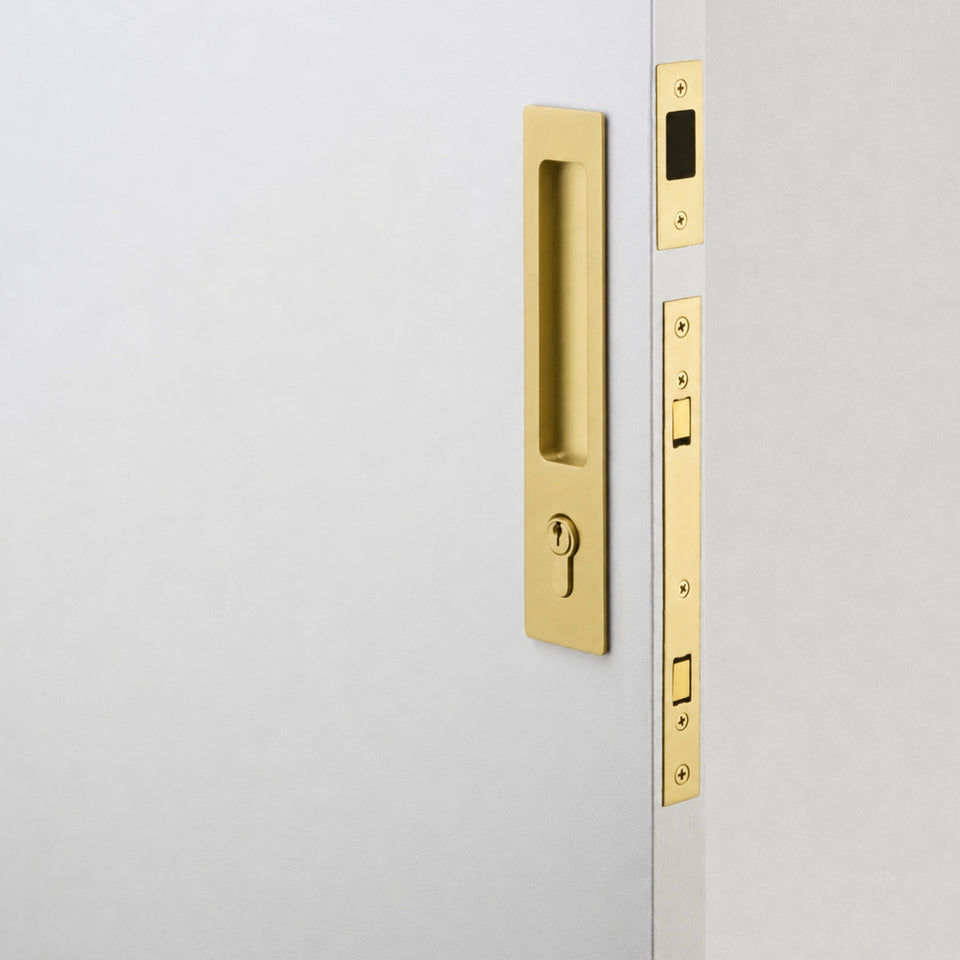
The Zanda cavity sets come in round and square profiles. The round and square cavity kits include flush turns with integrated privacy locking and an edge pull for drawing the door out of the cavity, and they keep the door profile flat enough for full insertion. For keyed doors, the Zanda Duke sliding door Euro lock kit is a 250 by 40mm flush pull set with a Euro mortice claw lock, a 60mm backset and a door thickness of 35 to 45mm. The Zanda Verve heavy duty kit is made for large cavity sliding entrance doors. The Verve narrow kit is made for aluminium sliding doors, with a 30mm backset and a 50mm case, and its kit includes two flush pulls with Euro keyholes in 316 stainless steel, a narrow mortice lock, a 40mm double cylinder and three keys. See Zanda Visca cavity sliding door hardware, Zanda square cavity sets and Zanda round cavity handles.
The Lockwood Onyx dual-handed patio sliding door lock is surface mounted, fits most aluminium and timber doors, takes doors 19 to 50mm thick and has twin locking beaks. It is a non-handed product for new and retrofit installations. The Lockwood 8653 sliding security screen door lock has a hidden hook bolt and suits a standard 20mm door. For screen doors, see screen door locks.
Sliding doors fall into six kinds, and each takes a different handle. Internal barn doors are solid timber hung on an exposed track and slid along the wall, so they need free wall space and a surface pull. Internal sliding glass doors keep rooms connected while preserving privacy, in timber, aluminium or MDF. Pocket doors, also called cavity doors, are usually a single panel that slides into a hollow wall cavity, suit small bathrooms, laundries and pantries, and are almost invisible when open, which is why they need a flush pull. Interior doors that slide and stack work as room dividers in open-plan homes. Sliding patio doors and al fresco stacking doors are external, in aluminium or timber, and they carry the locking arrangements in the lock kits above. Pocket doors need a wall cavity built, usually by a professional, and that they are less sealed and insulated than other sliding doors.
For finishes, see matte black door handles, brushed nickel door handles, brass door handles and chrome door handles. For the other parts of the door, see hinges, door stops and entry door lock sets. For a fuller view of cavity hardware, see cavity slider hardware.
Each brand has its own cut-outs, backsets and door thicknesses. See Nidus door hardware, Zanda door hardware, Lockwood door levers, Lane door levers, Iver door hardware and Momo architectural door hardware.
Start with how the door slides: a flush pull for a cavity door and a surface pull for a barn-style door. Then choose the function, privacy with an emergency release for a bathroom, and a keyed set only for a suitable external door. Measure the cut-out, the screw centres and the door thickness, and read the box contents to see whether an edge pull and a cylinder are included. That order avoids the common mistakes: a handle that clashes with the jamb, a privacy set made for a hinged door, and a kit with no edge pull for retrieving the door.
No. There is no universal hole pattern, so the handle has to suit the door. Measure the existing cut-out: its height, width, diameter and depth, the centre-to-centre distance of the screw holes, and the door thickness. Check the projection of the handle against the jamb, and confirm that the new plates cover the old holes. On a new door, choose the hardware before the joiner prepares the cut-out.
Yes, if the new handle matches the cut-out and the lock position. Identify the type of sliding door first, because the handle for a cavity door is not the handle for a surface-sliding door. Cavity doors slide fully into the wall, so a low-profile pull must clear the jamb. A surface pull needs clearance from walls, architraves and the frame.
The recessed grips are flush pulls, and the small pull on the leading edge that draws a cavity door out of the wall is an edge pull. Some sets sell the edge pull separately, so check whether the one you want includes it. The Zanda Visca includes an edge pull, and the Nidus round backplate sets name an end pull in the title.
Not any door. Standard door height is 2040mm, and widths run from 620 to 920mm. Aluminium doors can be much larger than timber doors. Frameless glass doors use 10 or 12mm safety glass, and large cavity sliders are best avoided in timber. A hinged door without a solid core can bow, so check what the door is made of before you choose the hardware.


