
*View accurate shipping rates and availability






20 Items


Up to 70% off across the store, plus free towels and mirrors up for grabs on orders over $800*


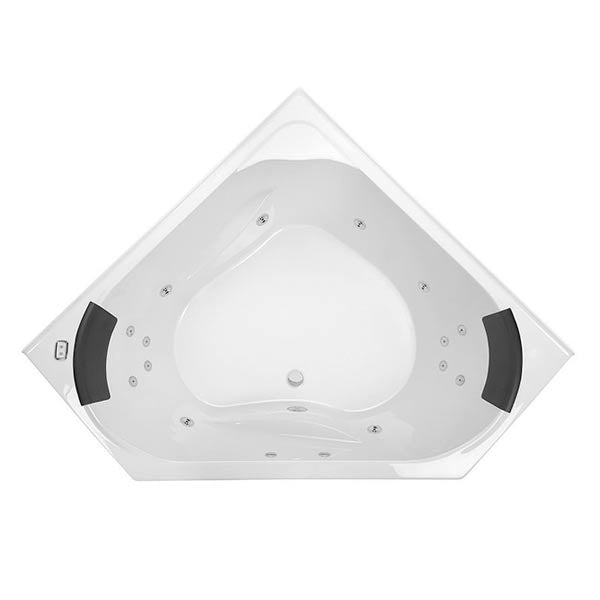



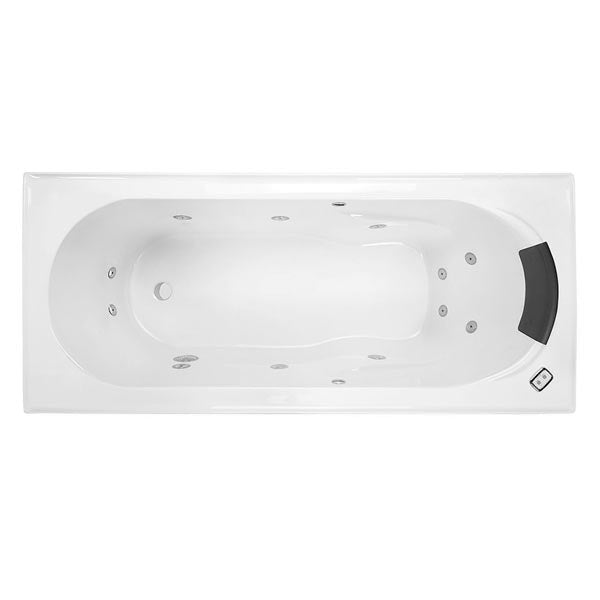


A spa bath is a bath with jets. It has a pump, a set of jets in the shell and a control, and it fills with fresh water for each use. The spa baths here are all Decina contour and Dolce Vita baths in acrylic, built as freestanding, back to wall, inset, island and corner baths, from compact inset baths to long two-person baths. The sections below cover how a spa bath works, how it differs from a spa pool, what to look for in jets, pumps, controls and access, how the different formats are installed, and how to look after one. Spa bath, spa bathtub, bath with jets and jetted tub all describe the same product.
A spa bath is an indoor tub with built-in jets, a circulation pump and often air controls, designed for one or two people. The pump draws water in through a suction inlet and recirculates it through jets set into the side of the bath. Air controls add bubbles to that flow, and a flush jet sits level with the shell, so nothing protrudes into the bath. The Turin has six flush centro jets, six flush mini jets, two air controls and a flush suction, with a rim mounted touch pad and a 750 watt pump. The Elisi has twelve flush jets, four centro and eight mini, plus a flush suction and a remote control instead of rim controls. The Mintori has fourteen flush mounted jets with two air controls and a flush touch pad in the rim.
People often ask the difference between a spa bath and a hot tub. A spa pool seats more people, usually sits outdoors, keeps and treats its water for months, and is heated by its own system. A spa bath is a bath with jets that is filled and drained for each use, and it becomes part of the house. That is the main trade: a spa bath uses fresh water every time and has no filter, cover or chemical treatment to look after, and in return it needs a bathroom, a plumber and an electrician and not a back deck.
The lengths here run from 1295mm to 1850mm. The Angelique corner spa comes in 1295mm and 1465mm, the Shenseki in 1395mm and 1515mm, the Turin in 1520mm, 1665mm and 1790mm, and the Uno in 1530mm and 1700mm. The Duo is 1850mm and the Lago 1795mm. The Venice is a square spa bath 1400mm by 1400mm. Capacity is measured 200mm below the rim and runs from 121 to 190 litres, so it is about the volume of water with a bather in the bath, not the full volume at the overflow.
The shapes are mostly oval and rectangular, with one square model. The small baths page has the shorter spa baths in context, 1500mm to 1700mm baths covers the standard band, and baths over 1700mm covers the longest. The Decina range also has its own page, Decina spa baths.
Spa baths can be made in many materials, but every bath on this page is premium sanitary grade acrylic in high gloss white, with one black option. Acrylic takes a moulded shape well and is the lightest of the common bath materials. The Turin is made to AS3861/1991 and the Alegra to AS 1172.5:2019, and the Turin, Alegra and Angelique are made in Australia. Each bath comes with installation instructions and a specification sheet, and those are the documents your plumber works from.
Jet counts differ by model. The Turin, Uno, Modena and Adatto are twelve-jet baths. The Uno has six centro jets and six mini jets. The Lago has six centro and twelve mini jets, with two air controls. The Duo has six centro and eight mini jets, and the Venice has four centro and sixteen mini jets with four air controls. The Shenseki Dolce Vita is a sixteen-jet bath with a choice of chrome, black or white jets and a polished stainless steel trim. The Adatto has a reflexology massage action.
Three control styles are used. A rim mounted Sensa-Touch pad is the common one. The Elisi runs from a remote control, which leaves its rim free of controls and gives it a thin edge. The Dolce Vita baths use a spa key remote for power and heat control. All of them use a 750 watt TriFlo Eco pump.
The Elisi and Mintori pump is 240 volts, 750 watts, 4.4 amps with a flow rate of 350 litres per minute. The Alegra is 7.5 amps because its 700 watt heater is included. The Elisi's pump sits at the end of the bath directly under the perimeter. The Alegra is made to sit against a wall with the pump mounted through the wall, either outside or in an adjoining room. The Mintori's pump fits directly underneath the perimeter, and the end of the bath for the pump can be chosen to suit the plumbing, but waste and pump positions cannot otherwise be customised, so read the technical drawings before you commit.
The pump has to be reachable. Leave access to the pump, the air control and any heater through a removable panel large enough to take a component out. The Mintori's pump is easily accessible for maintenance and its controls are always at the front. It also has removable side panels on a patented magnetic fixing, so reaching the pump does not mean dismantling the bath.
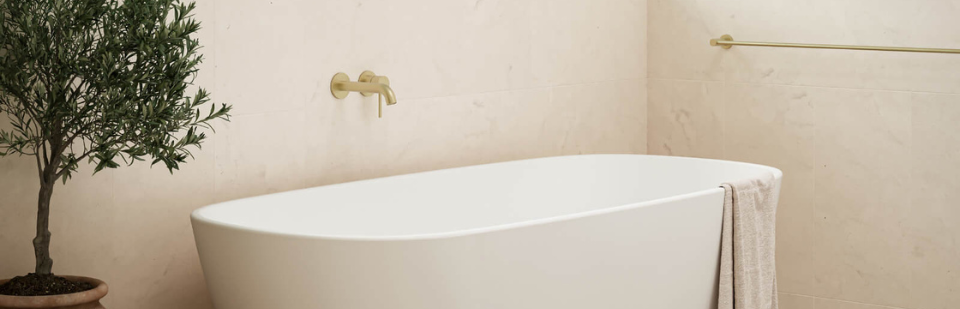
The Decina Elisi and Mintori are freestanding spa baths that can stand anywhere in the room, with adjustable self supporting feet on the Elisi. The freestanding baths page covers freestanding formats in general. The Alegra is a back to wall freestanding spa bath that sits flush against a wall, and back to wall baths lists the others. The Turin, Shenseki, Adatto and Angelique are inset baths with a tile bead, which lets the wall tiling meet the bath. The Lago, Duo, Uno and Venice are island designs set into a tiled island hob, and they can sit anywhere in the room. See built in baths for inset baths in general and corner baths for the corner format, which includes the Angelique.
The EZI Frame is a separate Decina product. It is a galvanised steel support frame with adjustable legs, fitted under the bath on site, glued to the bottom of the bath with construction adhesive, then screwed down to touch the sub floor. It removes the need for scrap timber, bricks or foam under the bath, which do not structurally support the bath when it is full of water and bathers. Decina recommends two support methods only, a full mortar bed or an EZI Frame. The frame can be fitted before or after delivery, and for a shower over a spa bath it should be pre-fitted by Decina so the bath has adequate base support.
The shape of the shell decides how comfortable a long soak is. The Elisi has a deeper interior with lumbar support built into the shape. The Uno has an ergonomically shaped lumbar support and steep sides for internal space, and the Adatto has moulded arm rests plus head, neck and lumbar support. The Turin's base is reinforced with resin and fibreglass, so it stays firm underfoot. The Sia headrest is sold as its own product and is included as standard with contour and Dolce Vita spa baths that have a curved backrest. It is a curved pillow with two suction cups. The Elisi has black Sia headrests as an option.
Waste and plug are sold separately on most models. The Angelique, Modena, Uno and Adatto work best with a pop-down waste for safety and easier servicing, and Australian building codes require a fully removable bath waste in some situations, so confirm with your plumber. The Alegra comes with an overflow as standard and an in-line waste connection with a built in connector pipe, and the Venice and the Elisi have an overflow too. The bath wastes collection has the options. Waste position is at the centre on the freestanding and back to wall baths and at the end on the inset baths, and on the Mintori it cannot be changed.
A spa bath needs more care than a plain bath because water sits in the pump and the jet lines. Clean regularly to prevent mineral and soap scum, clear debris from the jets and use non-abrasive cleaners made for acrylic. Clean the surface and the jets with a mild cleaner. To remove grime from the pipework, jets and pump, fill the bath, add bicarb soda and run the jets for 30 minutes, then drain and rinse.
Acrylic can be cleaned with warm soapy water or a liquid polish. After bath oils, refresh the pipework by running cold water mixed with bicarbonate of soda through the system for fifteen minutes, then empty the bath. The usual bath care also applies to the shell: a pH neutral cleaner, a soft sponge or microfibre cloth, no bleach, ammonia, abrasive powders or steel wool, and a monthly look at the waste, overflow and silicone seals. Ask for the care document that comes with the bath and follow the servicing schedule in it.
All Decina spa baths run on a standard 10 amp power supply, and all of them include a safety cut-off system for jet blockages. Models with an electronic touch pad or a spa key control switch off automatically when no water is present. The pump runs at 65 decibels, which is quieter than the water circulating through the system, and rubber anti-vibration pads are moulded into the pump base.
Start with the room and the pump. Choose the format by how much building the room allows. Pick an island or inset bath if the bath will sit in a hob, a back to wall bath if a wall can take the pump through it, and a freestanding bath if the room has the clearance. Check the heater, the jet layout and the control style, plan access for the pump and the support method before the tiling, and read the care document before the first use. The full range of baths is on the bathtubs page.


