
*View accurate shipping rates and availability






28 Items



Up to 70% off across the store, plus free towels and mirrors up for grabs on orders over $800*


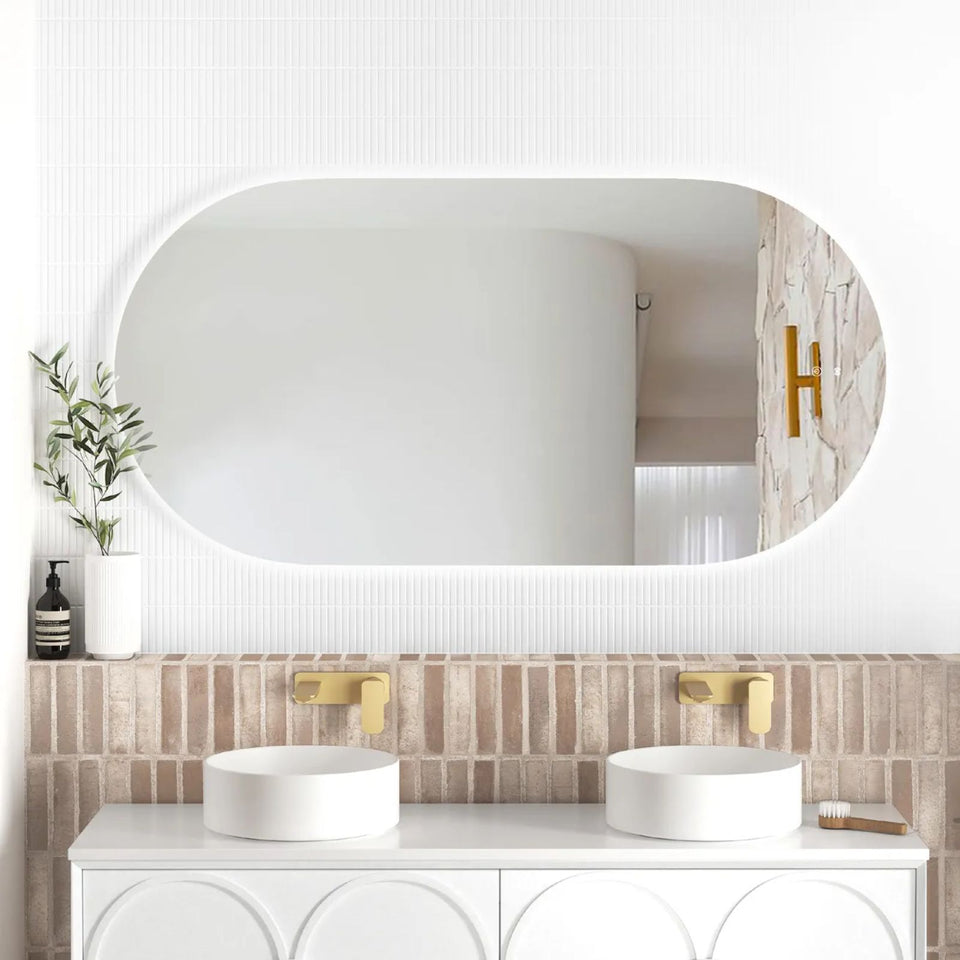
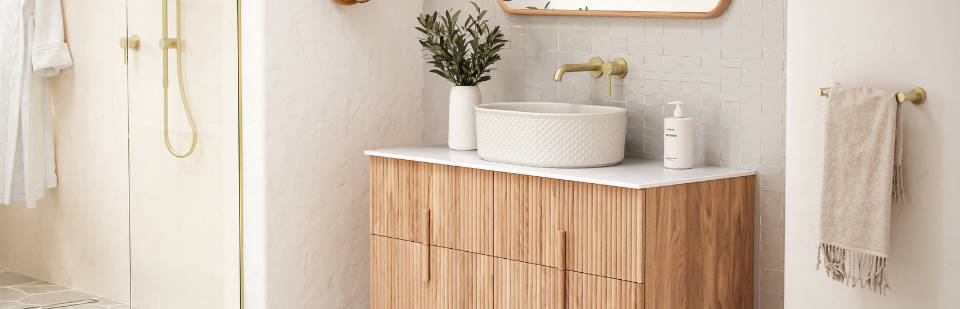


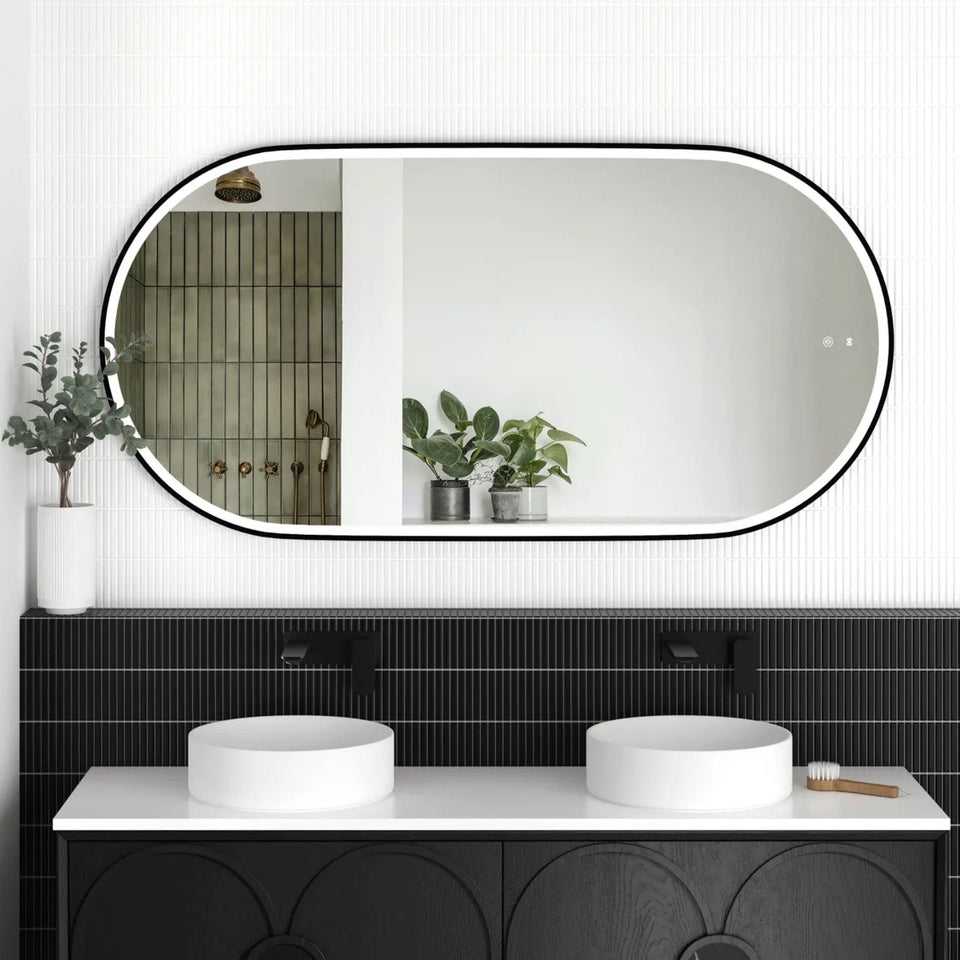
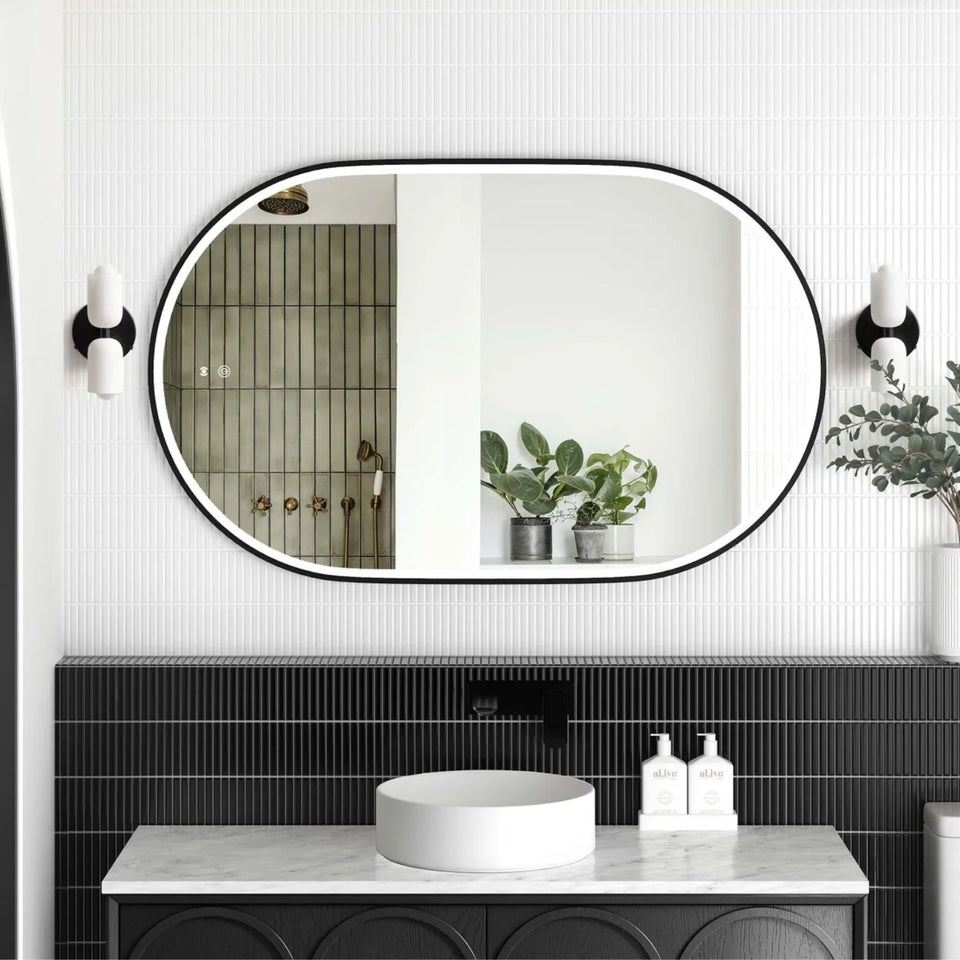
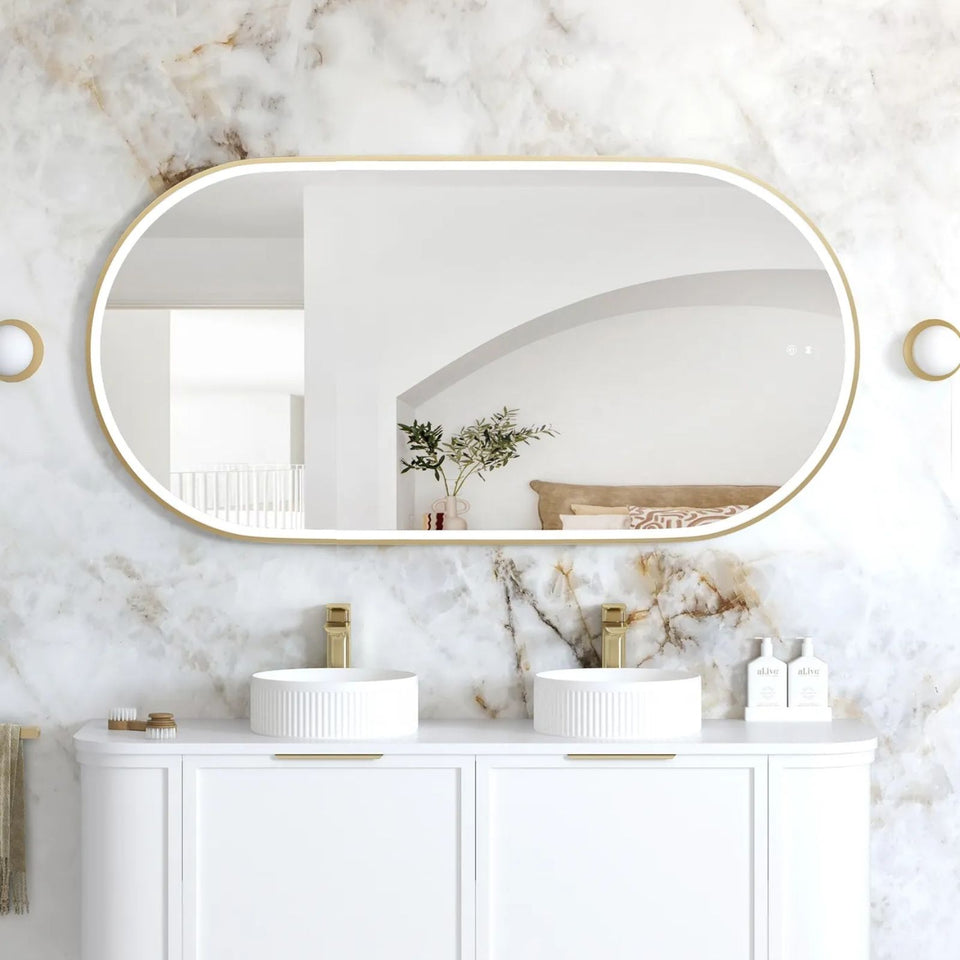
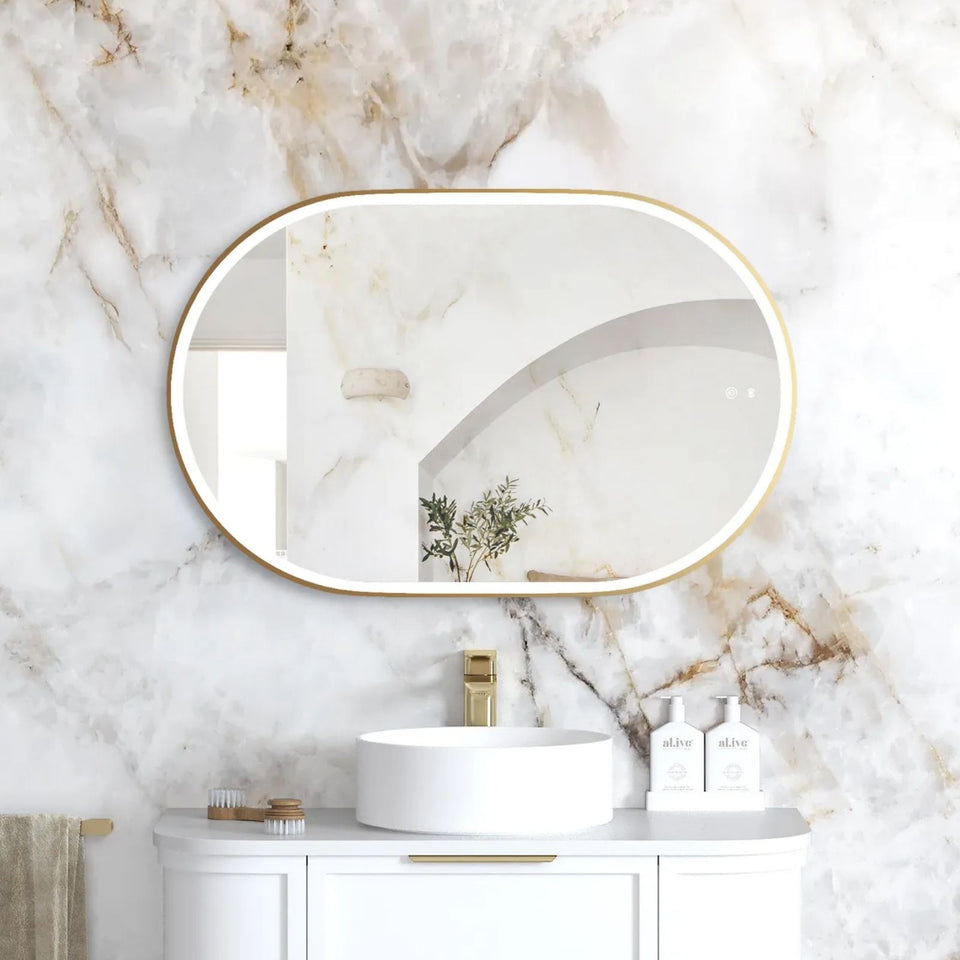
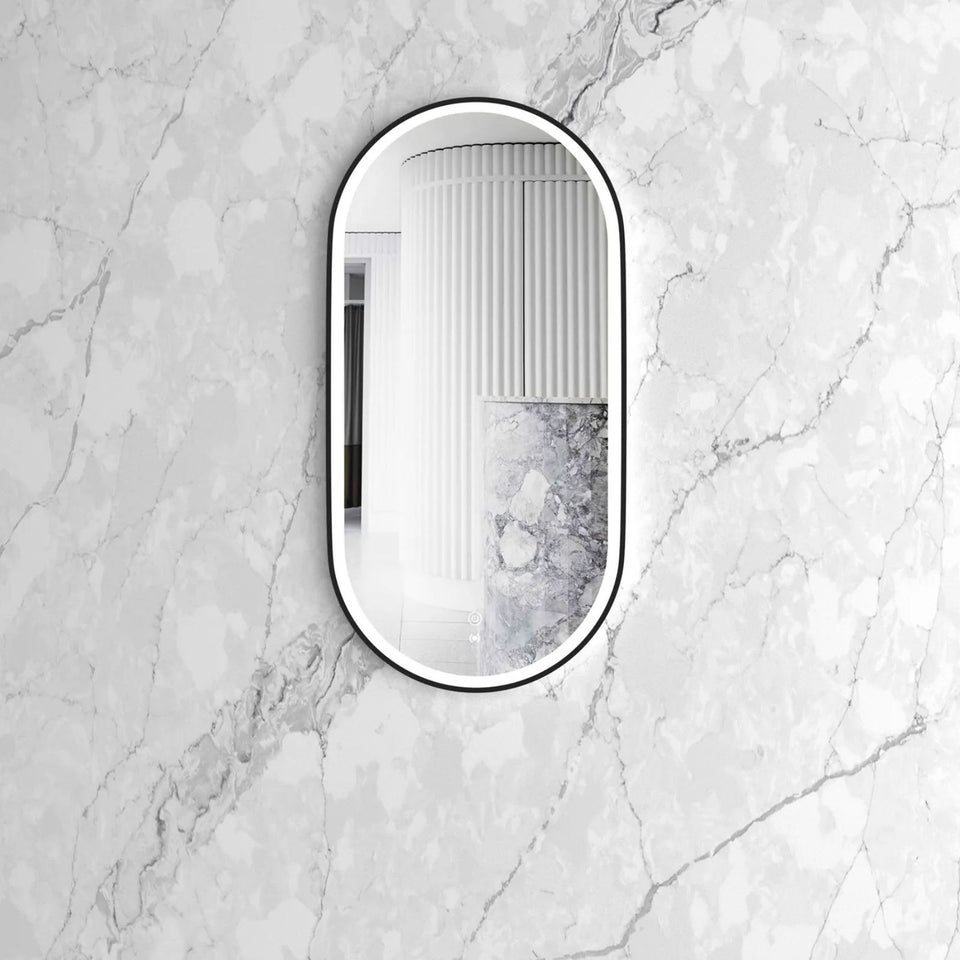
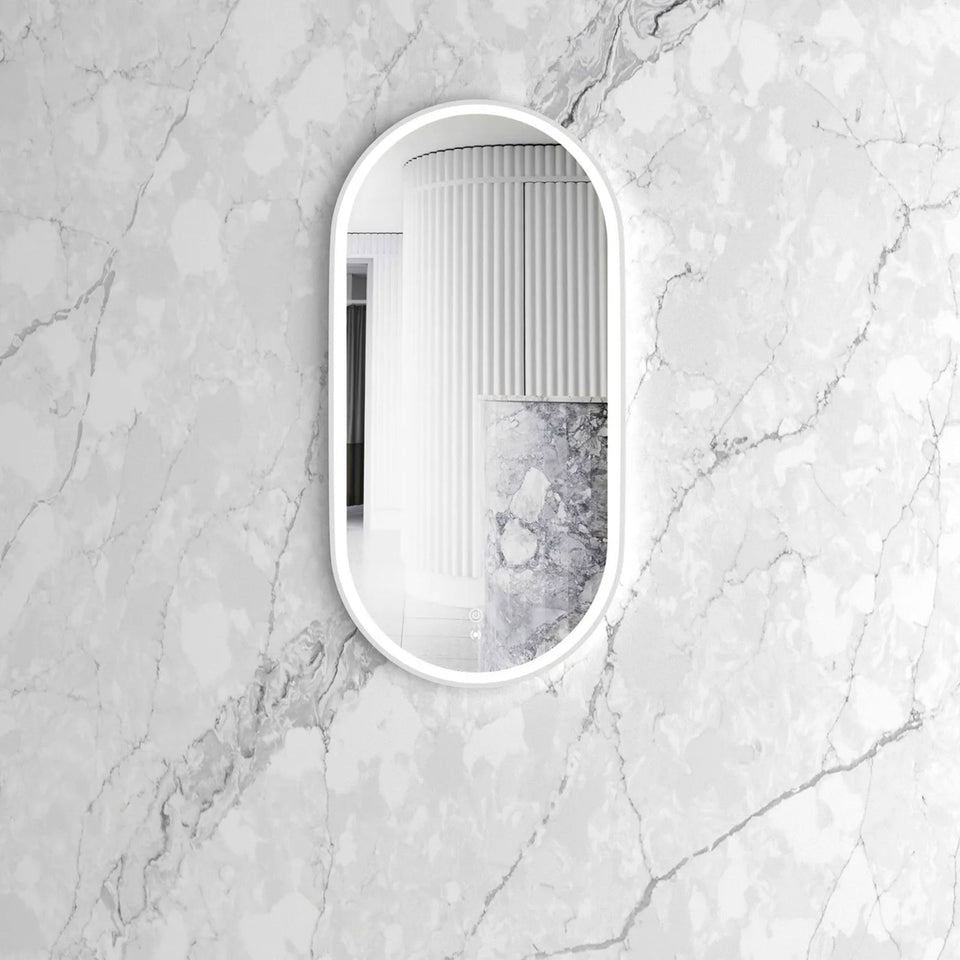


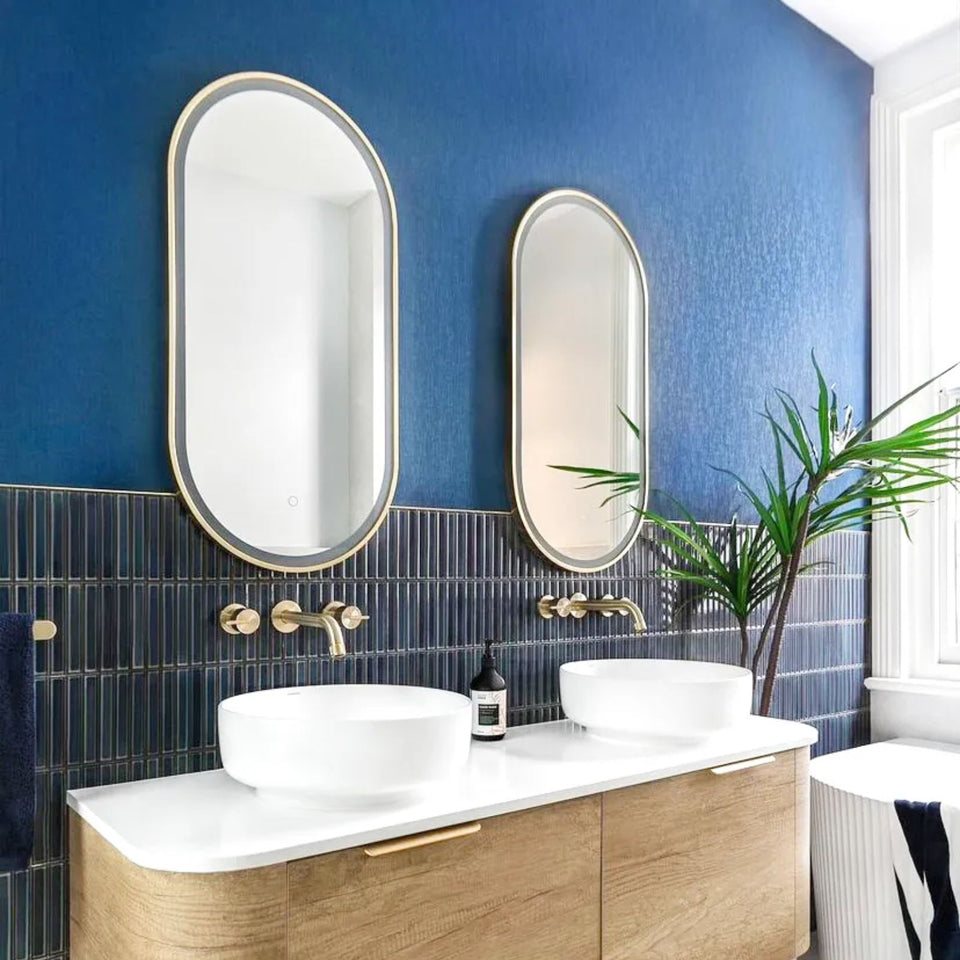
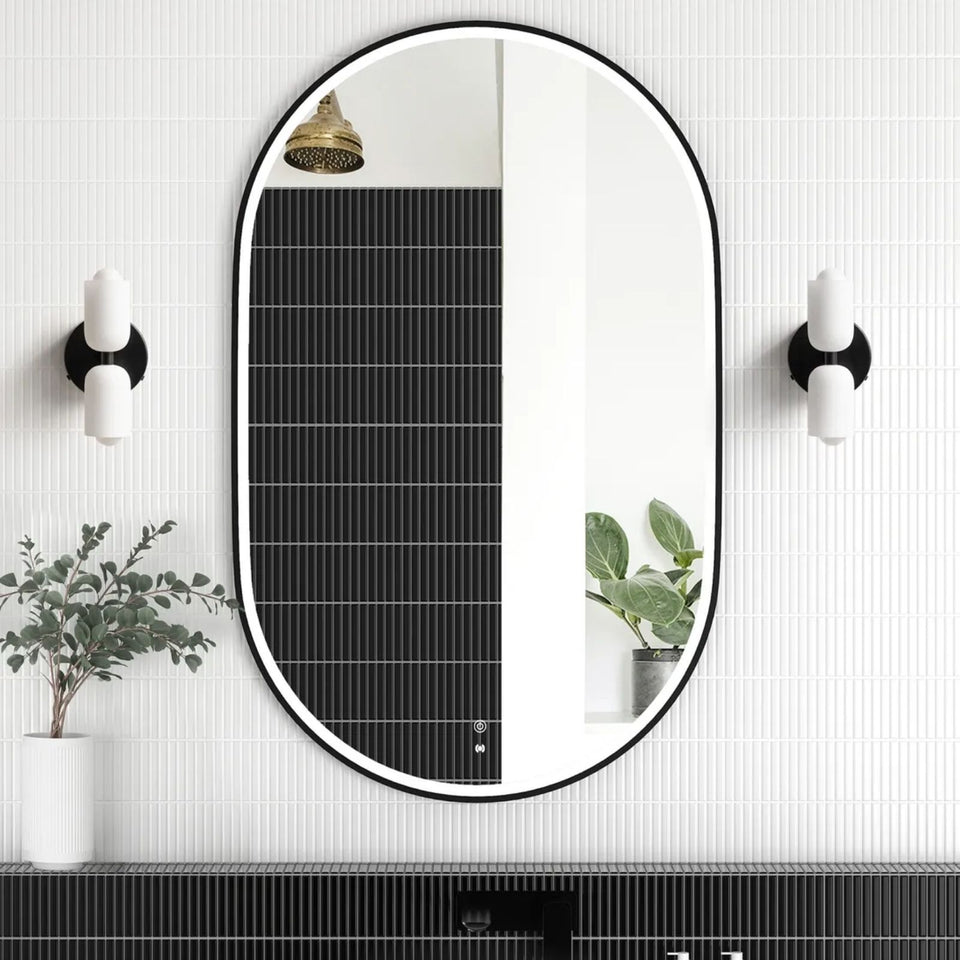


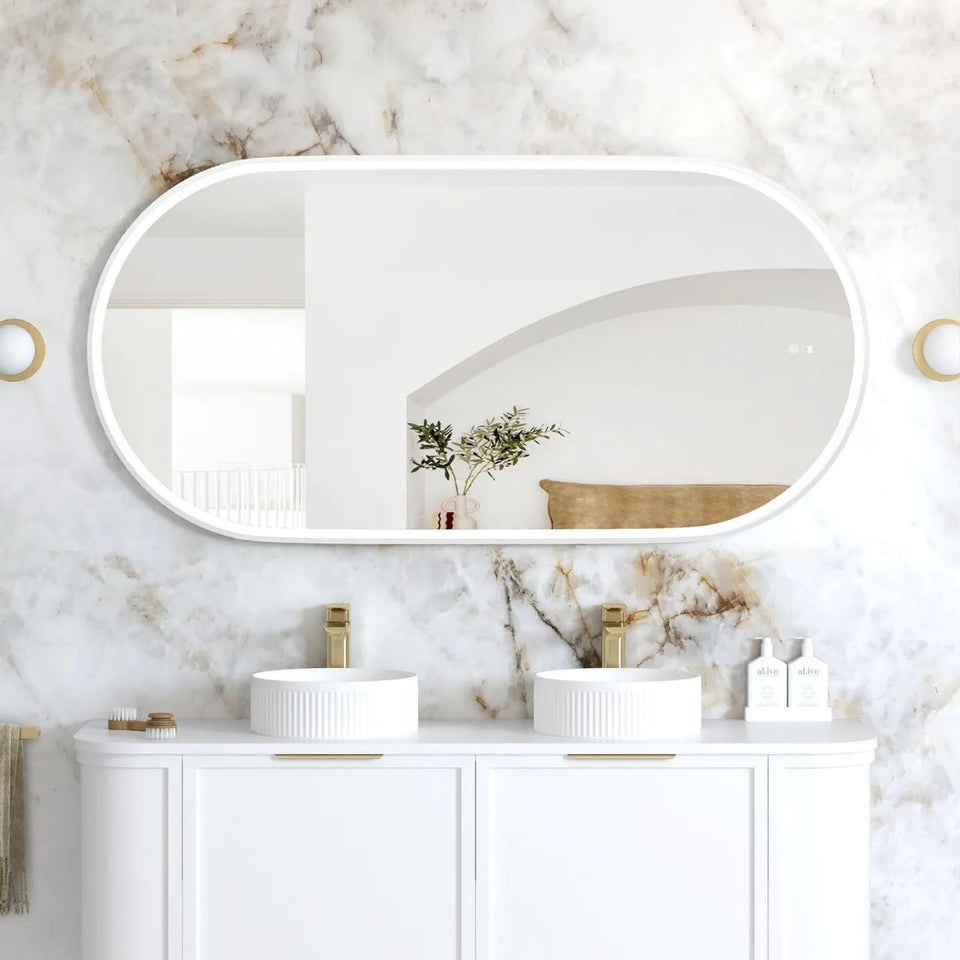
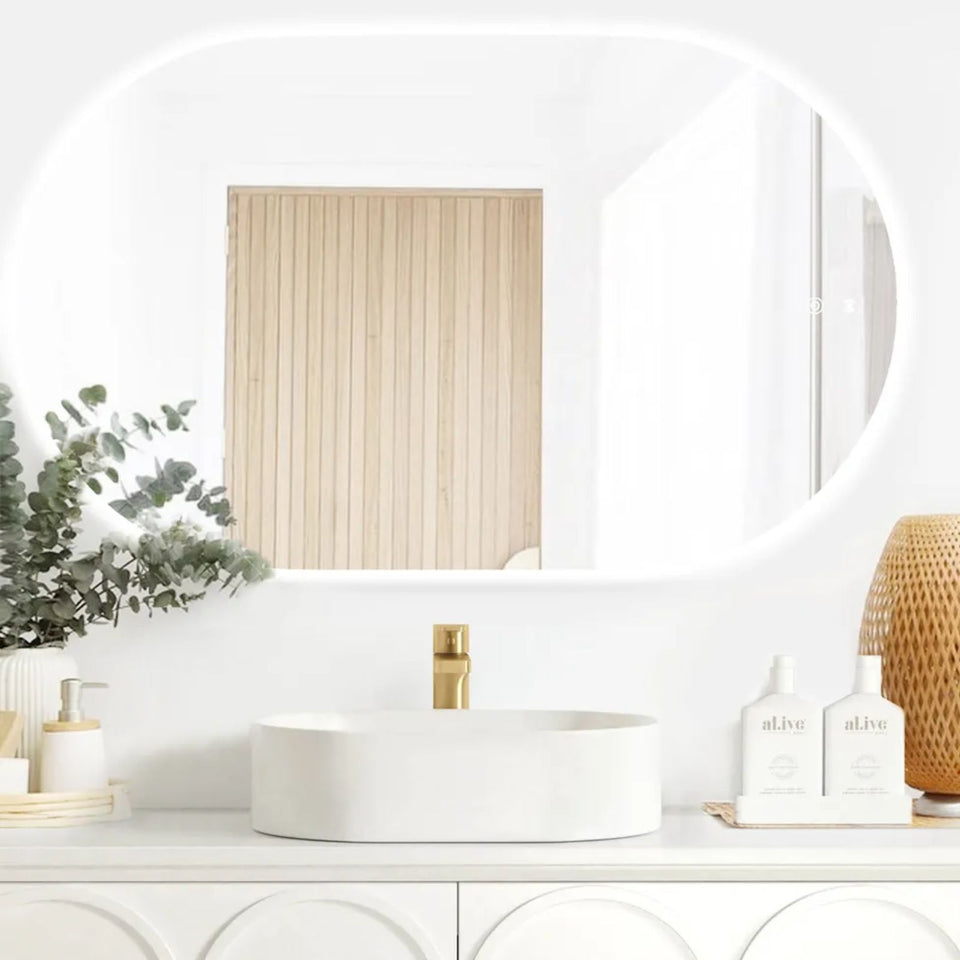
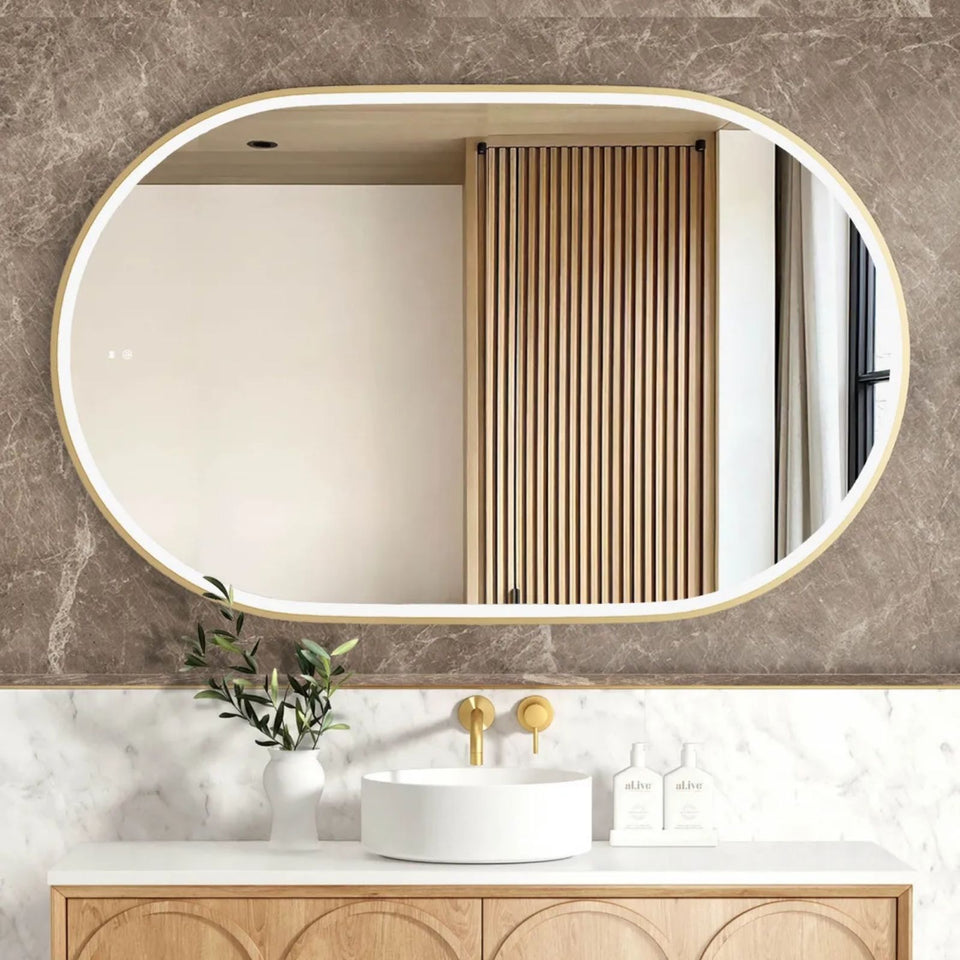
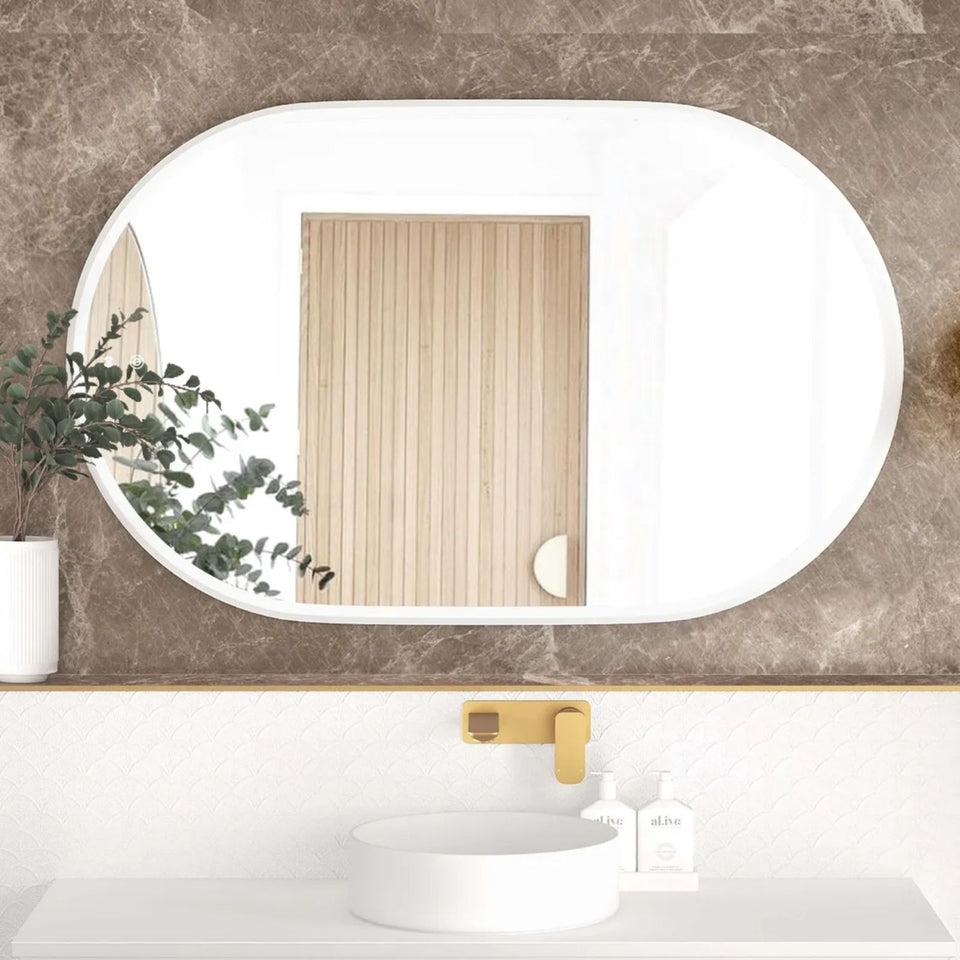
The Otti mirrors in this collection are LED mirrors in two ranges, the Noosa and the Newport. Both are wall-hung glass with a light strip, a motion sensor and a button, and an anti-fog mirror, in four sizes and in black, white or brushed gold metal frames or frameless. The practical call: choose the size against the vanity first, then the frame, and plan the power supply and the fitting before the wall is closed. The sections below cover each step.
The Otti LED Noosa comes in 900mm by 450mm, 900mm by 600mm, 1200mm by 750mm and 1500mm by 750mm. The 900mm by 450mm hangs vertically only, and the larger sizes hang vertically or horizontally. The Otti LED Newport comes in the same sizes, and its 900mm by 450mm is a soft square, a tall rectangle with rounded corners, in white, black or brushed gold. The Newport also comes frameless in 1200mm by 750mm, as a backlit mirror, and 1500mm by 750mm.
The shared build is an anti-fog 5mm copper-free mirror, a motion sensor with an on and off press button, an LED light strip, IP44 and SAA approval, at 40W. Some versions come with Tuffi glass, and the frameless 1500mm Newport is backlit and frontlit. The Newport adds a memory function that recalls your preferred settings, and a colour rendering index above 80.
The metal frames come in black, white and brushed gold, and the frameless versions have no border. Match the mirror finish to taps and accessories for a cohesive look, or contrast on purpose. Black cuts through pale tiles and matches black brassware, and brushed gold matches brass taps. In a small room use one or two finishes, choose a dominant finish first, and avoid very similar shades. For tapware see black taps and brushed brass taps.
A frame protects the glass edge from knocks, which suits a home with children or pets, and a frameless lit mirror gives a plain look that sits behind the vanity and tapware. For the choice see framed mirrors and frameless mirrors.
The framed mirrors have adjustable colour temperature at 3000K, 4000K or 6000K, and the frameless versions give cool, natural or warm light. Colour appearance is measured in Kelvin, with lower numbers warmer. Warm settings suit the evening and neutral or cool white suits the daytime, and the mirror and ceiling light should match or be layered on purpose. The memory function means the mirror returns to your setting each time.
The motion sensor switches the light without touching the mirror. The sensors are radar based and may receive interference from other sensored items in the space, such as sensor toilets. If the bathroom has other sensored fittings, check the sensor behaves as you expect after fitting. For the light styles see Ingrain backlit mirrors with demister and Ingrain frontlit mirrors with demister, which explain frontlit and backlit in depth.
Most sizes are plug-in, and some are plug-in or hardwired. Plug-in mirrors connect to a wall outlet and suit renters, the cord may be visible, and hardwired models need professional installation. Position a plug-in mirror so the cord and outlet stay away from water. Otti mirrors must be installed by a licensed tradesperson only, in accordance with the installation instructions. Treat that as the rule, and ask your electrician which connection suits the wall.
The two options sit side by side. Hardwired mirrors connect directly to the mains, show no cord, are more durable and suit renovations, but they are harder to move and take longer to fit. Plug-in mirrors have a standard plug for a nearby outlet, are quick to set up and can be taken when you move, but a visible cord looks untidy, the cord length limits placement, and cord management items are often needed. Plug-in suits renters.
For the Otti range that means the plug-in sizes need an outlet close to the mirror and the cord run planned, and the sizes that come plug-in or hardwired give a choice. If the wall is being opened in a renovation, a hardwired supply gives the cleaner result, and the licensed tradesperson condition applies either way.
The installation kit holds the mirror, two wall plugs, two screws and a wall bracket, which is a rail. The steps are short. Measure the spacing of the bracket holes, mark the wall using a level, drill the holes and tap in the plugs, screw the bracket to the wall, then hang the mirror on the bracket and connect the supply to the live and neutral terminals. Level every mirror, because the bracket alignment may vary.
Studs are the most secure fixing and cavity anchors suit plasterboard without a stud, and that a mirror over 100cm should be lifted by two people, which covers the 1200mm and 1500mm sizes. The supplied plugs are for the wall type the installer finds, so check the wall behind the mirror before you rely on them. An Otti category page asks installers to check the product against the measurements before roughing-in.
The frameless Newport mirrors are backlit, and the 1500mm is backlit and frontlit. A frontlit mirror directs light toward the user, which helps reduce shadows under the brow, nose and chin, and a backlit mirror lights the wall behind the glass, which gives a softer glow. Combined mirrors give the most balanced everyday result. Light walls and glossy tile reflect more light, and dark walls make a backlit mirror more decorative than useful.
No LED mirror replaces the ceiling light, because mirror light does not reach showers, baths or walk-in areas. A mirror that lights the face may remove the need for sconces on a narrow wall, but the ceiling light still does the room.
The clearest width rule is this: when the mirror is not the same width as the vanity, make it 70 to 80 per cent as wide, and 60 to 70 per cent when sconces share the wall. On a 600mm vanity that is a mirror about 420mm to 480mm wide. On a 900mm vanity it is about 630mm to 720mm, and on a 1200mm vanity about 840mm to 960mm.
Turn the rule around for the Otti widths. A 450mm wide mirror suits a vanity about 565mm to 645mm. A 900mm mirror hung horizontally suits a vanity about 1125mm to 1285mm, a 1200mm mirror suits one about 1500mm to 1715mm, and a 1500mm mirror suits one about 1875mm to 2145mm. Matching the width of the mirror to the vanity is the other option the rule allows, and it gives a cohesive look. Tape the outline to the wall before you decide.
Hang the mirror so its centre meets your eyes. Put the centre at 1500mm to 1650mm from the floor, with 100mm to 200mm between the tap and the base of the mirror and the top edge at least 100mm below the ceiling. A mirror needs to reach about 30cm above and below the eye line of its users.
A mirror 600mm to 900mm tall suits most single vanities, and 150mm to 200mm should stay clear above a mirror from cabinets or exhaust fans. The 900mm by 450mm and 900mm by 600mm mirrors fit that range and a compact vanity. Several tall, skinny mirrors can emphasise the height of a space. Allow for wall lights: when sconces share the wall, the width falls to 60 to 70 per cent of the vanity.
Each mirror hangs one way or both. The 900mm by 450mm hangs vertically only. The 900mm by 600mm, the 1200mm by 750mm and the 1500mm by 750mm hang vertically or horizontally. The touch button position varies with the installation direction, so decide the direction before the supply point is set.
Check the cord length against the outlet before you hang a plug-in mirror, because the cord limits where the mirror can sit.
Clean an LED demister mirror with a soft microfibre or lint-free cloth rinsed in warm water and wrung out, then wipe gently with a soft dry cloth. Avoid glass cleaner, window cleaner and chemical agents, because they can damage the silver coating. Switch the mirror off before cleaning, keep liquid off the edges and the sensor, and wipe the frame dry.
Choosing between the two ranges is mostly about the frame and the light. The framed LED Newport and Noosa give you a metal frame in black, white or brushed gold with adjustable colour temperature at 3000K, 4000K or 6000K. The frameless Newport gives a plain glass edge with a backlit glow, and the 1500mm version adds front light as well. Start from the wall: the 450mm width suits a narrow vanity or a pair over a double basin, the 900mm and 1200mm widths suit a single or wide vanity, and the 1500mm suits a long double vanity. Then choose the frame to match the tapware and decide whether the plug-in supply can reach the position you want.
Confirm three things before you order. First, that an outlet or a supply point will sit within reach of the mirror and outside the splash zone. Second, that the hanging direction suits the wall, because the touch button moves with the installation direction. Third, that a licensed tradesperson is booked to fit it, since the installation instructions make that a condition of the product.
The final check is the same for every Otti mirror: size against the vanity, frame against the tapware, power against the wall and height against the eye line. For all lit mirrors see LED mirrors, for the overview mirrors, and for the wall browse wall mirrors.


