
*View accurate shipping rates and availability






13 Items



Up to 70% off across the store, plus free towels and mirrors up for grabs on orders over $800*


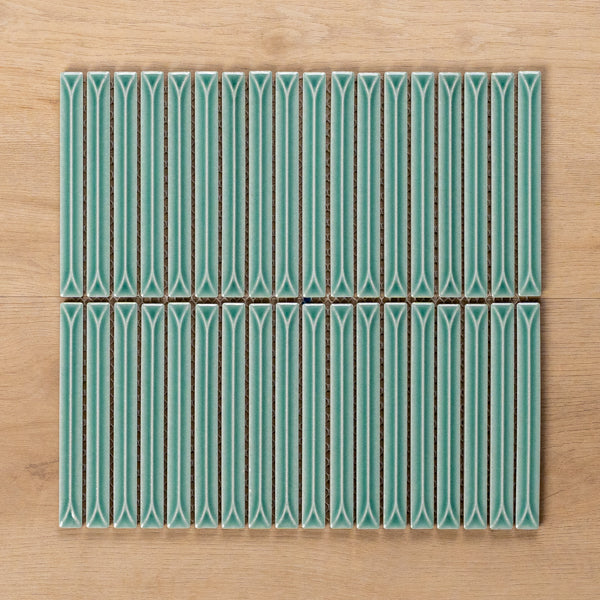
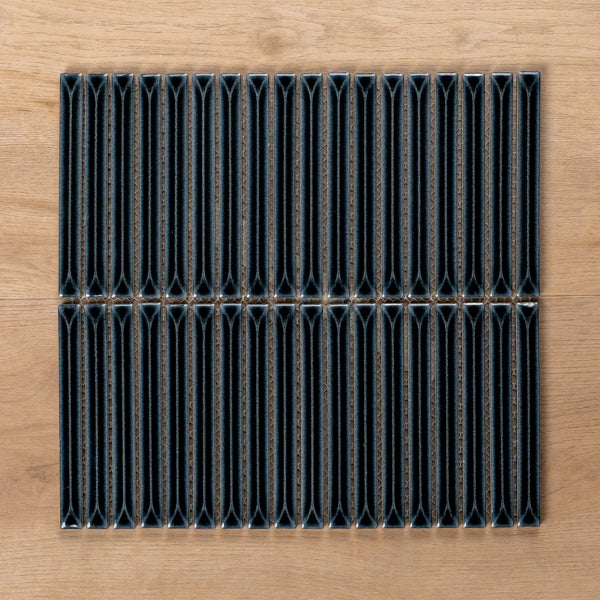
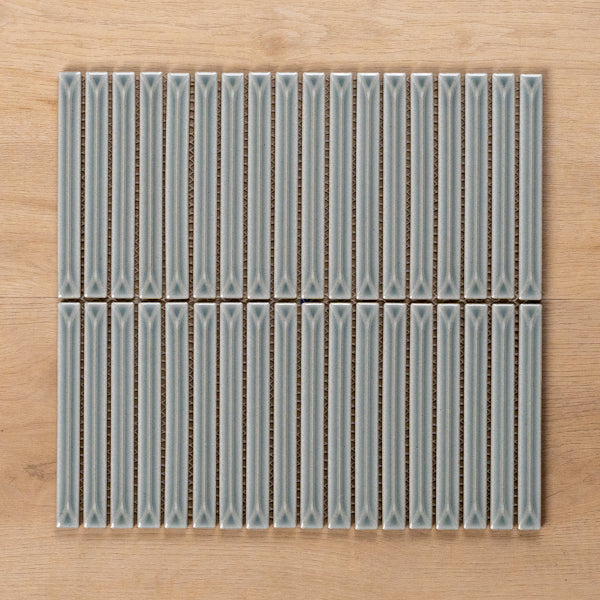
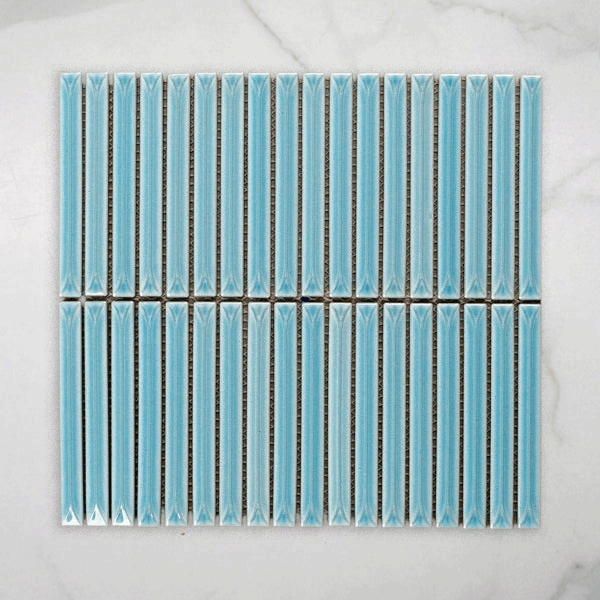
Kit Kat tiles are thin, elongated rectangles, also called finger tiles, that are laid side by side to make a ribbed, tactile surface. They are a kind of mosaic, sold in sheets, and they add texture and pattern without a strong pattern of their own. The collection holds 15 x 145mm gloss porcelain fingers, 12 x 92mm glazed fingers, a satin feature sheet and a travertine-look tile with a grip finish, in colours from white and beige to jade, blue, terracotta and black.
The sections below cover how the sheets are set, which way to lay the fingers, grout, floors versus walls, and what the spec lines say. For small formats in general, see the mosaic tiles collection, and for room ideas the bathroom tiles collection and the kitchen tiles collection.
Kit Kat tiles are a type of mosaic option: a thin, elongated small rectangle that adds a discreet element of texture, interest and pattern to a scheme. They are the smaller cousin of the subway tile, adding colour and texture while staying water-resistant and durable, which is why they suit kitchens and bathrooms. The shape is a quiet one, and it works in small spaces and large ones.
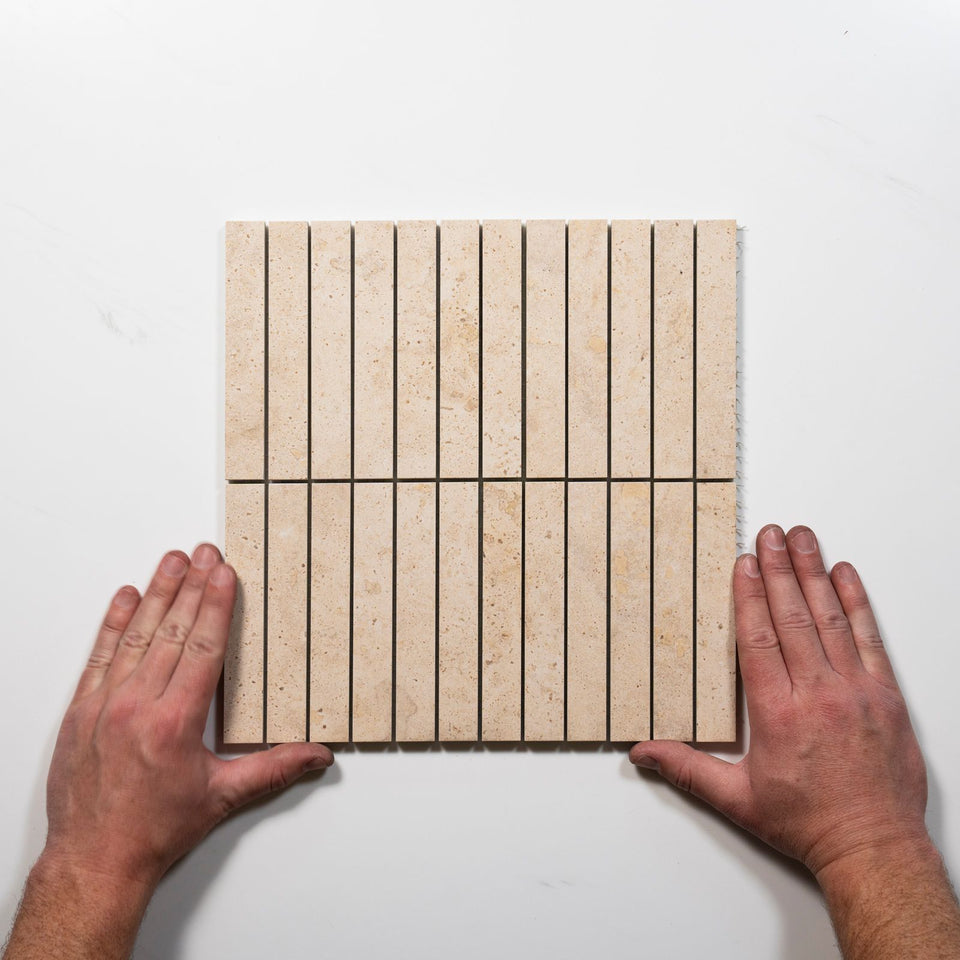
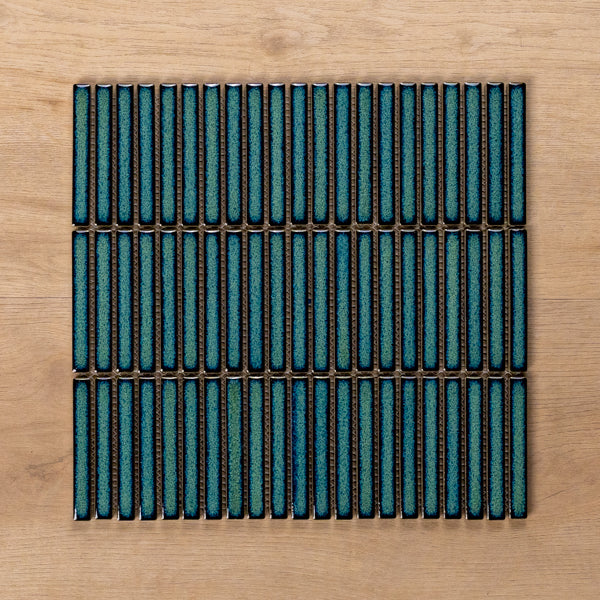
Kit Kat tiles are usually sold in sheets, with each piece attached to a mesh backing and a sheet measuring around 300 x 300mm, though the size varies by range. Sheets are simple to install because the tile spacers go between sheets and not between every piece. The tiles here follow the same format. The Avorio travertine-look tile is a 292 x 286 x 10mm sheet and the Ava is a 300 x 296 x 6mm sheet. The Middleton Antique Green is 282 x 308mm, with individual pieces measuring 12 x 92mm.
The Castaways fingers are 15 x 145mm. Each range prints its own sheet details, so check the Dimensions line on the page before measuring a wall.
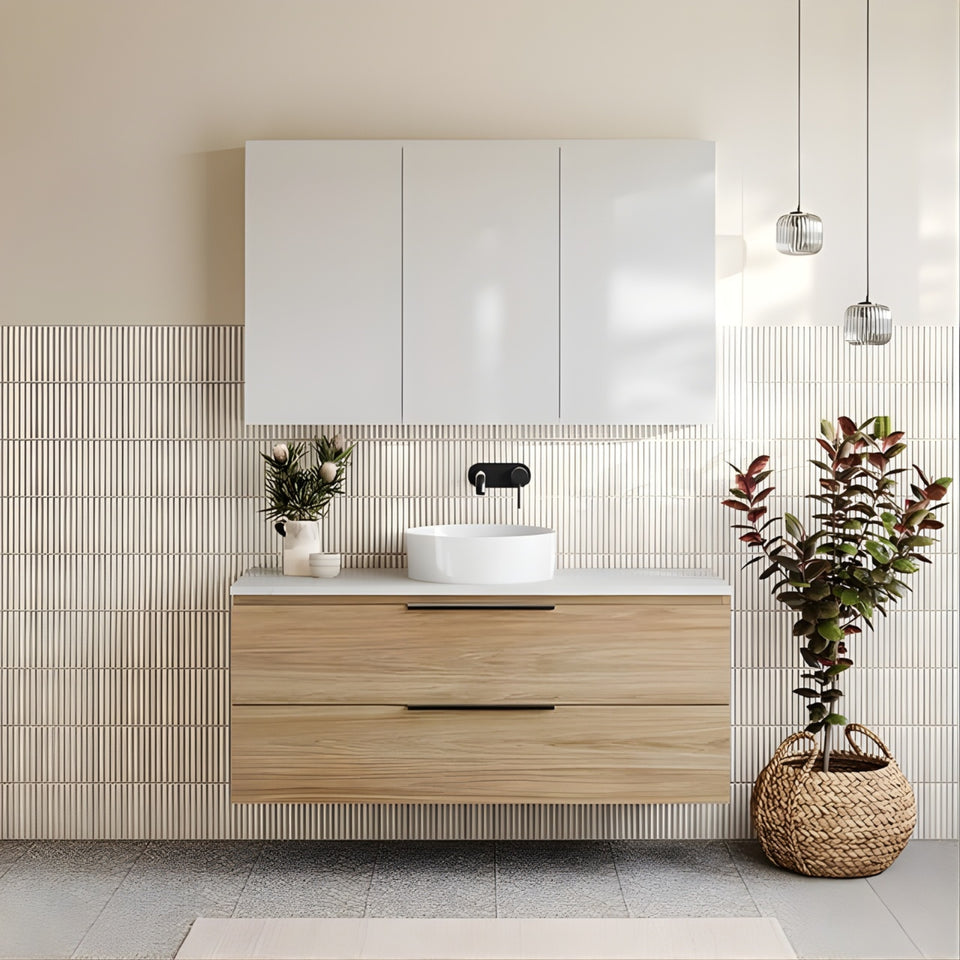
Direction changes how a wall reads. Horizontal layouts make a wall feel wider and vertical layouts draw the eye upward, and many people use vertical lines in showers and horizontal lines on splashbacks for a balanced look. The fingers can run vertically or horizontally across a wall for a linear pattern that adds a discreet sense of texture.
Both directions work in practice. In a Japandi-style bathroom, finger tiles run horizontally on the splashback, which adds width and texture to a calm space. In a family bathroom, sea green fingers sit on the lower part of the wall behind the bath for an unexpected splashback effect. In a coastal kitchen, white fingers cover the overhead cabinets and the island, which adds texture and avoids a flat look. The herringbone tiles collection covers a different layout for rectangular tiles.
Finish sets the mood. Gloss Kit Kat tiles brighten a room and reflect light well, which makes them popular for splashbacks and small bathrooms. Matte tiles give a softer, more settled look with low reflections, and suit bathrooms, powder rooms and relaxed kitchens. Gloss brightens darker rooms and matte creates a gentler look in bright ones.
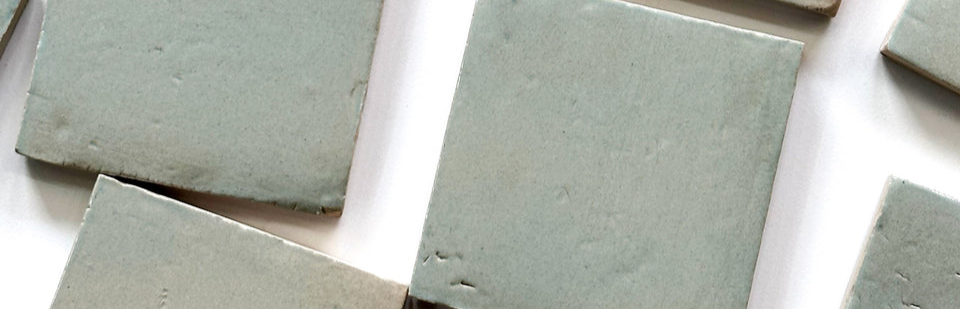
Soft greens, blues and neutrals are common in Kit Kat tiles, and they suit situations where you want detail without overwhelming the room. Richer shades can turn a small area into a focal point, such as behind open shelving or in a shower niche. The colours here run from white and cream to a sage-silver, mint, jade and water blue, with a terracotta and a black.
The Castaways range names seven colours on the product pages: Autumn terracotta, White, Jade, Frosty mint, Water, Silver sage and Midnight black. The Middleton range prints five unique colours, with Jade, Antique Green, Grey Smoke and White Chalk among those listed here. For single colours across the store, see the green tiles collection, the blue tiles collection, the white tiles collection and the grey tiles collection.
The material choice is simple. Porcelain finger tiles are durable and suit walls and some floor areas, depending on the product, and they are often chosen for bathrooms and kitchens because they handle moisture well and are easy to maintain. Ceramic Kit Kat tiles are common on splashbacks and feature walls, and they are lighter than porcelain, come in many finishes and have a smooth backing that is simple for tilers to install.
Every tile in this collection is porcelain, in glazed form for the Castaways and Middleton ranges, so the question is less about material than about the Application and wear lines on each page. A tile made for floors with a slip rating is built for traffic, and one made for walls is not.
Because the fingers are small, there is far more grout line per square metre than on a large tile, so the grout does much of the visual work. Use a fine, unsanded cement grout for most finger mosaics, because it packs neatly into narrow joints without scratching a gloss glaze. For showers, splashbacks and other wet or food areas, epoxy grout is worth considering because it resists stains and water better. Epoxy is non-porous and resistant to staining and moisture, so it helps prevent dirt and grime build-up.
Colour is the second choice. Matching the grout to the tile makes the fingers blend into one soft field, calmer and more spacious from across the room. A grout a few shades lighter or darker draws a line around every finger, which makes the pattern the feature. Strong contrast shows any unevenness in the setting out, so it rewards careful work. Natural stone fingers need extra care: seal them before grouting, wipe as you go so coloured grout does not sit on the stone, and consider a second seal afterwards.
The Middleton tiles need a specific joint: cushioned edge tiles have natural irregular edges, and grout lines of 3mm or more suit a classic tiled appearance. The Avorio carries no gap line, so a tiler can confirm the joint for that tile.
Kit Kat tiles are most often a decorative wall tile. Terrazzo or natural stone options in a finger format can usually be used on a floor, and make a good fireplace hearth tile. The tiles here follow that split. The Castaways fingers are wall tiles and read Walls. The Middleton fingers are Floor Category 2, suited to interior wall and floor surfaces exposed to regular wear, with soft shoes or bare feet.
The Avorio travertine-look sheet prints Walls and Floors and P5, with a Tech Grip finish and a V3 appearance, so it is the one finger tile here suited to a floor or a transitional area. The Ava prints Walls, Floors (low traffic) and Pool mosaics, with an Indoors area line and no slip rating. Read the Application, Area and slip lines together before choosing a finger tile for anything other than a wall. The floor tiles collection explains slip and wear ratings in detail.
The usual places are a bathroom wall tile, a kitchen splashback and a laundry splashback, adding a discreet layer of texture to the scheme. Kit Kat tiles suit wet areas, with their narrow format and finish making them both functional and stylish for bathroom walls, splashbacks and feature areas. The wall tiles collection sorts the full range of wall formats.
A bold colour has a natural home in a niche, behind open shelving or as a strip. A neutral finger covers a full wall without competing with the fittings. Mixing colours and finishes is also possible: Kit Kat tiles are well suited to unique patterns and contrasts when different colours and finishes are mixed.
Order more than the measured area, in whole sheets. Add 10 percent for cuts and spares, or 10 to 15 percent in general. Rooms with more cuts need more again, so confirm the quantity with your builder or tiler before ordering.
A worked example: a splashback 3m wide and 0.6m high is 1.8 square metres. A 300 x 300mm sheet covers 0.09 square metres, so the splashback takes 20 sheets, and with 10 percent for cuts the order is 22. A shower wall 2.4m high and 1.2m wide is 2.88 square metres, which takes 32 sheets, and 36 with the allowance. Plan the sheet joints with your tiler before the adhesive goes on, so the pattern runs across the join without a break.
The product pages print the full details for each range. These show the spread.
Castaways is a glazed porcelain mosaic with a three-dimensional look, in gloss. Middleton is a petite 12 x 92mm finger mosaic, in gloss with cushioned edges. Ava is a satin white feature tile, the perfect way to add a feature without being overpowering, as a bathroom wall tile or as a splashback in a laundry or kitchen. Avorio is a travertine-look finger sheet with a Tech Grip finish, inspired by the soft elegance of natural travertine.
For the plainer brick shape in larger sizes, see the subway tiles collection, and for the whole range, the tiles collection.
On installation day, check the wall for flatness before the first sheet goes up, because a slim finger shows an uneven surface along its whole length. Press each sheet in firmly, keep the gap between sheets equal to the gap between fingers so the join disappears, and wipe grout haze off the face as you go. A sample sheet laid on the wall beforehand shows how the direction, the colour and the grout read together.
Start with the surface. For a wall, a splashback or a niche, any of the fingers will work, and the choice is colour and finish. For a floor, choose the tile whose Application line says Floors and carries a slip rating, which here means the travertine-look sheet. Then decide the direction: vertical in a shower to lift the wall, horizontal on a splashback to widen it.
Choose the grout last, because it changes the look more than any other decision: close to the tile for a soft surface, contrasting for definition, and epoxy where wet or greasy conditions call for it.


