
*View accurate shipping rates and availability






53 Items


Up to 70% off across the store, plus free towels and mirrors up for grabs on orders over $800*
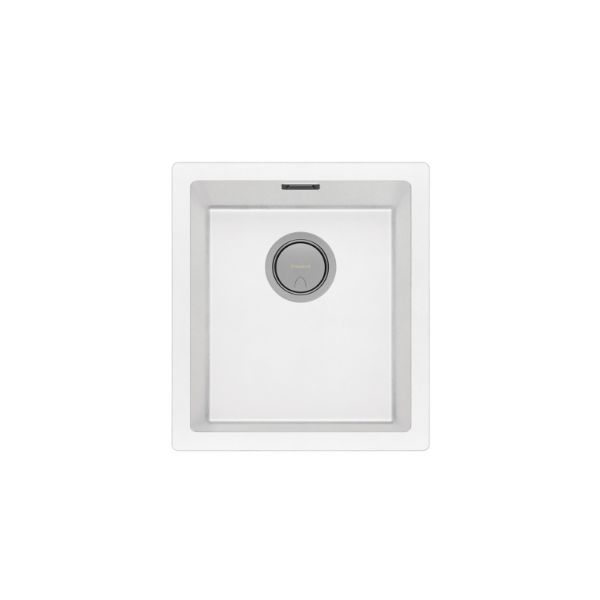

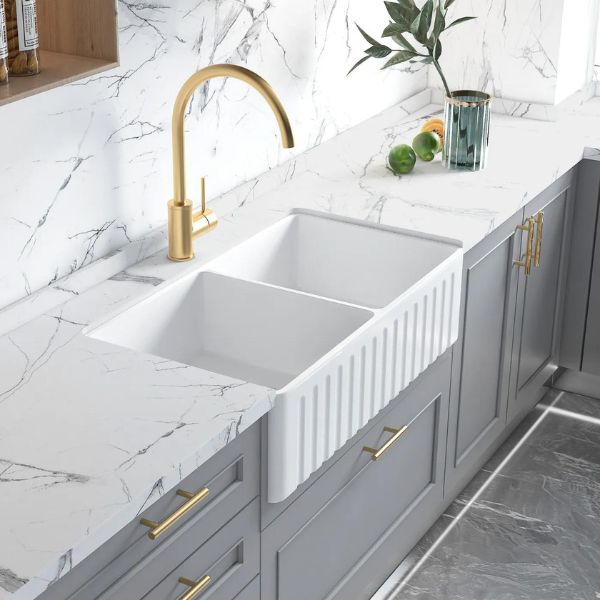

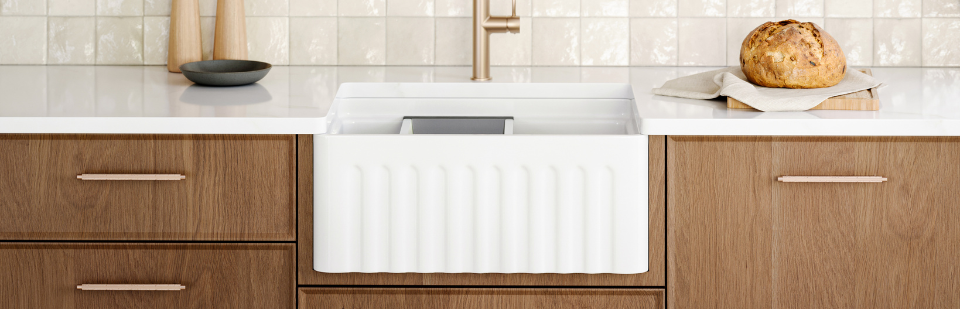

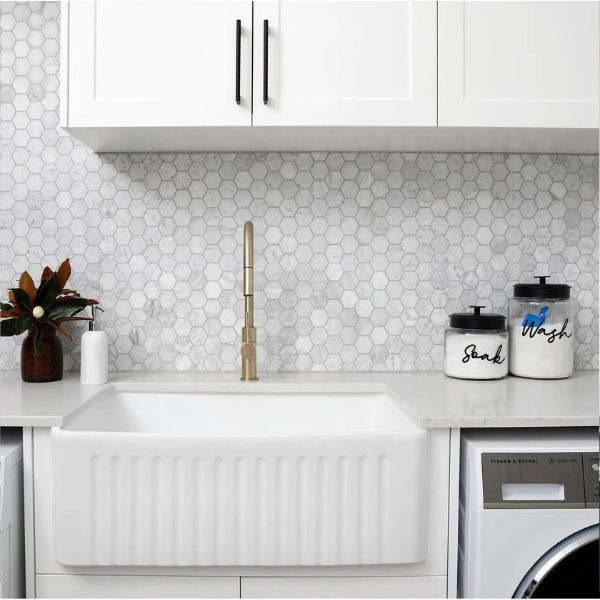
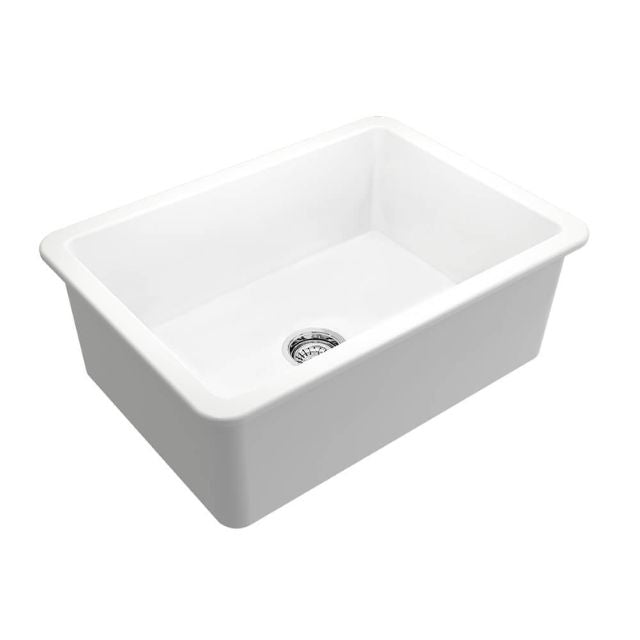


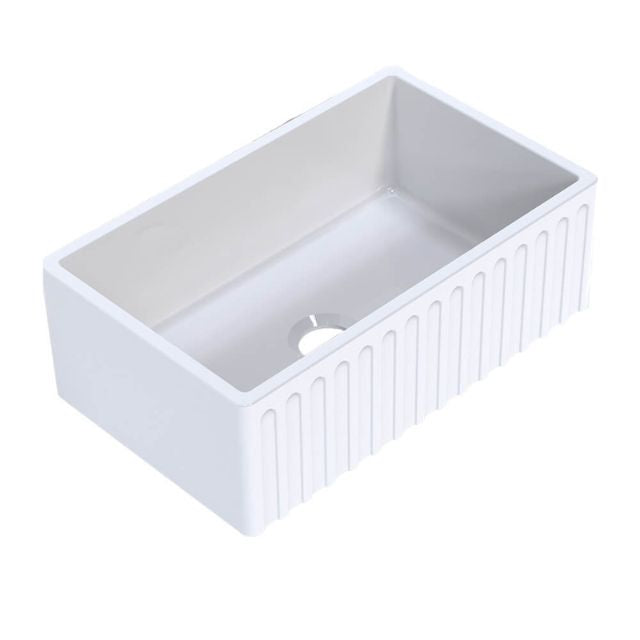
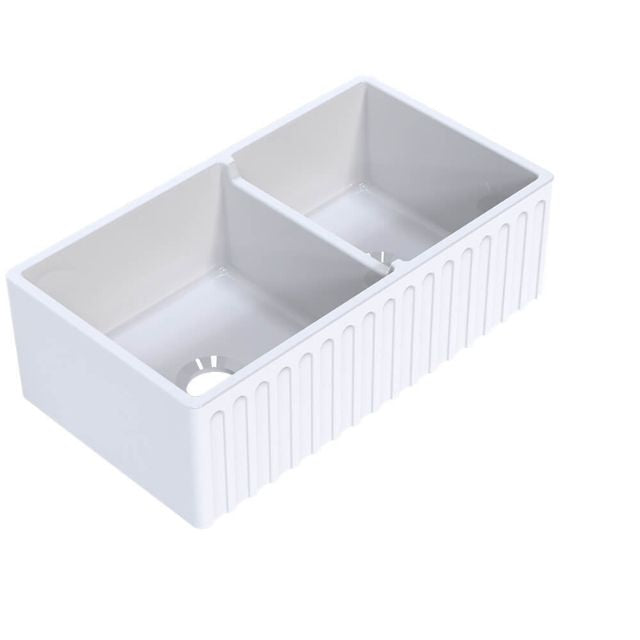


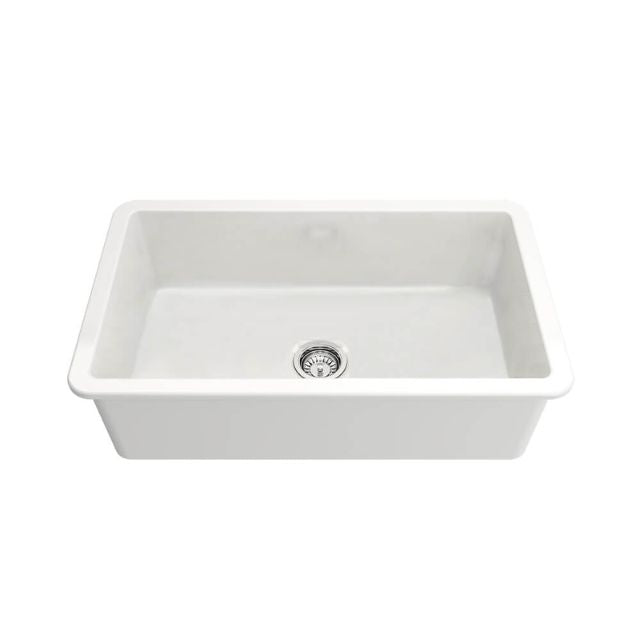
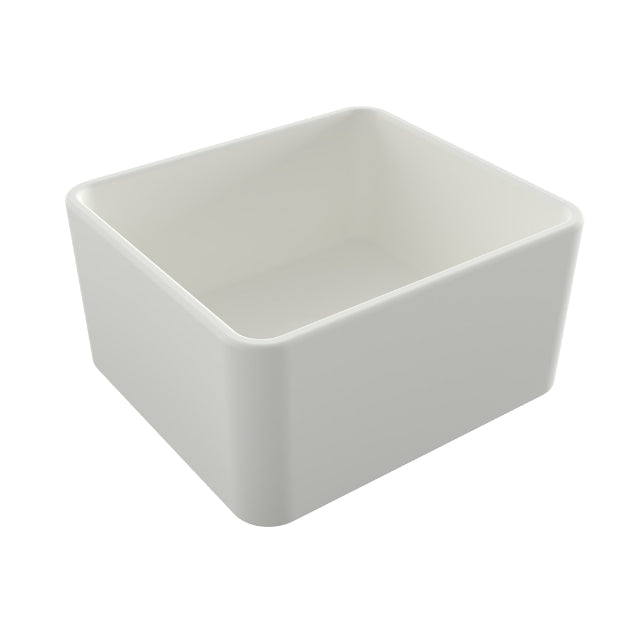
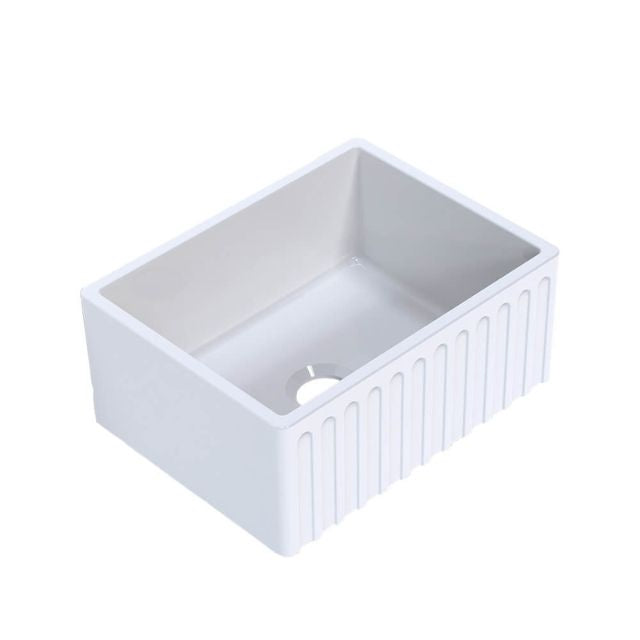
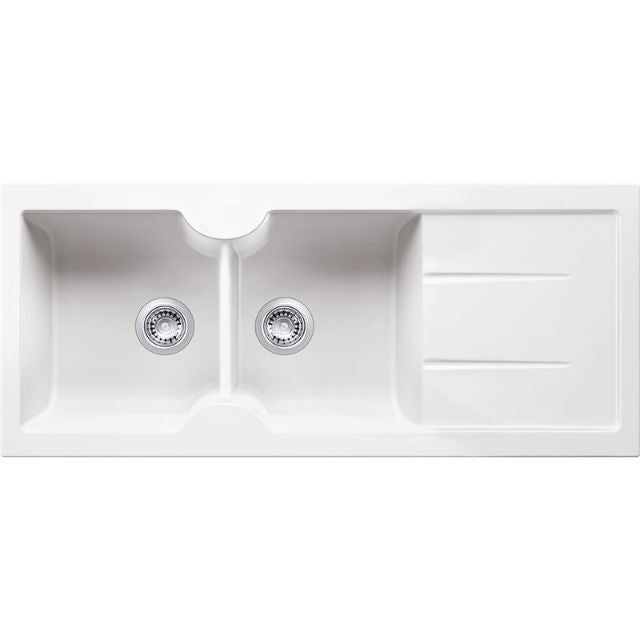
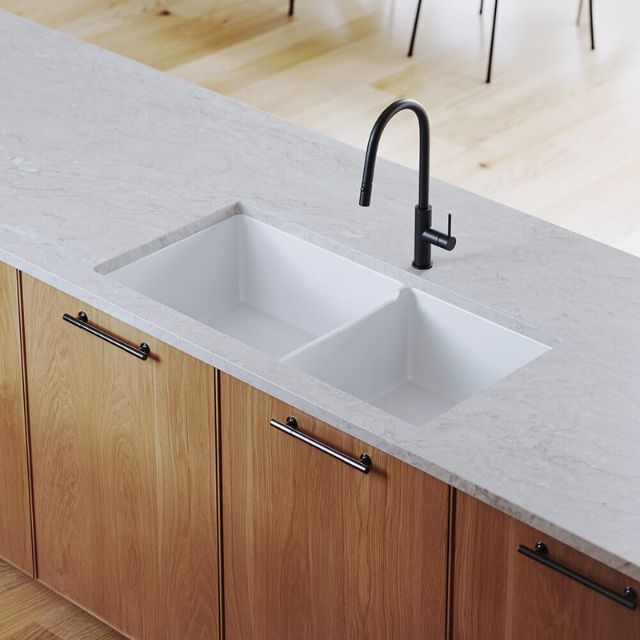

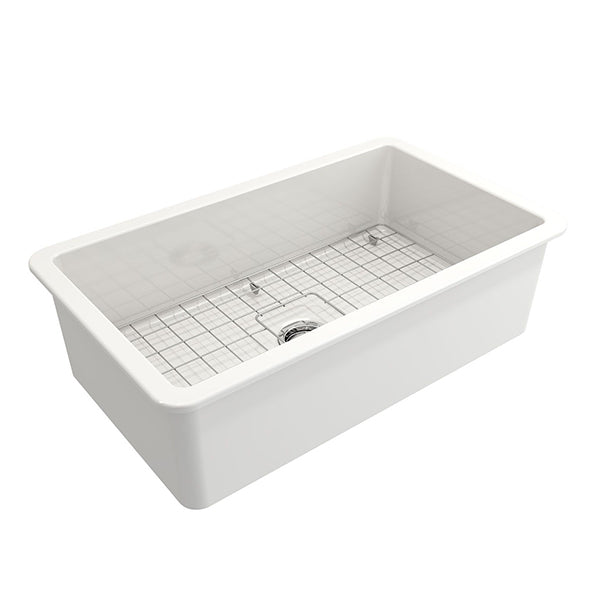

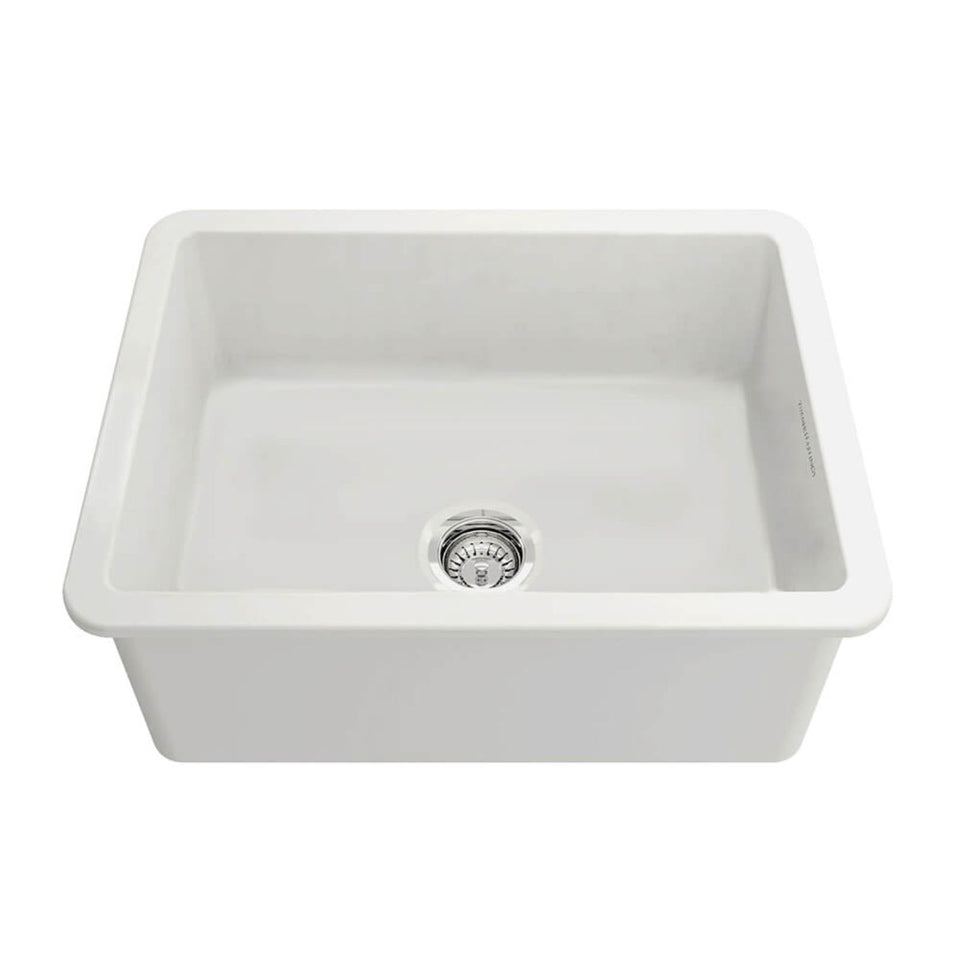
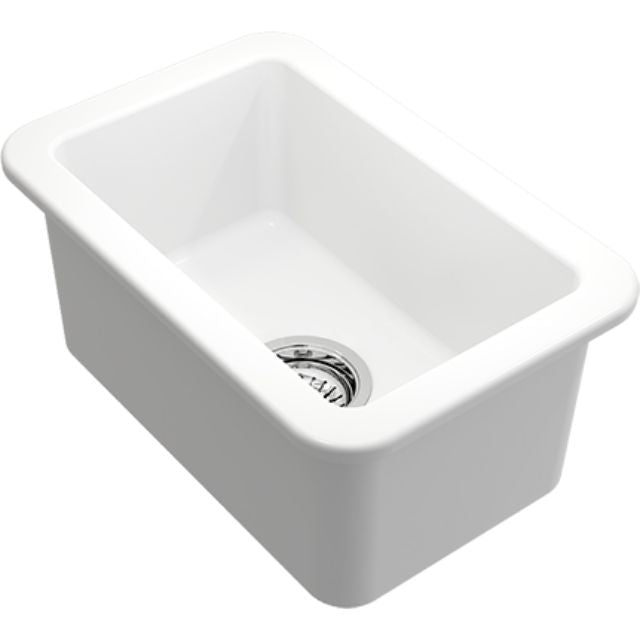


A white sink is a choice about surface and upkeep more than about colour. White shows marks that a darker sink hides, so the useful questions are what the sink is made of, how glossy it is, how it is fitted, and how you will clean it. This page answers those in order. For most kitchens, the practical call is a fine fireclay or quartz composite sink, fitted undermount under a solid benchtop. Choose a matte or gloss white that matches the other finishes in the room, and clean it with a soft sponge and baking soda, not with abrasives. The sections below give the reasons and say when a different choice is better.
White shows marks more readily than darker finishes such as black, and coffee, tea and wine can leave temporary marks. Those marks wipe off with warm water, detergent or a baking soda paste. Scratches are more visible on glossy white surfaces than on matte ones. Material matters more than colour, so a sink in a tough, smooth material is easier to keep clean than a white sink in a weaker one.
The grey lines that appear on a white sink are usually metal transferred from pans, not deep scratches, and baking soda on a soft sponge removes many of them. A grid on the bowl floor reduces how much metal touches the surface.
A white sink asks for a little more habit than stainless steel. If the household cooks heavily and wants no visible marks, a darker sink suits better; see black kitchen sinks and stainless steel sinks. If you want the bright, clean look and will rinse the bowl after coffee, tea and sauces, white is a good choice.
Most white sinks in this collection are fine fireclay, and the rest are composite. The material decides how the sink behaves when something hard hits it.
A word on the term porcelain. A sink sold as porcelain is often porcelain enamel over steel or cast iron, or vitreous china, and not solid porcelain. In an enamel-over-metal sink the enamel is the thin layer that matters, and a chip can expose the metal. A solid fireclay body does not depend on a thin coating. Check the material line on the product page before you buy, and see ceramic kitchen sinks for the wider ceramic range.
Fireclay and granite composite both rate very well for stain resistance, and neither is clearly ahead. Choose on the other factors: weight, finish, shape and how it will be fitted.
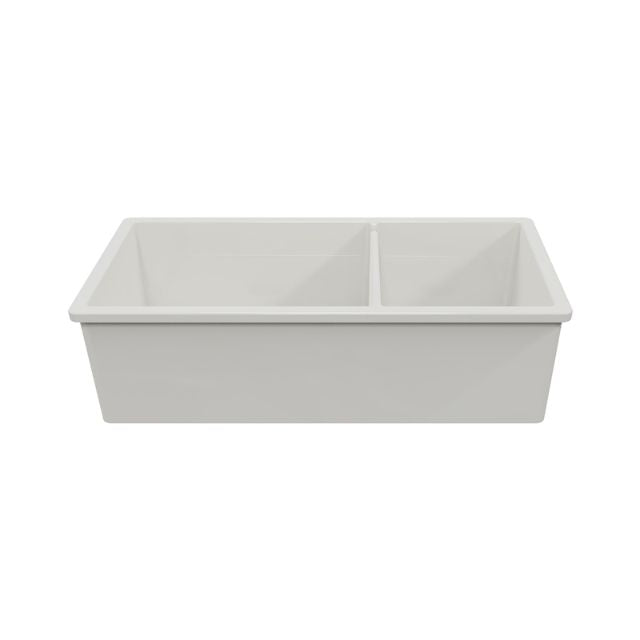
The finish matters as much as the material. Fireclay has a glossy finish and granite composite a matte or textured one, and glossy white shows minor scratches more readily. Many Turner Hastings Cuisine sinks come in both gloss white and matte white, and some in matte black as well. The Phoenix 5000 Series double bowl is a matte white quartz resin sink, and the Seima Oros and Rhodes sinks have a smooth finish in white.
The call: choose matte if the sink will be used hard and you want minor wear to show less. Choose gloss if you want the traditional look of a glazed sink and will keep a grid in the bowl. Whichever finish you choose, check that the white tone sits well with the benchtop and the surrounding finishes, because whites vary from cool to warm.
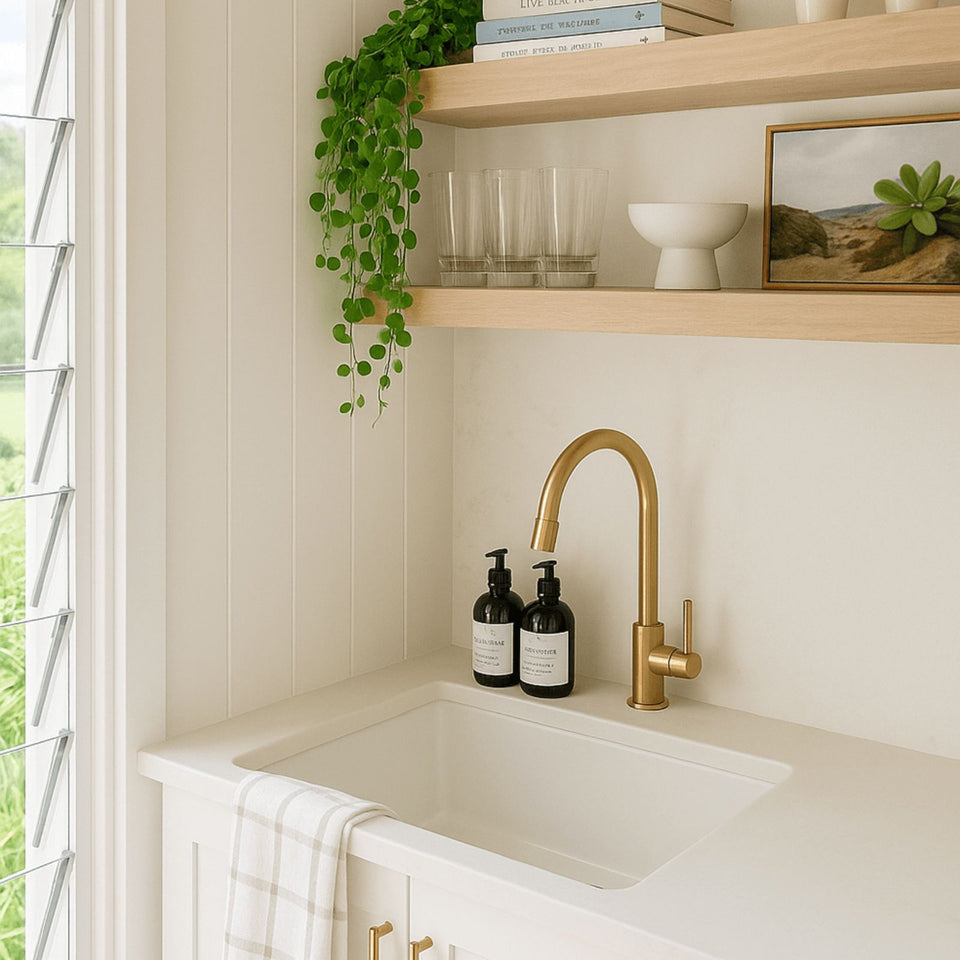
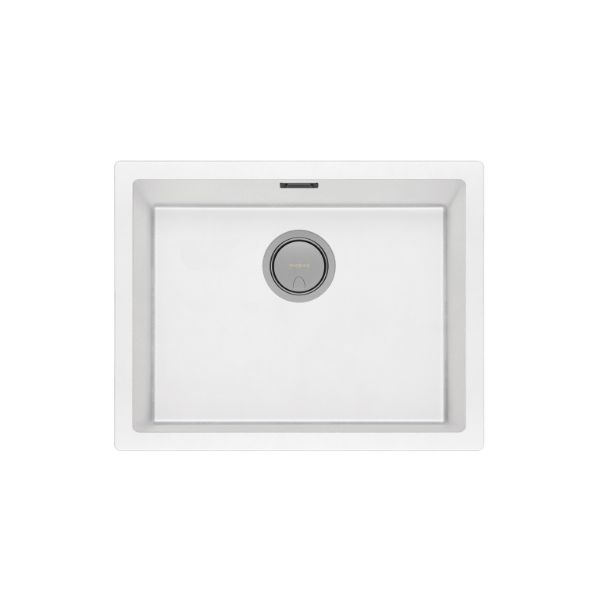
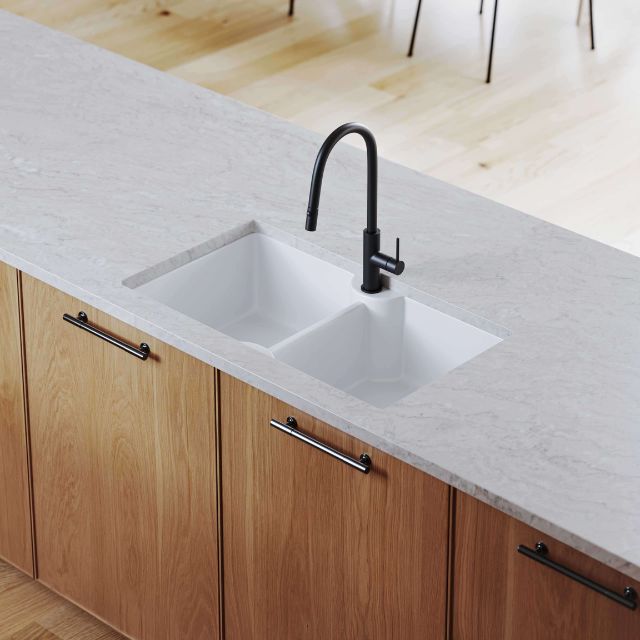
White sinks are traditionally installed undermount, but they can be top-mounted, and most models can be undermounted or flush mounted. The sinks in this collection are mostly inset or undermount. For a solid benchtop such as stone, undermount is the usual match, because the sink sits below the stone and there is no rim. An undermount design removes the raised lip that traps crumbs, water and grime, and a properly installed and sealed edge does not trap water. For a laminate or timber benchtop, an inset sink is the safer fit, because the rim protects the edge.
The Turner Hastings Cuisine 60 suits a stone benchtop with a drainer cut into the stone top, installed undermount. See undermount kitchen sinks, inset sinks and drop in kitchen sinks. For the guide to fitting methods in general, see kitchen sinks.
White sinks come from compact to very large, and the sizes below give the numbers.
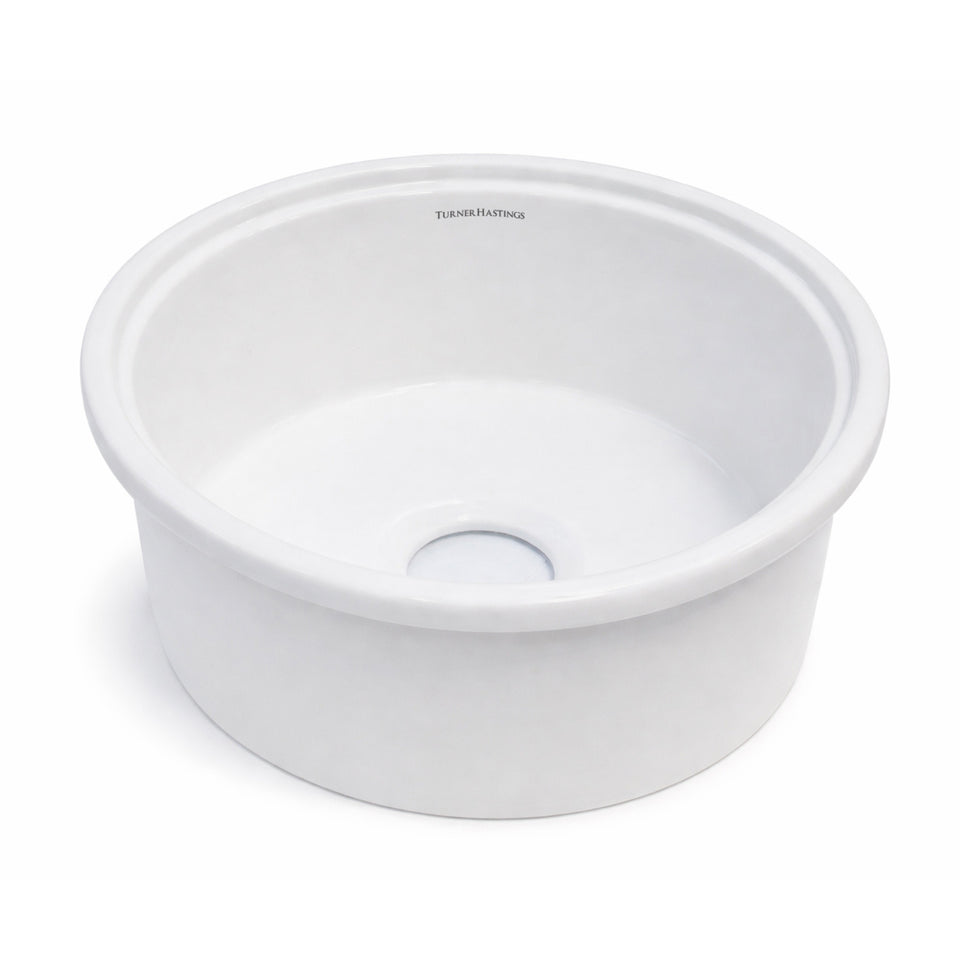
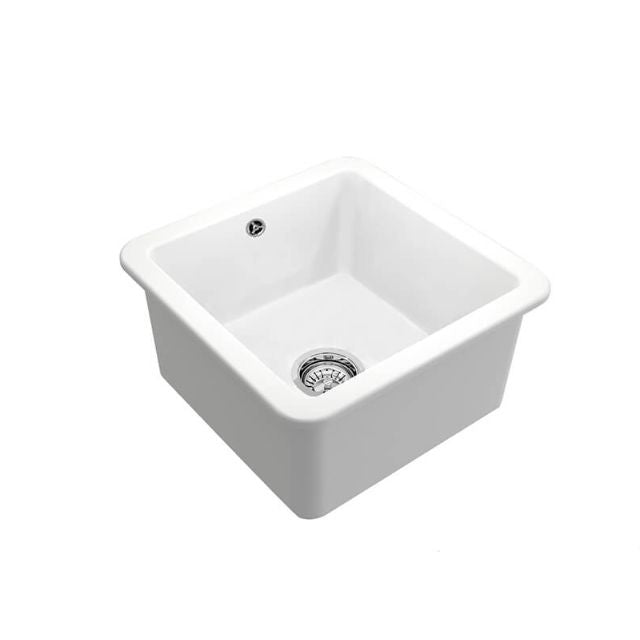
If you searched for a small white kitchen sink, the 30 x 46 and the Cuisine Round are the compact choices, and the 550mm Oros is the smallest quartz option. For a larger household, see double bowl kitchen sinks, single bowl kitchen sinks and 1.5 bowl kitchen sinks. The rule applies here as to any sink: a single bowl suits a dishwasher household that fills big pots, a double bowl suits hand washing and soaking, and a one and a half bowl gives a main bowl with a smaller prep bowl.
The Cuisine 93 x 48 has a full-size bowl and a smaller half bowl for washing large pots while draining smaller items. For compact rooms, see small sinks.
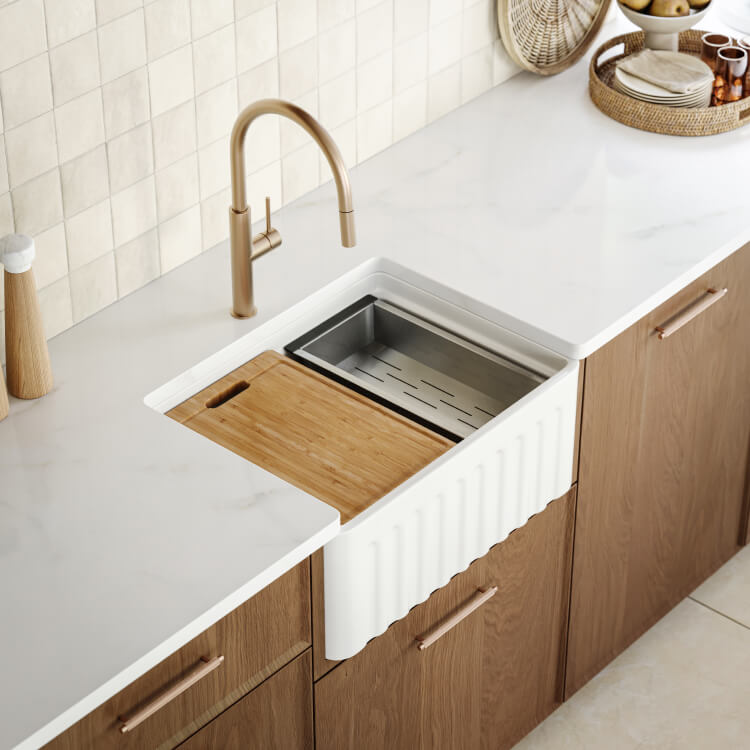
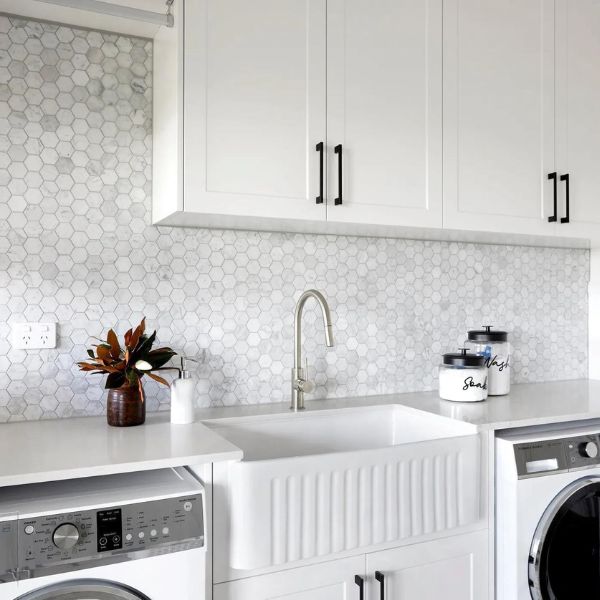
Fireclay is heavy. The Cuisine Round weighs 17kg and the Cuisine 60 weighs 24kg, and among the larger butler-style sinks the Turner Hastings Novi 61 is 30kg and the Novi 75 is 40kg. Fireclay is typically set before the benchtop goes on, two people should handle a large one, and cabinet support should be prepared first. For farmhouse and apron-front styles, which need custom cabinetry, see butler and apron sinks.
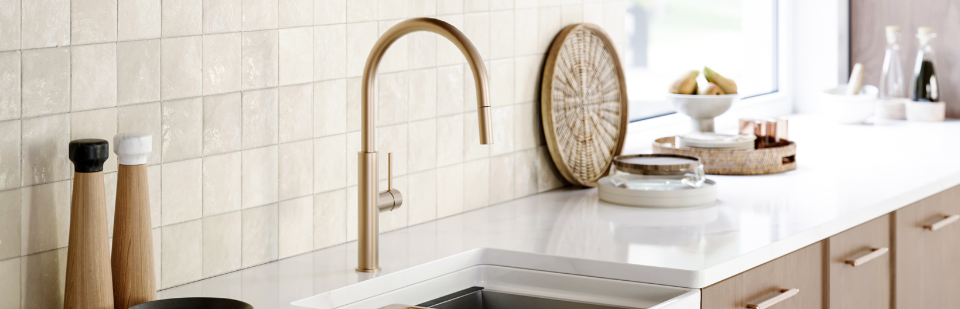
Match the tap to the tap hole count first. Many white sinks here have no tap hole, so the tap mounts on the benchtop or the wall, and a few have one tap hole behind the bowl. A white sink pairs well with traditional tapware, often with matching handles, for a classic look. For a modern kitchen, chrome and matte black are common matches. See kitchen taps, sink mixers and black kitchen taps and mixers. Check that the spout reaches over the full bowl and clears the rim.
The routine is short. Rinse after cooking or washing up so stains do not set. Once a week, scrub with mild dish soap or baking soda on a soft cloth. For coffee, tea or wine marks, wipe with warm water, detergent or a baking soda paste. For stubborn stains, a vinegar soak or a non-abrasive cleaner made for fireclay or granite works. Dilute the vinegar, leave it briefly and rinse it away, and keep bleach out of the routine. Rinse thoroughly after any cleaner and dry with a towel to reduce water spots.
Keep steel wool, harsh bleach and abrasive pads away from the finish. A sink protector grid or a rack reduces wear from pans. Take care with heat as well: avoid repeatedly pouring boiling water into one spot and then following it with cold water, even on heat-resistant surfaces, and follow the maker's care instructions for any glazed sink.
The same sinks work in the laundry, since a deep farmhouse-style sink suits the kitchen or the laundry. For laundry-specific choices, see laundry sinks and ceramic laundry sinks. For a butler's pantry, the Turner Hastings Novi 50 and Novi 51 are among the shortest width butler sinks on the Australian market.
These collections hold each maker's sinks: Turner Hastings sinks, Seima kitchen sinks, Phoenix kitchen sinks, Fienza kitchen sinks and Otti butler sinks. For other finishes, see coloured kitchen sinks.
Whatever you choose, read the material line, overall dimensions, overflow and box contents before you order. Those four lines tell you what the white sink is made of, whether it fits, and what else you need to buy.


