
*View accurate shipping rates and availability






38 Items


Up to 70% off across the store, plus free towels and mirrors up for grabs on orders over $800*


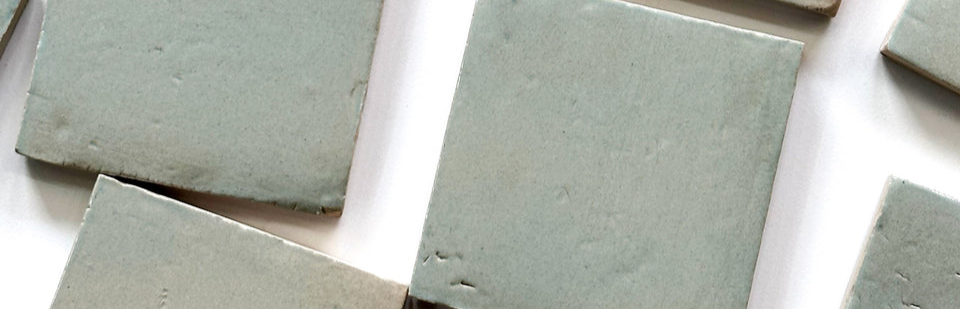


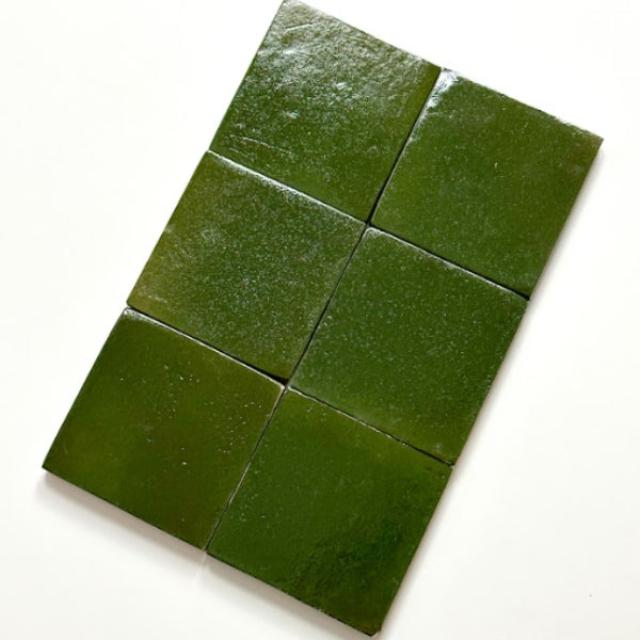
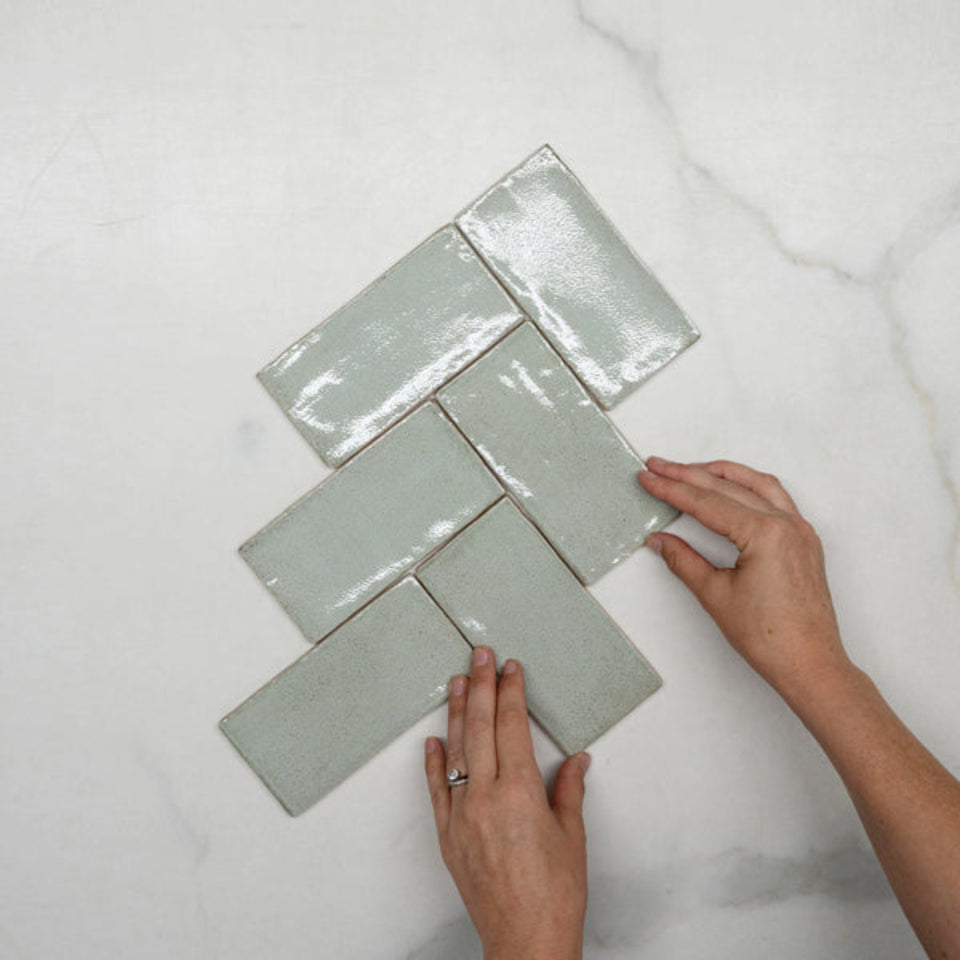


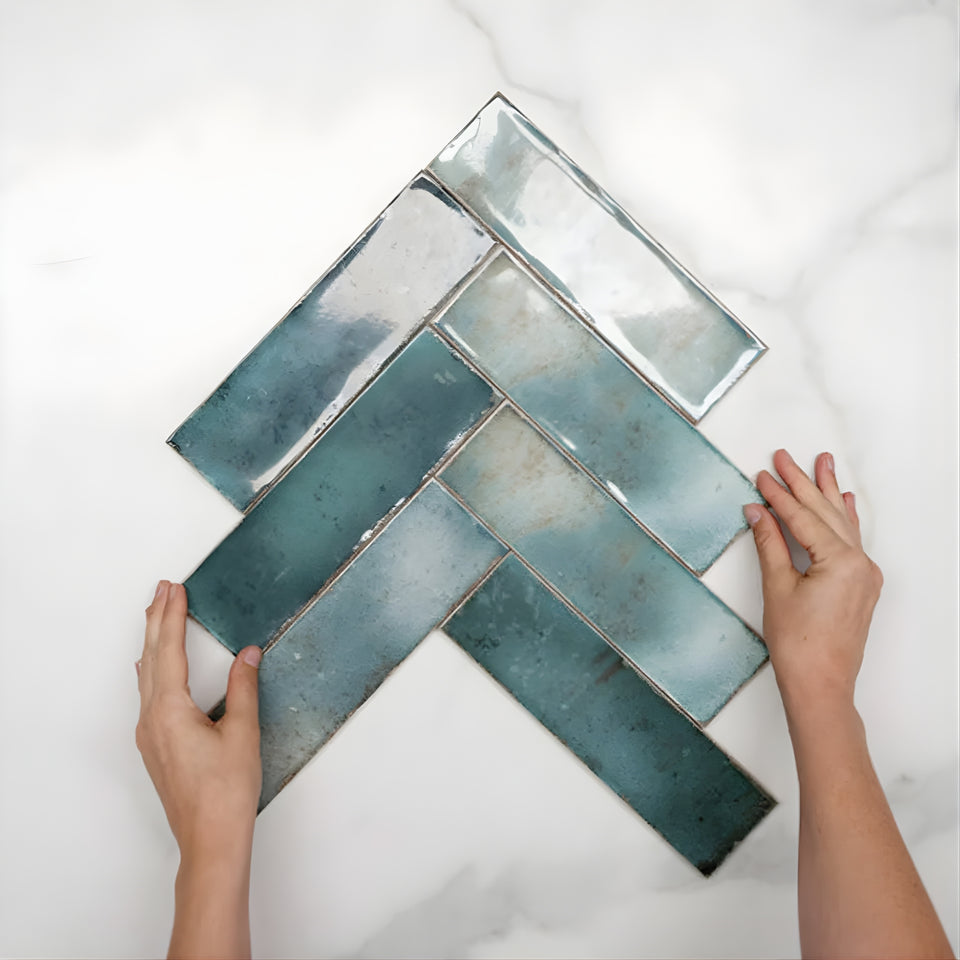
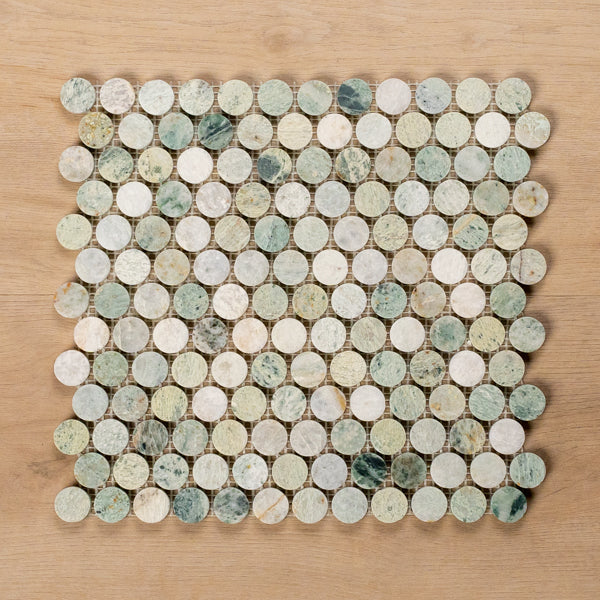

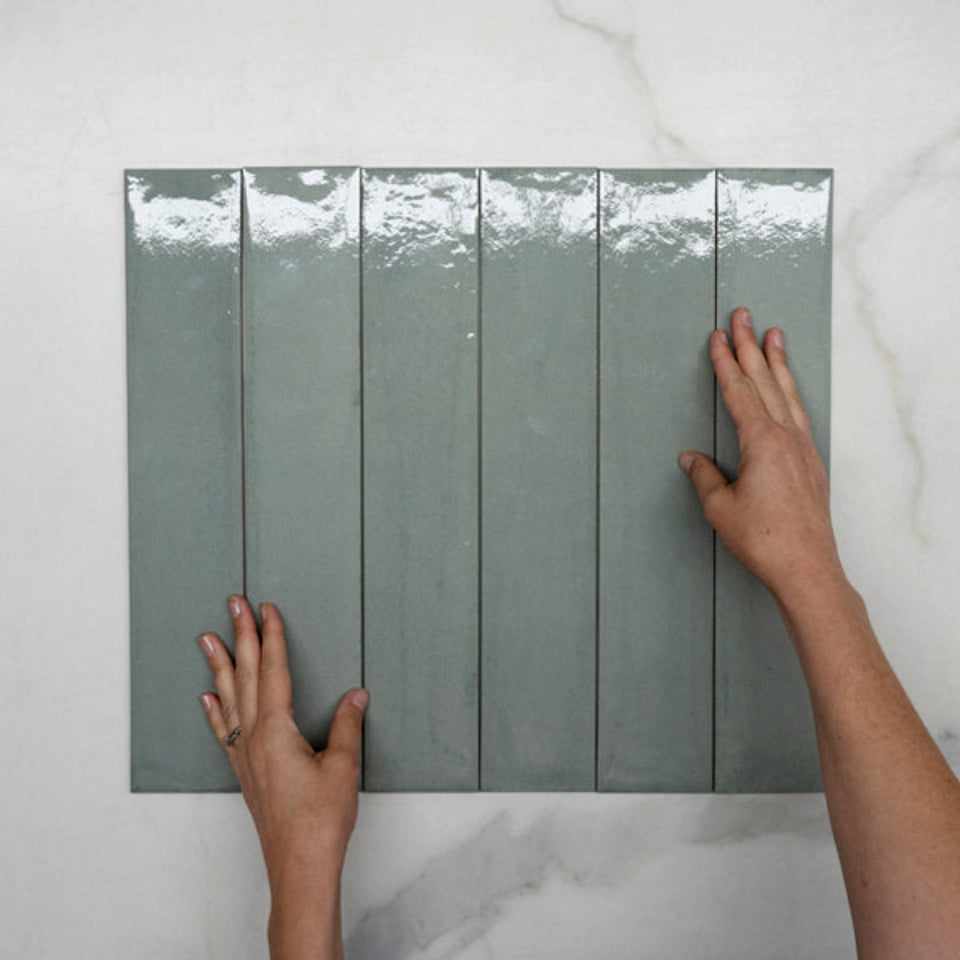
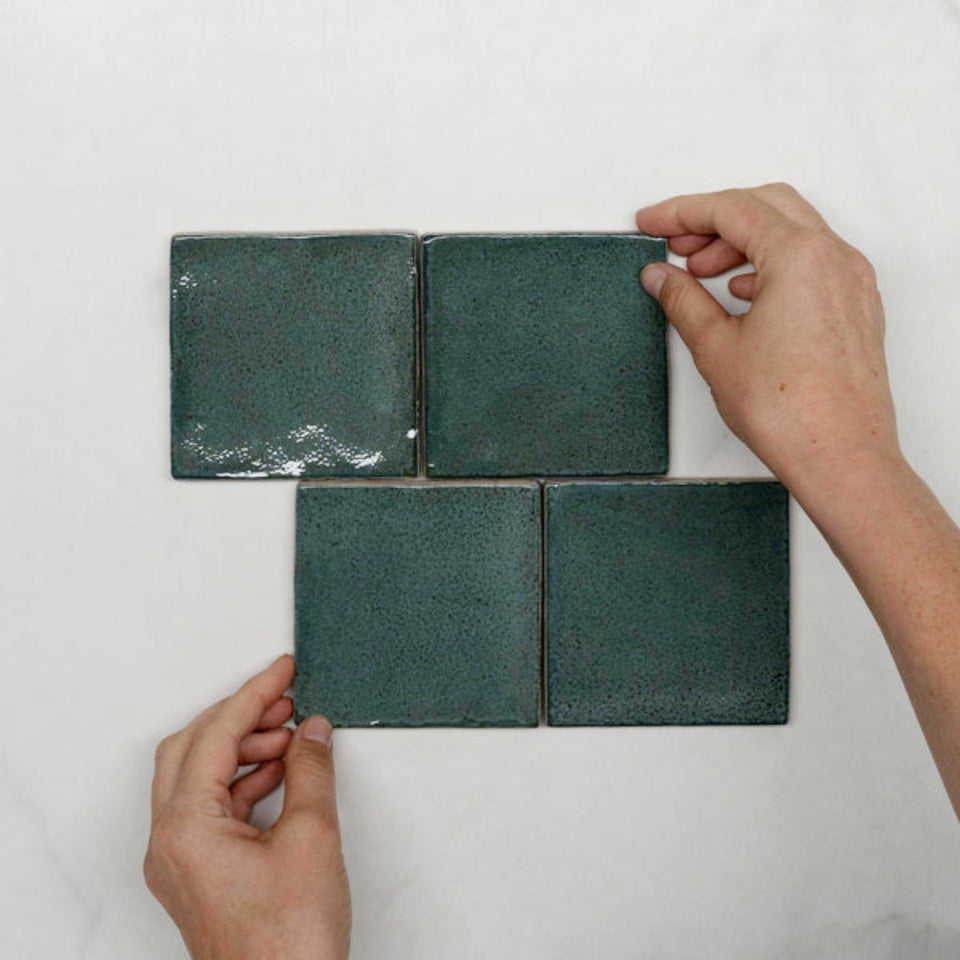

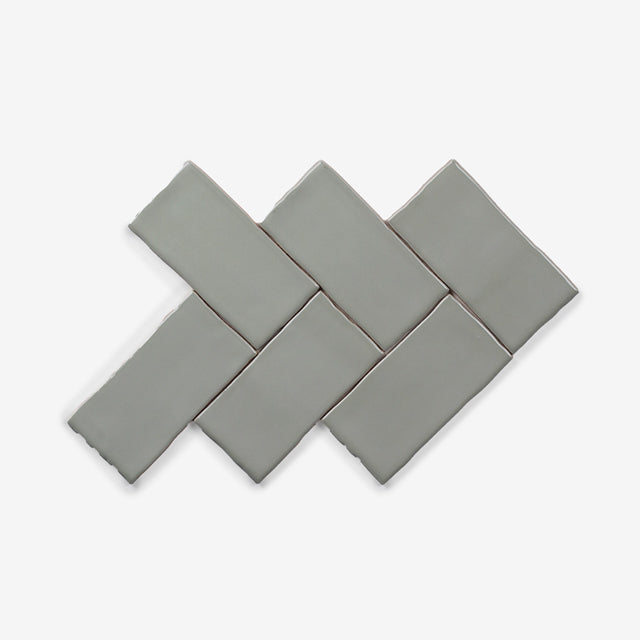

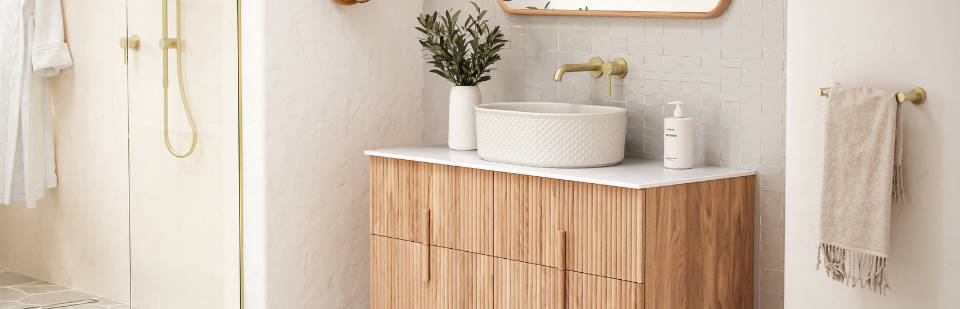


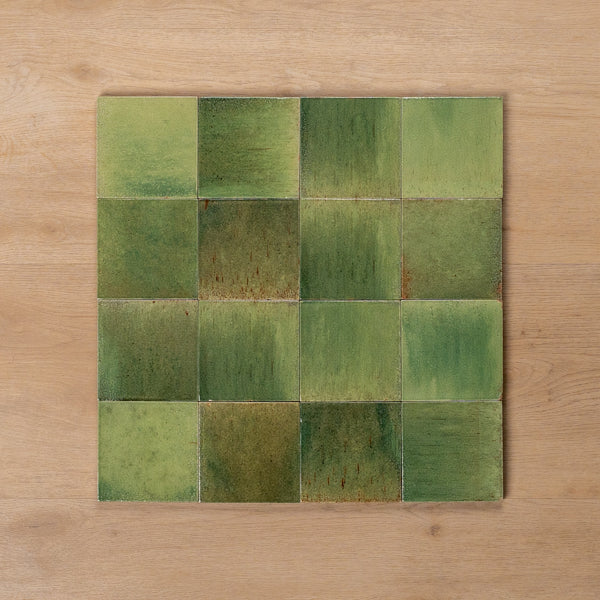
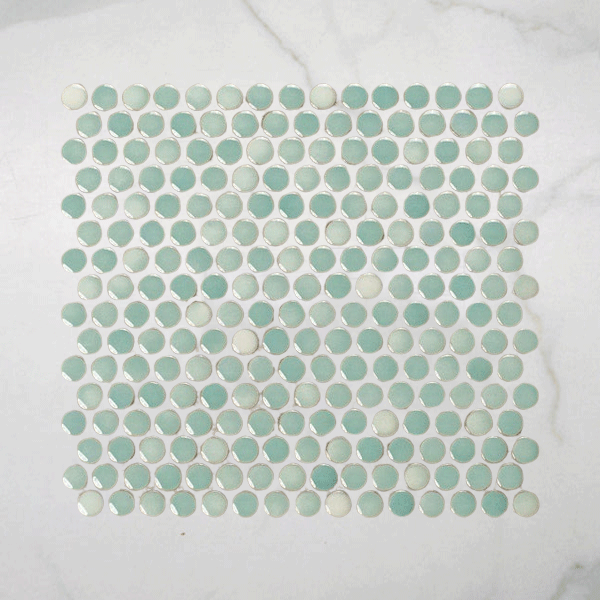

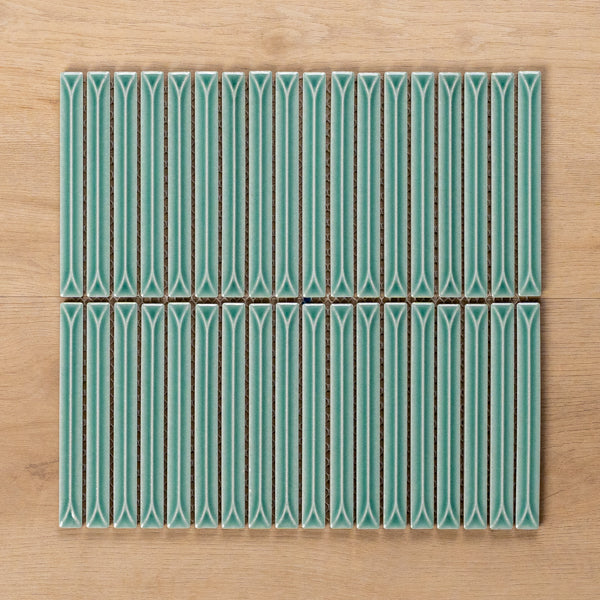
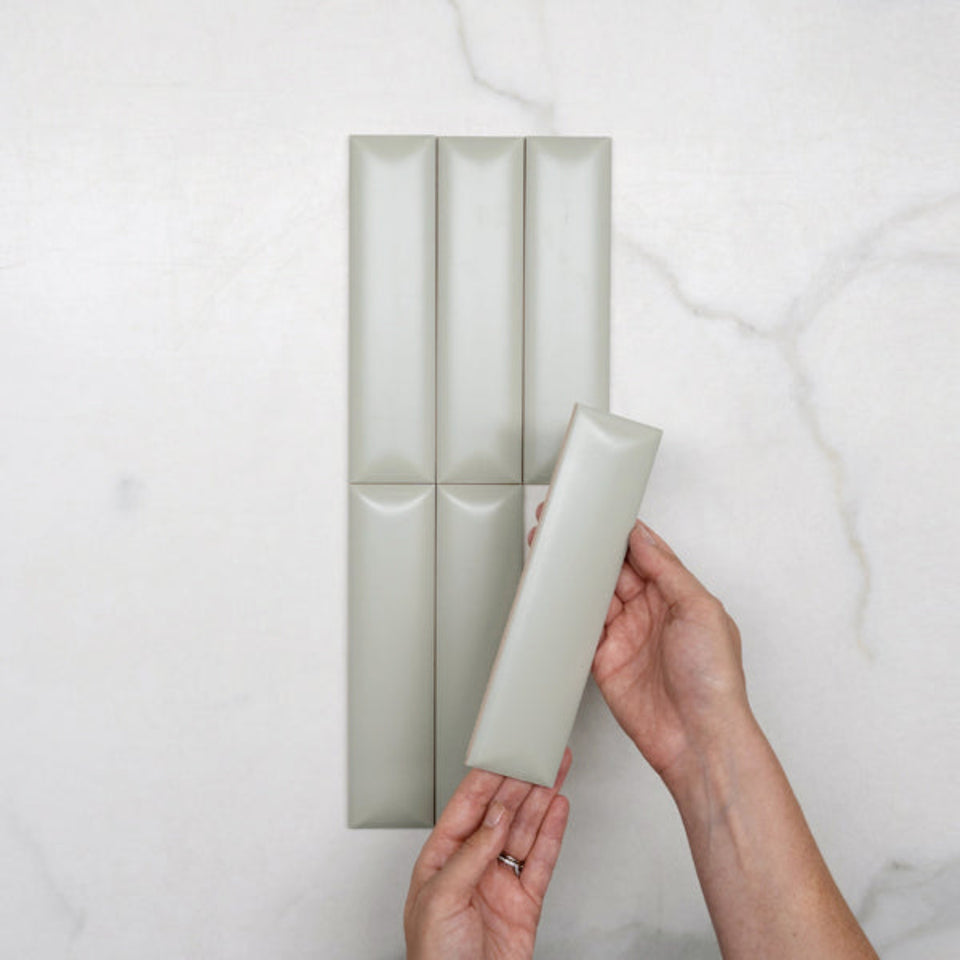
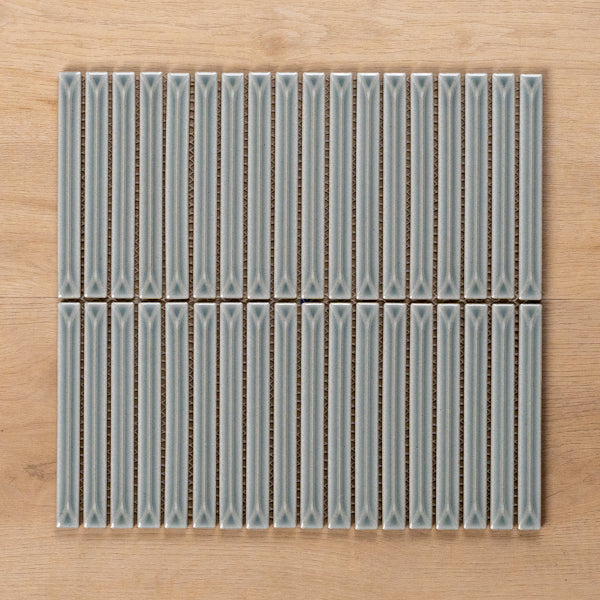
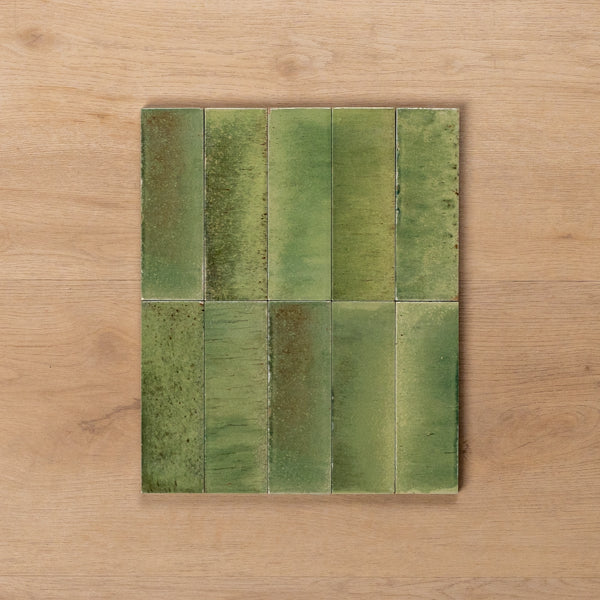
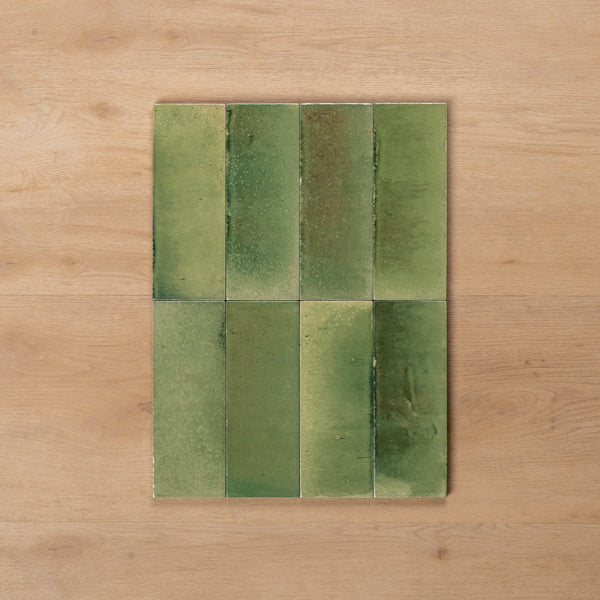
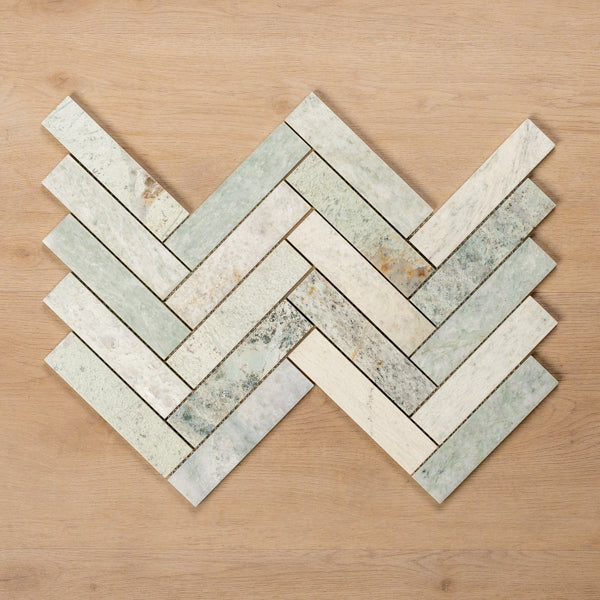
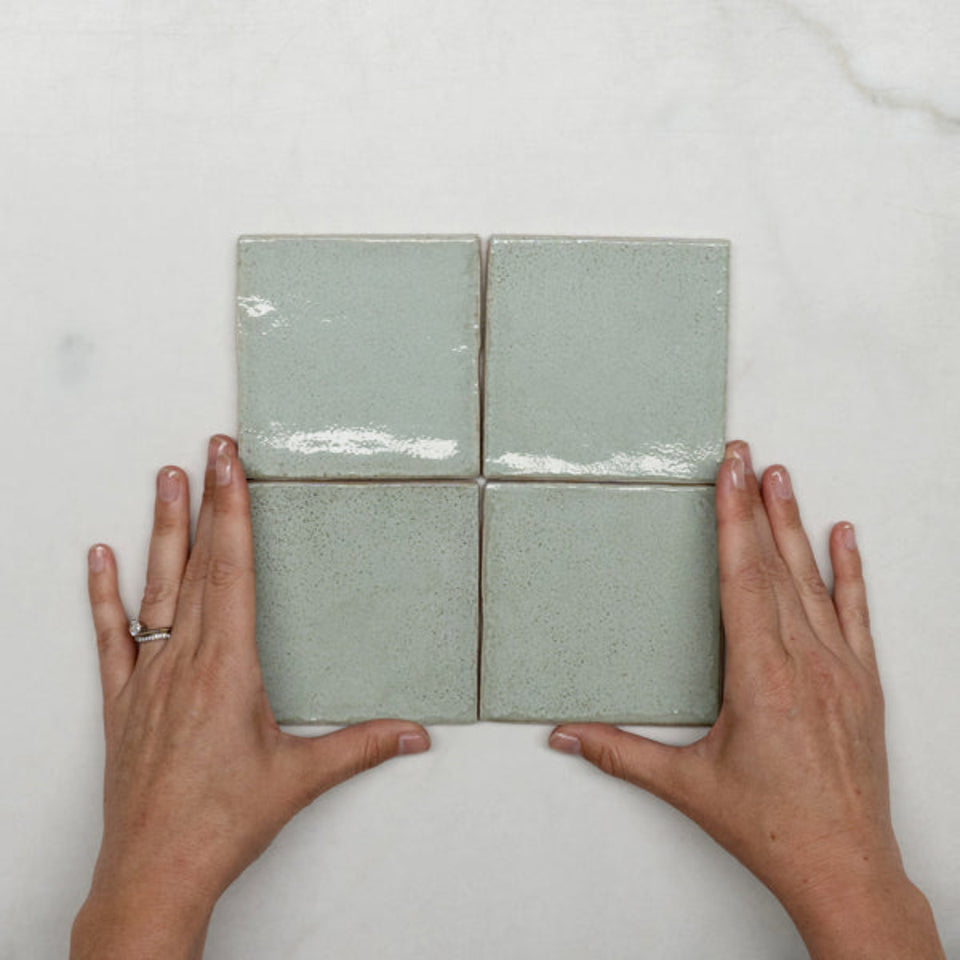
Green is a wide colour family. Sage and olive sit close to neutral, jade and mint run cooler and brighter, and forest and emerald go dark and rich. The tiles in this collection cover that whole span, in zellige-style squares, subway tiles, finger mosaics, penny rounds, fish scale, marble-look porcelain and natural stone, so the first job is narrowing the shade and the shape.
The sections below cover shade and mood, finish, whether a tile is for walls only or for floors too, formats and ordering. For rooms, see the bathroom tiles collection and the kitchen tiles collection.
The shades are best understood by what they do in a room. A muted sage works as a quiet backdrop. A deep forest tone suits a feature wall or a shower recess. Both pair well with cream grout and natural materials. The colour names here follow the same spread. Sage and Olive appear in the Luca handmade range, Jade in the Leon and Castaways ranges, and Mint in Castaways and Mooloolaba. Dark Green and Pale Green are in the Dianna range, and Ming Green is in the Cottesloe marble mosaics.
Darker greens bring a different set of pairings. Dark green makes brass and gold fixtures stand out, while soft sage tones look fresh with matte black or chrome. Greens from moss to mint in a diamond pattern on the walls look good with a pale grey floor and honey-toned timber with gold accents. Greens suit whites, greys and natural timber.
For a kitchen splashback, a glazed metro or zellige tile in green cleans easily and adds colour around a hob or sink without dominating the room. The subway tiles collection and the zellige tiles collection hold those shapes in every colour.
Finish changes how a green reads. Gloss is reflective, matte is softer, honed is textured and satin has a subtle shine, and each changes how light moves across a wall. Matte and gloss are the two most common finishes on the green tiles here, followed by polished, with lappato and satin as single examples. The Whitehaven subway, for instance, is a wavy satin ceramic in a soft pastel, with a lappato finish.
Dark greens show the difference most. A gloss emerald or jade reflects light, and a matte forest tone gives a softer, quieter wall. The choice depends on how much daylight the room gets and how bold you want the wall to be.
A green floor asks for matte or textured porcelain with a slip rating that suits the room. Olive, moss and deep forest work better underfoot than bright emerald or mint, because darker, earthy greens hide water marks and read as grounded. A green floor with plain white or cream walls is a way to bring colour without committing the whole room, and it reverses the usual green wall over a white floor.
In this collection the floor-listed greens are the Matrix and Meander porcelains and the Tamarama sage. The Tamarama sage, in particular, is a soft green on a matte 300 x 300mm tile that can sit on a wall or a floor.
Most green tiles here are wall tiles, and the Application line says so. The Whitehaven subway prints Walls only, not suitable for flooring, with a Not rated slip line. The Luca handmade tiles and the Dianna ranges print Walls or Wall Tile, with P2 on Luca and Dianna. The Middleton and Castaways finger mosaics print Wall.
A smaller group suits floors. The Matrix green marble-look porcelain is Walls and Floors at P3, moderate to high slip risk and suitable for flooring in dry areas, with the Area line reading Indoors. The Meander fish scale is Walls and Floors at P3 and Indoors and covered outdoor areas, and the Tamarama sage is P3 on Walls and Floors, with P3 or greater the right level for wet areas. The Briq Sage unglazed mosaic is Walls, Floors and Benchtops, and its Area line covers indoor wet and dry areas including shower recesses.
The rule that follows is plain. For a floor, choose a tile whose Application line says Floors and read the slip line before the colour. Check slip ratings and finishes for wet zones, and matte surfaces are the usual choice for floors. The floor tiles collection explains the ratings in detail.
The Dimensions lines cover the shapes you would expect. Zellige-style squares come in 100 x 100mm, in the Ella range (Italian made, with a wavy structured gloss finish), the Dianna range (Spanish made) and the Evelyn range (handmade zellige ceramic in 100 x 100mm at 12mm). Subway and brick tiles include the Whitehaven at 68 x 280mm, the Leon at 69 x 240mm, the Dianna at 75 x 150mm, the Luca at 75 x 150mm and the Aqua Theo at 75 x 400mm.
The small formats are mosaics. Middleton is a 12 x 92mm finger mosaic, and Castaways is a 15 x 145mm kit kat with a three-dimensional look. Mooloolaba is a 20mm penny round in blended colours, and Cottesloe Ming Green is a 23mm honed marble penny round. Meander is a 200 x 200mm fish scale, and St Kilda is a 97 x 97mm octagon with a dot. For the finger shape, see the Kit Kat tiles collection, and for small formats generally, the mosaic tiles collection.
Larger squares exist too: Tamarama is a 300 x 300mm matte porcelain at 6.3mm, and the square tiles collection holds the plain squares by colour.
The Appearance lines tell you how uniform a green will be. Whitehaven prints V1, a uniform appearance, and so does Luca. Dianna, Briq, Meander and Castaways print V2, slight variation, and the Evelyn handmade zellige and the Matrix marble look print V3, moderate variation. Leon and the Cottesloe marble print V4, substantial variation in colour and texture.
A handmade or hand-moulded surface gives green a depth that a uniform glaze cannot. It also means the tiles in one box will differ, so a wall of V3 or V4 tile looks less regular than a V1 wall. Evelyn is hand moulded and shaped, with the colour glaze applied by a skilled craftsman. Plan a feature wall of that kind around its texture.
A few combinations are safe. White, cream, light grey and navy blue go with sage. Cream grout and natural materials suit sage and forest. White, grey and natural timber suit most greens. Matte black or chrome keep a sage fresh, and brass and gold warm a dark green. Coordinate green tiles with tapware, mirrors and vanities in matching finishes. Choose one metal finish and use it throughout, because mixed metals in a green bathroom look accidental. Do not put two saturated colours in the same small bathroom, since green, one neutral and one metal make a complete palette.
The blue tiles collection pairs naturally with greens for a coastal scheme, and the white tiles collection supplies the calm neutral beside them. For a wall that carries the whole scheme, the feature tiles collection gathers the statement shapes.
Order more than the measured area to allow for cuts. Allow 10 percent for cuts and spares, or 10 to 15 percent in general, with 20 percent for larger formats. Handmade and zellige-style tiles need more again, because of the natural variation in each batch and the irregular edges. Confirm the quantity with your builder or tiler before ordering.
A worked example: a bathroom wall 2.4m high and 1.8m wide is 4.32 square metres. A 100 x 100mm zellige-style tile covers 0.01 square metres, so the wall takes 432 whole tiles, and with 15 percent for the handmade variation the order is 497. A 75 x 150mm Luca tile covers 0.01125 square metres, so the same wall takes 384, and 442 with the allowance. Mix tiles from several boxes as you lay, so the glaze variation spreads across the wall.
The product pages print the full details for each range. These show the spread.
Luca is a handmade gloss series that is soft to touch with rounded edges, in Sage and Olive, for bathroom or kitchen walls. Ella is a zellige-inspired Italian made ceramic in a rich gloss glaze, and Dianna is the Spanish made zellige-inspired square and hand-made subway. Evelyn is the handmade zellige. Whitehaven is a ceramic subway in soft pastel colours. Leon is a Spanish subway with deep tones. Matrix and Cottesloe cover the marble-look and marble routes, and Meander, St Kilda and Tamarama cover the patterned floor and wall tiles.
Briq, Middleton, Castaways and Mooloolaba cover the mosaics. Sicily Giada is a gloss green zellige-style square in porcelain. For handmade zellige on its own, see the zellige tiles collection, and for the Moroccan look, the Moroccan tiles collection.
Test the green in the room before ordering. Lay a sample against the paint, the vanity and the tapware, and view it in morning daylight and again at night, since green shifts between grey and yellow with the light. Choose the grout last, with the sample laid on the wall.
Start with the room and the light. For a small bathroom, choose a soft sage or pale green in gloss, with pale grout. For a feature wall or a shower recess, choose a forest or emerald, and choose between the handmade variation of V3 or V4 and the evenness of V1. For a floor, choose a tile whose line says Floors and read the slip rating.
Then check the Application line, match the grout to the shade and order extra for cuts. The wall tiles collection sits beside this one for the full range of wall formats, and the tiles collection sits above it for everything.


