
*View accurate shipping rates and availability






38 Items


Up to 70% off across the store, plus free towels and mirrors up for grabs on orders over $800*


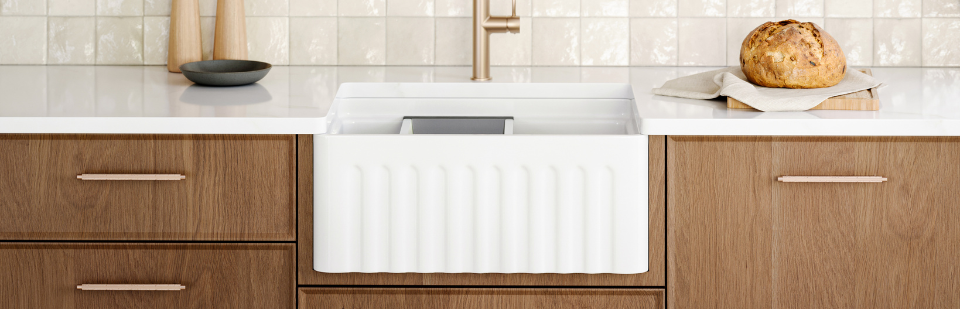


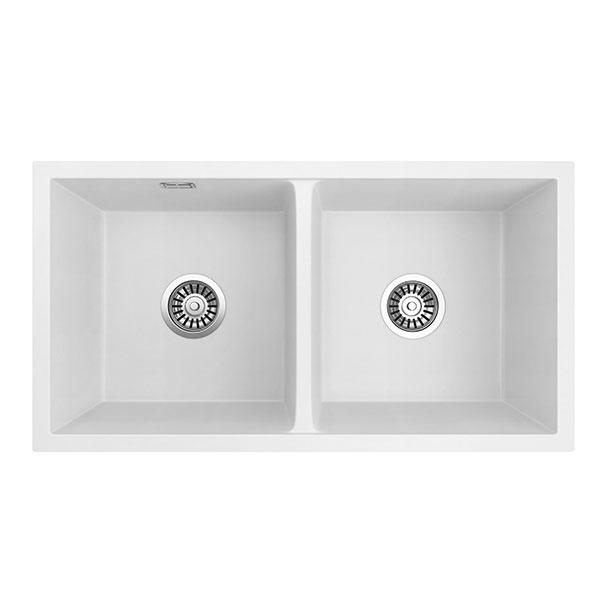


Seima is an Australian bathroom and kitchen brand, and the sinks in this collection come in six ranges: Tetra Pro, Kubic, Acero, Oros, Rhodes and Icaria. Two of them are stainless steel with different finishes and build methods, three are made of Arqstone, a natural quartz, and one is a round bowl for a small bench. This page explains what each range is made of, what sizes and bowl layouts it comes in, how the sinks fit into a benchtop, and what to check before you order. For most kitchens the sensible choice is a stainless range if you want a light sink that fits a standard cabinet, and an Oros if you want a coloured bowl in a stone-style material with drainer options.
People who search for Seima sinks, or for the common misspelling Siema, are looking for the brand's kitchen and laundry sinks. The range is grouped by name, including Acero, Oros, Kubic and Tetra, and by material: stainless steel, Arqstone and ceramic. It comes in one or two bowls, with or without a drainer, and in abovemount, undermount, apron front or workstation fittings. This collection holds the Seima kitchen sinks sold here, and the laundry versions sit on their own page: see Seima laundry sinks. The Oros, Rhodes and Icaria are a kitchen and laundry series, so the same bowls can be used in either room.
The Tetra Pro sinks are handcrafted from 304 grade stainless steel. The corners have a 10mm radius, the sinks come with built-in basket wastes, and they are made to be fitted either above the benchtop or under it. The range has single bowls in square, rectangular and large formats and two double layouts.
The Blade double is the one worth reading about. A traditional double bowl has a divider between the two bowls, and on a standard double the bridge between the bowls is 30 to 40mm wide, which causes splashing whenever the tap swings from one bowl to the other. The Blade puts the two bowls close together so the dividing wall is thin, and that also simplifies the benchtop cut-out. If you wash on one side and rinse on the other, that is the layout to compare against a standard double.
The Kubic range is the widest in this collection. It is 304 grade stainless steel in a silk finish, 1.0mm thick, with square lines and rounded corners that are easy to wipe clean, and a sound-deadening designer basket waste. The range covers a single bowl, a large single, and 1.5, 1.75 and double layouts. Some suit inset or undermount fitting, and the 1.5 bowl is an undermount or overmount sink.
Two sizes are worth knowing. The Kubic 500 single bowl measures 544 x 444 x 200mm, with an inner bowl of 500 x 400 x 200mm and a 40L capacity. It is the small end of the range. The large single measures 750 x 750 x 200mm, comes with a 90mm basket waste and has an overflow option. A bowl that is 750mm square holds trays and big pots flat, and it needs a wide base cabinet to take it.
The Acero sinks are also 304 grade stainless steel, with a polished finish and designer basket wastes. The Classic double and the Classic double drainer have an embossed drainer area that directs water back into the sink. An Acero double bowl is also available for undermount fitting.
The Oros range is made of Arqstone, a natural quartz, in black and in white. The sinks have an integrated overflow and corners with a 10mm radius, and the bowls can be fitted above the benchtop or under it. The Oros range is made in Europe.
The Oros sizes in this collection are:
Most Oros sinks have no tap hole, which means the tap goes on the benchtop beside the sink. On the 620 you choose how many holes you want, because the tap landing is part of the sink. Check the tap you plan to use against the number of holes before you order. Matching accessories exist for the range: waste and overflow covers in brushed gold, brushed bronze, gunmetal, black, white and stainless steel, bamboo boards sized to the sink, a drainer basket and roll mats. Pick the waste cover finish to match the tap. The sink wastes collection has more choices.
The Rhodes 900 is an engineered Arqstone sink, 897 x 515 x 190mm, in black and white. It has no tap hole and an integrated overflow. At 515mm from front to back it is a deeper footprint than the Oros 820, so the cabinet below it needs to be at least that deep and the tap needs somewhere to stand. It can be installed above or under the benchtop, and it works in a kitchen or a laundry.
The Icaria is a round bowl, 510mm across and 170mm deep, with one tap hole, in black and white. A round bowl suits a small bench, a bar or a second prep sink. The depth of 170mm is shallower than a typical kitchen sink, where 200 to 250mm is the standard depth and 150 to 200mm is shallow. A shallow bowl splashes less when the tap runs hard. It holds less, though, so a large roasting tray will not sit in it.
The stainless ranges suit an inset fitting, where the sink drops into a cut-out in the benchtop and the rim rests on the surface, and an undermount fitting, where the sink is fixed under the benchtop. Several of the ranges suit both. An inset sink works with almost all benchtops, including laminate, and its rim covers the cut edge. An undermount sink needs a waterproof solid benchtop such as engineered stone, granite or concrete, and is not suited to laminate or timber.
That gives you a simple rule. If the benchtop is laminate or timber, choose a sink for inset fitting. If it is stone, you can choose either, and the choice is about how the edge looks and how you wipe the bench. Crumbs sweep into an undermount bowl, while the join between sink and benchtop collects grime in the silicone. Caulking needs replacing every three to five years on both types. For more on the two methods, inset sinks and undermount kitchen sinks cover both.
Two measurements come first: the cabinet's internal dimensions and the benchtop cut-out. The sink should be at least 70 to 80mm narrower than the internal width of the cabinet, so there is room for the plumbing and hardware. Leave 50 to 100mm between the back of the sink and the wall where a splashback goes in. A typical inset cut-out in Australia is about 560 x 430mm, but the sizes vary, so confirm the opening for the sink you choose.
A single bowl is one uninterrupted basin with room for trays and large pots, and the plumbing is simpler. It suits dishwasher households that rarely wash full loads by hand, large pots and trays, and runs under 600mm. A double bowl lets you wash on one side and rinse or prep on the other. Choose a double if you hand-wash often, prep vegetables, or have children who need a separate bowl for hand washing, and if the benchtop run is 900mm or more.
The 1.5 and 1.75 bowls sit between the two: one main bowl with a smaller prep or rinse bowl next to it. See double bowl kitchen sinks if a full double is what you want. The drainer adds width. Most drainer models are handed left or right, and a flat or shallow drainer pools water, so look for deep grooves and a slope. The Acero embossed drainer and the Oros drainers are the ones in this collection that offer that.
Most sinks have one tap hole, some have two, and some have none. Check the count against the tap you plan to fit. With a deep sink you may want a taller mixer or a pull-out, and with a compact sink a standard mixer is enough, because the spout has to clear the rim and the splash has to land in the bowl. A sink with no tap hole, such as most of the Oros, takes a tap mounted on the benchtop, which is a decision to make with the cabinet maker before the benchtop is cut. The kitchen taps collection covers the options.
The Oros, Rhodes and Icaria come in black and white, and the finish of the bowl is smooth and easy to wipe. Black pairs with matte black, gunmetal or brushed brass tapware, and white suits chrome, brushed nickel or a coloured mixer. Match the waste cover to the tap, because the waste is the one metal fitting that sits inside the bowl. Because most Oros sinks have no tap hole, the mixer stands on the benchtop beside the sink, so choose its height and reach with the bowl depth in mind: a taller spout suits the 240mm Oros 620 or the 210mm Oros doubles, and a standard mixer suits the shallower Icaria.
This page covers Seima kitchen sinks only. Other makers are on the main kitchen sinks page, and stainless steel sinks sets out steel grades and thicknesses side by side. black kitchen sinks and white sinks cover the colour choice. A kitchen sink gets used 20 to 30 times a day, so the dimensions and the bowl layout are worth getting right before you order.


