
*View accurate shipping rates and availability






477 Items


Up to 70% off across the store, plus free towels and mirrors up for grabs on orders over $800*


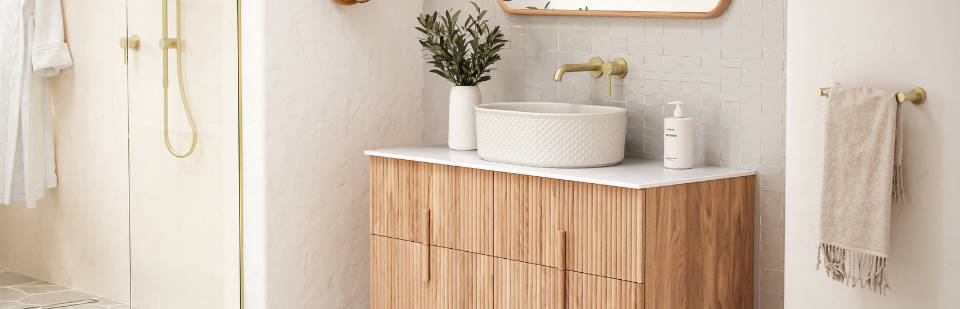


Brushed brass is a warm, golden metal finish with a fine brushed grain that sits between the cool tones of nickel and chrome and the brighter yellow of polished gold. This page holds brushed brass taps for the basin, bath, shower, kitchen and laundry, from several brands. This guide explains what brushed brass actually is, how it differs from brushed gold, polished brass and antique brass, whether it tarnishes, how to care for it, and what to check about the tap itself before you order.
Brass is an alloy of copper and zinc, and its natural colour runs from a dark red-brown to a pale, silvery yellow depending on the mix. Brushed brass is a finish with fine parallel lines on the surface, which gives it a soft, non-mirror look and a golden warmth. The colour changes with light, space and reflection, so the same tap can look different in two rooms.
Most brushed brass tapware is not bare metal. The tap is usually solid brass, or stainless steel, coloured to look like brushed brass by a PVD coating, which stands for physical vapour deposition and is applied in a vacuum with high heat. PVD is more durable than conventional electroplating and is designed to avoid tarnishing or patina if properly cared for. Modern brushed brass is often a coating over a range of base materials, so the finish name describes the look and the texture, not necessarily the metal underneath. Brushed brass, brushed gold and tiger bronze are mostly PVD on this page, and the brass colour products are split between PVD and electroplating. Check the process on the product page before you compare two taps.
Buyers ask this more than any other question about the finish, and the answer is that the names overlap. Brushed gold is a colour description and not a specific metal, and it usually means a finish on a gold-coloured coating over brass, stainless steel or another base. Brushed gold is brighter and more vivid, with a more refined look, and brushed brass is warmer and more natural, sometimes with a reddish hue. There is no universal industry standard fixing one exact shade for either, so a pale brushed brass from one brand can look almost the same as a brushed gold from another.
The conclusion for a buyer is simple. If the room already has a gold or brass finish, match it from the same maker, or send a photo and ask for the closest tone. If you are choosing from scratch, choose by the actual colour and undertone, not the name. See gold taps and champagne taps for the neighbouring finishes.
The brass finishes differ by how they are protected, and the difference decides how each ages.
For taps used every day in a wet room, the stable, non-tarnishing version is the one most buyers want, and the product page tells you which one you are buying.
A PVD brushed brass tap is designed not to, if it is cared for. The finish should resist tarnishing and patina, and drying the fixtures after each use reduces watermarking and surface rust. A raw or lacquered brass tap behaves differently: raw brass develops a patina as the surface reacts with its environment, and a lacquered finish can wear. A brushed brass label alone does not tell you how the finish will change. If you want a living, ageing finish, confirm exactly what the finish is. If you want a finish that stays as it is, look for PVD on the product page and look after it.
These pairings work:
Lighting changes the result. Warm lighting makes gold and brass look deeper, and cool lighting makes them look lighter. Keep the main fixtures in one finish: the basin, wall and shower mixers, the shower rail and head, the bath outlet and visible wastes. A second metal can be added through handles, lighting or accessories, if it is repeated deliberately. Mixing two close but non-identical golds can look like a mistake, so either match perfectly or contrast boldly. The brushed brass showers, heated towel rails, cabinet handles and brass kitchen sinks are in the same family.
Use this routine. Clean weekly with warm soapy water and a microfibre cloth, and wipe in the direction of the brushed grain. A toothbrush helps in hard to reach areas, and diluted toothpaste and water also works. For deposits, a paste of lemon juice and baking soda left for a few minutes and wiped with a soft cloth is the gentler option, and vinegar should only be used diluted, because undiluted white vinegar is acidic enough to damage brass. Avoid bleach, acidic cleaners, alcohol, mineral solvents, abrasive cloths and scourers, and rinse immediately with warm soapy water if one touches the finish. Test any product on a small hidden area first. Dry the tap after each use, because leftover moisture causes water spots and can speed up tarnishing. Polish every few months with a brass polish suitable for brushed brass, following the product's instructions. For extensive tarnishing or heavy limescale, ask a professional. Some finishes should not be cleaned with vinegar or certain products, so check the care guidance for yours.
Basin mixers are the main choice: one lever sets temperature and flow. Run this short checklist before you order:
Each mixer shows its spout reach and height to spout, with reaches from about 105mm on compact mixers to 175mm and beyond on taller ones, so compare the figures on the product pages. See basin mixers. A wall mounted set needs the pipe centres to match, and the typical spacing is 150mm. Some wall mixers come with the outlet and in-wall body, and some are the trim only, and the basin and bath spouts include a free flow aerator for bath installation and a restricted aerator for basin installation.
Brushed brass is a common kitchen finish because the brushed grain hides fingerprints and watermarks. A pull out sink mixer draws out of the spout so you can rinse the corners of the sink, a gooseneck has a tall curved spout, and a pot filler mounts on the wall behind the cooktop. Slimline styles suit small kitchens, and for tall and pull out models check the clearances and the bench thickness. See sink mixers, kitchen taps and laundry taps.
We recommend a solid brass body and a ceramic disc cartridge, and most mixers here have a 25mm or 35mm ceramic disc cartridge, with brass, lead-free brass or stainless steel as the construction. A ceramic disc cartridge uses two ceramic plates to control the water, and it is smoother, holds its shut-off better over time and is less prone to dripping than older designs. Check that a local plumber can source replacement cartridges, aerators and handle parts before you buy. The National Construction Code requires lead-free tapware at the point of installation in Australia from 1 May 2026. The limit is 0.25 percent lead for copper alloy plumbing products that carry drinking water, so check the product page for lead-free status on the kitchen and basin taps. See lead-free taps.
Brushed brass varies between makers more than chrome does, so a full suite from one brand matches more closely. If you need to mix brands, compare physical samples side by side in your own light. For other finishes in the same family see bronze taps, brushed nickel tapware, gunmetal tapware, chrome taps and black taps, and the full taps collection for other brands and rooms.


