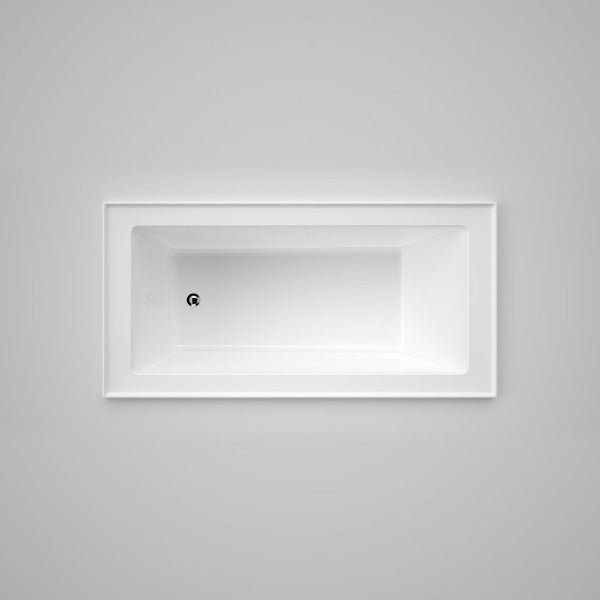
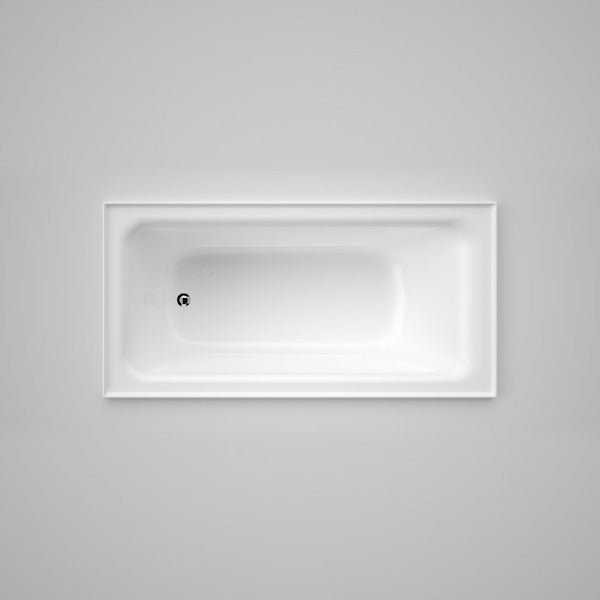
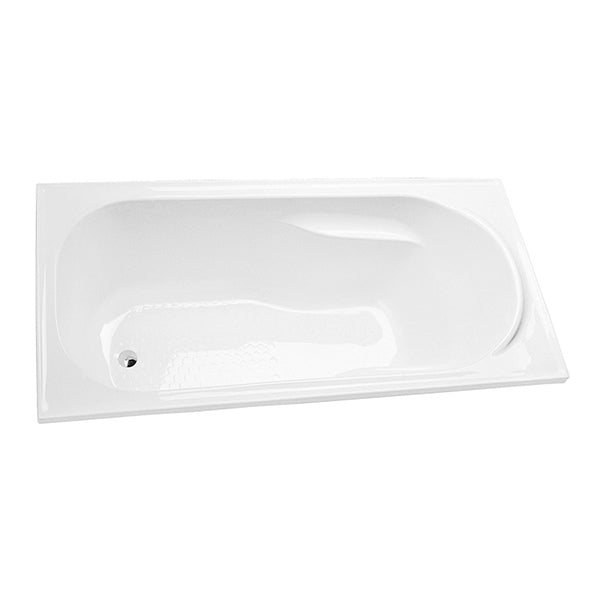
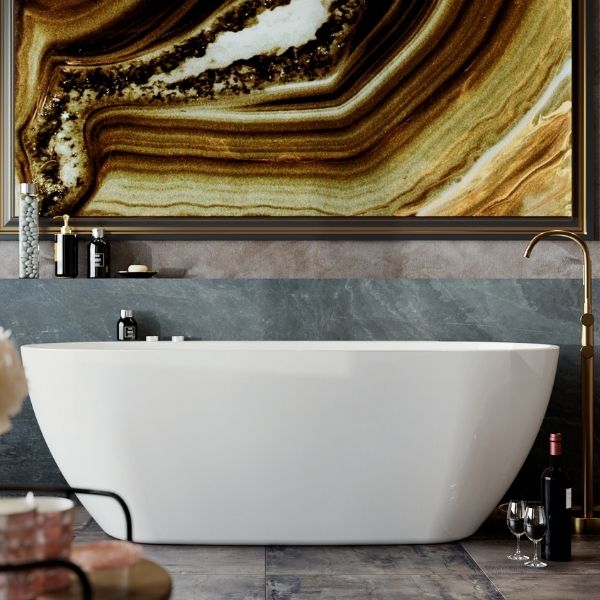
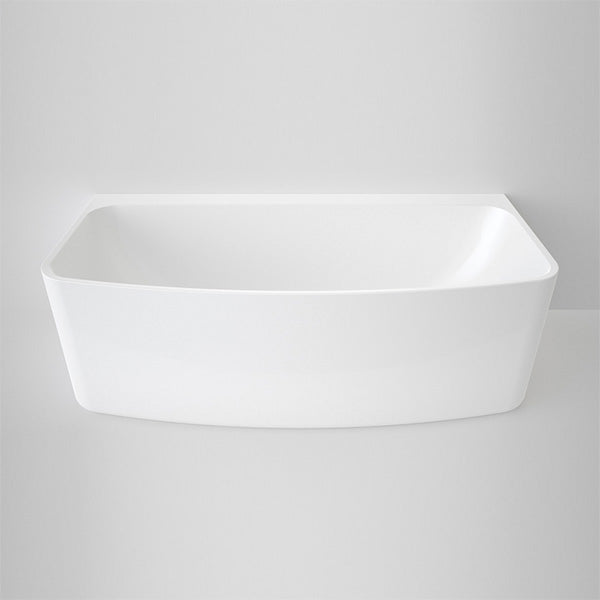
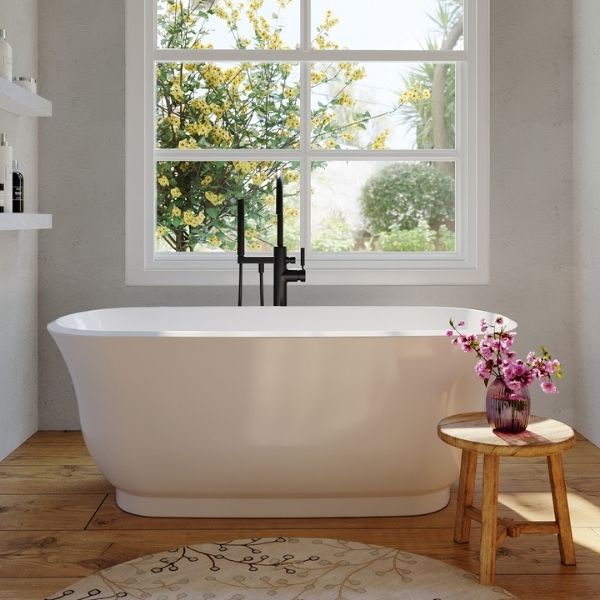
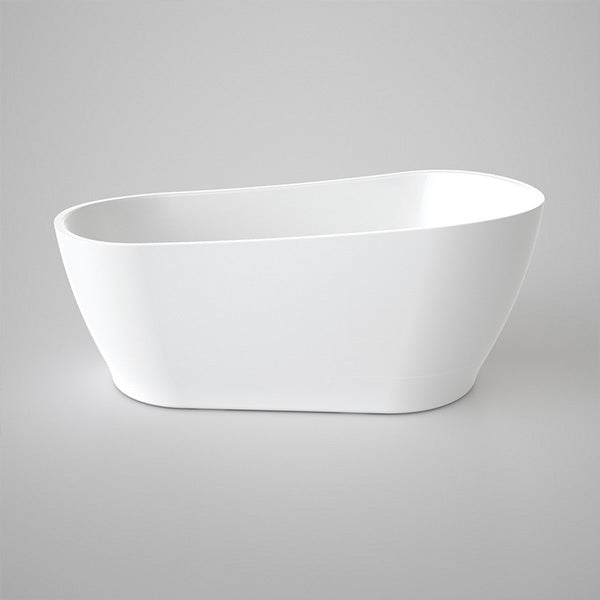
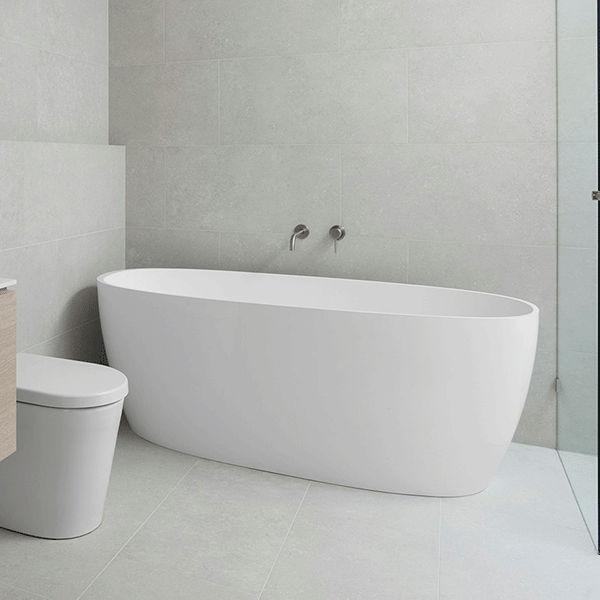
Acrylic baths are the most widely installed bath type in Australian homes, chosen for their warmth underfoot, lightweight handling, and competitive price across freestanding, inset, and corner formats. This page covers how acrylic is made, how it compares to pressed steel and stone resin, what thickness and size to specify, and which brands The Blue Space stocks.
What is an acrylic bath and how is it made?
An acrylic bath is formed by vacuum-moulding a sheet of cast or extruded acrylic (PMMA) over a mould, then reinforcing the underside with fibreglass and resin to add rigidity. The result is a one-piece shell with a non-porous, gloss surface that holds heat reasonably well and weighs far less than cast iron or stone alternatives. Sheet thickness typically ranges from 5 mm on budget models to 8 mm or 10 mm on mid-to-upper range options, and thicker sheets flex less underfoot and resist cracking more reliably over time.
Acrylic vs pressed steel vs stone resin: which material suits you?
Acrylic is lighter (15–30 kg for a standard inset bath), warm to the touch, and repairable with a polish kit if scratched. Pressed steel baths are harder and more scratch-resistant but feel cold initially and conduct heat away faster. Stone resin baths retain heat longest and feel premium, but weigh 80–150 kg and require reinforced floor support. For most renovations where budget is a factor and floor loading is a concern, acrylic is the practical default. Stone resin suits freestanding statements in ground-floor or concrete-slab bathrooms.
Do acrylic baths scratch easily?
Acrylic can develop fine surface marks from abrasive cleaners or sharp objects, but minor scratches are polishable with a dedicated acrylic compound, unlike steel or porcelain. Use only non-abrasive bathroom cleaners and a soft cloth for routine maintenance. Thicker-gauge sheets (8 mm+) show less flexing and microcracking at drain and overflow points over years of use. Avoid bleach-based products applied undiluted as these can dull the gloss finish over time.
What sizes are available and which fits most bathrooms?
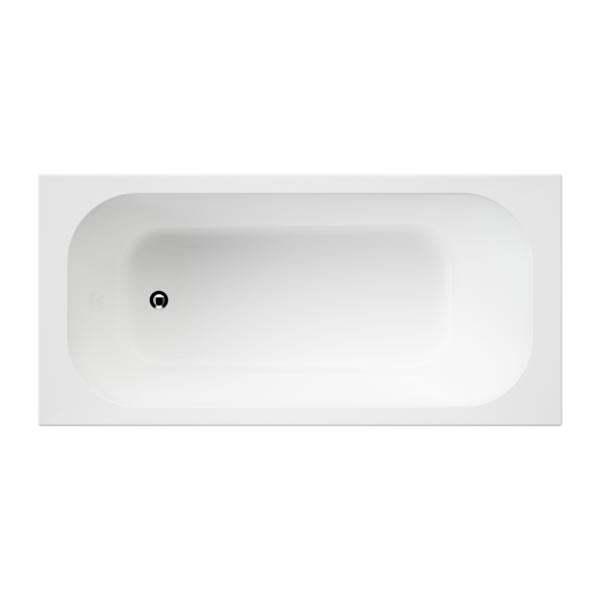
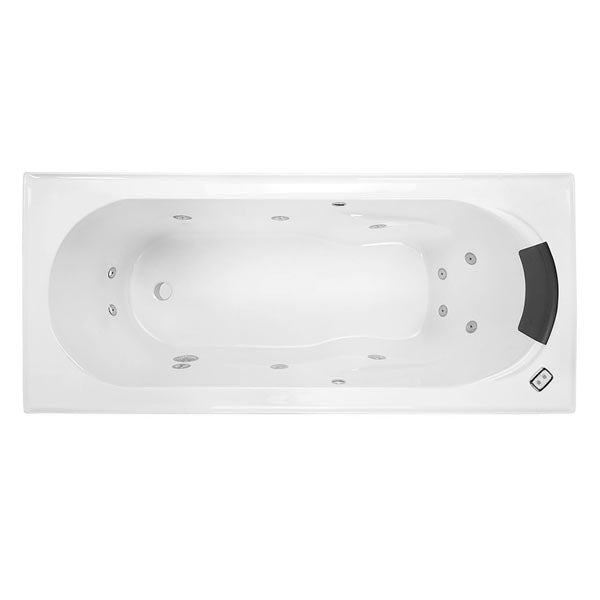
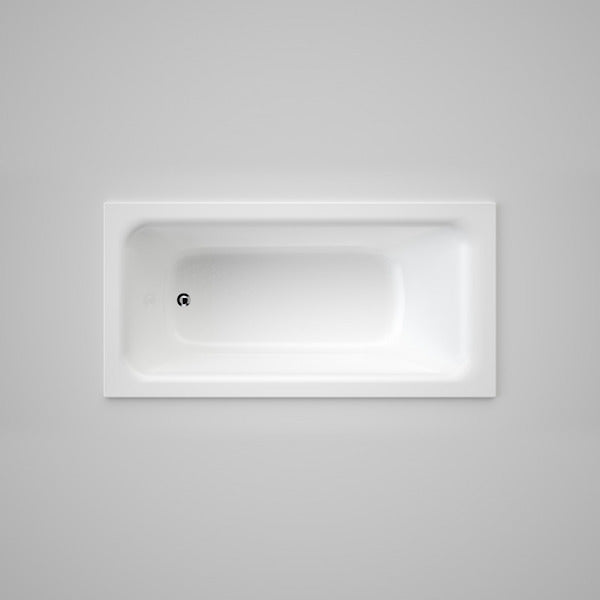
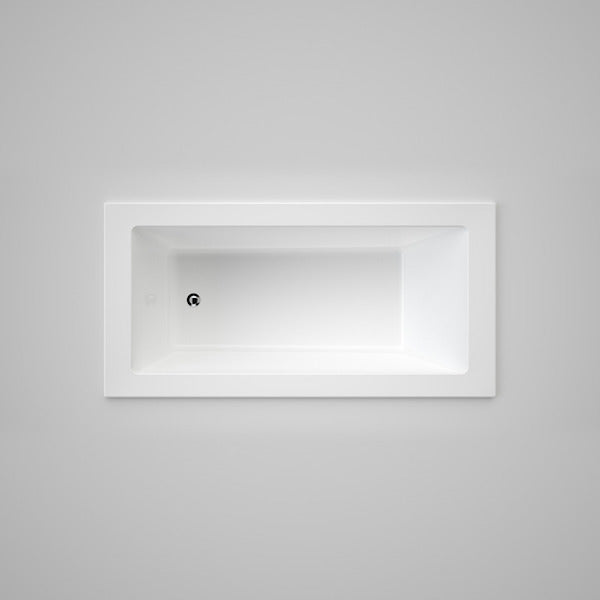
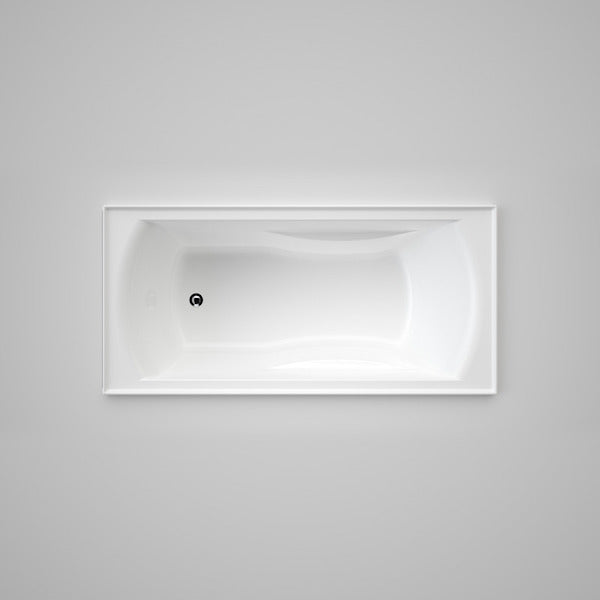
Standard acrylic inset baths run from 1500 mm to 1800 mm in length, with 1675 mm and 1700 mm being the most common rough-in lengths in Australian bathrooms. Width is typically 700–800 mm. Freestanding acrylic baths extend to 1800 mm and some oval formats reach 1900 mm. For bathrooms under 2.1 m in the long dimension, a 1500 mm inset bath with a tiled surround is usually the best fit. Always check the bath rim width against your alcove measurement before ordering, as rim overhangs vary 40–80 mm per side depending on the model.
Freestanding acrylic baths: what to know before buying
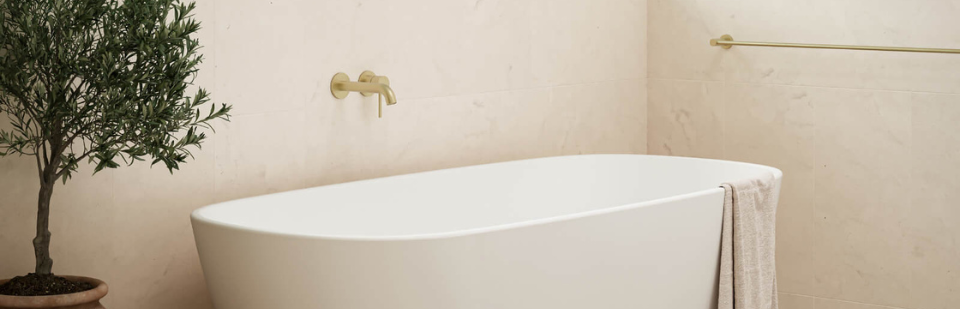
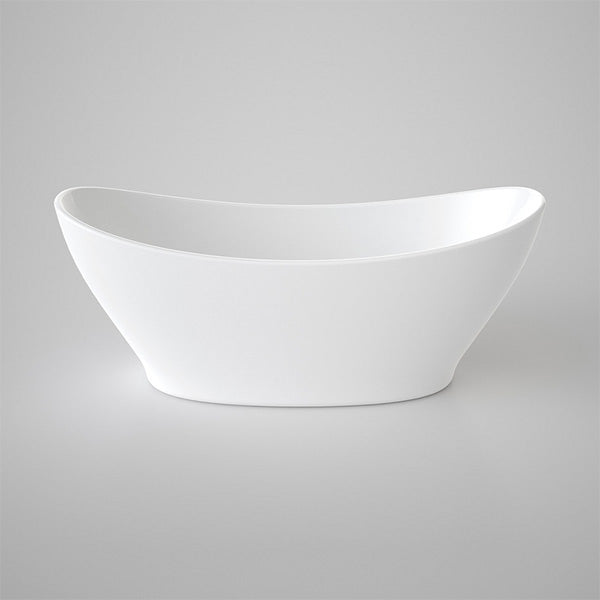
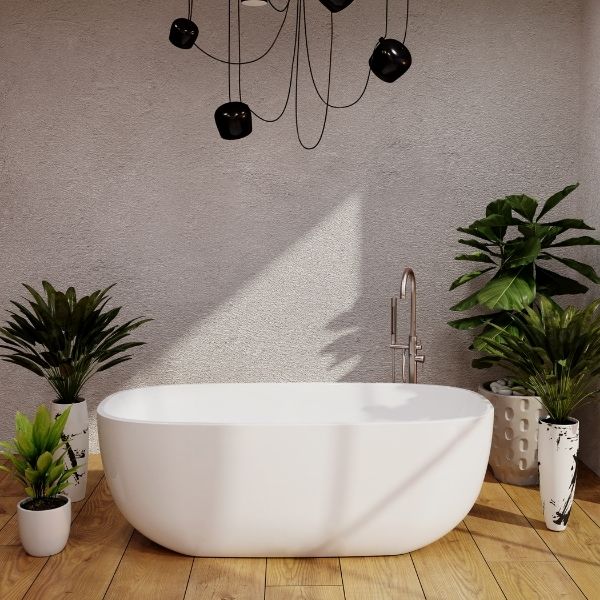
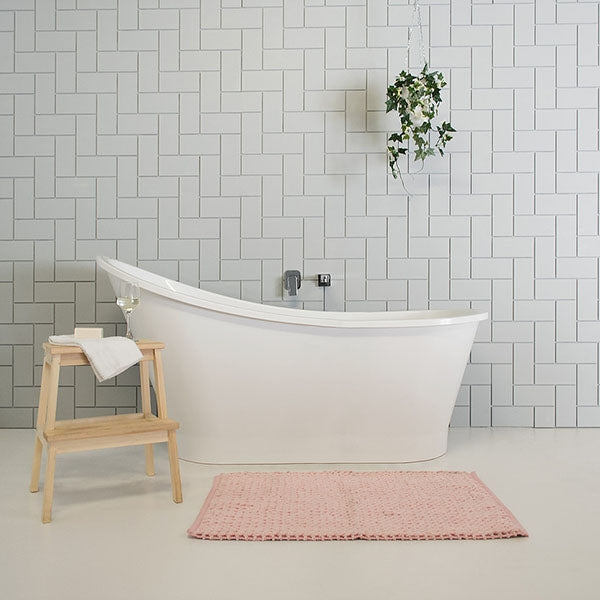
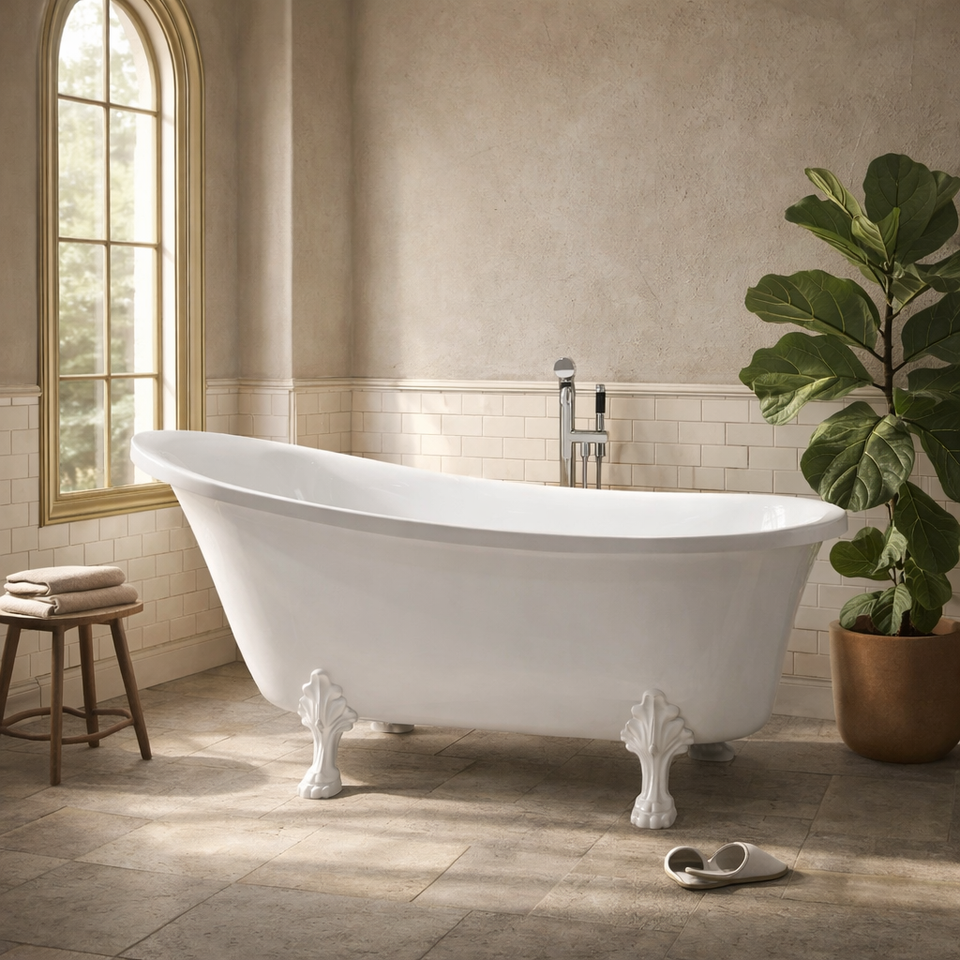
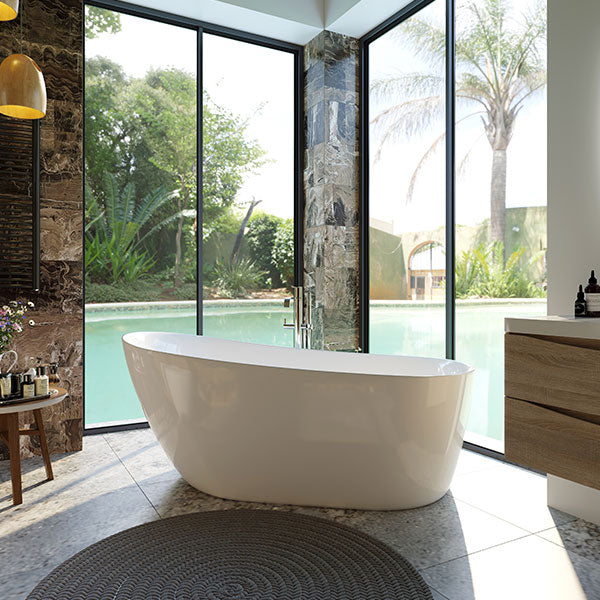
Freestanding acrylic baths are significantly lighter than freestanding stone resin models, making them viable on timber-framed upper-floor bathrooms where floor loading is a constraint. Most freestanding acrylics weigh 20–40 kg empty. The underside is typically fibreglass-reinforced with an integrated waste and overflow, and a floor-mounted bath filler is required since wall-mounted fillers lack the reach for most freestanding positions. Confirm the waste position (centre-bottom or offset) matches your floor waste location before purchase. Browse the full bathtubs collection to compare freestanding, inset, and corner formats side by side.
How to choose the right acrylic bath: a specification checklist
Sheet thickness matters more than brand name at the budget end. Specify 8 mm minimum for a bath that will see daily use. Check that the bath carries a minimum 10-year structural warranty, which most reputable Australian-stocked models do. Confirm the waste size (standard 40 mm or 50 mm) matches your existing trap. If you are tiling a surround, order the bath first and tile to it, not the reverse. For colour, white gloss covers over 90 percent of sales; matte white and gloss black are available from select brands but carry longer lead times. Pair your bath with appropriate tapware that matches your waste and overflow finish.
Brands stocked
The Blue Space stocks acrylic baths from Fienza, which covers the full range from entry inset baths to contemporary freestanding formats, and ADP (Australian Design Products), whose acrylic inset range is a specification staple in volume residential builds. Both brands manufacture to Australian standards and carry structural warranties of 10–25 years. For related bathroom planning, see the bathroom vanities and tapware collections to coordinate your bathroom fit-out.
Frequently Asked Questions
Are acrylic baths good quality?
Acrylic baths are durable and practical for most Australian bathrooms when specified at 8 mm sheet thickness or above. They are warm to the touch, repairable if scratched, and typically carry 10 to 25-year structural warranties from brands such as Fienza and ADP. Thinner gauges (under 6 mm) flex underfoot and are worth avoiding.
What are the pros and cons of acrylic baths?
Pros: lightweight (15 to 30 kg), warm surface feel, lower price than stone resin, minor scratches polishable. Cons: more prone to surface marks than pressed steel, less heat retention than cast iron or stone resin, and can flex if under-reinforced. For most tiled bathroom renovations on a mid-range budget, acrylic is the practical choice.
Are acrylic baths better than steel baths?
It depends on the priority. Acrylic is warmer underfoot, lighter, and repairable. Pressed steel is harder, more scratch-resistant, and thinner-walled, but transfers heat away faster, feels cold initially, and cannot be polished if chipped. Acrylic suits most domestic use; pressed steel suits commercial and rental properties where durability over decades is the main concern.
How thick should an acrylic bath be?
A minimum of 8 mm is recommended for a daily-use domestic bath. Budget models at 5 to 6 mm can flex noticeably underfoot and are more prone to cracking at waste and overflow cut-outs over time. Mid-range and upper-range models typically use 8 mm to 10 mm sheet, which provides a noticeably firmer feel and longer service life.
What size acrylic bath fits a standard Australian bathroom?
Most Australian bathroom alcoves accommodate a 1675 mm or 1700 mm inset bath. The 1500 mm length suits smaller bathrooms or where a separate shower takes priority. Standard width is 700 to 750 mm. Always measure the alcove before ordering and allow for rim overhang, which varies 40 to 80 mm per side depending on the model.