
*View accurate shipping rates and availability






27 Items



Up to 70% off storewide, free metro shipping over $500, and free gifts from $800. Spend more to unlock luxury towels and mirrors.*




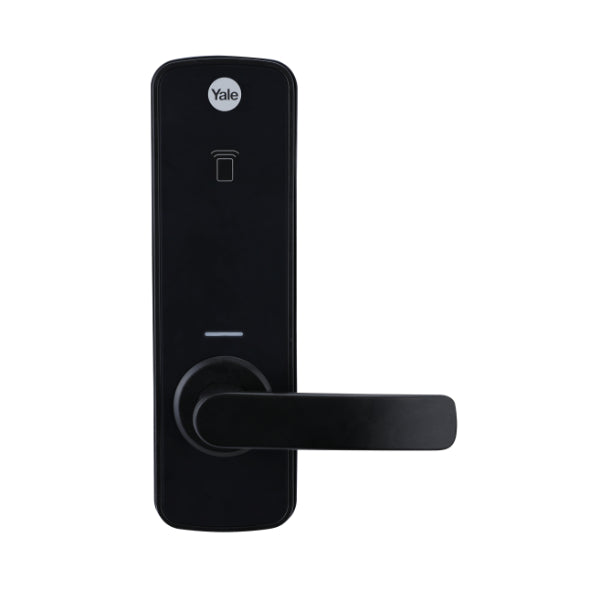
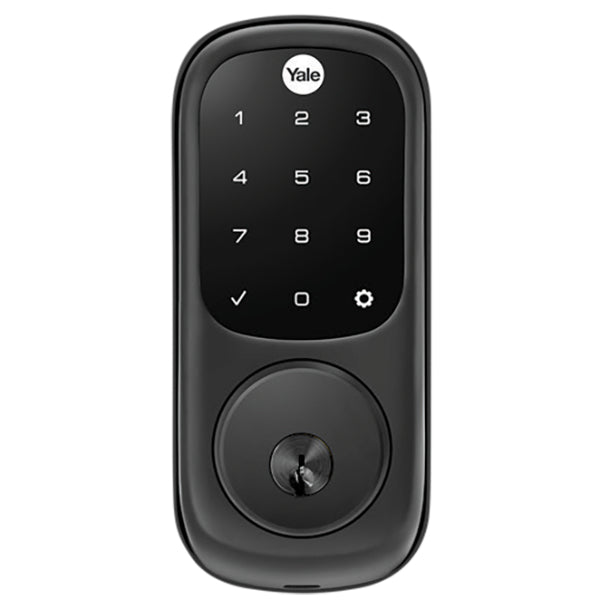


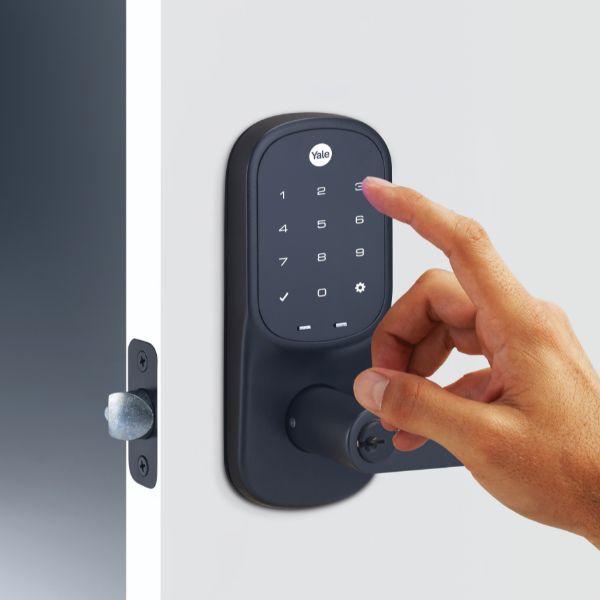
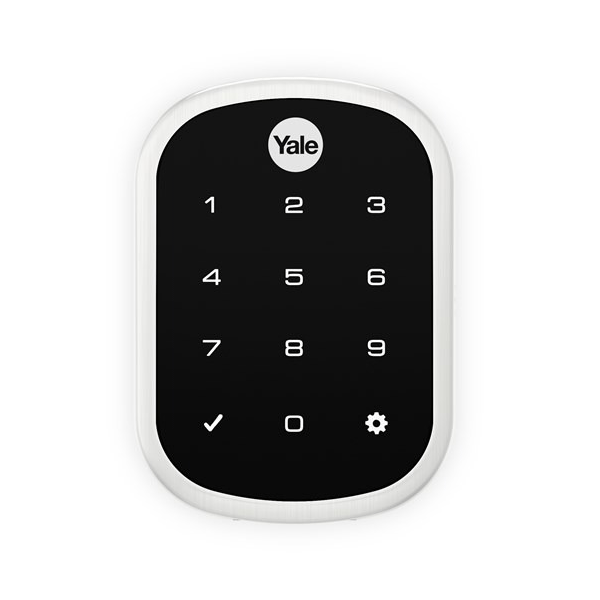
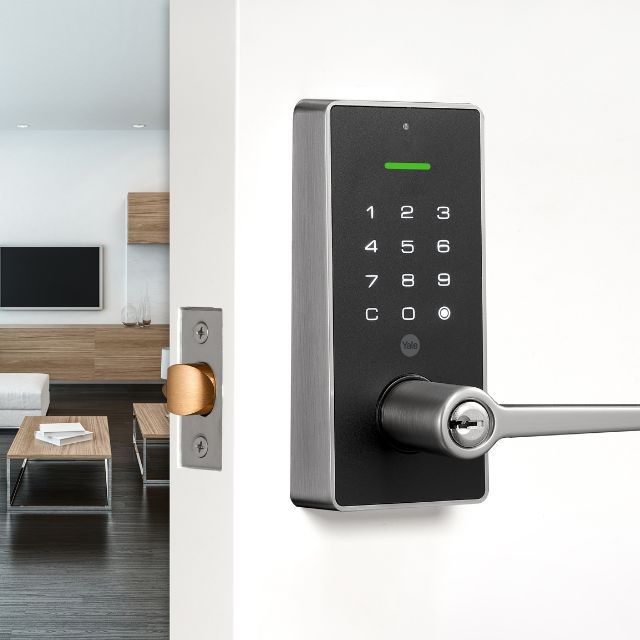
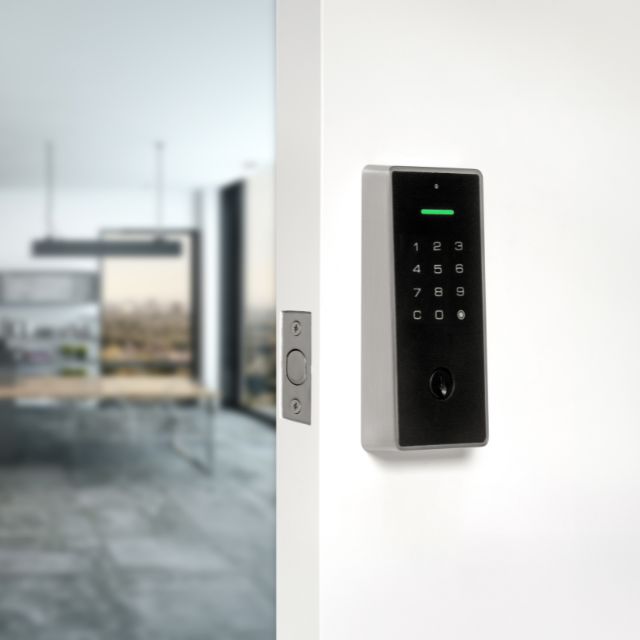
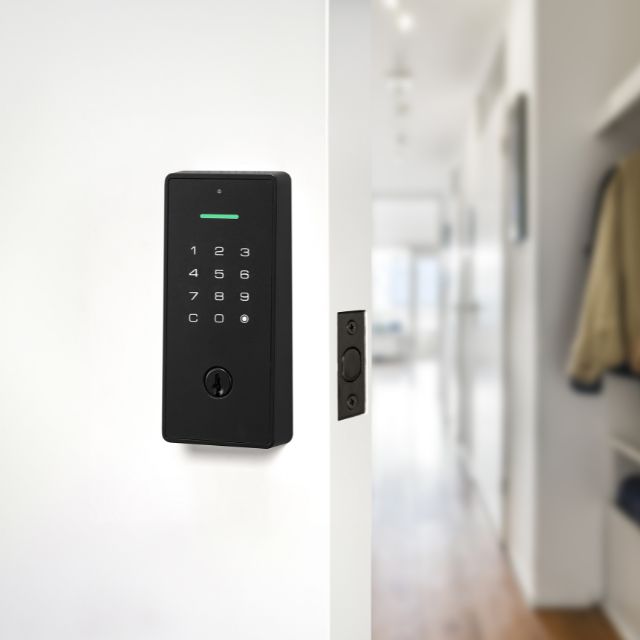
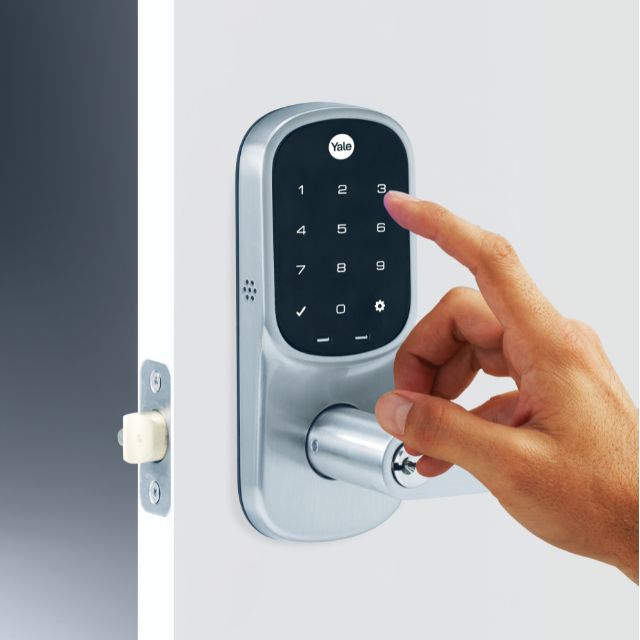
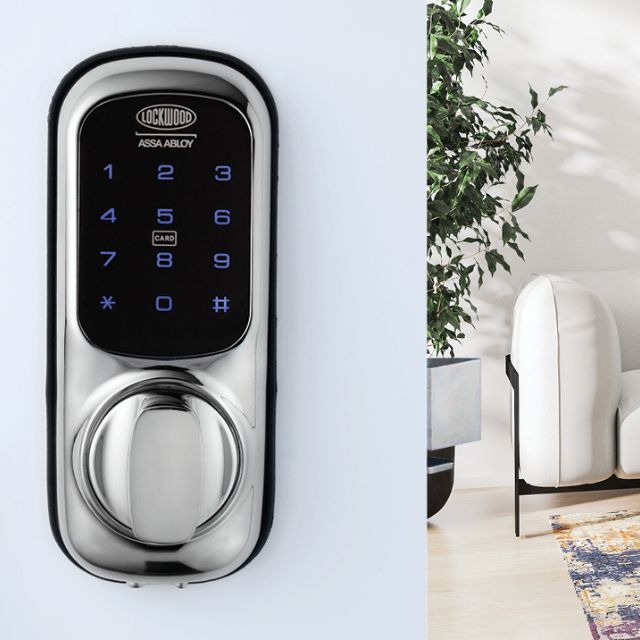
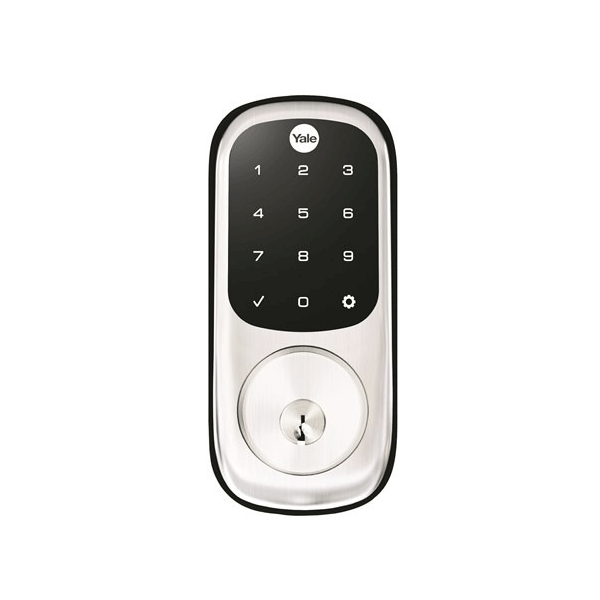
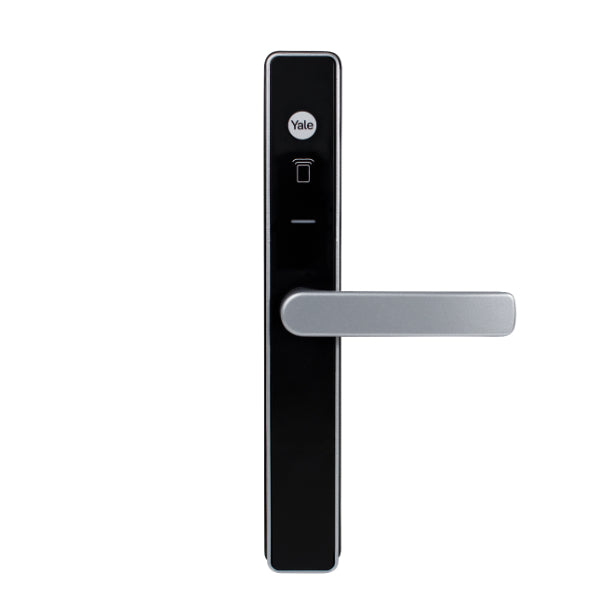
A digital or smart entrance set is a front door lock that opens without a traditional key, using a fingerprint, a PIN code, a card, a phone or a face scan, and that still carries a keyed override in case the battery goes flat. This collection holds smart entrance locks from Zanda, Yale, Lane and Lockwood: deadbolts, digital levers, push and pull mortice locks and the cards and modules that go with them. This guide explains how the locks work, which unlock methods suit which household, what to know about door thickness, backset and bore size, how a deadbolt differs from a mortice lock and what to check on the door before you order. For the wider range, see smart door locks and entry door lock sets.
The locks in this collection offer several methods, and many offer more than one on the same lock.
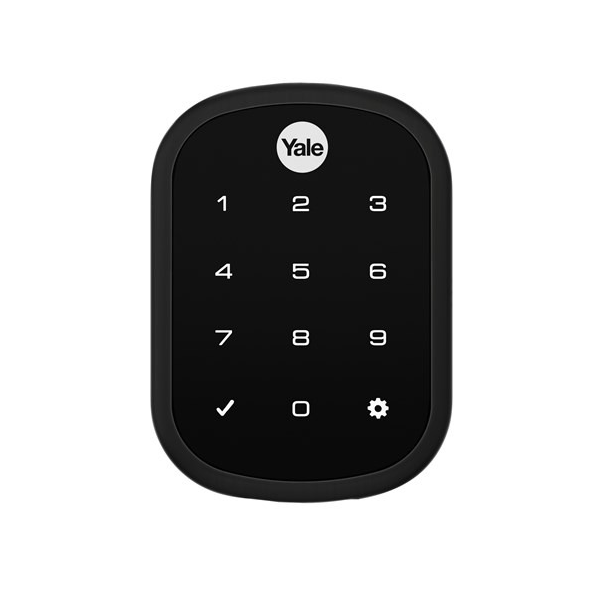
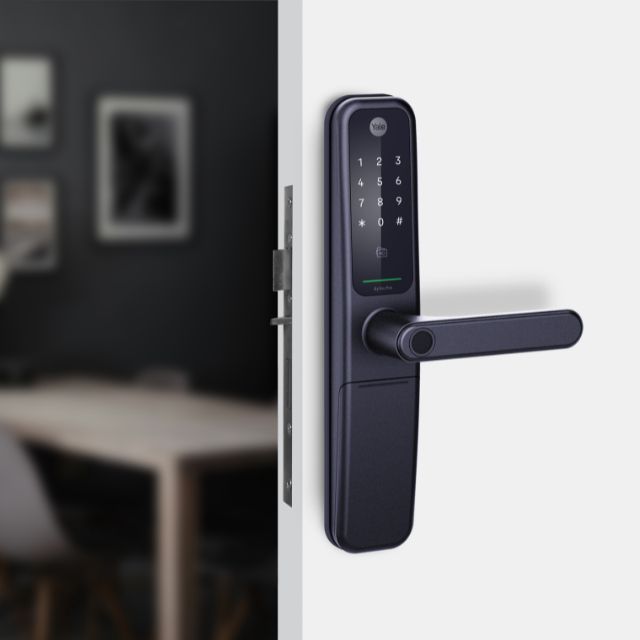
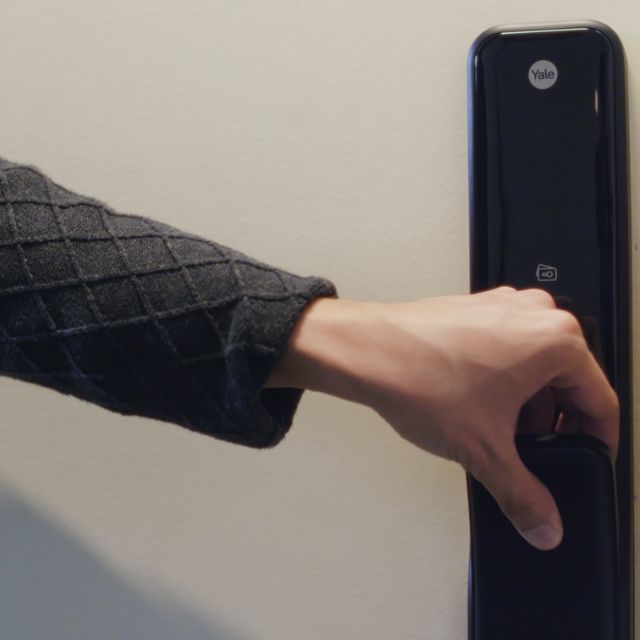
A PIN keypad is the simplest. The Yale Assure SL and the Yale Libi have a touchscreen keypad that you wake by approaching it, and you enter a code. The Libi lists up to 70 unique PIN codes and 5 one-time user codes. A fingerprint reader is quick and cannot be lent out by accident. The Yale ByYou Pro and Kyra Pro list fingerprint, PIN and RFID tag access, and the ByYou Pro works with Apple Home Key so you can tap an iPhone or Apple Watch. The Yale Luna Pro+ adds face recognition using 3D structured light, with a fingerprint, PIN, card and app as other ways in. A card or tag suits children, visitors and tenants, because it is simple and can be cancelled. The Lane Grande IC cards pair with Lane Grande locks and carry no PIN.
A phone app adds remote features. The Zanda Stealth works through the Zanda app over Bluetooth, and with the Wi-Fi bridge it can be controlled from anywhere. The Yale locks work with the Yale Home or Yale Access app. Choose the methods you will actually use, and keep the key override as a backup.
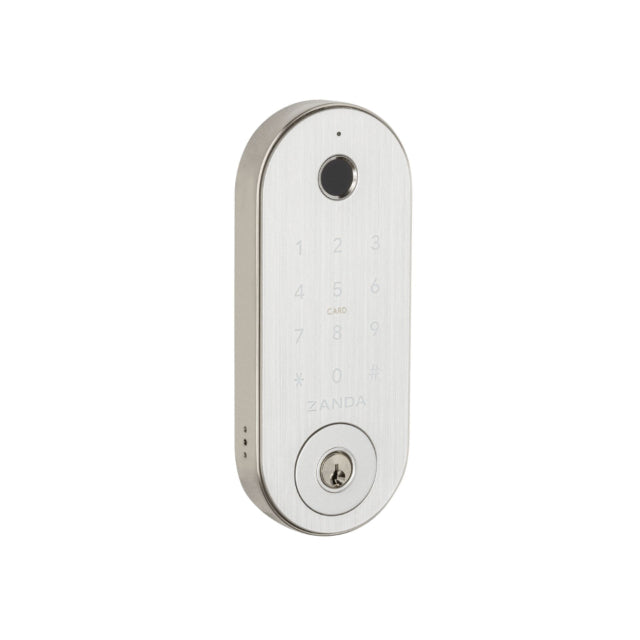
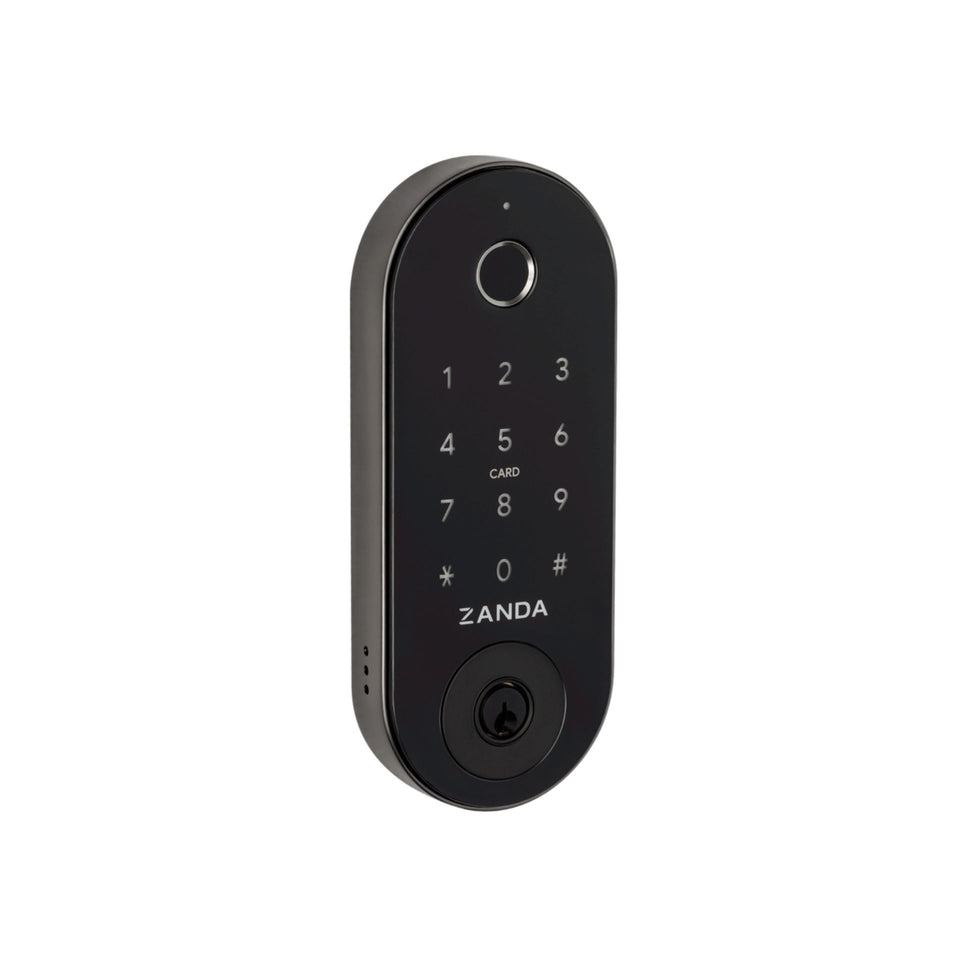
The Zanda Stealth comes as a deadbolt and as a mortice lock with long plates. One unit offers several ways to unlock, including fingerprint, PIN code and Bluetooth, with remote access through the Zanda app using the Wi-Fi bridge. The lock is weatherproof to IP66, which means resistant to rain, dust and harsh environments. It has auto-lock and passage mode, a key override and, on the mortice version, e-key sharing so you can share access digitally.
The deadbolt has a 60mm backset and suits retrofit on timber and aluminium doors. The mortice lock suits doors 35 to 65mm thick. Finishes include brushed nickel, graphite nickel, matte black and satin brass. The deadbolt is keyed different, so each lock has its own key. Pair the lock with a pull handle or a passage set to complete the entrance. See entrance pull sets and Zanda door hardware.
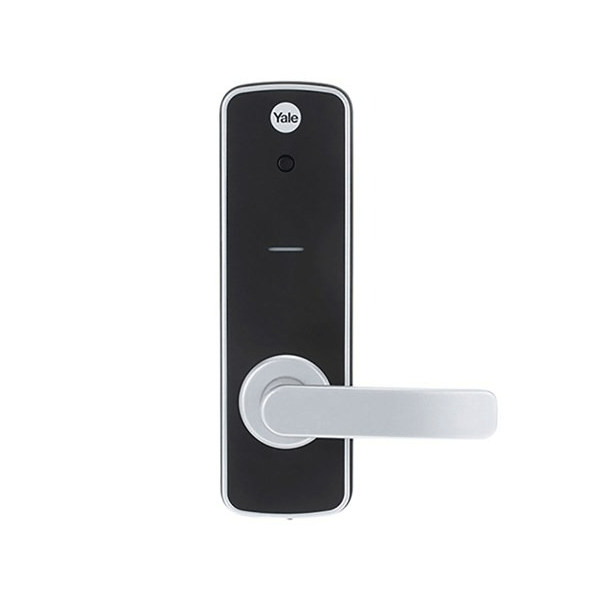
The Yale Unity is a smart lock that works with the Yale Access app, a key card or the Yale Smart Keypad. The entrance version has patented digital dead locking, which locks both the internal and external handles, and it meets Australian lock standard AS 4145.2:2008, SL8 and D8. A built-in LED shows the lock mode: green for unlocked, yellow for locked and red for secure. A door position sensor checks that the door is closed and tells you if it is not, which stops the lock from engaging while the door is open.
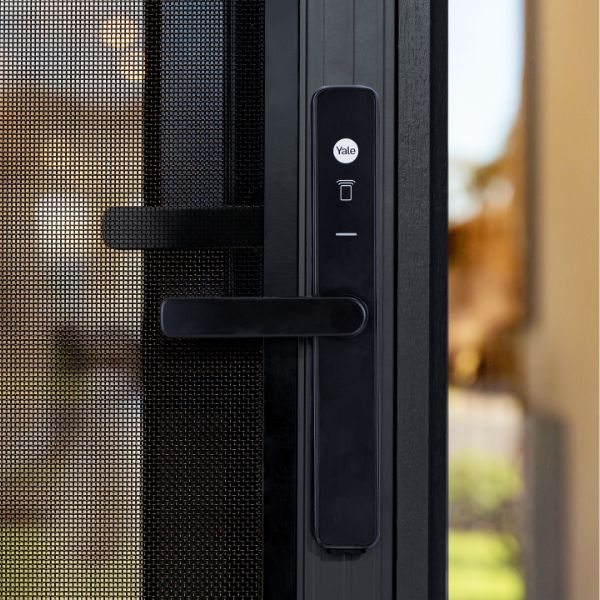
The Unity can be upgraded with the Yale Connect Bridge so you can lock and unlock from anywhere, and it has an auto-unlock feature that uses Bluetooth, Wi-Fi and GPS as you approach. The security screen door version lists AS 4145.2:2008, SL6 and D7, an optional three-point lock kit and compatibility with Apple HomeKit. The bridge and the smart keypad are sold separately. See smart screen door locks for screen door versions.
The Yale Assure SL is a touchscreen deadbolt for fully keyless use, and the Assure keyed deadbolt keeps a key cylinder as well. Both come with a Yale Home module for the smart features, and they can take a Z-Wave Plus or ZigBee module, sold separately, to link with a home automation system. The keyed deadbolt has an adjustable 60 to 70mm backset, suits doors 35 to 50mm thick and fits a 54mm hole.
The keyed product page makes an important point: the deadbolt needs a door lever, knob or pull handle with a roller bolt to keep the door closed when the lock is unlocked. A deadbolt locks the door but does not latch it, so check how the door will be held shut. The Assure keyed lever replaces the handle itself, with a C4 keyway that allows keyed-alike customisation. See deadbolts for deadbolts on their own.
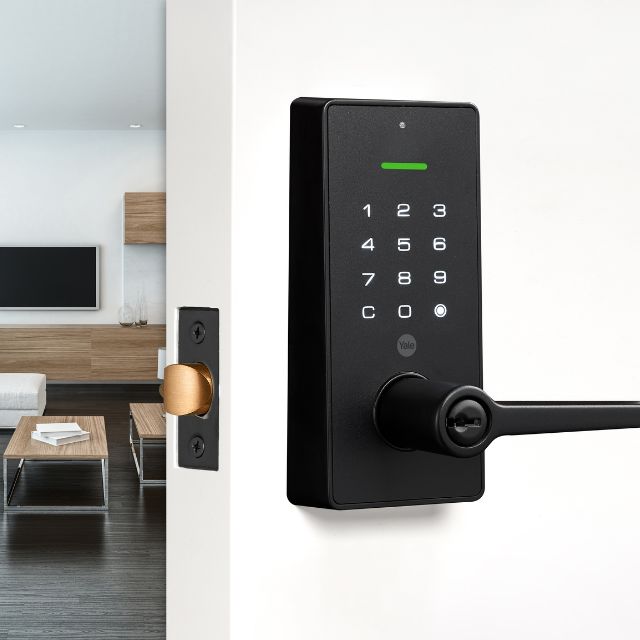
The Libi is a digital leverset that fits a standard 54mm bore, and it is a quick replacement for an existing deadbolt without power tools. It suits doors 35 to 45mm thick, with a latch adjustable to a 60 or 70mm backset. Unlock with a PIN on the backlit touchscreen, and lock with a tap. The lever has a mechanical key override if the battery goes flat, and an auto-lock mode that locks the door after a set time. For a house that wants one product to replace a handle and a lock, it is a simple path.
These three are push and pull mortice locks with long, slim bodies, built for a modern entry. The Luna Pro+ lists face recognition, fingerprint, PIN, RFID card and app access. It lists capacity for up to 100 PIN codes, 100 facial credentials and 50 fingerprints, a door thickness of 35 to 100mm and a Yale Home module included. The ByYou Pro lists fingerprint, PIN and RFID tag access for up to 100 users each, Apple Home Key, and a handle plate in matte black with champagne gold and silver plates in the box. The Kyra Pro lists fingerprint, PIN, RFID tags and the app, six AA batteries and a Type-C connection for emergency power.
All three keep a mechanical key override, and home automation through the Yale Connect Plus Hub 2 is sold separately. A mortice lock sits inside a pocket cut into the door edge, so the door must take the mortice. Check that your door can take the lock body, and use the installation template and guide supplied.
A deadbolt is the easier fit for most existing doors. It uses a standard 54mm hole in the door face and a smaller hole in the edge, and the Zanda and Yale deadbolts here have adjustable backsets of 60 to 70mm. It can often replace an existing deadbolt without new cuts. A mortice lock sits in a slot cut into the door edge, which suits solid timber and some aluminium doors and gives a slim, architectural look with long plates. It needs a door that was prepared for it or a joiner to cut the pocket.
If you are building a new door, choose the lock first, and give the maker the product template. If you are retrofitting, look at what is already in the door. A deadbolt retrofit is usually the simpler path.
Before you order, check six things. First, the door thickness against the range on the product page. Second, the backset, which is the distance from the door edge to the centre of the hole. Third, the bore size, which is 54mm for the deadbolts and the Libi. Fourth, whether the door can take a mortice if you are choosing one. Fifth, whether the door is square and closes without sagging, because a door that rubs or drops can stop a latch from engaging. Sixth, the strike plate and frame, which must be solid.
A smart lock does not make a weak frame strong. Check the frame, the hinges and the strike at the same time as the lock. See hinges for hinge options.
The smart lock is one part of the entry. Pair it with a pull handle or passage set in the same finish. Matte black, brushed nickel, graphite nickel, satin brass and chrome are among the finishes in this collection. See pull handles for pull handle styles and door hardware for the full range.
For a retrofit on a timber or aluminium door, choose a deadbolt such as the Zanda Stealth or the Yale Assure and pair it with a pull handle or lever. For a one-product swap of a handle and a lock, choose the Yale Libi. For a slim, premium entry with several unlock methods, choose a Yale Luna Pro+, ByYou Pro or Kyra Pro mortice lock. For a security screen door, choose the Yale Unity screen door lock.
Measure the door, decide how the household will unlock it, confirm the bridge and match the finish. Then the lock will suit the door on the day it is fitted.
It is a front door lock that opens with a PIN, fingerprint, card, phone or face scan, and keeps a mechanical key override as a backup.
Usually yes. Bluetooth works near the door, and remote control needs a bridge or hub, which is sold separately on some models.
The locks in this collection keep a mechanical key override or an emergency power option, so a flat battery does not lock you out.
No. A deadbolt locks the door but does not hold it closed. It needs a lever, knob or pull handle with a roller bolt.
It depends on the model. The Yale Libi lists 35 to 45mm, the Assure keyed deadbolt 35 to 50mm, the Zanda mortice 35 to 65mm and the Luna Pro+ 35 to 100mm.


