
*View accurate shipping rates and availability






99 Items


Up to 70% off across the store, plus free towels and mirrors up for grabs on orders over $800*


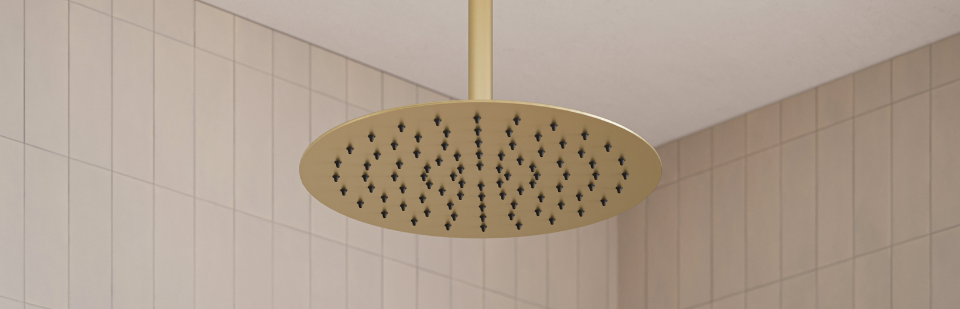


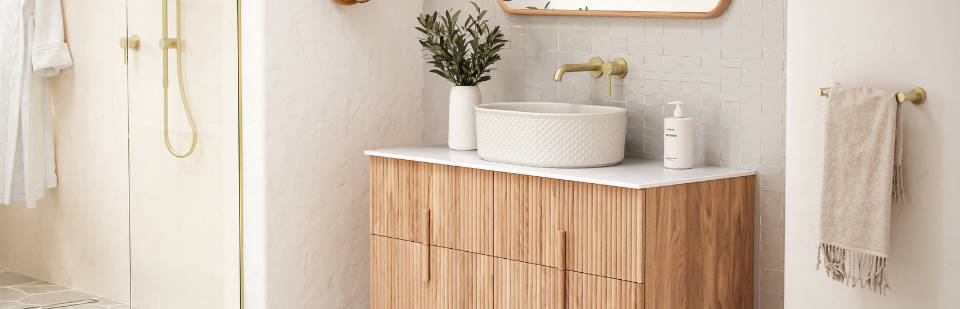


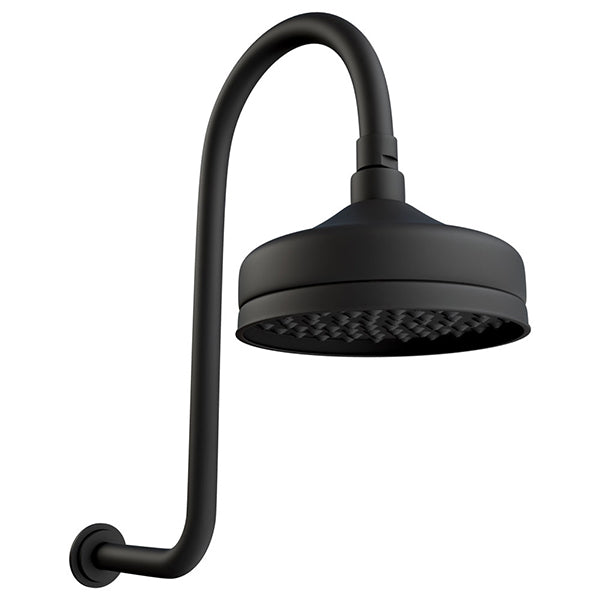


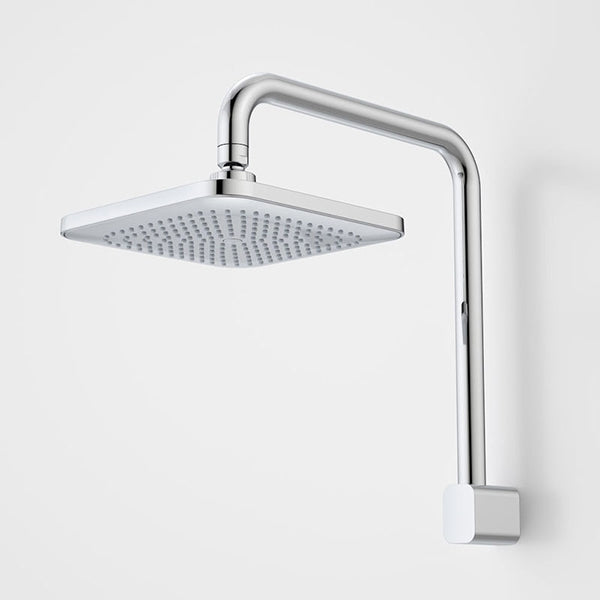


A wall shower head is a head that hangs from an arm fixed to the wall. Wall showers mount directly to the wall and deliver water through a fixed or adjustable arm, with no ceiling fittings and no exposed hose kit, which is why they suit guest bathrooms and laundries as well as daily use. This collection holds the wall-mounted heads and arms from six makers: Phoenix, Fienza, Nero, Caroma, Modern National and Clark. Most are sets, with the head and the arm in one box, and a few are exposed sets for heritage bathrooms.
The question is which set suits your outlet. The sections below take it in order: the types, the head sizes, the arm shapes, the materials, the pressure and flow, the finish, the care and the fitting. For the arms on their own, see shower arms. For every head type, see shower heads. For the wider guide, see showers.
The collection holds all four, and the sections below set out how each one is built, with the figures for each.
Sizes run from small to large. The smallest are 120 mm adjustable heads, such as the Caroma Luna adjustable wall shower and the Nero X Plus all direction head. The Phoenix Vivid Slimline rose is 155 mm. The Fienza Lillian is a 208 mm round rain head, the Fienza Hustle is 200 mm, and the Phoenix Wiltern is 220 mm. The Phoenix Vivid roses are 230 mm and 250 mm, the Cromford is 210 mm and the Nuage is 255 mm. The Phoenix NX and Ormond sets use 250 mm roses, and the Orli is 290 by 210 mm. The Nero Serenity head is 300 mm, and the Fienza Empire Slim heads are 303 mm.
Round fixed heads run at 200 to 300 mm, with 150 to 200 mm for low-pressure systems, and heads over 250 mm suit good pressure unless a pump is fitted. A larger face divides the same flow between more nozzles, so the spray feels softer, not stronger. Rain-style heads can seem gentler in a low-pressure home. Match the size to your pressure first. A 150 mm head suits a modest supply and a 300 mm head suits a strong one.
Two Fienza ranges use very thin heads. The Kaya sets have a head 2 mm thick and 250 mm across, with a brass swivel joint and a flange included. The Empire Slim sets have a head 8 mm thick and 303 mm across, in stainless steel with a brass swivel joint. The Hustle set has a 200 mm head that is 8 mm thick. The Phoenix Wiltern, Nuage and Cromford heads are thicker, and the Nero Serenity is a 300 mm head with a backplate of 180 mm.
A thin head keeps a flat line from the wall and sits close to the ceiling, which suits a modern room. It also leaves little depth for a swivel, so the joint is the part to check. The Fienza sets have a brass swivel joint, and the Phoenix Cromford, Nuage, Wiltern and Vivid MKII sets have an adjustable head angle.
The arm decides where the head sits. The basic types are a standard arm with an angle, a straight arm that suits rain heads, and a gooseneck or S-shaped arm that raises the head. The sets here use six shapes.
The first rule for any wall set is to check the height of the plumbing outlet before choosing. If the outlet is too high, choose a straight arm with a rain head. If the outlet is too low, choose a rising arm to lift the head. A fixed wall head sits at 2000 to 2100 mm above the finished floor to the centre of the arm outlet, or 2100 to 2200 mm for a tall household. Measure from the floor to the outlet, and compare it with the height you want the head to sit.
The material changes by product. The Phoenix Vivid, Wiltern and Oxley arms are brass, and the Cromford and Nuage sets are brass with ABS. The Fienza Kaya and Empire Slim heads and arms are lead-free stainless steel with a brass swivel joint, and the Lillian and Hustle sets are brass. The Nero Serenity head is ABS with electroplating. Stainless steel and brass resist corrosion better than ABS, so the metal sets are the durable ones and the ABS pieces are the light ones.
The Phoenix Vivid Slimline in 316 stainless steel is the set for outdoors or the coast. It has the corrosion resistance of 316 marine grade stainless steel for outdoor kitchens, laundries and coastal residential areas, with a 250 mm round rose and a fixed position, rated 3 star at 9 litres per minute. For the wider choice, see outdoor showers and stainless steel showers.
Most heads and arms use a half inch BSP thread, and most share a standard half inch thread. Proprietary designs and older plumbing can differ, so check the specifications of both parts before buying. The sets list the connection in different words. The Fienza sets state a female half inch BSP inlet. The Phoenix NX sets have a push-fit adaptor suited to an existing connection. The Cromford, Nuage and Wiltern sets fit onto existing half inch plumbing.
The ratings run from 3 to 4 star across the sets. The Plumbing Code of Australia requires new developments to use showerheads of no more than 9 litres per minute, which equals 3 stars. A head of 7.5 litres per minute or less earns 4 stars if it passes the spray force and coverage tests. The Phoenix Cromford, Nuage and Vivid MKII sets are 4 star at 7 to 7.5 litres per minute. The Phoenix NX and Oxley sets are 3 star at 8 to 8.5, and the Fienza, Clark and Modern National sets are 3 star at 9. The Nero X Plus lists 6 litres per minute with no star rating.
The finishes include chrome, black, brushed nickel, brushed gold, brushed bronze, brushed carbon, gunmetal, brushed copper, matte white and urban brass, and not every set comes in all of them. The process differs: PVD on many brushed tones, electroplating on the Fienza chrome and black and on the Nero Serenity, and chrome plate on the Vivid. PVD is significantly harder and more durable than traditional plating. For finish-led browsing, see chrome showers, black showers, brushed nickel showers, bronze showers, gold showers, gunmetal showers and white showers.
Match the finish to the mixer and the other fittings, so the head goes with the basin mixers, bath taps and accessories. For brand ranges, see Phoenix showers, Fienza showers, Nero Tapware showers, Caroma showers and Clark showers.
Dry the fitting after use, since drying prevents mineral deposits and water marks. Wipe it regularly with warm water or mild soap on a soft or microfibre cloth, then rinse and dry it straight away. For chrome, a soft-bristled toothbrush works on a limescale spot. On matte black, keep abrasive cleaners, scouring pads, bleach, vinegar and lemon juice away, because acid can damage the coating over time and dull the finish. Silicone and TPR nozzles can be rubbed with a finger to dislodge deposits.
A white vinegar soak every one to two months is acceptable only on standard chrome or plastic. Keep acid away from matte black, brushed nickel, gunmetal and other PVD or electroplated finishes, and use warm soapy water on a coated finish. Cleaning monthly in hard water and every two to three months in soft water keeps the face clear.
A like-for-like swap on the same outlet is a simple job. Turn the water off first and protect the finish with a cloth between the wrench and the arm. Unscrew the head, slide the flange away from the wall, and unscrew the old arm anticlockwise if you are changing it. Wipe old thread tape from the fitting in the wall. Wrap new thread seal tape clockwise two to four times around the thread of the new arm, screw it in clockwise until it is secure, slide the flange back and fit the head. Turn the water on and check for leaks.
Inspect the fitting inside the wall, turn a stuck arm slowly, and stop if the arm may snap. Call a plumber for leaks that will not stop, a changed outlet, or a fitting that moves. The rules on what an owner may do themselves differ by state, so check yours before you start.


