
*View accurate shipping rates and availability






8 Items

Up to 70% off across the store, plus free towels and mirrors up for grabs on orders over $800*
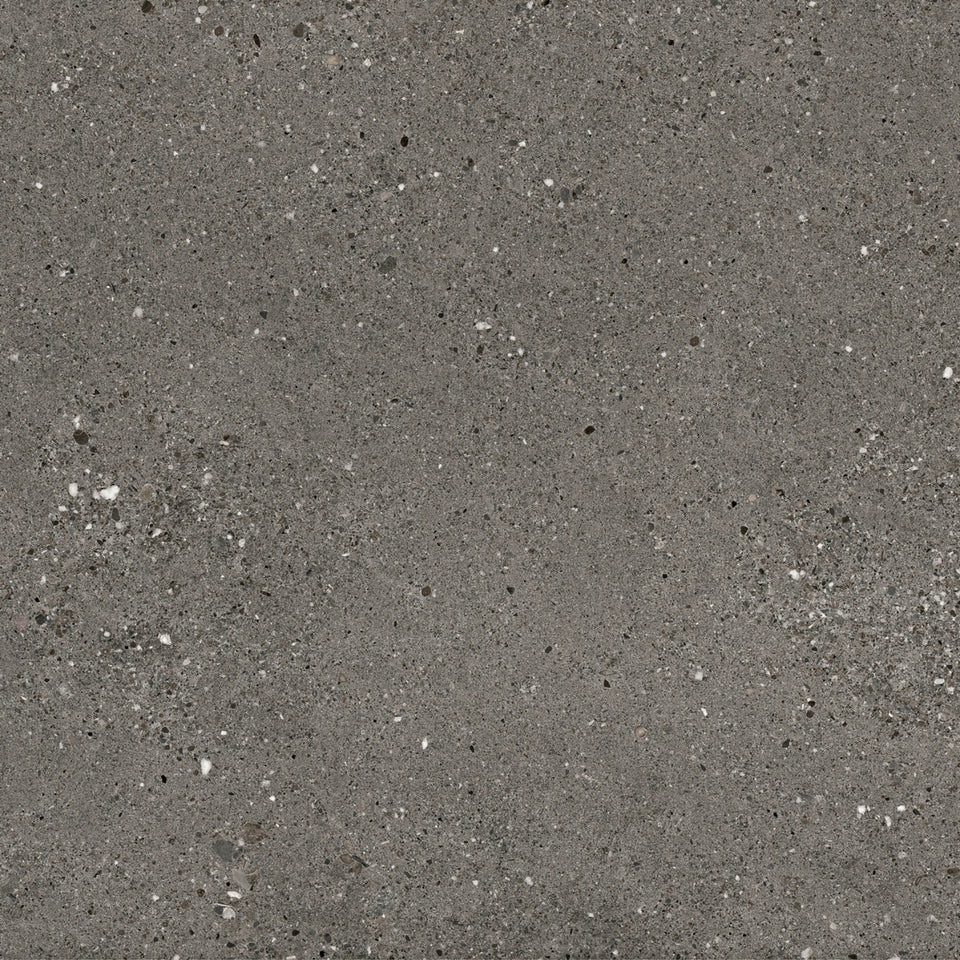
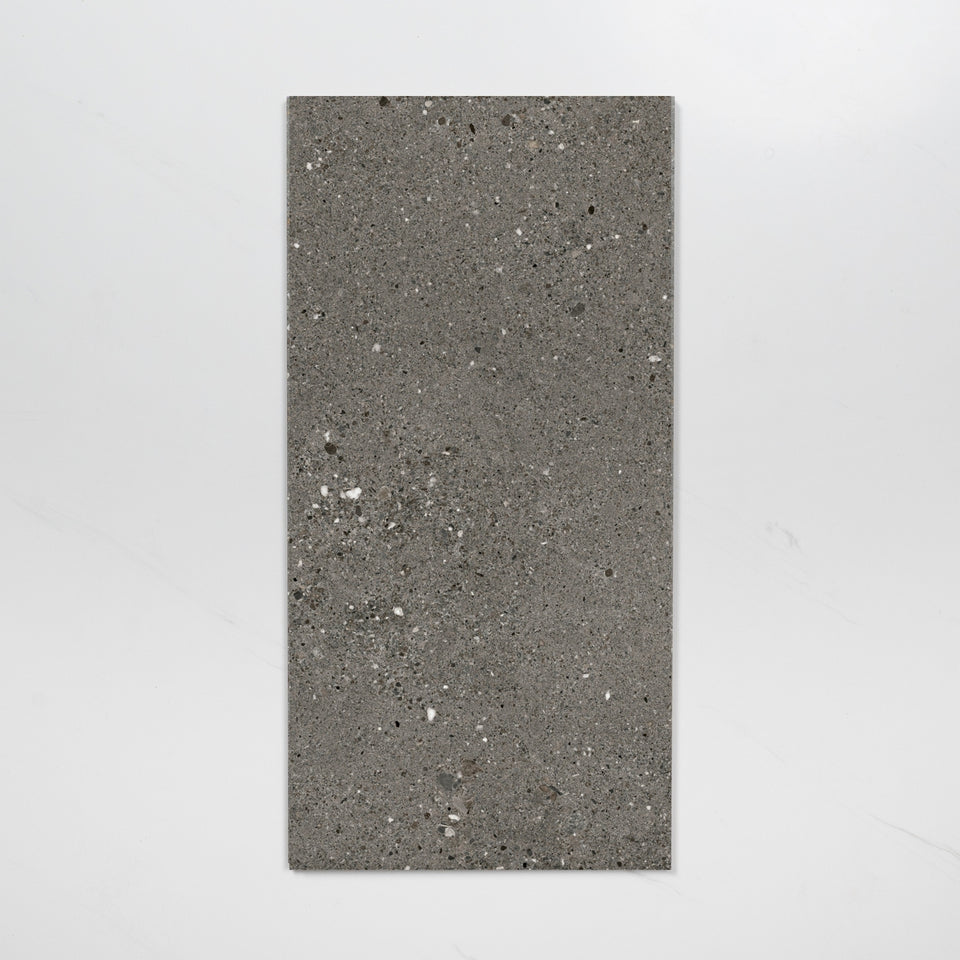
Concrete look tiles copy the plain, slightly clouded surface of poured or polished concrete and put it on a porcelain tile. This collection holds three families: Vela, a soft matte concrete and stone look in cream and greige, Nuvira, a dark grey grip tile, and Frankie, a polished concrete look with a fine terrazzo fleck. All are glazed porcelain, rectified and 10mm thick, in 300 x 300, 300 x 600 and 600 x 600mm.
The sections below explain how the tile compares with real concrete, what each family carries in its spec block, how slip and wear lines decide where it can go, and how to order. For single colours, see the grey tiles collection and the beige tiles collection. For the speckled version in particular, see the Frankie concrete-look porcelain tiles collection.
Factories can now reproduce concrete finishes on glazed porcelain, including aggregate, formwork and polished concrete looks, in shades of grey, beige, cream and black. The best of them are difficult to tell from real concrete once laid. Porcelain can replicate polished concrete when the tile is made with face variation.
The look is quiet by design. There is no strong pattern, only a clouded surface, small changes in tone and sometimes a fine grain. That makes concrete look porcelain a backdrop tile. It works under timber, brass, stone and plain walls without competing with them.
Concrete is known for being hard wearing and, when properly sealed, water and stain resistant. A real concrete surface needs treatment, while a concrete look porcelain tile needs no sealing, grinding or polishing. The practical gap is that concrete is a surface made on site, and a tile is a product made in a factory to a fixed size and finish.
That difference matters most for planning. A tile arrives in boxes with a printed Appearance line that tells you how much variation to expect, so the tone across a floor and a wall can be planned before anything is laid.
Each family carries its own details in the spec block. These show the spread.
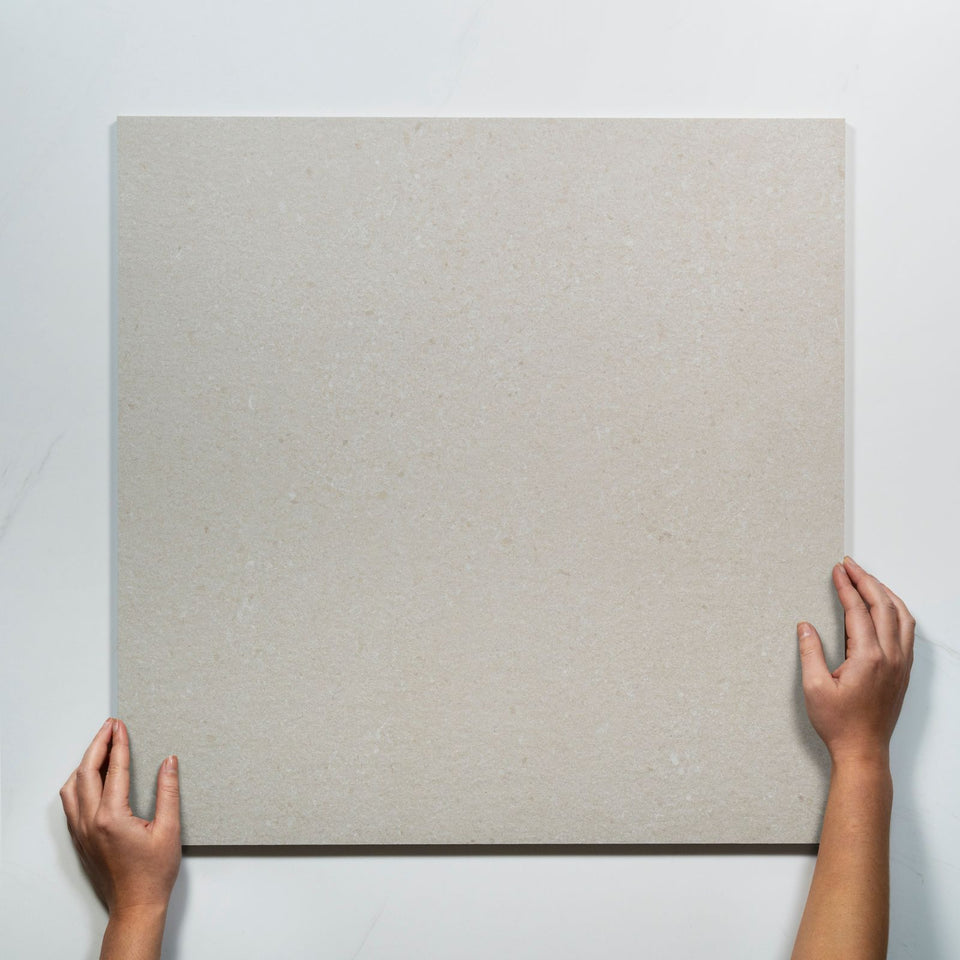
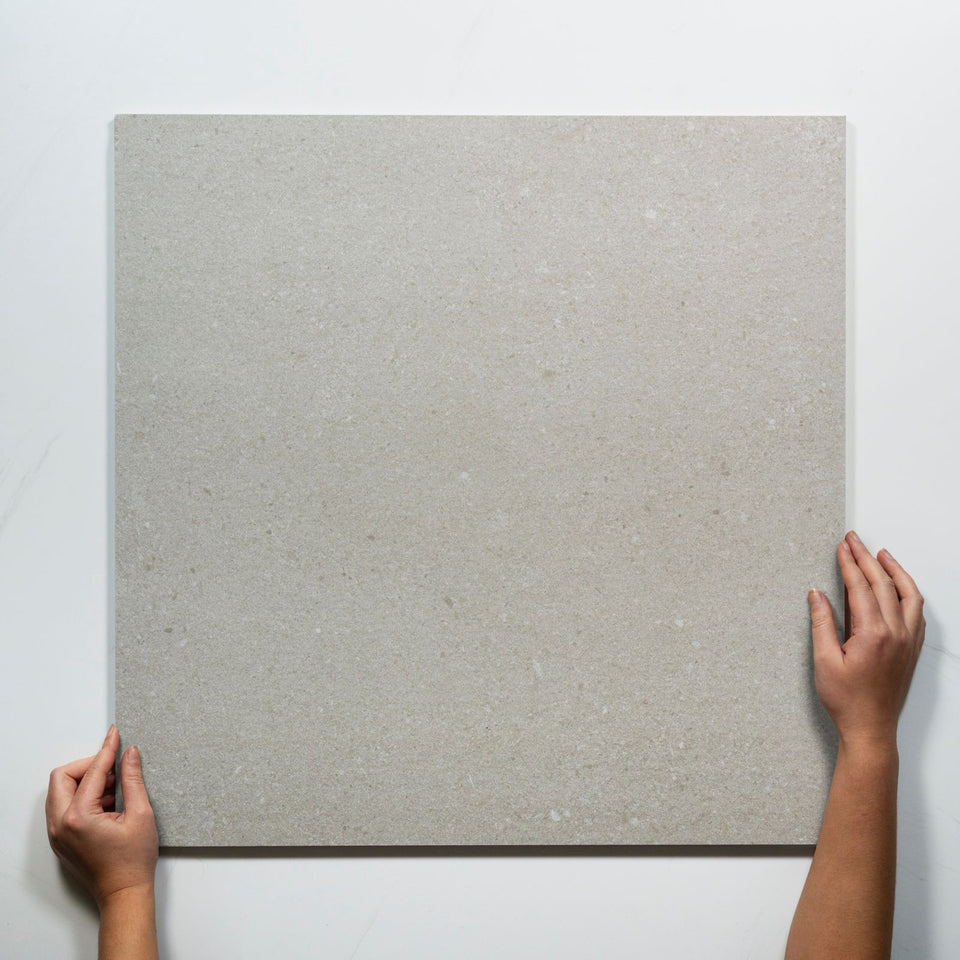
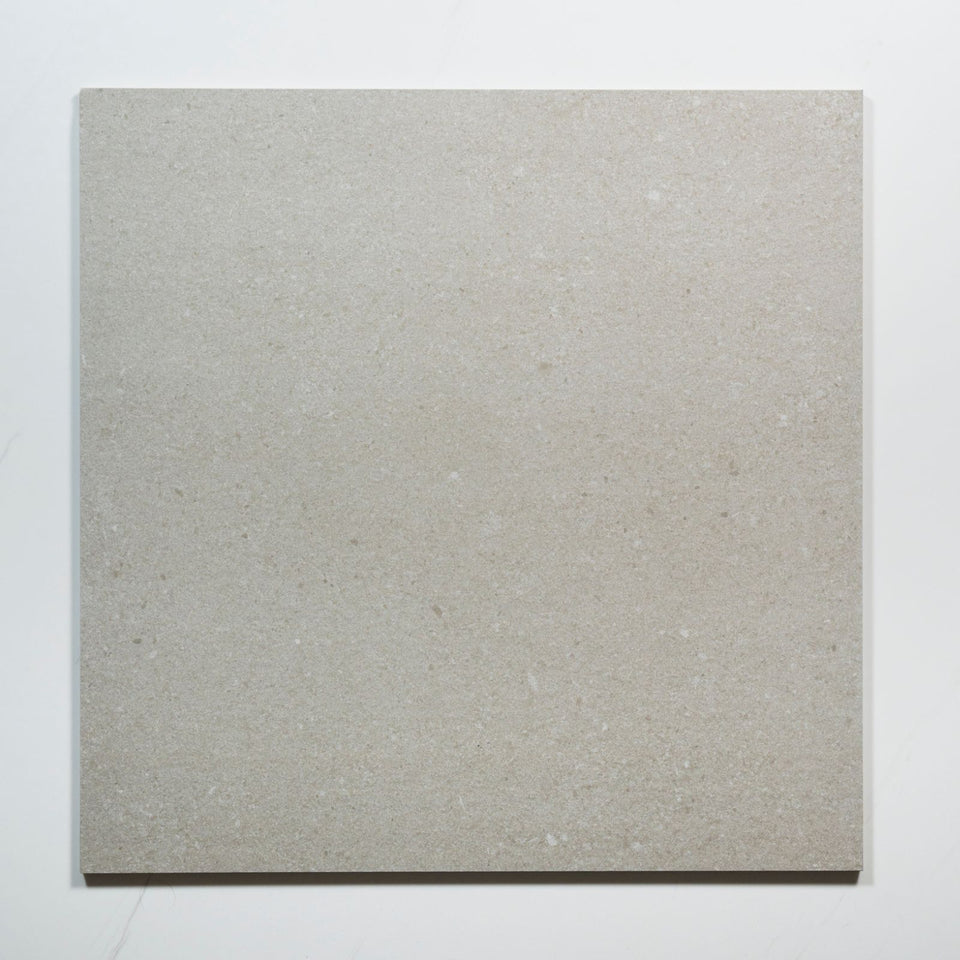
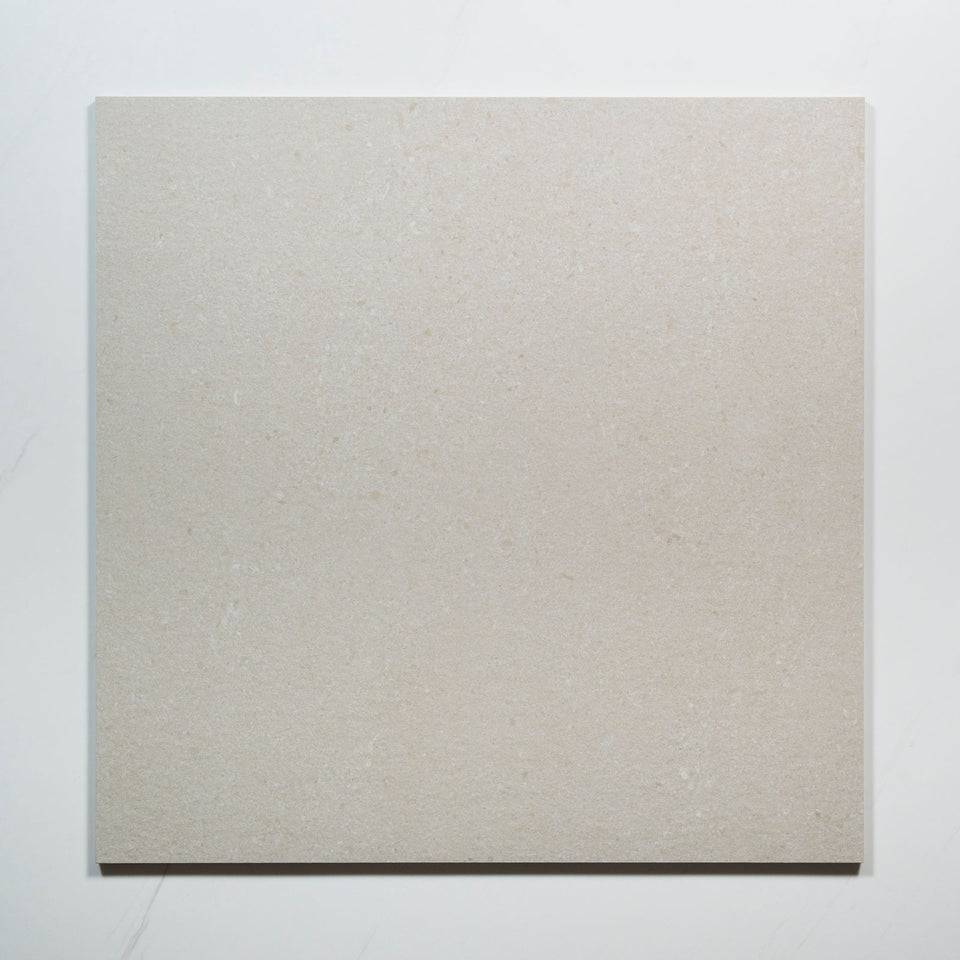
Vela brings contemporary minimalism to life with a raw, stone and concrete look finish and a soft matt surface. It comes in cream and greige in 600 x 600mm and 300 x 300mm. There are floor and wall options plus a matching textured feature tile. The Finish line reads Matte, the Slip Rating P3, the Application Walls and Floors, the Texture matt slight texture and the Appearance V2.
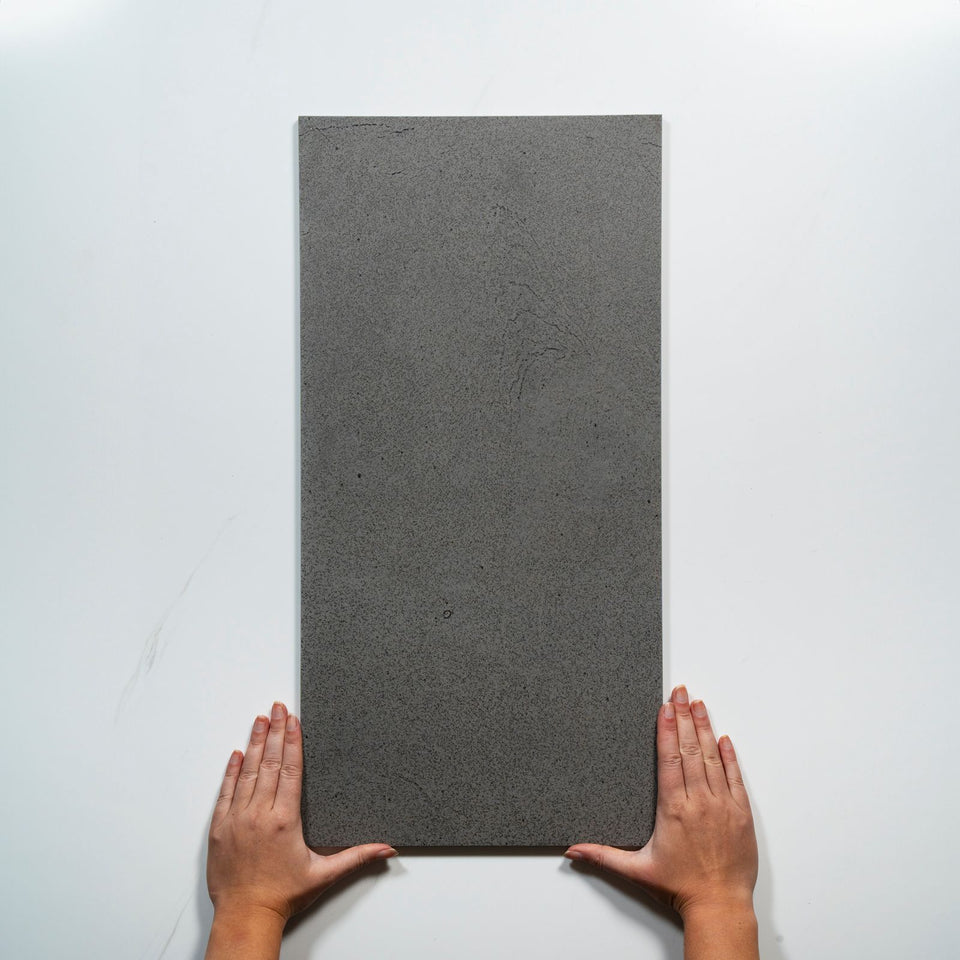
Nuvira is a dark grey tile with a soft stone-like texture and a deep tone, in 300 x 600mm. It is the one grip tile in the collection: the Finish line reads Grip, the Slip Rating P5, and the page prints Indoors and Outdoors. The Appearance line reads V3, which means moderate variation, so a box of Nuvira shows more difference from tile to tile than a box of Vela.
Frankie is the polished concrete look, a combination of terrazzo and concrete with a fine grain fleck. It feels flat and smooth with light reflections on the terrazzo chips, and it comes in warm and cool hues from light to dark. The dark grey in this collection is matte with a P3 slip rating and a V2 appearance. For the other Frankie colours, see the Frankie collection, and for the wider terrazzo look, see the terrazzo look tiles collection.
Vela and Frankie print a Slip Rating of P3, and Nuvira prints P5. AS 4586 classifies the slip resistance of new pedestrian surface materials, and its wet pendulum test uses ratings from P0 to P5. The rating applies to floors people walk on, not to feature walls. No single rating suits every bathroom or outdoor spot, so confirm what the exact surface needs with your builder or tiler.
The wording on where each tile goes differs, and the lines are worth reading together. Nuvira is P5 and suits walls and floors, including high traffic or wet areas, and is Indoors and Outdoors. Frankie reads differently. It suits walls and floors, indoors and outdoors, and as a mitred stair tread. The dark grey 600 x 600 and 300 x 600mm tiles carry Application Floors and Area Indoors, and the 300 x 300mm carries Walls and Floors.
When the description and the lines differ, the Application, Area and Slip Rating lines are the ones to follow. They are the lines a builder and a tiler will read. For a covered or outdoor floor, the Nuvira grip tile is the one with the higher rating. The outdoor tiles collection and the floor tiles collection explain these ratings further.
All the tiles are rectified, which means a narrow joint is possible. Frankie needs a recommended gap of 1.5mm to 3mm. The other families carry no gap line, so ask your tiler to confirm the joint for the tile you choose. A narrow, tonal joint keeps the surface reading as one piece, which is the closest a tile gets to a poured floor.
A contrasting grout does the opposite and turns the grid into a feature. Order a sample, set it against your chosen grout, and view it in the room before the full order.
The collection runs from 300 x 300mm to 600 x 600mm. A 300 x 300mm tile has more joints per square metre, and Frankie suits a mitred stair tread. A 600 x 600mm tile has fewer joints and covers a larger room more quietly. The 300 x 600mm rectangle sits between them and takes a stagger. For a closer look at each size, see the 300mm x 300mm tiles collection, the 300mm x 600mm tiles collection and the 600mm x 600mm tiles collection.
The same family can run across all three sizes. Frankie, for example, comes in 300 x 300, 300 x 600 and 600 x 600mm, so a floor can use the large tile and a niche or a step can use the small one in the same tone.
The collection runs from the cream and greige of Vela to the dark grey of Nuvira and Frankie. Ivory, sand, limestone, beige and travertine are warm neutrals that soften visual contrast and pair with timber vanities, brushed brass tapware and natural stone. Vela's cream and greige sit in that group, with a concrete texture instead of a stone one. For a closer look at that warm range, see the beige tiles collection.
Dark grey is the other direction. Nuvira is a deep and moody tone, and Frankie's dark grey carries pale terrazzo chips against a dark base. A dark floor suits a scheme that wants weight, and the finish, the light and the grout change how any colour reads in the room. A sample under your own lighting settles it.
Concrete look tiles suit floors, walls, entryways, staircases, verandas and bathrooms, and can be used outdoors provided they have the right surface finish. That last condition decides it for this collection: Nuvira is the grip tile, so it is the one to check first for an outdoor or wet floor. The bathroom tiles collection sorts tiles by room.
The tags run across bathroom floors and walls, kitchen floors, living areas and covered outdoor rooms, and Nuvira adds outdoor areas and pool surrounds. A concrete look tile in a hallway, a kitchen or a living area carries one tone from room to room, and the finish does the work of marking each space.
For a wall, any of the three can work, and the Application line confirms it. The wall tiles collection holds the other formats.
Allow at least 15 percent on top of the required quantity for wastage when cutting. That is a sensible figure for the 300 x 600mm tile on a staggered layout, where each row starts with a cut. A V3 tile such as Nuvira also benefits from enough stock to mix boxes, because the variation is part of its look.
A worked example: a living room floor of 5m by 4m is 20 square metres. A 300 x 600mm tile covers 0.18 square metres, so the room takes 112 whole tiles, and with 15 percent the order is 129. A 600 x 600mm tile covers 0.36 square metres, so the same room takes 56, and 65 with the allowance. Start the layout from the centre of the main wall, lay a few rows dry, and mix tiles from several boxes as you go, so the face variation blends across the floor.
Open more than one box when laying and mix the tiles, so the variation spreads across the floor. Confirm the quantity with your tiler before ordering, because rooms with many corners and fixtures need more.
Test the finish before you commit. Lay a sample on the floor and check it in morning and evening light, because a concrete look reads cooler in daylight and warmer under lamps. Place it beside the cabinetry, the benchtop and the paint that stay, and choose the grout last. A tonal grout one shade from the tile keeps the surface calm and close to a poured floor, and a narrow joint of 2mm to 3mm on a rectified tile keeps the grid quiet.
Start with the surface you are covering. For a calm, light concrete tone on floors and walls, Vela in cream or greige is the match. For a dark floor or an outdoor spot that needs a grip tile, Nuvira is the one with the higher slip rating. For a polished concrete look with a fine terrazzo fleck, Frankie is the choice, and its collection holds the other colours.
Then settle the joint and the layout: narrow and tonal to keep the surface continuous, a stagger of a third for the long tiles, and a straight grid for the squares. Check the Application, Area and Slip Rating lines for the room, and order a sample first.
If concrete is not the look you want, the tiles collection covers every shape and finish in the store, and the porcelain tiles collection holds the wider range of the material.


