
*View accurate shipping rates and availability






5 Items
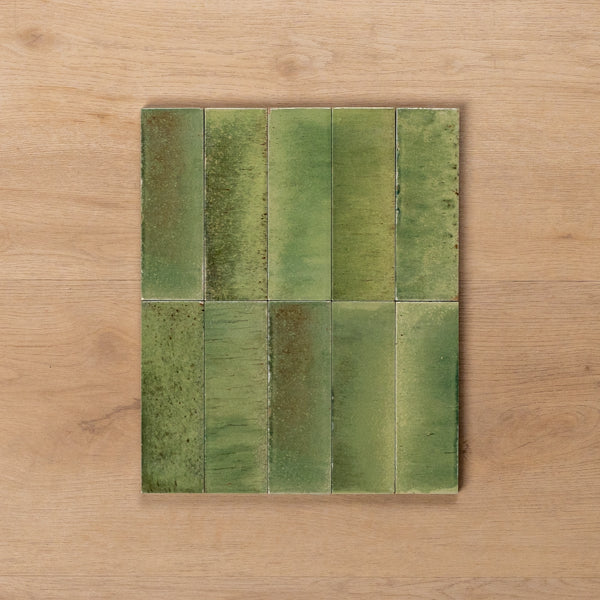
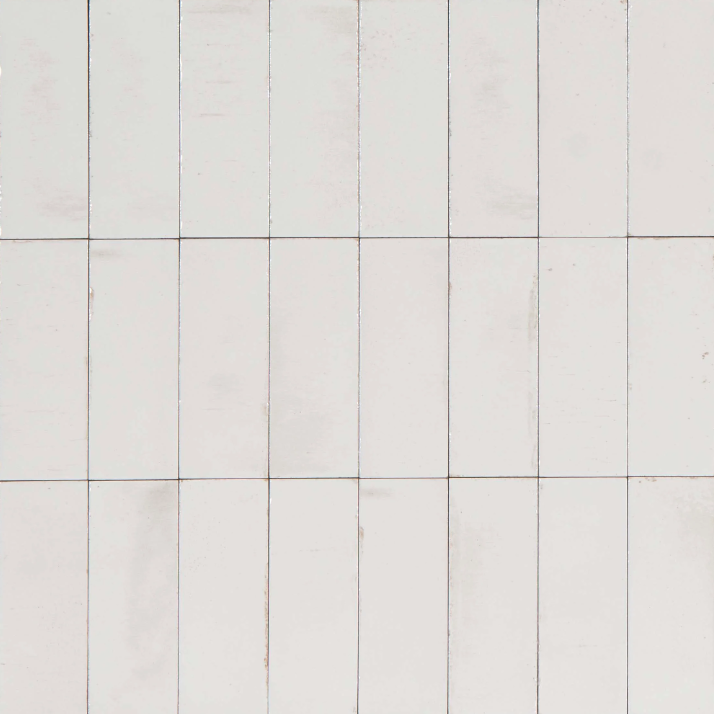
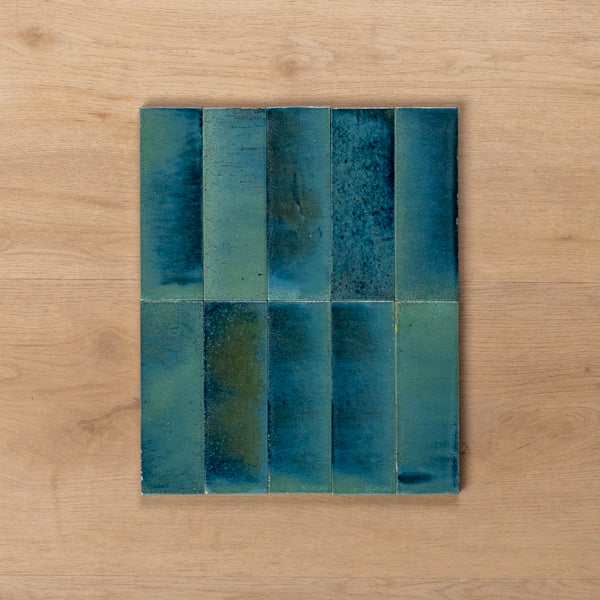
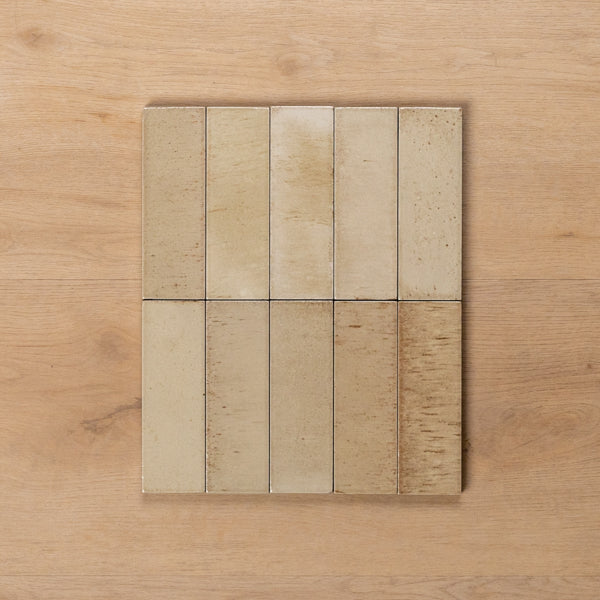
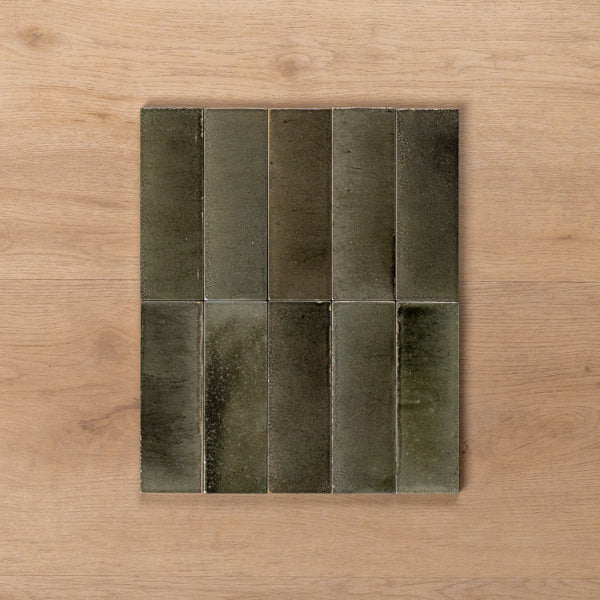
This collection holds five tiles from one range. Sicily is a gloss porcelain tile in a small rectangle, 50 x 150mm, with a long edge exactly three times the short one. The colours are Giada Green, Bianco White, Turchese Blue, Beige and Grigio Charcoal. It is an Italian made collection, hand crafted, with ever-changing materials that create the added beauty of imperfection.
Each tile is 10mm thick, non-rectified and gloss, with a wear rating of 3. The product titles name the shape bejmat and mention a cushioned edge. The sections below go through what the Sicily spec block carries, what it leaves out, how the shape connects to handmade Moroccan tiles, how to lay a 1:3 rectangle, and what to ask before you order.
If you want to compare this size with its neighbours, the 50mm x 200mm tiles collection is longer, and the 75x200mm tiles collection holds the same Sicily range in a wider size. The tiles hub links every other category on the site.
The specification block is short. The dimensions are 50 x 150mm. The finish is gloss and the material is porcelain. The edge is non-rectified. The maintenance line reads easy to clean. The thickness is 10mm. The wear rating is 3, suitable for floors in light traffic areas with normal shoes, with a medium risk of scratching.
The standard ordering advice applies: an extra 15% over the exact quantity, because colour, size and texture can vary from batch to batch, and a few spare tiles stored for later breakages.
What the block doesn't carry matters just as much. There is no slip rating, no application line, no area line, no recommended gap and no box quantity. The tags mark all five as wall tiles and feature wall tiles, and Bianco White and Beige also carry a floor tile tag. The wear line sits beside that floor tag and means light traffic with a medium risk of scratching, so a floor use needs a conversation with the team before you plan it. Ask for the slip rating, the box size and the recommended joint for the colour you choose.
Bejmat is the name of a small brick-proportioned tile from the handmade Moroccan family. It is sold in 50 x 150mm, handmade and for walls only, and it sits beside zellige squares at 100 x 100mm. Moroccan bejmat and baton tiles are hand crafted in Morocco and used for accents in kitchens, bathrooms, vanities, window surrounds and fireplaces. Bejmat is a Moroccan subway.
So the size of this collection matches the handmade original. A 50 x 150mm tile is the classic bejmat size, and Sicily borrows it. The difference is the body. Sicily is an Italian made porcelain, not Moroccan clay, so the sealing advice for unglazed handmade clay does not apply. Glazed tiles do not need sealing.
Real zellige is hand-cut from unrefined clay, glazed by hand and fired in traditional kilns, so each tile differs. Look-alike porcelain copies the tonal shift of the original in a harder body that needs no sealing. Sicily is a look-alike in that sense, and it gives the soft shade transitions with the practicality of porcelain. The zellige tiles and Moroccan tiles collections cover the wider family.
All five tiles are tagged Basketweave and Subway, and the proportion explains why. Three tiles laid side by side along their long edges make a block about 150mm square, so alternating blocks of horizontal and vertical tiles gives a woven grid. Crosshatch or basket weave means two or three horizontal tiles alternating with two or three vertical tiles, for a woven look that suits traditional or retro spaces. The related double weave alternates two vertical tiles with two horizontal ones to make a repeating square motif that is structured but eye-catching.
The other layouts work too. A brick bond offsets each row from the one above, like brickwork. A stack sets the tiles directly above each other, in horizontal rows or vertical columns. A herringbone lays them in a zigzag. A stacked layout gives a clean, contemporary look, and a vertical orientation draws the eye upward. The subway tiles collection covers the shape across other ranges.
Keep grout lines fine and consistent for geometric patterns, so the geometry shows. A basket weave in a gloss tile with shade variation already has a lot going on, so choose one pattern and keep the joints even. Because the tile is small, a woven layout needs a lot of cuts at the edges, so ask your tiler how the pattern will finish at the corners and the niche.
All five tiles are gloss. Gloss finishes brighten kitchens with limited natural light, while matte gives a calmer backdrop. A gloss surface with shade transitions picks up the light and shifts across the wall, so the colour reads differently at different times of day.
Giada Green and Turchese Blue are the accent colours. Bianco White and Beige are the neutrals, and Grigio Charcoal is the strong tone. These palettes tend to work in familiar ways: whites and natural tones catch the light softly, greens settle a moody room, and deep blues and turquoise are confident accents best used sparingly, in a niche or behind a single vanity. The green tiles, blue tiles, white tiles, beige tiles and black tiles collections show each colour across other ranges.
Because the glaze carries shade transitions, test the tile in the room's own light and beside your benchtop, cabinetry and tapware. Build a flat lay of samples with stone, timber and the tapware finish, and let the tile sit there before you commit.
Handmade look tiles are fundamentally wall tiles. They work on a feature wall, behind a vanity, around a bath niche, framing a kitchen range, in a powder room or on a fireplace, where light catches the glazed surface and small shifts in colour give the wall a soft, hand-touched quality. They suit walls, and a shower floor, a high-traffic floor or an ultra-minimal palette calls for a different tile.
That fits Sicily. Sicily is a wall and feature wall tile, and the wear rating is 3. Use it where the small size and the shade variation can be seen: a splashback, a niche, a vanity wall, a window reveal. The feature tiles collection shows other tiles chosen to be seen, and the small tiles collection covers other small formats. Use the feature tile on one wall, not on every surface.
For a bathroom, the bathroom tiles collection shows tiles chosen for the room, and for a kitchen the kitchen tiles collection does the same. Since Sicily carries no slip rating, don't plan it on a wet floor.
The 1:3 proportion makes the arithmetic easy. Laid horizontally, each course is 50mm high, so a wall takes many courses and the lines of the grout run across the wall like fine stripes. Laid vertically, each course is 150mm high, and the vertical lines dominate. A vertical orientation draws the eye upward, which suits a tall shower wall or a niche, while a horizontal run emphasises width.
A worked example: a splashback 2.4m wide and 0.6m high is 1.44 square metres. A 50 x 150mm tile covers 0.0075 square metres, so the splashback takes about 192 tiles before cuts. Laid horizontally, 0.6m is twelve courses. Laid vertically, it is four courses of 150mm, with a cut at the top unless the benchtop and the rangehood allow a whole course. A basket weave needs blocks of three tiles, so set the wall width out in 150mm blocks, and expect cuts at the ends of the run.
Measure the height of the splashback and divide by the course height, including the joint, to see where the top row will land. A top row cut to a thin sliver looks wrong, so ask your tiler whether to start from the middle of the wall, from a bench line or from the top to balance the cuts. The same check applies to the width: a woven layout needs the blocks to line up with the corners.
Think about the edges. The Sicily tiles are non-rectified with an irregular edge and no printed trim, so finish the exposed ends of the splashback with a trim your tiler recommends, or return the tile around the corner. Check where the tile meets the benchtop, the window frame and any power points before you order, because every junction is a place where a small tile needs a neat cut.
A 50 x 150mm tile covers 0.0075m², so a square metre takes a lot of tiles before cuts and joints. Sicily carries no box line, so ask for the box quantity and coverage for your colour, then measure the wall, divide by the coverage and add an allowance.
Allow an extra 15%. Wastage for real zellige is typically 15 to 20 percent, and lower for look-alikes. A basket weave or herringbone creates more cuts than a plain brick bond, so lean towards the higher end for a woven layout.
Colour, size and texture vary from batch to batch. For a handmade look tile with built-in variation that matters less than it would for a plain tile, but order everything for one wall together, blend tiles from several boxes as you lay them, and keep a few spares.
It suits you if you want a small, gloss, handmade look wall tile with visible shade variation, you plan a splashback, niche or feature wall, and you like a woven or stacked layout that shows the shape. Five colours cover green, blue, white, beige and charcoal.
Look elsewhere if you want a floor, a wet area or a plain, even surface. Sicily carries no slip rating or application line, and the shade transitions and chipping are the point of the range. The wall tiles collection offers plainer alternatives, and the Whitehaven subway tiles and Bella subway tiles collections show quieter subway ranges.


