
*View accurate shipping rates and availability






4 Items

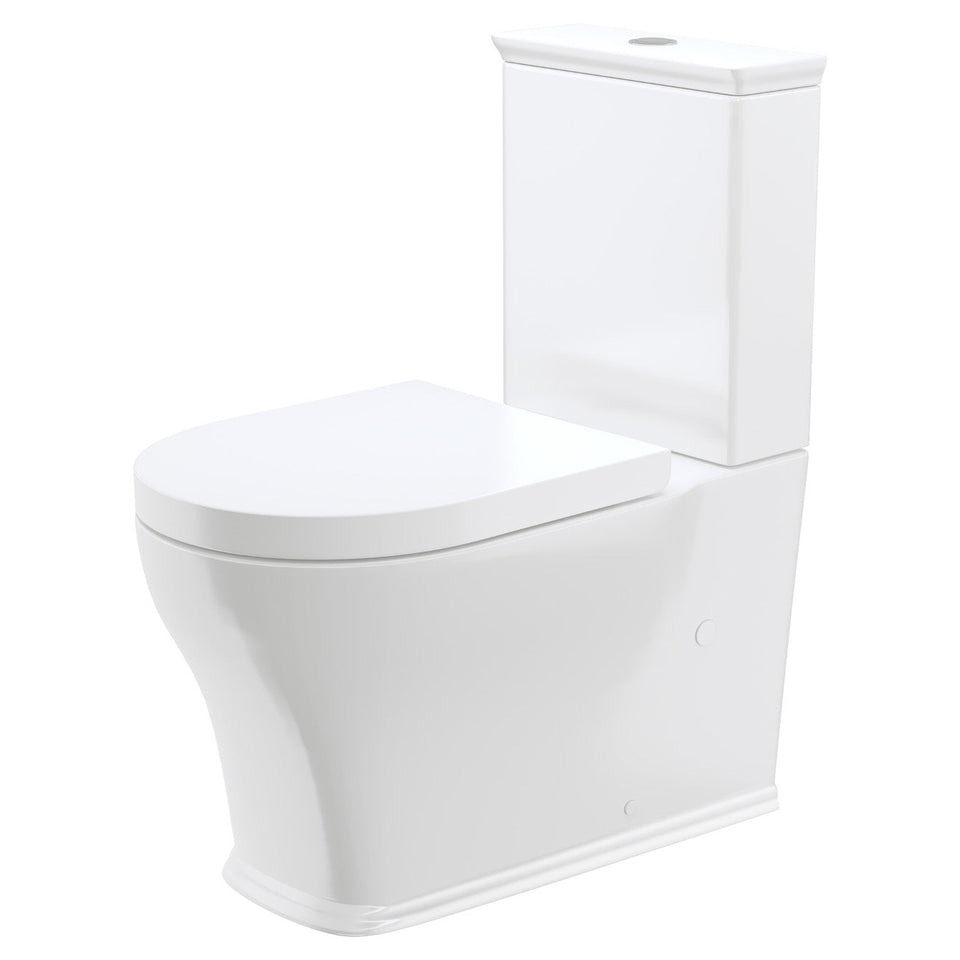
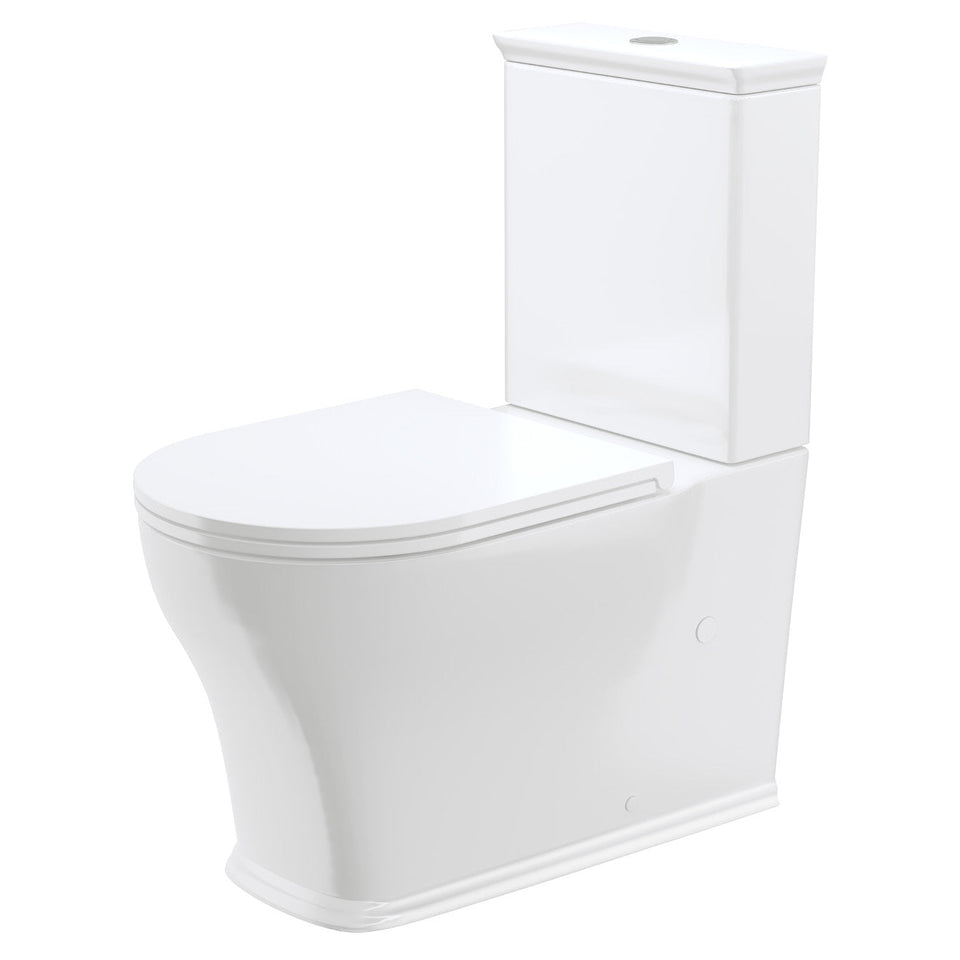

A heritage toilet suits a period renovation for reasons beyond nostalgia. Its mechanical simplicity means fewer components that can fail, its ceramic construction holds up to decades of daily use, and design details like curved lines and elevated cisterns give a bathroom genuine period character.
A traditional toilet uses a rounder pan silhouette, visible or semi-visible cistern detailing, and curved rather than angular lines, in contrast to the flatter, more geometric profile of a contemporary suite. Traditional designs often carry a slightly higher cistern position too, echoing older two-piece designs. Fienza's RAK Washington in this collection is a close-coupled suite that keeps the cistern sitting directly on the pan in the traditional way, which suits a heritage-style renovation more literally than a back-to-wall design.
Back-to-wall toilets conceal plumbing behind a wall or furniture unit, giving a cleaner appearance while retaining a classic profile, a practical option for a smaller bathroom. Close-coupled suites keep a more literal period look but need slightly more floor depth to accommodate the visible cistern. Check your existing waste position before choosing, since switching from close-coupled to back-to-wall can require moving the outlet.
If floor space is tight, Turner Hastings' Claremont range in this collection is built as a wall-faced pan paired with a Geberit Sigma in-wall cistern, which conceals the tank inside the wall cavity entirely while keeping the traditional pan shape visible. This suits a period bathroom where floor depth is limited but the classic silhouette still matters more than a fully exposed cistern.
Toilets connect via either an S-trap (floor outlet) or a P-trap (wall outlet), and this is fixed by your existing plumbing rather than a style choice. Fienza's RAK Washington is available in both a standard configuration and a dedicated S-trap version in this collection, so check your existing outlet position before choosing between them.
A slim seat gives a lighter, more contemporary edge even on a traditionally-shaped pan, while a thick seat leans into the period look more fully. Fienza's Lillian Tornado Flush suite in this collection is available in both slim and thick seat versions on the same pan shape, so you can adjust the look without changing the toilet itself.
This collection includes Fienza's RAK Washington and Lillian Tornado Flush ranges, Studio Bagno's Impero suite, and Turner Hastings' Claremont range, spanning close-coupled, back-to-wall and in-wall configurations. Browse the full toilets collection for contemporary alternatives, or see accessible toilets if raised-height or ambulant features are also a requirement.
A heritage-look suite sold in Australia still has to meet the same WELS water rating requirements as any modern toilet, and dual-flush mechanisms are standard across every traditional range in this collection. The styling is classic, but nothing about the flush technology inside is from the same era, so choosing a traditional look doesn't mean giving up modern water efficiency.


