
*View accurate shipping rates and availability






26 Items




Up to 70% off across the store, plus free towels and mirrors up for grabs on orders over $800*


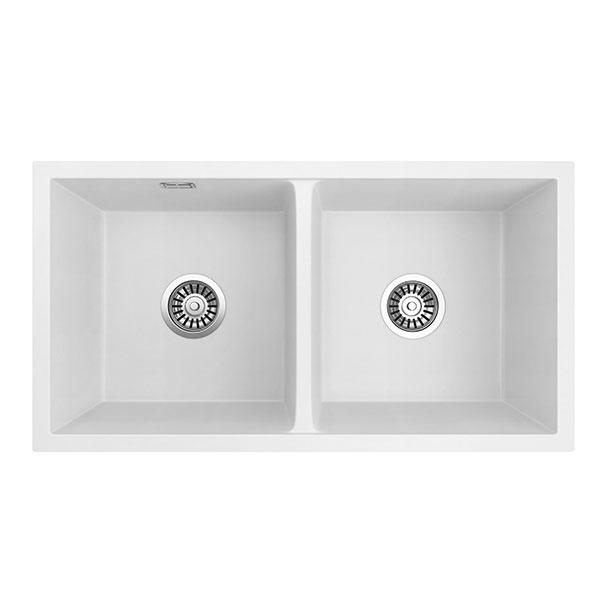



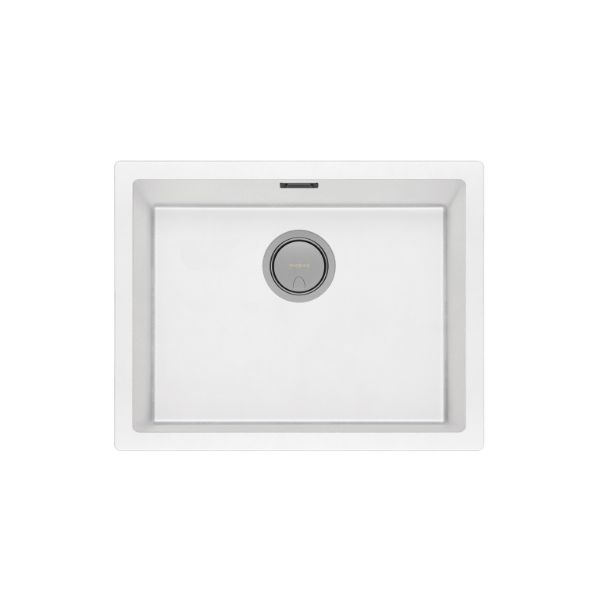
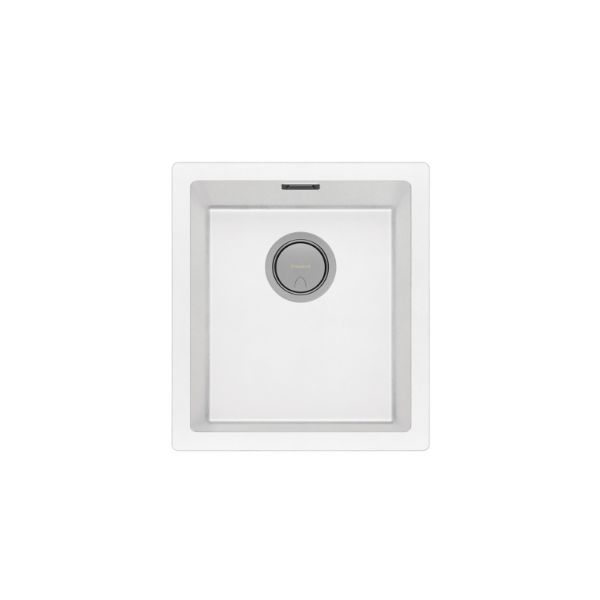
Granite and stone composite sinks are moulded from crushed stone, usually quartz, bound with resin into one solid piece. This collection brings together the Seima Oros, Rhodes and Icaria sinks in Arqstone natural quartz, and the Phoenix 5000 Series in quartz resin, all in matte black or matte white. They suit cooks who want a quiet, solid sink with a soft matte finish that ties in with stone benchtops.
A granite composite sink is made mostly of crushed stone mixed with a smaller share of resin, then moulded as a single unit. The names granite composite, quartz composite and engineered stone are used loosely for the same family. Seima calls its material Arqstone, a natural quartz, while Phoenix describes the 5000 Series as moulded quartz and resin. The result is dense, hard and matte rather than glossy.
Neither material is better in every kitchen. Composite resists scratching well, holds its colour and is much quieter, since the dense material does not ring when cutlery or pots hit it. Phoenix notes its 5000 Series is quieter than a pressed steel sink. Stainless steel is lighter, a little more forgiving when glassware is dropped and easier to fit in a light cabinet. Choose composite if you want a calm, matte look and lower noise. Choose stainless if weight or a classic metal finish matters more.
Composite sinks are heavier than stainless ones, so the cabinet and benchtop must be able to carry the weight. A heavy dropped pot can chip or crack the bowl, and dropped glasses break more readily than on steel. Limescale from hard water shows as a chalky film, especially on black, while white shows coffee, tea and wine stains sooner. A bottom grid or sink mat helps protect the bowl floor.
Wash with warm water, mild liquid detergent and a soft sponge, then rinse and dry with a microfibre cloth to stop water spots and limescale forming. For mineral build-up, a mix of one part white vinegar to three parts water usually lifts it. Phoenix advises against cream cleaners and citrus-based products on the 5000 Series. Avoid scouring pads, steel wool, bleach, drain cleaners and solvents on all composite sinks, and rinse away food dyes and vegetable juices promptly.
The range covers single, 1.75 and double bowl layouts. The Seima Oros runs from the compact Oros 550 at 552 x 440mm up to the 1160mm Oros doubles with a drainer, and features an integrated overflow and tight 10mm radius corners. The Phoenix 5000 Series is 220mm deep and runs from a 418 x 468mm single bowl to an 804 x 468mm double, each with a built-in overflow and centre rear waste. The Seima Icaria is a round bowl, and the Rhodes 900 is a wide single.
Most of these sinks can be fitted as an inset or undermount, depending on the model and benchtop. Inset sinks suit almost any benchtop, including laminate, because the rim covers the cut edge. Undermount fitting suits stone benchtops. Most have no tap hole, so the mixer goes on the benchtop. The Seima Oros 620 offers a tap landing with 0, 1 or 3 tap holes. Always work from the cut-out size on the specification sheet, and give the cabinet maker the sink before the benchtop is cut.
Compare stainless steel sinks and ceramic kitchen sinks, browse the Phoenix 5000 Series and Seima kitchen sinks, then pair your sink with kitchen taps from The Blue Space.


