
*View accurate shipping rates and availability






51 Items


Up to 70% off across the store, plus free towels and mirrors up for grabs on orders over $800*





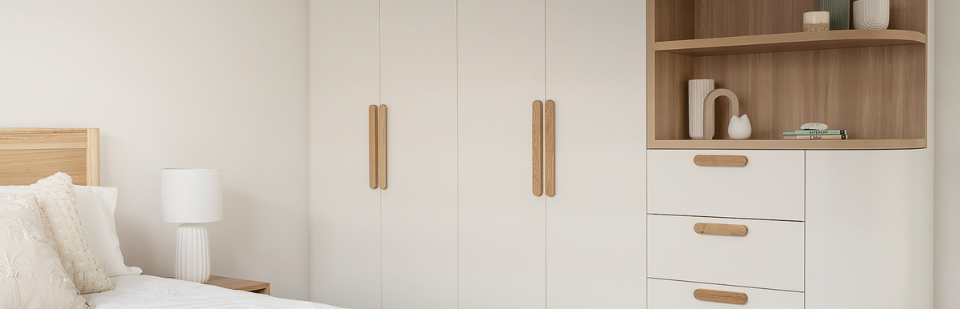


Momo Handles sorts its handles into three tiers: Premium, Designer and Project. This page holds the Premium tier, the one the brand positions for discerning customers, and every handle on it is solid brass. Six ranges sit here: Aspen, Belgravia, Bellevue, Manhattan, Sussex and Ara. You will find what the Premium tier is, how each range looks and measures, how solid brass and its finishes behave, how to choose a size, where to fit it and how to look after it. For the whole brand, start at Momo Handles kitchen and bathroom handles, and for handles in every maker and material, cabinet handles.
The Furnware Group owns and creates Momo Handles, and its own brand page describes three ranges. Premium is positioned for discerning customers who want superior quality in everyday use. Designer is a curated selection of designer handles aimed at elevating cabinetry. Project is a wider selection that still meets the group's durability and performance standards. The tier names a position in the line-up and not a single style, so the handles on this page do not look alike, and they are not meant to.
What they share is construction. Every Premium handle here is listed as solid brass, and the finish names repeat across the ranges: Bronze, Brushed Satin Brass, Dark Brushed Brass, Matte Black and Dull Brushed Nickel. That shared palette is the practical benefit of a tier. A kitchen can take a bar pull from one range, a knob from another and an appliance pull from a third, all in one finish, with the same metal underneath.
An Australian retailer calls the brand Australian-designed and premium, with solid construction and classic shapes that suit modern, coastal, Japandi, Hamptons and traditional interiors. A restoration retailer calls it a premium handle brand with one of the widest ranges of traditional and on-trend designs, recommended for kitchens, bathroom vanities and bedroom dressers. Both views point the same way. This tier is for people who want one coherent family of hardware across a house, and who will notice weight and finish every time they open a door.
The figures below come from the product listings. Hole centres, which the listings also call the fixing distance, are the gap between the two screw holes. Overall length is the whole handle, and projection is how far it stands off the door.
Across the whole brand, the range page lists these handle types: appliance pull, backplate, bar pull, cup pull, D handle, flush pull, knob, lip pull, round knob, square knob and T knob. The Premium tier covers bar pulls, pull handles, knobs, T knobs, backplates and appliance pulls.
The Aspen listing describes a classic design with a subtle stepped edge framing a flat face that catches the light. The pull has a contoured underside, which is the detail you feel as your fingers curl behind it. A pull and a knob come in all five finishes, so a run of drawers can take pulls while the doors take knobs.
The two pull sizes suit different doors. The 160mm size is 200mm long and sits well on a vanity drawer or narrow door. The 320mm size is 320mm long and suits a wide drawer front. Projection grows from 20mm to 30mm, so the larger pull stands further off the door and is easier to grip with a full hand.
The flat face and stepped edge give Aspen a quiet outline, which is why the listing calls it suitable for a number of interior design styles. On a flat-front door with no other decoration, it is the safest first choice in this tier.
Belgravia is the knurled range. The listing calls it an exquisite solid brass range with knurled detailing in a modern contemporary bar design, and it comes as a bar pull, a round knob and a T knob. A hardware retailer explains why knurling matters: the textured pattern gives the fingers something to grip and adds a tactile detail that a smooth bar lacks.
The bar pull comes in two sizes. It is 241mm long on 160mm centres and 404mm long on 320mm centres, and both project 38mm. That is a deep projection, so check that nothing on or beside the cabinet will catch on the handle. The round knob is 35mm across with a small round backplate, and the T knob is 82mm long. A kitchen can use the bar pull on the drawers, the round knob on the upper doors and the T knob on a pantry or tall door where a longer grip helps.
The Belgravia range has its own collection page, Momo Handles Belgravia cabinet handles, if you want to see the range on its own.
Bellevue is the largest range in the tier. The listing describes it as available as both a bar handle and a knob, completed by an integrated appliance pull handle, with solid brass construction and refined knurled details. It also lists a classic cabinet handle design with modern detailing, which is the range's main idea: a familiar shape made tactile.
That makes Bellevue the range to pick when one kitchen needs every handle type. The knurled bar pull handles drawers and doors, while the knob and knurled knob handle small doors. The backplate sits behind a knob where you want more visual weight, and the appliance pull is made for a long appliance front on 416mm centres. Because the finish names repeat across the range, the dishwasher pull and the drawer pull can match exactly.
The range comes both plain and knurled. A plain bar pull has a smooth surface and a knurled one has the texture. Mixing the two across a room works if the finish stays the same, because the shape is unchanged and only the surface differs.
The Manhattan listing says the collection draws inspiration from the New York City skyline, with refined linear detailing and a cylindrical design. It adds that Manhattan makes a statement when paired with the Sussex knob for a unified look. That pairing is the practical point of the two ranges: a cylindrical pull on the drawers and a matching knob on the doors read as one set.
The pull comes in a 200mm size on 160mm centres, projecting 25mm, and a 360mm size on 320mm centres, projecting 30mm. Both ranges use the same five finishes, and the Sussex knob is also listed in Brushed Brass. The Sussex listing describes a classic knob with bold linear detailing, suitable for kitchens, bathrooms and wardrobes.
Manhattan suits a cabinet run where the handles should read as clean, round and slightly industrial.
The Ara listing describes a bar pull grounded in natural forms, with an oak finish for natural warmth and texture, suited to coastal or Scandinavian interiors. The material line says brass, so the oak is a finish on a brass pull and not a timber handle. For solid timber handles, see timber cabinet handles.
It comes in two sizes. The 160mm centre size is 224mm long and the 224mm centre size is 284mm long, and both project 32mm. Ara is the quietest warm option in the tier, because the oak tone sits well against pale timber, white and soft grey.
A handle retailer that sells brass, zinc alloy and aluminium handles explains how they differ. Solid brass is heavier than zinc alloy or aluminium of the same size, feels more substantial in the hand and takes a wider range of finishes, while zinc alloy and aluminium are lighter. None of that makes brass the only good choice. It makes it the choice for people who want weight.
The same retailer points out that bare brass darkens over time, which is why almost every cabinet handle carries a finish. A finish slows the darkening and sets the colour. An English hardware maker explains the two kinds. Living brass is left without a protective coat, so it ages with use. Lacquered brass has a clear coat that keeps the colour as it was made. The finish decides how the handle ages. A brushed brass handle under a clear coat is still solid brass underneath, so a scratch shows more brass and not a different metal.
One caution applies to every coated finish. A coating can wear at the places the hand touches most. A matte black or bronze handle that is touched many times a day will show the base metal or a change of sheen at the grip first. That is normal wear and not a fault, and the care section below shows how to slow it.
For other solid brass handles, including those from other makers, see solid brass cabinet handles.
The finish names repeat across the six ranges, so you can pick one finish and use it through the house. A hardware retailer groups finishes by style: warm metals such as brushed brass suit traditional and transitional rooms, black is bold and modern, and nickel is cool and neutral.
The same retailer gives one rule for combining them. Limit a room to two metals, repeat each one at least twice so it reads as a choice, and carry the same finish through the house. Matching the tap finish to the handle is the simplest way to follow it. You can also contrast on purpose, for example matte black handles on white cabinets.
Bathroom vanities take the smaller sizes. A 160mm pull or a knob is enough for most vanity drawers, and a knob keeps the front clean on a narrow door. Bellevue, Manhattan and Aspen all carry a 160mm size. The cabinets they fit are at bathroom vanities and furniture.
Kitchens suit the larger pulls on wide drawers and a knob on small doors. The Bellevue appliance pull is the one handle in the tier designed for a dishwasher or an integrated fridge, and wardrobes and laundries suit the same sizes.
Coastal and Scandinavian rooms suit Ara and Brushed Satin Brass. Traditional rooms suit Bronze and Dark Brushed Brass, and modern rooms suit Matte Black and Dull Brushed Nickel. Those are matches and not rules, and the best test is a sample held against the door.
A hardware retailer's guide states a widely used rule: a pull is about one third the width of the drawer front. A drawer 600mm wide takes a pull of about 200mm, and a wider drawer takes a longer one. For fronts between roughly 450mm and 700mm wide, the retailer's table suggests 128mm, 160mm or 224mm centres. Beyond that, 256mm or 320mm centres, or two pulls, suit better.
For knobs, a retailer's size guide gives a range of about 25mm to 38mm across for most cabinet doors. The Belgravia round knob is 35mm, which sits inside that range, and the Aspen knob is 40mm, just above it. That reads as a larger knob on a larger door.
On doors, a pull or knob sits 40mm to 60mm from the edge that opens. On upper doors it sits near the bottom corner, and on lower doors near the top corner. The Belgravia and Manhattan pulls project 38mm and 25 to 30mm, so check clearance on a corner run where two doors open near each other. If the standard sizes do not fit the door, see cabinet pull handles and cabinet knobs for more.
A backplate sits behind a knob and adds visual weight. A hardware supplier's guide describes backplates of about 35mm to 50mm that make a small knob look larger. The Bellevue range has a solid brass knob backplate in the same finishes, and the Belgravia round knob has a small round backplate built in.
An appliance pull is a long handle for the front of a dishwasher, a fridge panel or an oven door. The Bellevue appliance pull is listed on 416mm centres, in plain and knurled versions. For other appliance pull options, see appliance pull handles.
When replacing existing handles, match the hole centres. The listings give them as 160mm, 320mm or 416mm, and a new pull with the same centres will go into the existing holes without drilling. If the centres differ, the old holes will show, and a backplate can cover them.
Fixings matter. A cabinet-handle guide on this site recommends screws chosen for the thickness of the door. A typical door of 16mm to 18mm takes a screw long enough to bite but short enough not to come through the face. Fit pulls horizontally on drawers and vertically on doors, and mark the holes with a template before you drill. A paper template taped to the door lets you see the handle position before you commit, and a hardware retailer recommends the same tape test.
Before you fit a whole kitchen, buy one sample and hold it in place. Open the door with it, check that your hand clears the edge, and look at the finish in the room's own light. A finish that looks right in a showroom can look different under warm kitchen lights.
Care depends on the finish. A coated handle needs only a soft cloth and mild soapy water, wiped dry. A handle supplier cautions against abrasives, and an English maker warns specifically against brass polish on lacquered brass, because the polish strips the clear coat and leaves patches. A living finish can take polish, but none of the five finishes on this page is sold as living brass, so treat them all as coated.
Wipe the grip area more often than the rest of the handle, since a coating wears first where the hand touches.
For the full brand, see Momo Handles kitchen and bathroom handles. For other materials and finishes, see cabinet handles, solid brass cabinet handles and timber cabinet handles.


