
*View accurate shipping rates and availability






5 Items


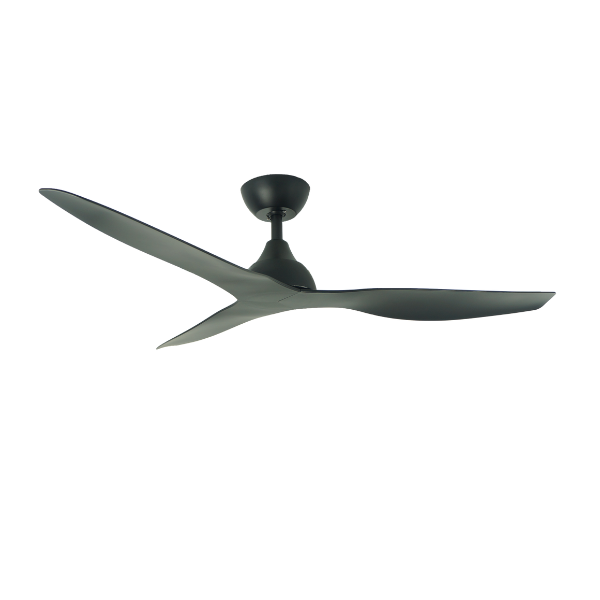


A ceiling fan cools the people in a room by moving air across the skin, and can run in reverse in winter to push warm air down from the ceiling. This collection holds ceiling fans from Fanco, Eglo, Martec and Brilliant, in DC and AC models, with and without lights, for bedrooms, living areas and covered outdoor spaces. It suits anyone looking for lower running costs than air conditioning on warm days.
A 52 inch (132cm) fan suits most living rooms and larger bedrooms. A 48 inch (122cm) fan, such as the Fanco Eco Silent Pro, suits smaller bedrooms and studies. Fans of 54 inch (137cm) and above, such as the Fanco Infinity-iD v3, suit larger square rooms of about 5 by 5 metres or more. Long, narrow rooms often do better with two fans than one very large one.
Fan blades must sit at least 2.1 metres above the floor, and ideally between 2.1 and 2.4 metres. Keep the blade tips at least 300mm from walls. On a 2.4 metre ceiling, choose a low profile fan so the blades stay above the minimum height.
DC fans use less power, are quieter, offer more speed settings and usually come with a remote. AC fans cost less up front and are often compatible with a simple wall controller. Most fans in this range are DC, including the Eglo Noosa, Fanco Horizon and Martec Quantum. The Fanco Breeze and Eglo Cabarita are AC options.
Choose one if the fan will replace the main ceiling light, since it uses the same ceiling point. The Martec Quantum has a 24W tricolour LED light and the Eglo Seacliff a 15W CCT light, both letting you choose the colour of the light. If the room already has downlights, a fan without a light keeps things simpler.
Only under a solid roof that keeps rain, spray and condensation away. For a covered patio with open sides, choose a fan rated for outdoor use. For coastal homes or areas that get sideways rain, look at coastal rated fans with a sealed motor and weather rating.
In Australia, a ceiling fan must be installed by a licensed electrician. The fan needs to be fixed to a ceiling joist or a rated mounting bracket, as a fan exerts more force than a light. Tell your electrician whether you want a remote, a wall control or both, as the wiring differs.
Narrow the choice with DC motor fans, ceiling fans with lights, outdoor ceiling fans and large fans, or add a remote or down rod from fan accessories at The Blue Space.


