
*View accurate shipping rates and availability






53 Items

Up to 70% off across the store, plus free towels and mirrors up for grabs on orders over $800*
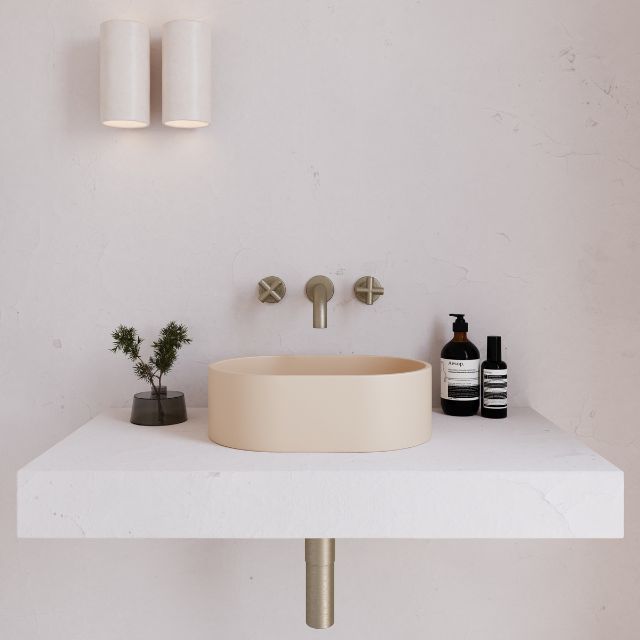
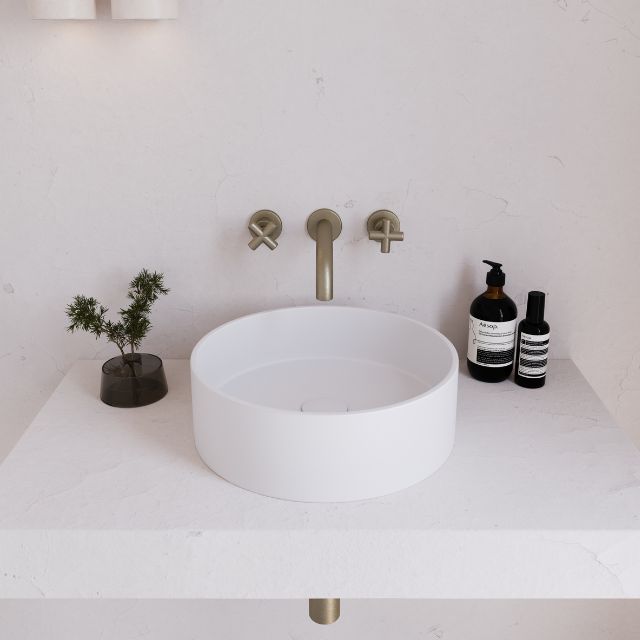
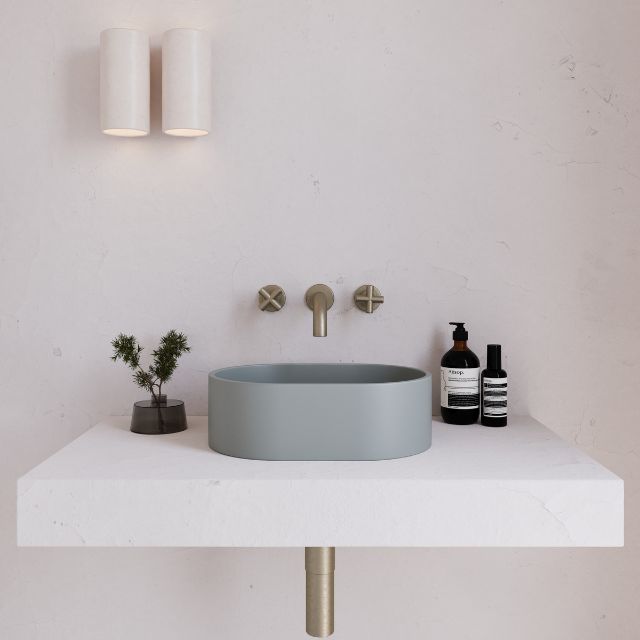

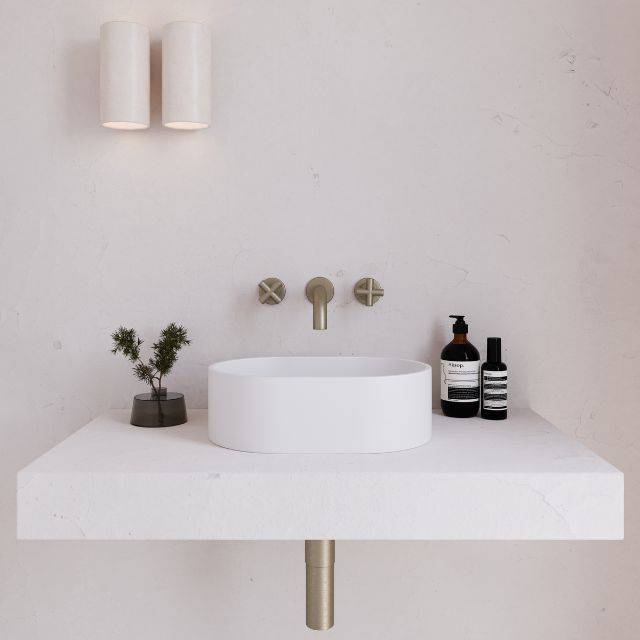
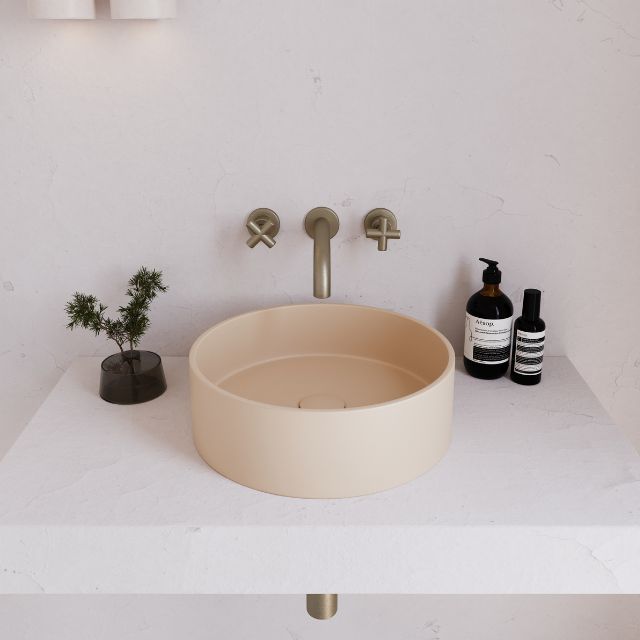
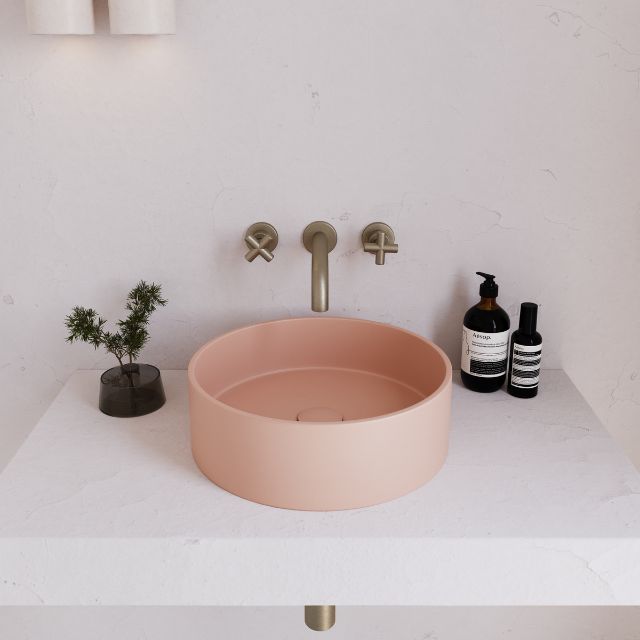
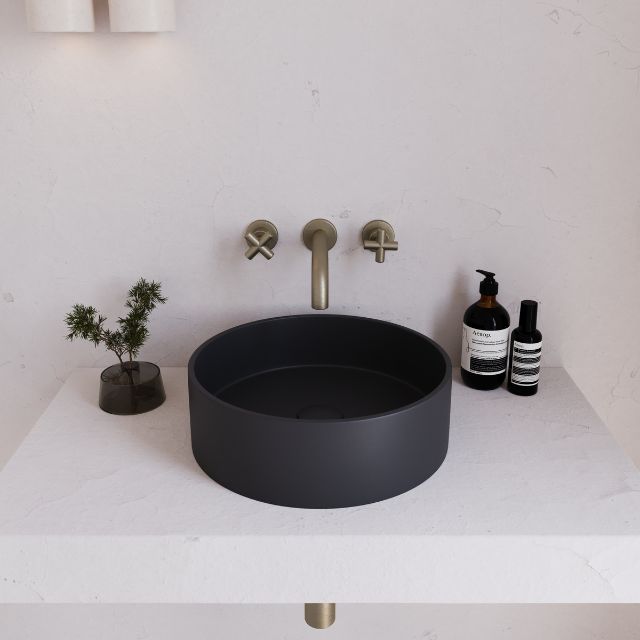


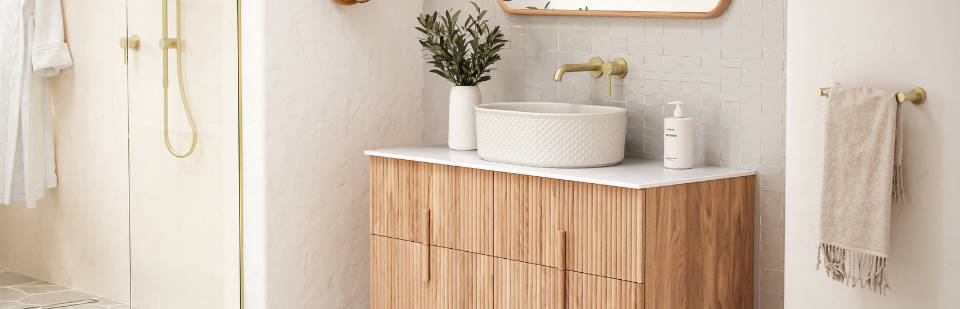


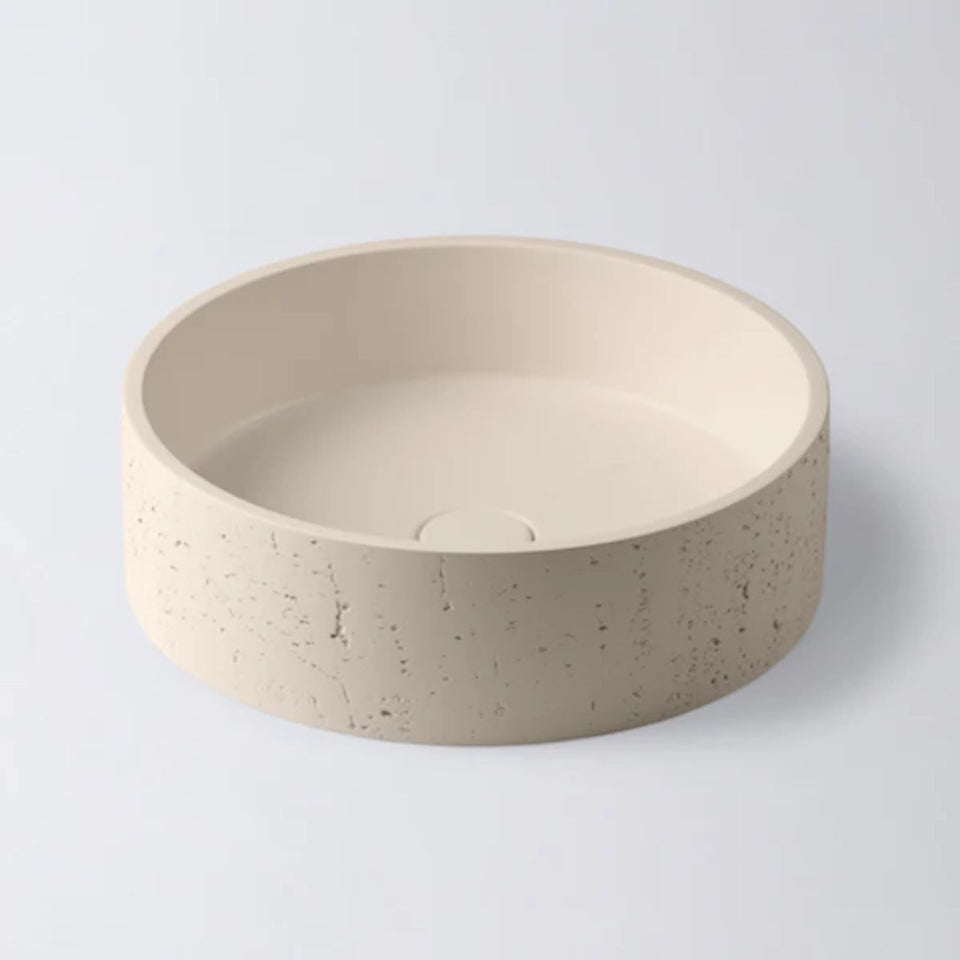
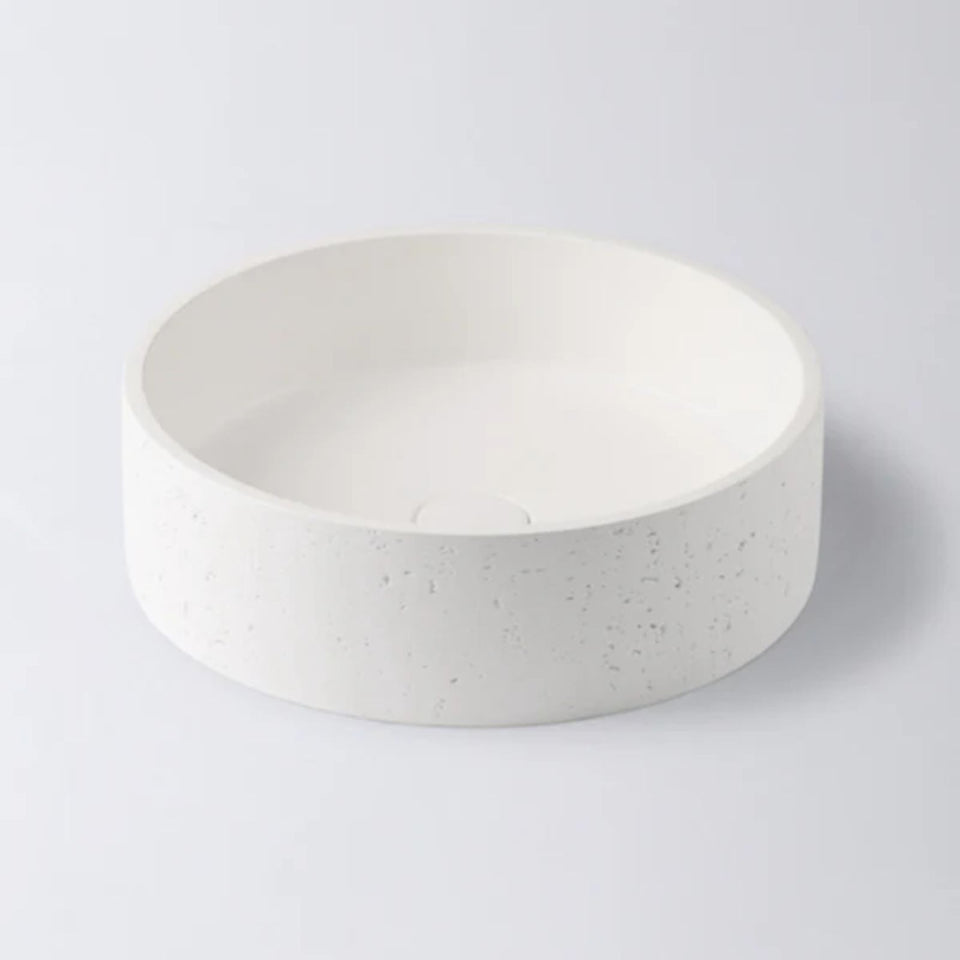
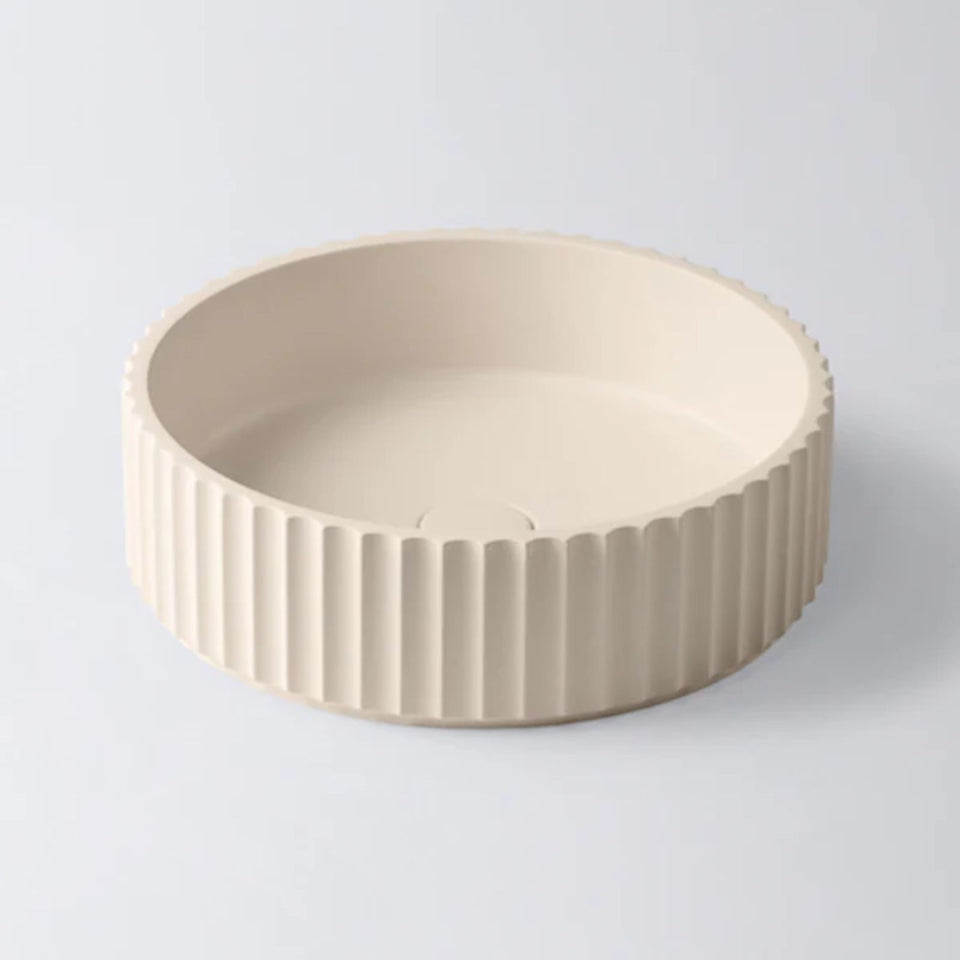
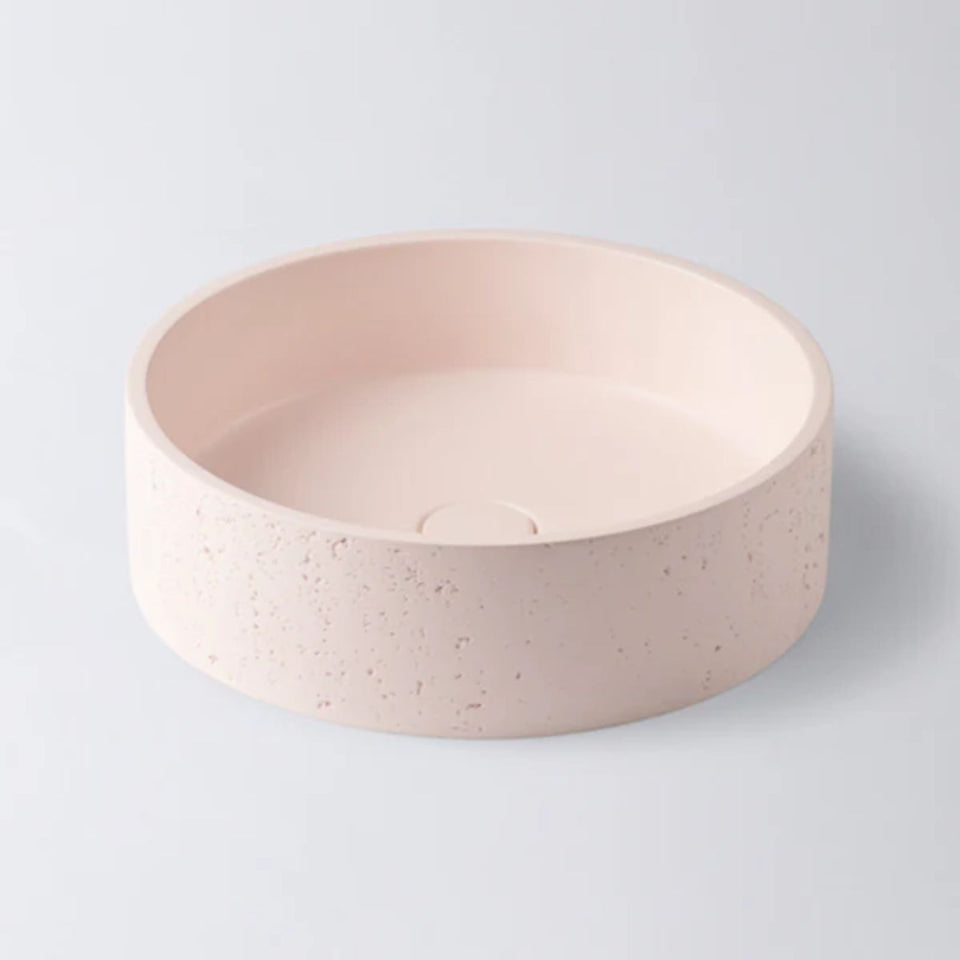
A concrete basin, sometimes searched for as a concrete sink or cement basin, is a basin cast in concrete and sealed so it can sit in a wet room. This page holds concrete and terrazzo basins from Fienza, Eight Quarters, ADP and Otti, mostly above counter, with a few wall hung, in round, oval, pill, arch and fluted shapes. The guide below answers the questions people ask before they buy: what the material is, whether it is a good idea, how it is sealed and cleaned, how heavy it is, and what to read on the listing about taps and waste. Each fact below is attributed to a listing, a maker's care page or an installation guide.
Makers describe the material in different ways. Some Australian makers pour glass fibre reinforced concrete, known as GFRC, and seal it in coats. The Fienza listings describe concrete with a food-grade nano sealant, and the Eight Quarters listings describe concrete and terrazzo basins that are pre-sealed and need no further treatment. Terrazzo basins have chips set in the base. The Eight Quarters terrazzo circle listing in the Como colour describes a white base with chips in black, white, grey and ochre. It notes that each basin has its own fleck pattern and may vary from the basin pictured. Whichever the material, the sealed surface is what you wash in, so the sealer matters as much as the concrete under it.
They are a good idea where the surface is the feature and the household will follow the care rules. A stockist guide lists the advantages: a striking appearance, almost any shape and size, a colour range, low upkeep once the basin is sealed, hard-wearing material, and repairability, since concrete can usually be resealed, repaired or patched. The same guide lists the trade-offs just as plainly. Concrete is naturally porous, so it needs sealing to resist stains and moisture. The finish can differ from the sample, and the basin is heavy, so the vanity or the wall has to carry it.
Both trade-offs show up on the listings. Fienza notes that the colour may differ from its images because of the high colour variation in concrete, and the Eight Quarters listings suggest ordering a sample to see the colour in real life. If you want a basin that looks the same every time, ceramic is the more uniform material, and the ceramic basins page covers it. If you want a surface with character, concrete is the better call.
Concrete needs the sealed surface kept intact. Maker and stockist care pages agree on the rules. Rinse the basin with warm water after use and dry it with a soft cloth to avoid water spots. Use a pH-neutral cleaner, such as mild washing-up liquid on a soft microfibre cloth, because acidic or alkaline cleaners can corrode the sealer and let liquid into the concrete. Avoid bleach, ammonia, abrasive scrubs, steel wool and scourers, and avoid acids such as vinegar, lemon juice and wine, which can etch the surface. Do not put very hot hair tools on it, and avoid pouring boiling water into the basin, since rapid temperature changes can cause thermal cracking.
For stains, one care guide suggests dish soap on a damp cloth, rubbed gently over the affected area and rinsed, and a baking soda paste used sparingly for oil or make-up marks. A maker's guide says scratches usually affect only the sealer and can be polished out. How often to reseal depends on the maker: one care guide gives no interval, a maker's guide says to reseal regularly, and the Eight Quarters listings say the basins are pre-sealed and recommend a wax polish every 6 months to keep the original appearance. Follow the instructions that come with the basin you choose.
A stockist warns that concrete is heavy, so a wall hung vanity and its stud frame must be able to support it, and a maker's guide says its floating sinks are held on heavy-duty steel brackets fixed to wall studs. Maker installation sheets require wall hung furniture and basins to be fixed to a support beam fitted between the studs, with support noggins added before the wall is sheeted. The Fienza Valentina concrete wall basin includes extra heavy duty mounting brackets and bolts, and the wall hung basins page covers how the wall is prepared. Water connections need a licensed plumber.
Every concrete basin on this page is listed with no tap hole, so the mixer mounts on the bench behind the basin or on the wall. The Otti Hudson fluted basins say they are compatible with a 12 o'clock tap position or none for wall tapware, and not recommended with 10 or 2 o'clock. An above counter basin raises the rim, so it takes a tall basin mixer or a wall mixer; see above counter basins, basin mixers and basin wastes.
No concrete basin here has an overflow. The Fienza listings say the basin needs a 32mm non-overflow waste, which is not included, and the Eight Quarters concrete listings give a 32mm plug and waste as sold separately. The Eight Quarters terrazzo basins are supplied with a colour matched pop-up plug and waste, the ADP listings sell the plug and waste separately, and the Otti Hudson lists a pop-up waste as sold separately. Read the plug and waste line before you order, because it decides whether the basin is ready to fit.
The Eight Quarters concrete circle is 390mm by 390mm and 125mm high, with a 10.2 litre bowl, and the Mini Pod is 400mm by 280mm and 120mm high, with a 7.5 litre bowl. The Fienza Jada round basin is 390mm across and 120mm high and holds 10 litres, the Jada pill is 600mm by 280mm and 120mm high and holds 12.3 litres, and the smaller Alba round is 362mm across and 145mm high and holds 7.2 litres. The ADP Jean is 400mm round with an 8.5 litre bowl, and the ADP Norma is 550mm by 350mm with a 10.5 litre bowl. The Otti Hudson fluted basins come as a 400mm round, a 520mm square and a 600mm oval. For wall hung sizes, the Fienza Valentina fluted arch basin is 465mm by 360mm and 119mm high, and the Blanca is 650mm by 300mm and 200mm high with an 8 litre bowl. Pick the size the bench can carry with room left for the mixer. Small hand basins lists the compact sizes.
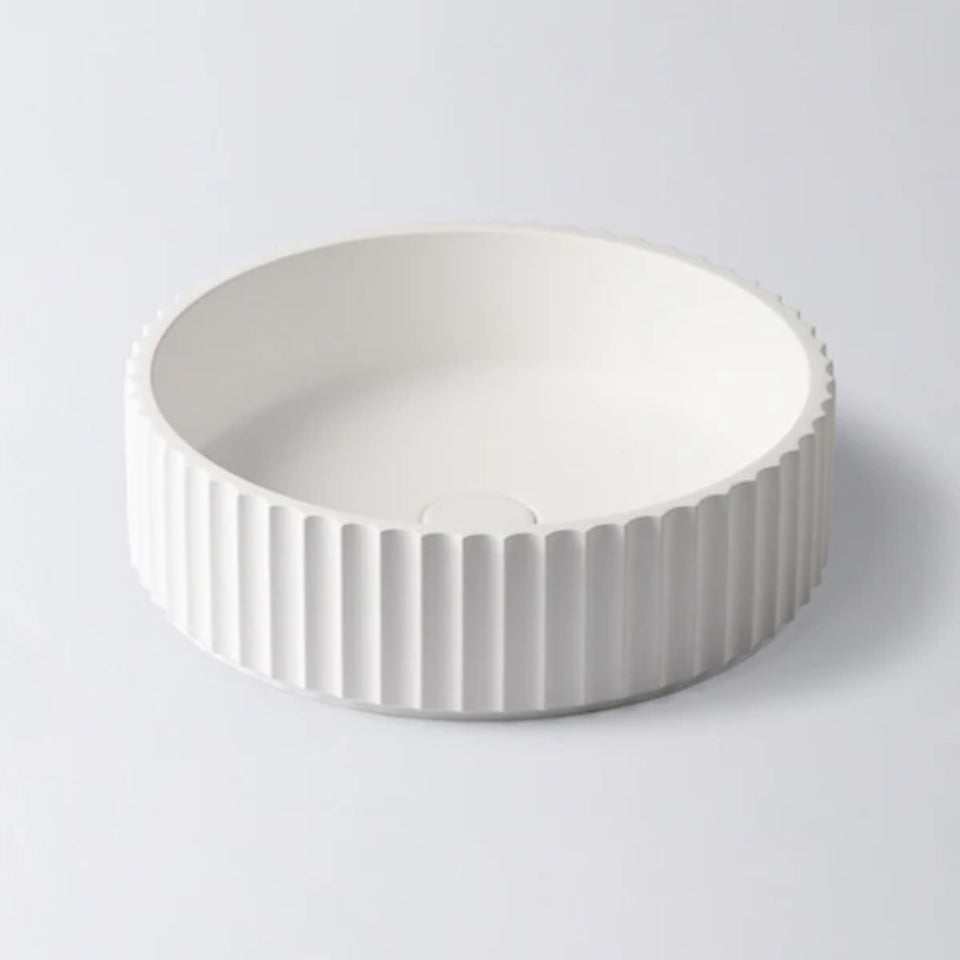
Concrete suits shapes that ceramic finds harder to hold. The range includes round, oval, pill and arch basins, and fluted basins with vertical ribs. The colours here include oat, white, blush, grey, charcoal, sage, tuscan, warm grey and warm white, and terrazzo mixes with flecks of black, white, grey and ochre. A maker's care page notes that textures run from polished to ribbed, and pinprick holes are a natural feature of some pours, so look at the finish on the listing before you decide.
The question people ask most about a concrete basin is how often to reseal it, and no single answer holds across the sources. A UK maker's installation and care guide for a concrete countertop basin says to clean with warm soapy water, dry with a soft cloth and treat the basin with a specially formulated wax every six months. The Eight Quarters listings give the same six month wax. An Australian retailer, as reported in a search result, says to seal a concrete basin every year or two to keep water out. A New Zealand retailer's care guide says the sealant is not permanent and may need resealing every few years, depending on use, sun and how much water the basin sees. Several other guides say reseal regularly and give no interval, and the Fienza sheets give care steps and no resealing steps.
The honest summary is that wax every six months is the one interval two makers agree on, and a sealer interval of one to a few years is the range retailers give, with no test behind either. A practical check is the one a search result suggests: start with a yearly check, and look at whether water still beads on the surface. If it soaks in, the sealer needs attention. Ask the supplier of your basin which product and which interval its maker uses, because a maker's own sealer can override general advice. Search results also say the areas around the waste hole are the weak points for hairline cracks, because water flows there most, so seal around the waste when you fit it.
The UK maker's guide lists nine steps for a concrete countertop basin, and they show what the fitting involves even though the product is not on this page. Check the local plumbing and building codes and inspect the waste and plumbing, replacing them if necessary. Trace the template on the countertop to map the basin, taking the tap dimension into account, because a basin too near a wall can cause problems with the tap's drain lift rod. Drill the waste and tap holes precisely, position the basin in the opening and adjust it to fit, then remove it and install the tap and waste according to their instructions.
Apply sealant to the bottom of the installation area and press the basin down firmly. The guide says you must not use epoxy resin as a sealant, and that doing so voids the maker's cover. Wipe away excess sealant at once, fill any voids and check the basin does not move. After the sealant has cured for at least 30 minutes, connect the tap supply lines and the waste, open the tap valves to check for leaks, and clean the basin with a non-abrasive, non-acidic cleanser. Other makers of above counter basins give different sealant rules, such as dots of non-acidic silicone at no more than three points, so follow the sheet for your basin.
A search result for one brand's care guide says to use a new concrete basin lightly for the first 7 days, avoid placing objects in it during that time, and expect scratch resistance after 28 days. That is one brand's guide and none of the Fienza or Eight Quarters pages gives a curing period, so ask the supplier if your basin needs one. A New Zealand retailer's guide says concrete expands when heated, so avoid excessive localised heat, and that direct sunlight can slowly discolour concrete over a long period, which is a reason to think about where a basin sits near a window.
Three questions come up beside this keyword. The first, whether concrete basins are a good idea, is answered above: they suit a household that wants the surface as a feature and will follow the care rules. The second, whether they are hard to clean, has a plain answer from the care guides. A New Zealand retailer says sealed concrete basins are very easy to maintain, and the cleaning is a mild non-abrasive cleaner, a wet cloth for dried spills and a non-acidic non-abrasive cleaner for stubborn stains. The effort is in what you avoid: scouring pads, high-pH products such as paint strippers, bleach and nail polish remover, and forceful scrubbing that can remove the sealer.
The third is how to make a concrete basin, and this page does not cover it. The sources are written for buyers of finished basins, and they describe glass fibre reinforced concrete poured in moulds and sealed in coats, which is a manufacturing process and not a home method. If you want to make a basin, a concrete maker's own guidance is the place to start, and the listings here describe finished basins.
This page holds concrete and terrazzo together. A reference source describes terrazzo as a composite of marble, quartz, granite or glass chips in a cementitious or polymeric binder that is ground, filled, polished and sealed after curing. It says alkalis and acids can break down binders and strong acids can attack marble chips. That is general terrazzo guidance, mostly written for floors, and no basin-specific care for terrazzo was found. Stone composite basins, such as the Kaskade range, are described by their listings as composite resin stone with a matte finish that can be cleaned with mild detergent and sanded for scratches, which is a different routine. Glazed ceramic has a glass-like surface that needs no sealer. See stone basins, solid surface basins and ceramic basins for the alternatives.
The listings on this page rarely give a weight, but the Fienza concrete spec sheets do, and they show how far concrete basins differ in load. The 362mm Alba round is 7kg, the 390mm Jada round is 9kg, the Valentina wall basin is 12kg and the Blanca wall basin with a shelf is 22.5kg. Add the water: the Blanca holds 8 litres, which puts about 30kg on its brackets when full, and the 10.5 litre Valentina puts about 22kg on its own. A bench basin spreads its weight across the bench, and a wall basin concentrates it on two brackets, so the wall is the place to be careful. The Eight Quarters listings give no weight, so ask the supplier before you plan a floating vanity.
A short list covers what the listings on this page can and cannot tell you. The tap hole line is none on every basin here, so the tap goes on the bench or the wall. The overflow line is none, so the waste must be a non-overflow one, and the listings give a 32mm size for several. The plug and waste line tells you whether the basin is ready to fit, because some include a matching waste and some sell it separately. The size line gives the footprint and the height above the bench, which sets the rim height. The colour note tells you whether the maker promises a match to the pictures, and the sample line tells you whether a sample exists. The care and weight lines are the ones that most often go missing, so ask for them in writing.
Browse Fienza basins, Eight Quarters, ADP basins and Otti basins for the full ranges. The Fienza concrete basins and Eight Quarters concrete basins pages narrow the choice to one maker.
The bathroom basins page sets concrete basins beside the other materials, and stone basins and solid surface basins cover the other cast and cut options. For the cabinet that carries the basin, see bathroom vanities.


