
*View accurate shipping rates and availability






165 Items


Up to 70% off storewide, free metro shipping over $500, and free gifts from $800. Spend more to unlock luxury towels and mirrors.*








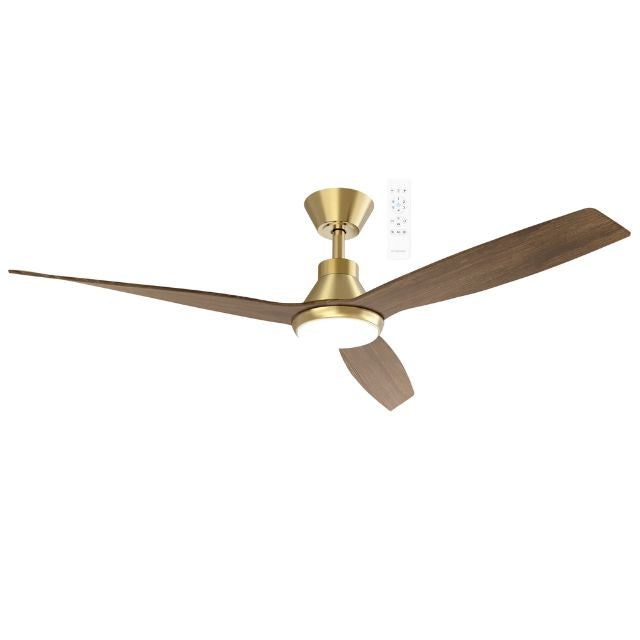


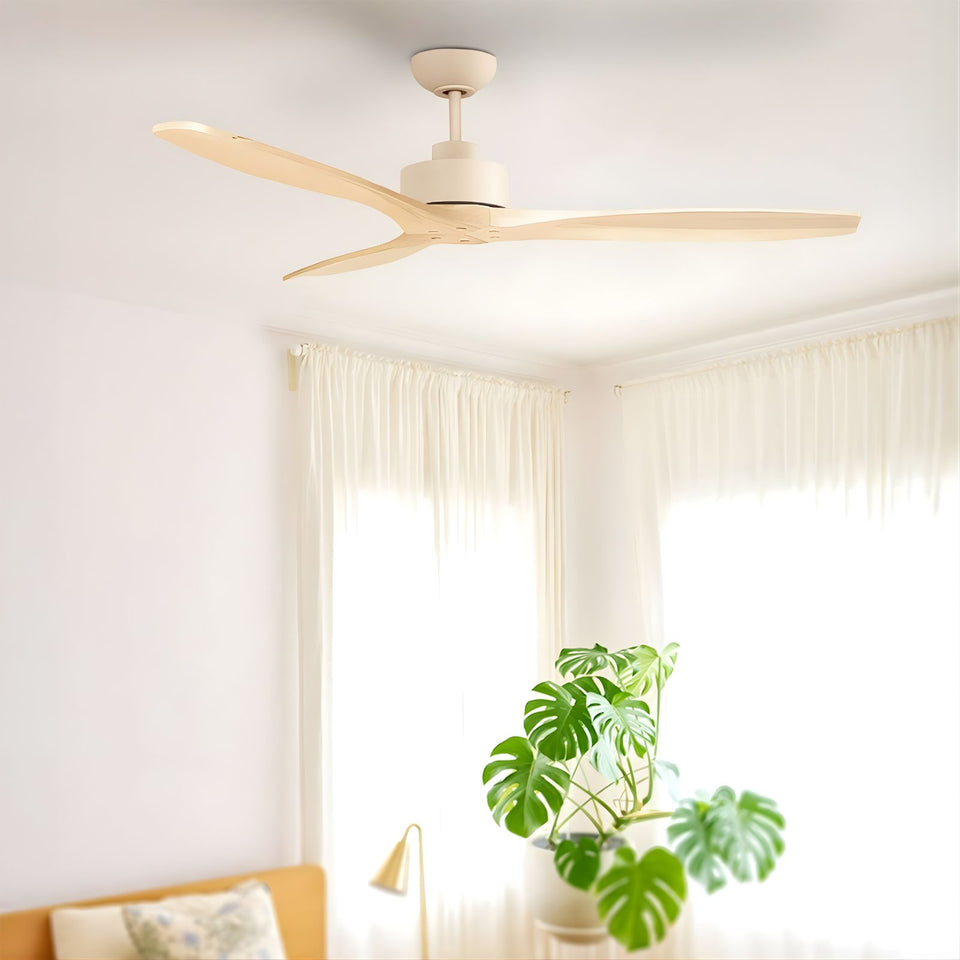

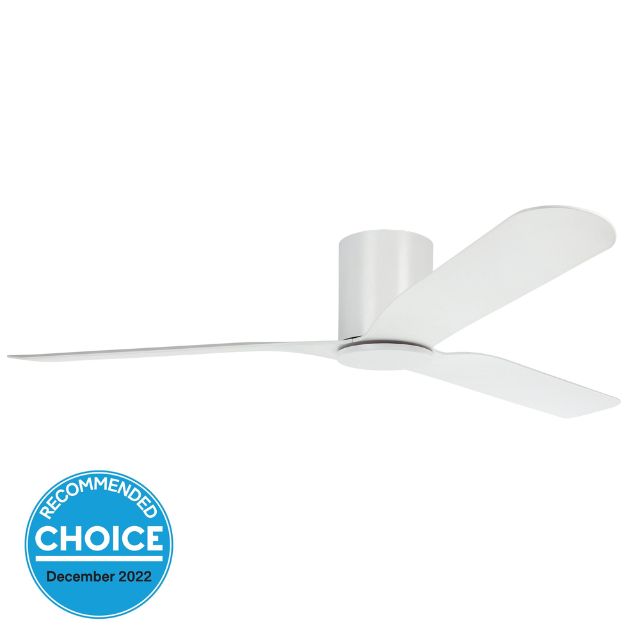


Under a ceiling of 2.7 metres, one number decides the fan: how far it hangs below the ceiling. The blades have to stay at least 2.1 metres above the floor, so the question for any model is what is left once its drop is taken from your ceiling height. This guide works that arithmetic through for the ranges in this collection at 2.4, 2.5 and 2.7 metres, using the drop or overall height of each fan. It then covers what changes the answer: a light, the pitch of the ceiling, the span and the walls.
The minimum blade height is 2.1 metres above the floor. A standard fan on a downrod drops about 300mm, which is why a room under 2.4 metres generally needs a close-fitting fan. The arithmetic is simple. On a 2.4 metre ceiling, a fan that hangs 300mm leaves the blades at exactly 2.1 metres. Every extra millimetre of drop takes the blades under the minimum, and every millimetre saved adds clearance.
Most Australian ceilings are 2.4 metres, and older homes built before the current ceiling height rules often have lower ones. Ceiling heights of 2.1 to 2.4 metres give the best performance, and ceilings of about 2.7 to 3 metres or higher may need an extension rod. That is the reason 2.7 metres is the working line for this collection. Below it, a fan fixed close to the ceiling is the norm. Above it, a rod starts to make sense, and ceiling fans for high ceilings takes over.
The figures below are arithmetic from the drop or overall height of each fan, and the real blade height depends on the fan's geometry, so the electrician should confirm it. Ranges are grouped by what they leave at 2.4 metres.
Clear of the minimum by a comfortable margin, about 2.14 metres or more:
Just over the minimum, between 2.10 and 2.14 metres:
Under the minimum on a 2.4 metre ceiling:
Read together, a 2.4 metre ceiling takes the first group without trouble, the second only just, and the third not at all. A ceiling of 2.5 metres adds 100mm to every figure. That brings the second group to between 2.20 and 2.24 metres and lifts the third group over the line, with the standard Iluka, the tallest in the collection, leaving about 2.16 metres.
At 2.7 metres, the tallest fan in the collection leaves about 2.36 metres and the shortest about 2.5 metres. Every range clears the 2.1 metre minimum with room to spare, and the choice moves from clearance to comfort. Mount a fan 2.3 to 2.7 metres above the floor, ideally between 2.4 and 2.7 metres, because air thrown from a higher blade has farther to travel before it reaches people. On a 2.7 metre ceiling a fan on a short drop is therefore in the sweet spot, and a hugger is unnecessary unless the look matters. Above 2.7 metres an extension rod may be needed, and rods are sometimes included, sometimes sold separately and not available for every model.
The light is the most common reason a fan that clears on paper does not clear in the room. The lit Martec Avoca hangs 331mm against 263mm without a light, a difference of about 70mm. The Seacliff goes from 234mm to 258mm, and the Hampton from 295mm to 320mm. Many models are sold as light or no-light versions only, so decide before you buy, and check the figure for the version you choose. If a ceiling is close to the limit, the version without a light is the safer pick, and a separate light fitting does the lighting.
A fan near downlights can also strobe as the blades pass in front of them. A fan with its own light avoids that, but the height matters more on a low ceiling. See ceiling fans with lights and ceiling fans without lights.
A low ceiling is sometimes a sloped one too, and then the pitch limit matters. Fans generally handle about 10 degrees of ceiling tilt without a kit, 20 to 40 degrees usually needs a raked ceiling kit and a longer rod, and low profile or no-rod fans may not suit angled ceilings. The limit for each range:
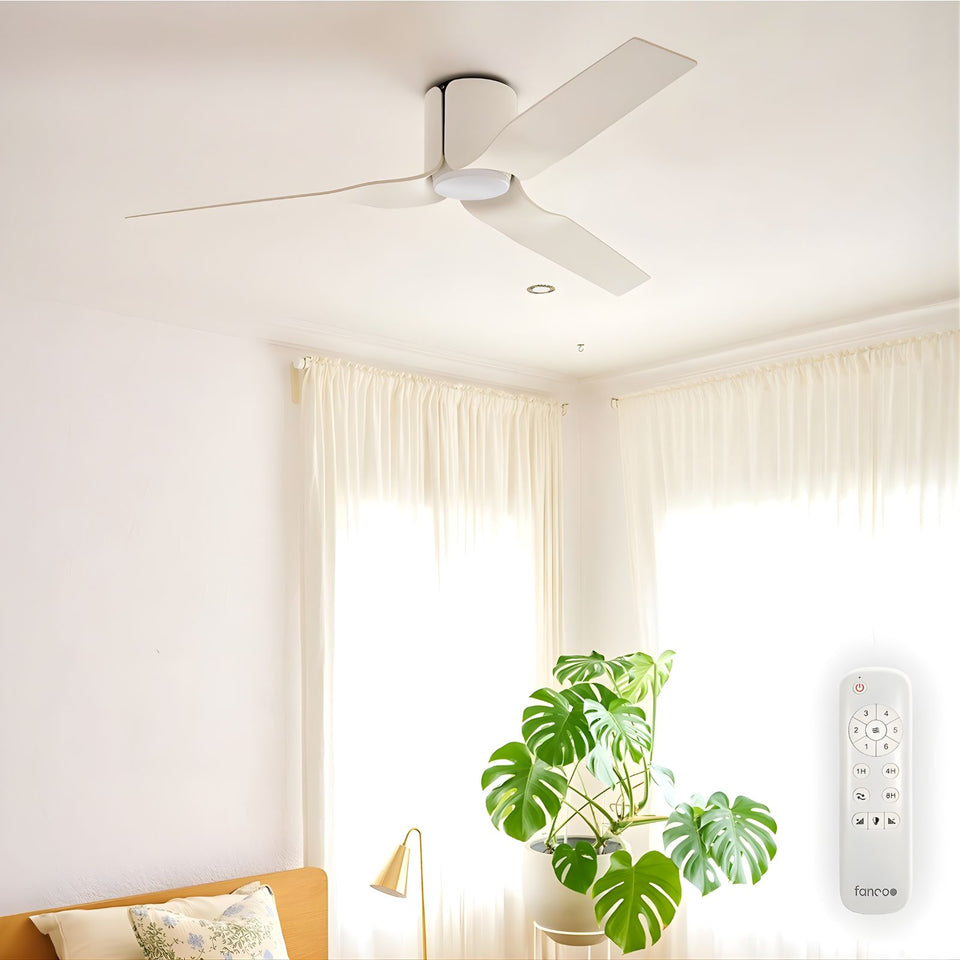
The true huggers here are the Martec Metro and Fresno and the Eglo Iluka hugger. The Seacliff, Fantom and Waikiki are close behind on height. The Fanco Flow, EarthFirst Gaia and Wynd V3 are hugger or low profile fans. They have no published height or drop, so confirm the figure with us before using one on a low ceiling. See low profile fans for the full hugger group and how to choose among them.
A low ceiling and a small room often go together, and the span has to suit the room as well as the height. A 52 inch (132cm) fan is the standard size, 48 inch (122cm) suits smaller rooms, and over 54 inch (137cm) suits larger square rooms of about 5 by 5 metres or more. By area, 12 to 20 square metres pairs with a 52 to 60 inch fan. The collection runs from the 40 and 44 inch fans for a study to the 60 inch and larger for a living area.
Wall clearance figures vary, so use the larger figure when the room allows it. Blade tips should stay at least 50 centimetres from walls, and never closer than 300mm. For Martec fans about a metre is the better figure, ideally with the fan centred in the room. On a low ceiling, also check what hangs below the blades, such as a pendant light or a curtain track. A slightly larger fan on a lower speed can move the same air as a smaller fan on high and can be quieter, which helps in a small room where a big fan on high would feel too strong. See small fans and medium size ceiling fans.
On a low ceiling the fan sits closer to your head, so noise is easier to notice. AC motors are the older type and usually have three speeds, while DC motors are now the most common, are more efficient and offer up to seven speeds, and DC fans use less electricity than AC on average. Most of the fans in this collection are DC. The Eglo Bondi and Waikiki are AC with three speeds, and the Waikiki's remote is an optional extra, so check what comes in the box. Try a bedroom fan on its lowest speed, because clicking or knocking is more irritating than general fan noise. See DC motor fans and quiet operation fans.
A ceiling fan is a fixed electrical appliance, and hard-wired fans must be installed by a licensed electrician. Fitting a wall-switch fan without a licence is illegal. A close-fitting fan has little rod to absorb movement, so the fixing matters. The electrician checks that the ceiling support can carry the weight, and a balance kit corrects a wobble, which adds noise and wear. Wipe the blades every few weeks, and have the fan inspected early if it hums, wobbles or runs slowly.
For every style see ceiling fans. For the opposite problem see ceiling fans for high ceilings, and for close-fitting fans low profile fans. By brand, Martec ceiling fans and Fanco ceiling fans.


