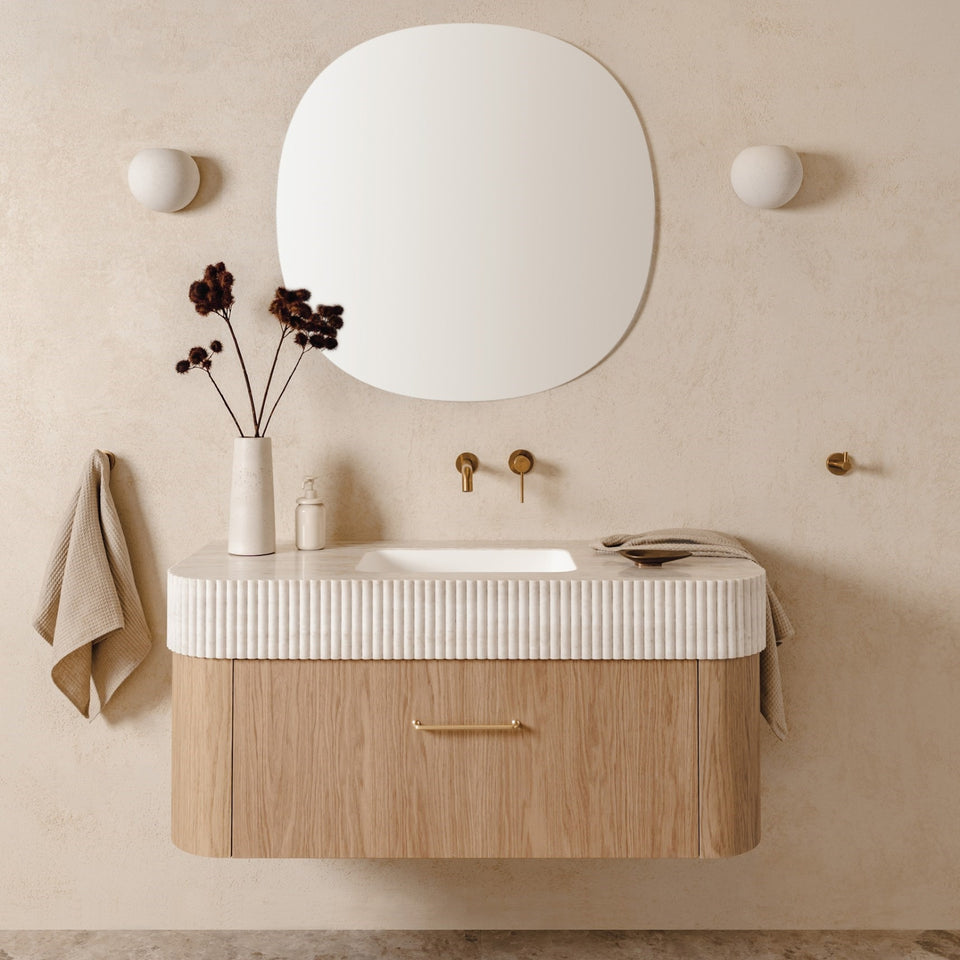
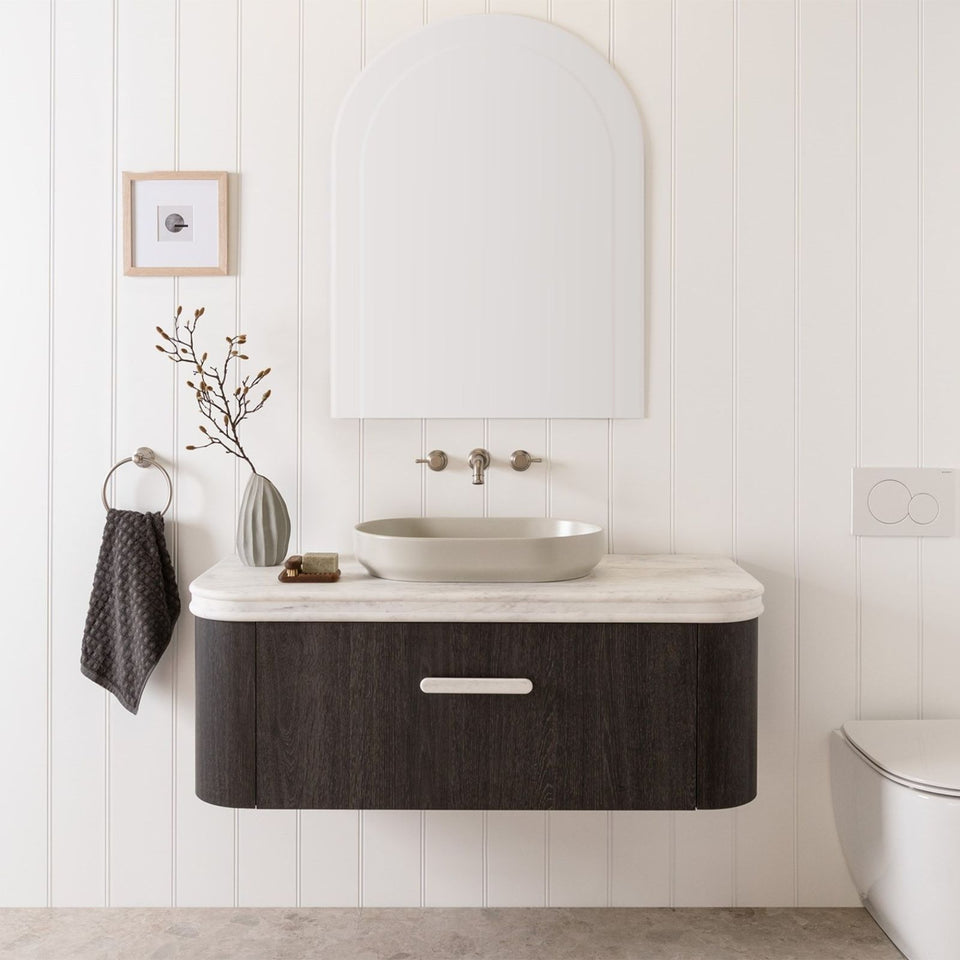
ADP Surry wall hung vanity
The Surry range from ADP is a wall hung vanity option, meaning the unit is mounted directly to the wall rather than sitting on the floor. This style suits bathrooms where floor space is limited or where a lighter, more open visual line is the goal, since there is no cabinet base breaking up the floor area. It also makes cleaning the floor underneath the vanity considerably easier, as there is nothing obstructing a mop or vacuum.
Who chooses a wall hung vanity
Wall hung vanities like Surry are a common choice in smaller bathrooms and ensuites, where every centimetre of visible floor helps a room feel larger. They also suit renovators after a more contemporary look, since the floating cabinet reads as less bulky than a floor standing unit of the same width. Because the Surry range is a compact two-product offering, it is best suited to buyers who already have a clear sense of the width and basin configuration they need, rather than those wanting to compare a large spread of options.
Buying considerations
- Width against available wall space: measure the full wall run, including clearance either side for doors, tapware and adjacent fixtures, before settling on a width.
- Basin configuration: confirm whether the vanity you are looking at is set up for an above counter or inset basin, as this affects both the finished height and the tapware you will need.
- Wall support: wall hung vanities carry their full weight, plus the weight of the basin and anything stored inside, on wall fixings alone. Proper wall bracing or a support frame rated for the unit's weight is essential, so check this is part of your installation plan before purchase.
- Plumbing rough-in: because the cabinet floats above the floor, the plumbing rough-in height needs to be confirmed against the specific Surry unit you choose, ideally before wall sheeting is finalised.
Installation note
Wall hung installation is more involved than a freestanding vanity, since it typically requires an in-wall carrier system or noggins set at the correct height during the framing stage. It is worth confirming these requirements with your builder or plumber early, rather than after walls are closed in.
Is Surry right for your bathroom
If you want a wall hung vanity in a straightforward, no-frills format and already know the width and basin style you need, the Surry range is a practical option to review. For bathrooms needing a wider comparison of finishes or configurations, it is worth browsing ADP's broader vanity range alongside Surry to confirm fit before deciding.
Frequently Asked Questions
What is the difference between a wall hung vanity and a floor standing one?
A wall hung vanity like Surry is fixed to the wall with no cabinet legs or base touching the floor, while a floor standing vanity sits directly on the ground. The wall hung style leaves the floor beneath visible and easier to clean, and tends to make a small bathroom feel more open.
Does the Surry vanity need special wall support?
Yes. Because the full weight of the cabinet, basin and stored items hangs from the wall, you need proper bracing, noggins, or an in-wall carrier system rated for the unit. This is typically arranged with your builder or plumber during the framing or renovation planning stage, not after the wall is closed in.
How many options are in the Surry range?
Surry is a small, focused range from ADP with two vanity units. It suits buyers who already know roughly the width and basin style they want, rather than those wanting to compare a wide spread of configurations.
Will a wall hung vanity suit a small ensuite?
Wall hung vanities are a common choice for small ensuites and compact bathrooms because they keep the floor area visually clear, which can make the room feel larger than a floor standing unit of the same width would.
What should I measure before choosing a width?
Measure the full available wall run, allowing clearance for any doors that swing nearby, adjacent tapware, and other fixtures, before comparing Surry's available widths. Getting this measurement right first avoids ordering a unit that crowds the room or leaves an awkward gap.