
*View accurate shipping rates and availability






39 Items
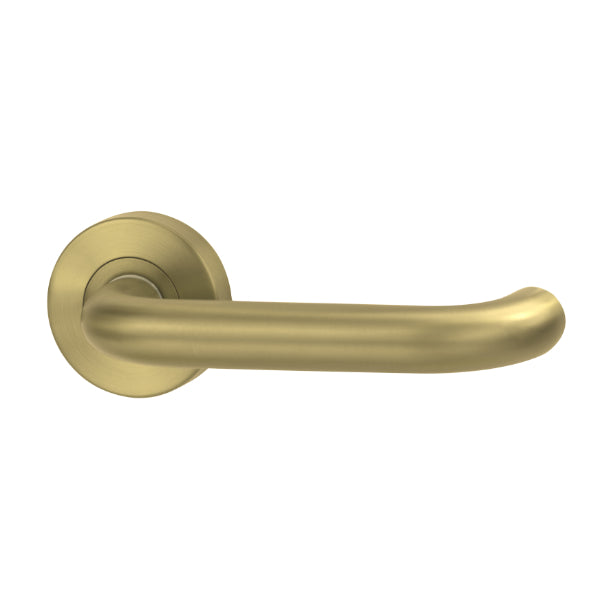
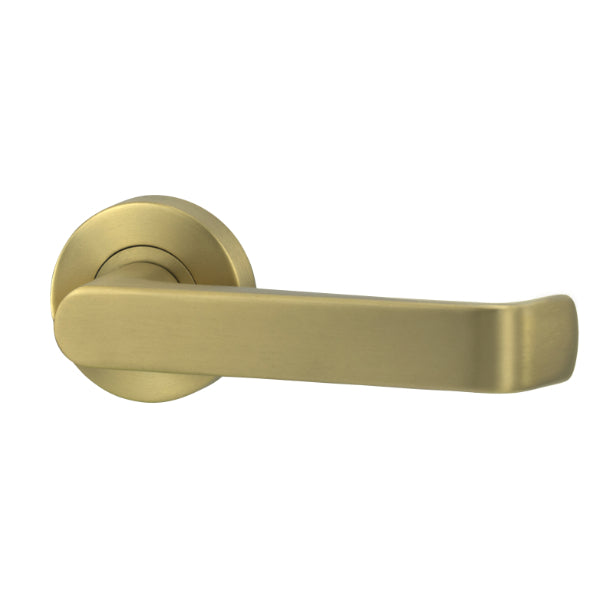

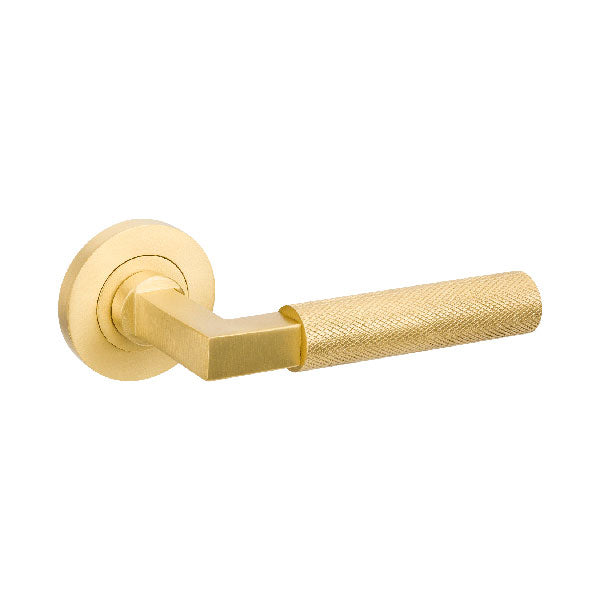
Brass is a warm, golden metal that has been used for door hardware for generations, and it comes in two forms in this collection. Some handles are solid brass, and others are brass-coloured, with a brass finish over stainless steel. The difference decides how the handle ages and how you care for it. This guide sets out what brass means on a product page, how antique, brushed and satin brass differ, what the metal does over time, what it pairs with, and which details to check before ordering. For the wider range, see door handles and interior door handles.
Read the material line on the product page, because it separates two products that look alike. The Zanda Zurich and Vienna sets are solid brass, with a satin brass finish, and the Zurich passage set has a 55mm rose. The Lane Bala knobs are brass in a polished brass finish. The Lockwood Vivid sets are different: the body is 304 stainless steel with a durable PVD finish in satin brass, so the colour is a coating over stainless. The Zanda Futura Streamline set is stainless steel in satin brass, and the Zanda satin brass hinge is stainless steel too.
Neither is better in every case. Brass is durable, resists corrosion, is harder than copper and aluminium, and has enough weight to give a high-end feel in the hand. A stainless steel handle with a PVD finish gives the colour with the corrosion resistance of stainless. Choose solid brass for the weight and for a finish that can age, and choose a brass-coloured finish on stainless where you want the colour to stay put.
Brass comes in several looks. Antique brass ranges from a soft aged gold to a deeper bronze tone, and it is usually more aged or muted than brushed brass, which tends to be lighter and more uniform. Aged and antique-style finishes can show more variation across the surface than a flat matte finish, and many buyers treat that variation as part of the appeal. Finish names such as antique, aged, brushed and vintage brass do not reliably match between makers, so compare real products and samples in the same light before you buy a full set.
Polished brass is the shiny version. Gold is shinier and lighter than brass, and it has its own page. Look at the finish pages to compare: brushed brass door handles, satin brass door handles and gold door handles. For darker, bronze-toned looks, see bronze door handles.
The surface treatment decides the care. Unlacquered brass develops a rich patina over time, needs regular polishing to keep its shine, and some unlacquered finishes tarnish or discolour. Lacquered brass has a clear coat, so it needs only wiping with a soft, damp cloth. Patina is a natural ageing property of brass, and the way to care for it is a soft damp cloth and no chemicals. Lever handles of this type are for interior doors, because exposure to the weather speeds up ageing.
Brass tarnishes and needs some maintenance to keep its lustre. For routine cleaning, use a soft damp cloth and dry the handle afterwards. For tarnish, a store-bought brass polish works, and a homemade paste of vinegar, salt and flour is wiped off with water and a towel. Keep metal polishes off a PVD finish, which should be cleaned with warm water, mild soap and a soft cloth. Brass-plated hardware is an alternative to solid brass, and the product's material line tells you which you have.
Airborne salt is the main threat to door hardware near water. Within about 5km of the bay or ocean, choose 316 marine grade stainless steel, because it contains molybdenum, which improves salt resistance over standard 304. Standard metals near salt water will pit and rust. Inland and urban homes can use solid brass without salt concerns, and brass develops a patina from hand oils and air, a living finish that ages naturally. In practice that gives a clear split. Choose solid brass for a heritage or classic home inland, where you want the finish to mellow, and choose a stainless steel handle with a brass PVD finish near the coast, where the steel does the corrosion work. See exterior door handles and hardware for entries.
Brass warms up modern rooms that feel flat or cool, and a simple lever in antique brass can look contemporary. It pairs well with white, cream and warm neutral doors, and with timber such as oak, walnut and spotted gum, where a slight contrast usually looks better than an exact match. It works with green, blue-grey, charcoal and terracotta, and it softens stone, terrazzo, concrete and porcelain tile. Brass and black hardware give a strong but balanced contrast.
Plain doors and minimal rooms suit a straightforward lever. Panelled doors and homes with heritage details suit a knob, a knurled handle or a more decorative profile. For heritage styles, see heritage door hardware, and for knobs see door knobs.
Keep the number of competing finishes limited. Two strong finishes can work together, and more can look busy. Brass on the door alone can look like an afterthought, so repeat its warmth through lighting, timber, tapware or cabinet hardware. A warm finish in an otherwise cool scheme of chrome, cool white and polished stainless can look disconnected. If your scheme is cool, consider brushed nickel door handles, chrome door handles or matte black door handles, and consider gunmetal door handles for a darker option.
Privacy sets suit bedrooms and bathrooms, passage sets suit hallways and are best kept consistent across doors, and dummy handles suit wardrobes and cupboards where no latch is needed. Sliding wardrobes use flush pulls sized to the door and the cut-out, and a cavity slider needs a handle or lock made for sliding doors. See passage door handles, privacy door levers, dummy door handles, sliding door handles and flush pulls.
The Zanda Zurich entrance set in satin brass is a Euro mortice set with a key/turn cylinder. Its box holds two levers, a Euro round escutcheon, a Euro double cylinder, a Euro mortice lock with 85mm pitch and a 60mm backset, and three keys. The Zanda single cylinder roller lock kit has a 57mm backset, a 70mm Euro cylinder, a pair of round satin brass escutcheons and three keys. The Lockwood 005 double cylinder deadbolt in Everbrass has an adjustable 60 to 70mm backset and takes doors 32 to 48mm thick, with a spacer ring for the thinner doors. See entry door lock sets and deadbolts.
Match hinges, door stops and flush pulls to the handles. The collection includes the Lockwood Vivid half moon door stop, wall-mounted door stop and edge pull in satin brass, the Zanda Verve flush pull kit in satin brass and the Nidus Mardeco cavity sliding privacy set. See hinges and door stops.
Each brand has its own materials, finishes and fixings. See Lockwood door levers, Lane door levers, Zanda door hardware and Nidus door hardware.
Decide first between solid brass and a brass finish on stainless, and read the material line to confirm which you are buying. Choose antique or aged brass for warmth and variation, and a brushed or satin finish for a lighter, more even tone. Keep a limited number of finishes in each room, repeat the warmth in the lighting or the tapware, and clean the handle with a soft damp cloth. That order avoids the common mistakes: a finish that ages when you wanted it fixed, a warm handle in a cool scheme, and a polish used on a coated surface.
Solid brass is highly durable and resists corrosion. It does not rust, it is harder than copper and aluminium, and it is heavy, which gives a solid feel in the hand. The caveat is that a name can mean brass when it is a brass-coloured finish on another metal. The Zanda Zurich and Vienna are solid brass, and the Lane Bala is brass. The Lockwood Vivid in satin brass is 304 stainless steel with a PVD finish. Read the material line to see which you are buying.
Brass tarnishes and needs maintenance if it is unlacquered. Unlacquered brass develops a patina and needs regular polishing to stay bright. Lacquered brass needs only a soft wet cloth. Patina is a natural ageing process, and exterior exposure speeds it up. For care, use a soft damp cloth and avoid chemicals. A paste of vinegar, salt and flour will polish unlacquered brass, but never use metal polish on a lacquered finish.
Brass pairs with white, cream and warm neutral doors. On timber, a slight contrast works better than an exact match. It also suits green, blue-grey, charcoal and terracotta, and stone, terrazzo, concrete and tile. Black hardware gives a strong, balanced contrast if you want one. Brass on the door alone can look like an afterthought, so repeat the warmth through lighting, timber, tapware or cabinet hardware.
Choose by the style of the door. Plain doors and minimal rooms suit a straight lever. Panelled doors and heritage details suit a knob, a knurled handle or a decorative profile. The Lockwood Vivid levers are 127 to 140mm long, and the Lane Bala is the knob range.
The brass finishes each have their own page. For the muted, low-gloss look, see satin brass door handles. For the fine directional grain, see brushed brass door handles, and for the lighter, shinier tones see gold door handles. This page covers brass as a material and as a family of finishes, so use it to decide whether brass suits the door, and the finish pages to choose the tone.


