
*View accurate shipping rates and availability






289 Items


Up to 70% off across the store, plus free towels and mirrors up for grabs on orders over $800*




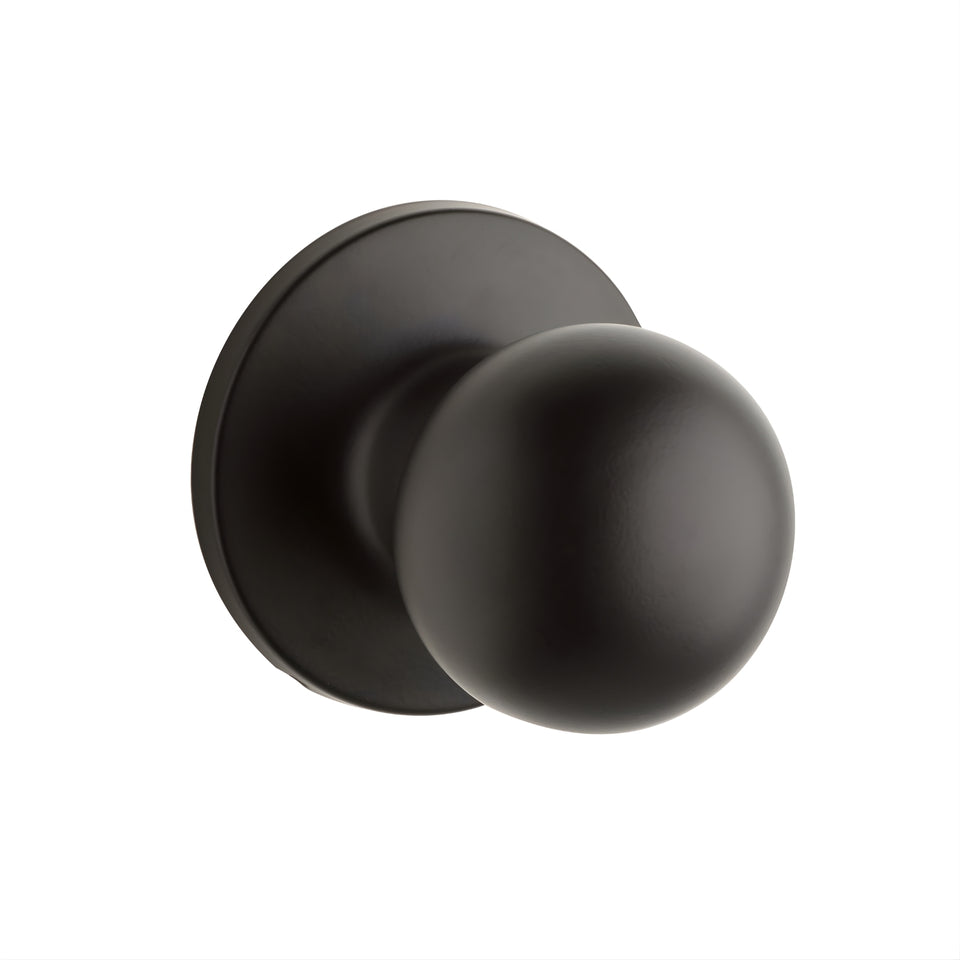


This collection holds lever and knob sets for internal doors, in passage, privacy and dummy functions, in zinc alloy, stainless steel and solid brass. Four decisions settle the order: what the door needs to do, whether the handle is a lever or a knob, whether the set fits the door you already have, and which finish sits well with the hinges, locks and other hardware nearby. This guide sets out the facts behind each one. For the wider range, see door hardware and door handles.
A passage set has a latch that holds the door shut but no lock. It suits hallways, laundries, living rooms and wardrobes that do not need to lock. A privacy set has the same latch plus a lock that is set from inside the room, which makes it the set for bathrooms, ensuites, toilets and bedrooms. A dummy handle is a fixed handle with no latch and no lock. It gives a door something to push, pull or shut against, and it is used on wardrobe doors, linen cupboards, the fixed leaf of a double door and decorative doors that do not need to latch.
Decide each door's function before ordering, because the function decides the part you buy. A bathroom door fitted with a passage set cannot be locked, and a privacy set on a hallway door adds a lock nobody needs. See passage door handles, privacy door levers and dummy door handles for each function on its own.
The product pages follow the same split. The Lockwood Vivid and Velocity lines each come as passage, privacy and dummy half sets, for connecting doors, for lockable spaces such as bathrooms and toilets, and for cupboard and wardrobe doors where matching styling is wanted. The Lane Oxford, Avalon, Victoria and Bala lines and the Zanda Duke line are sold the same way, one design in three functions, so a hallway, a bathroom and a wardrobe can carry the same handle.
A privacy lock is a convenience lock, not a security lock. It is set from inside the room, and it can be released from outside in an emergency, usually with a coin or a small pin pushed through the hole in the outside rose. That matters in a bathroom, because someone can always open the door if a person inside needs help. A dummy set has no moving parts, so there is nothing to release.
Levers are measured by length and knobs by diameter. An internal lever is roughly 100 to 130mm long and an internal knob roughly 30 to 40mm across. The product pages in this collection sit inside that range: the Lockwood Velocity levers run 120 to 122mm, the Lockwood Vivid V4 lever is 130mm, the Zanda Duke lever is 116mm and the Nidus Manital Imola lever is 130mm overall.
Accessibility guidance favours levers. A D-shaped lever works far better than a round knob or an L-shaped handle for anyone with limited grip or dexterity, and the building code points to the Australian standard for handle location, dimensions and operating force. Colour contrast between the handle and the door also helps people find the handle. The Lockwood Velocity has a finger clearance of 34.5mm to 43.5mm and the Vivid V4 has 49mm, so check that figure if grip matters in your home. Knobs have their own page: door knobs. For levers alone, see door levers.
Three measurements decide whether a set fits the door. Measure the door you have, then read the spec line of the product page.
The first is the backset: the distance from the edge of the door to the centre of the handle. Measure to the centre of the spindle or keyhole, not to the edge of the large hole. The two most common backsets in Australian homes are 60mm and 70mm, and 60mm is the usual size on modern internal doors, with 45mm available on some styles. If the backset is wrong, the new latch will not line up with the strike plate in the frame and the door may not close properly. Some latches adjust and some do not, so a non-adjustable latch of the wrong size means buying a new latch. The Lockwood Element and the Zanda Duke and Boston each have a 60mm backset.
The second is the door thickness. Most hollow-core interior doors in Australia are 35 to 45mm thick, and its own range. The Lockwood Vivid and Velocity take 32 to 45mm, the Lane Oxford 33 to 45mm, the Lane Avalon and Victoria 35 to 45mm, and the Lane Bala knobs 32 to 45mm. A privacy set or a cavity slider has a thickness range too, so read it for every function, not only the lever.
The third is the hole in the door. Most modern hardware needs a bore of about 54mm through the face of the door, and each rose covers a stated range. The Lane sets suit a 50 to 54mm cross bore. The Lockwood Velocity rose fits 50mm or 54mm holes, which suits both a retrofit and a common new door preparation. The Lockwood Vivid 54mm rose suits door preparations up to 45mm thick. The Manital sets from Nidus are different. They suit a 16 to 20mm hole with two through fixing holes, and they do not suit a 50mm or 54mm hole, so they are not a swap for a door drilled for a standard rose.
A handle that fits a standard door can still be wrong for an older door, and the check takes a minute with a tape measure. Do it for one door in the house, then confirm that the others match before ordering a set for each.
Most lever sets are reversible, so one product fits a left-hand door and a right-hand door. So directly: the handle is non-handed and rotates into position for both. To work out a door's hand, stand on the side the door opens toward you. If the hinges are on your left it is a left-hand door, and if they are on your right it is a right-hand door. Handing matters for a few products, mainly entrance sets with specific lock mechanisms, so check the spec when a product is not non-handed. Lift-off hinges are also handed, which is worth knowing if you replace them at the same time. See hinges.
Most sets in this collection are complete, but not all. The Lane Oxford box lists two lever sets, the latch, the striker plate and all fixings. The Lockwood Vivid and Velocity boxes list two handles, the latch, the strike plate, the fixing screws and the spindles. The Zanda Boston box lists two levers, the latch and the strike plate, and the Zanda Zurich privacy box lists two levers, the latch and the privacy kit.
Others leave a part out. The Zanda Duke box lists the two levers only, and the latch is sold separately and is added from a dropdown. A dummy set lists a single handle and the fixing screws, since it has no latch. Read the box contents on the product page before adding a set to your order, and add the latch if the line calls for one.
The rose is a second choice. The Zanda Duke comes with a 54mm screw-on rose, and a larger 65mm rose is available as an upgrade, sold as a pair. A larger rose is the answer when an older, bigger handle has left marks or screw holes that a small rose would not cover.
Match the finish of an internal handle to the hinges, the locks and the handles on the exterior doors. Limit the number of finishes in one room and coordinate them with the hinges and locks, which is the quickest way to a result that looks planned. To shop by finish, start with matte black door handles, brushed nickel door handles, brass door handles, brushed brass door handles, gold door handles, white door handles, bronze door handles, chrome door handles and gunmetal door handles.
The Lockwood Vivid comes in three finishes, satin brass, gunmetal and bronze, with gunmetal as the versatile choice for modern and heritage styling and brass and bronze as the warmer choices for modern country and Hamptons-style homes. Treat that as a starting point, since the right finish is the one that matches the hardware already in the room.
A sliding door needs a different handle from a hinged one, because the door has to move past the frame. The Lockwood Vivid cavity slider is 63mm across, fits a 54mm prep hole and suits sliding doors 32 to 45mm thick. The Zanda Visca cavity slider privacy set has two 55mm flush pulls, a mortice lock and an edge pull that draws the door out of the cavity, for sliding doors 35mm thick. The Lane flush pull is sold as a pair and fits doors up to 50mm thick, and the Momo Handles Fold flush pull has 128mm between its fitting points and can be fitted horizontally or vertically. See sliding door handles and flush pulls.
A door stop protects the wall behind the handle, and a matching stop finishes the look. The range is at door stops.
Each brand has its own sizes and fixing details, so the comparison above carries across the lines. For the Lockwood sets see Lockwood door levers, for Lane see Lane door levers, and for the Zanda and Nidus ranges see Zanda door hardware and Nidus door hardware.
Start with the function, then the fit, then the finish. Match the function to the room, check the backset, the door thickness and the hole against the product page, confirm what is in the box, and choose a finish that matches the hinges. That order avoids the common mistakes: a set with the wrong backset, a latch that was never included, or a handle that does not cover the hole in an older door.


