
*View accurate shipping rates and availability






52 Items



Up to 70% off storewide, free metro shipping over $500, and free gifts from $800. Spend more to unlock luxury towels and mirrors.*

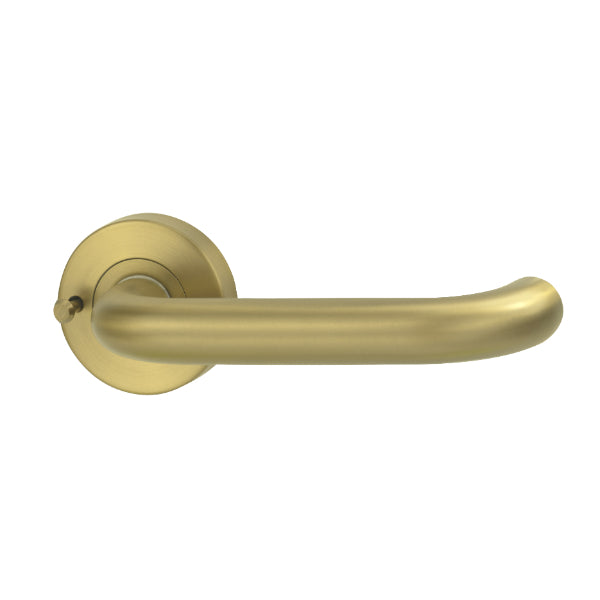



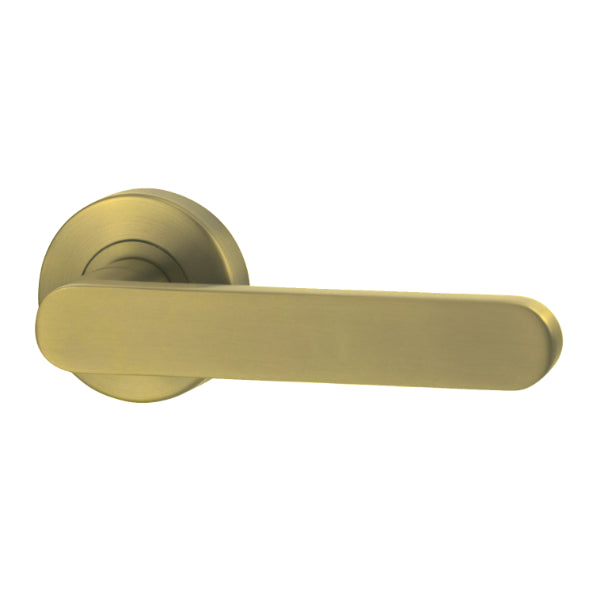


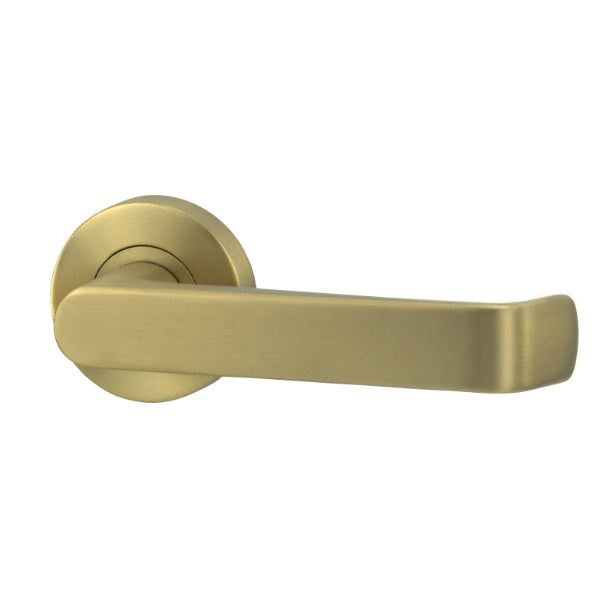


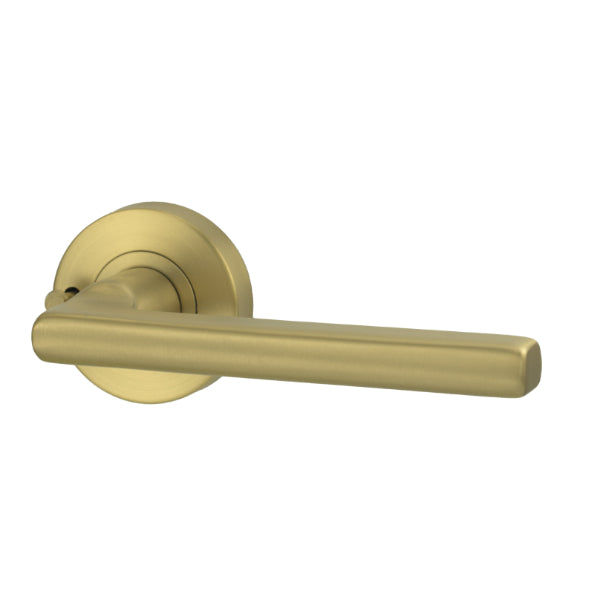


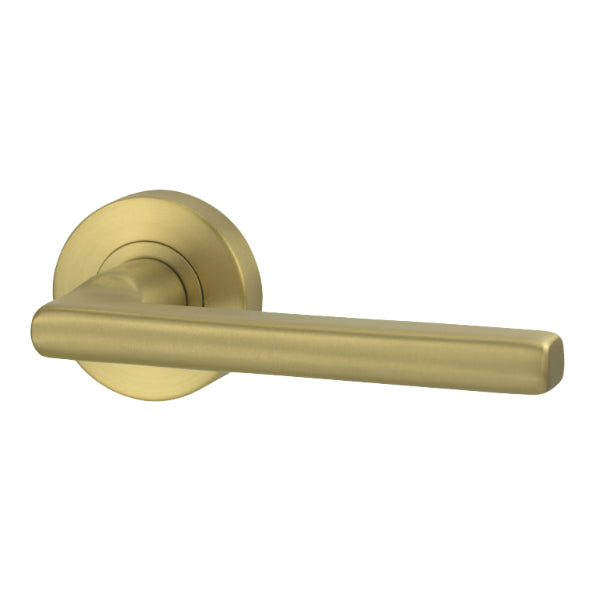


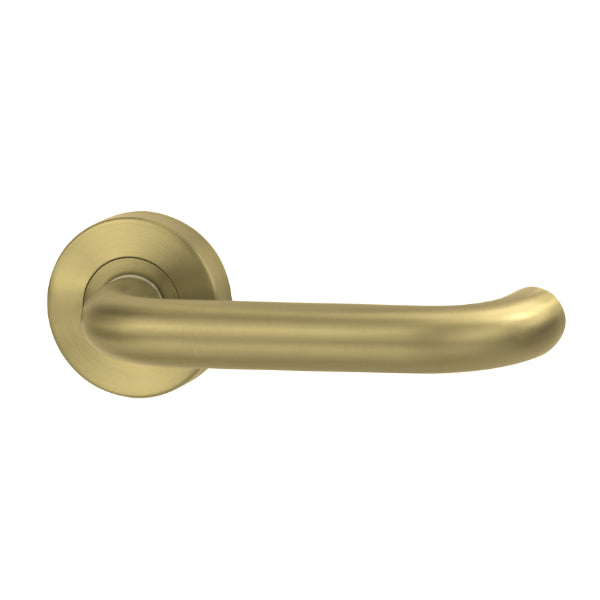


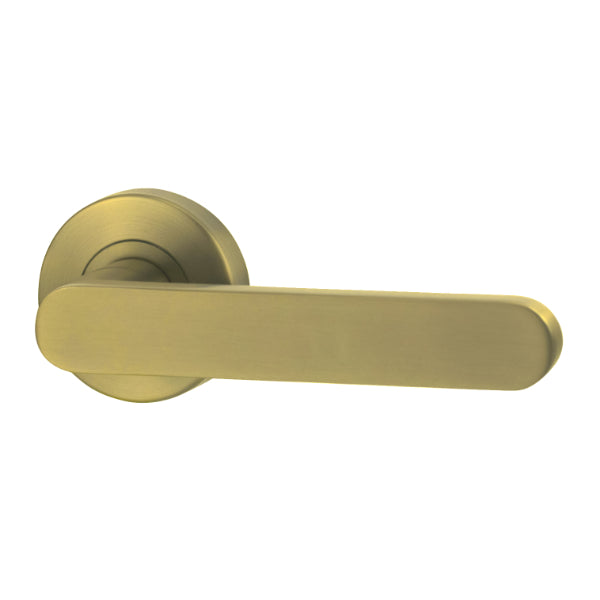


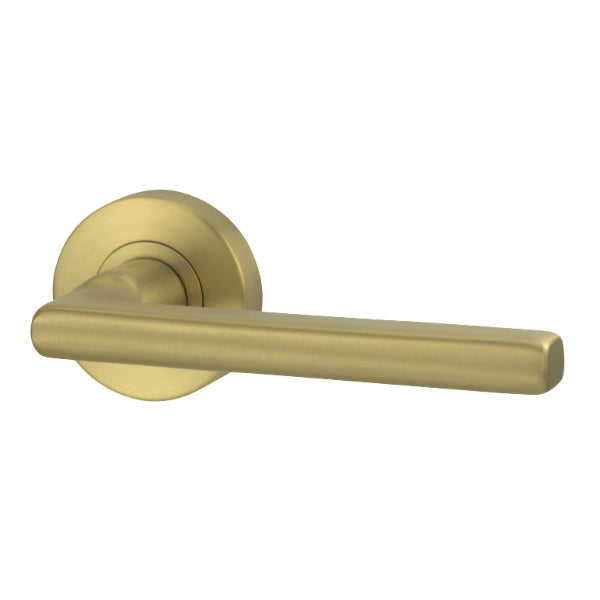
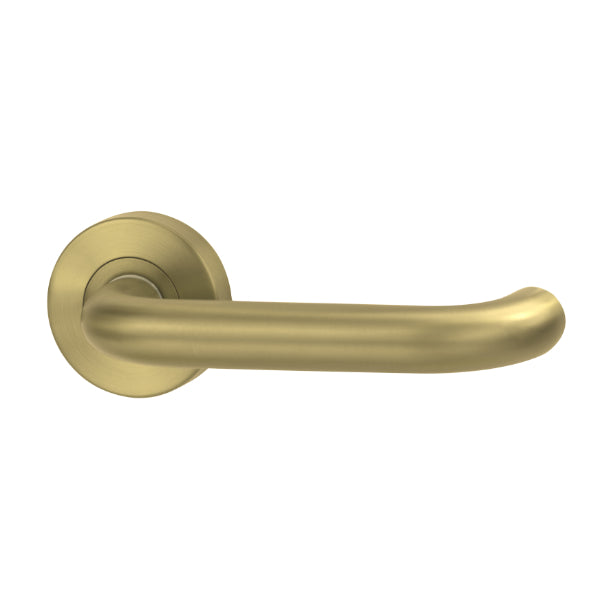

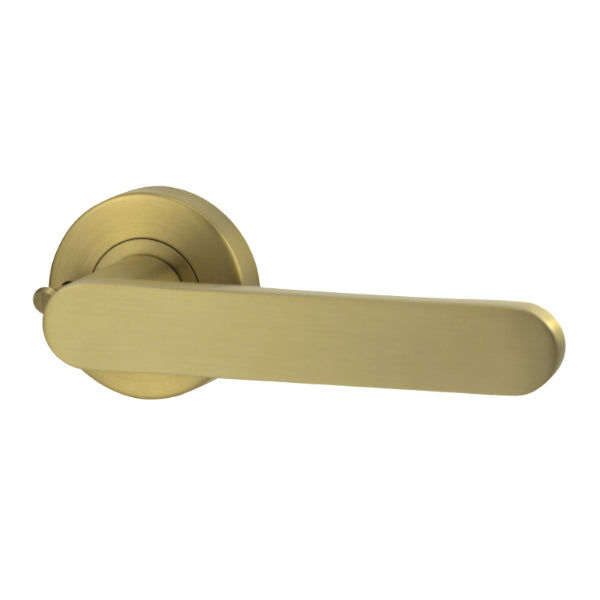
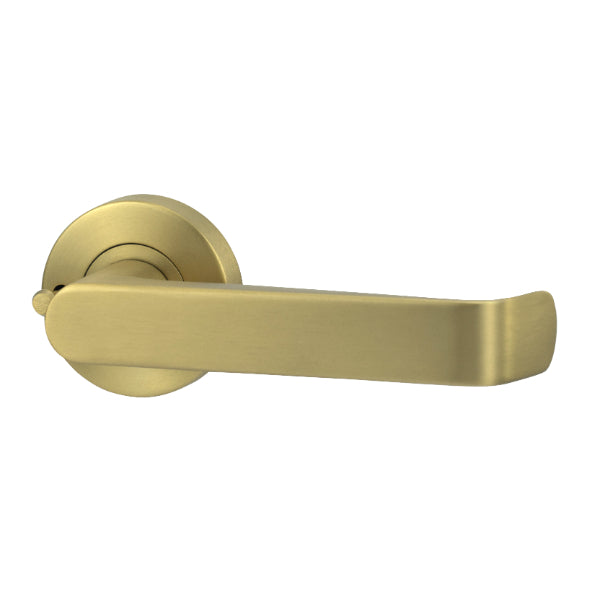
Lockwood Vivid is a range of 304 stainless steel levers on a 54mm round rose, finished in a durable PVD coating in satin brass, satin bronze and satin gunmetal. It comes as four lever designs, V1 to V4, in passage, privacy and dummy sets, and it extends past the levers to a matching hinge, two door stops and a cavity slider privacy handle, so a door can be matched from edge to face. This guide explains how the four designs differ in size and feel, what the sets contain, which finishes are made, how the matching hinge and stops fit in, and how to set out a door with the range. The brand overview is on Lockwood, the Lockwood levers across both families are on Lockwood door levers, and the larger zinc family is on Lockwood Velocity.
The Vivid rose is 54mm across, so it is a small, neat disc that sits tightly on the door and fits the standard 54mm hole. The levers are stainless steel, not zinc, which gives them a solid weight in the hand and a surface that resists wear and cleaning. The PVD finish is a hard coating applied in a vacuum chamber, and it is the reason the colours stay even under daily handling. Vivid is designed in Australia and uses a twist and tighten fixing with a pre-assembled lever set, with all fixings hidden beneath a removable rose trim, so the face of the door stays clean.
The warm finishes are the other point of difference. Where Velocity is mostly chrome, Vivid is brass, bronze and gunmetal, so it suits a house with warm metal tapware, timber joinery and black or brass fittings.
The four designs share the same rose and the same range of finishes, and they differ in length, reach and finger clearance. Those three numbers are the best way to compare them.
The V1 is the shortest and neatest. It is 127mm long, projects 53mm from the door and leaves a 42mm finger clearance. It suits a narrow door or a place where a compact lever is wanted. The V2 is the longest at 140mm, projects 60mm and leaves a 41mm clearance. It gives the longest grip and the most leverage, and it reads as the most elegant of the four. The V3 is 130mm long, projects 57mm and leaves a 47mm clearance, so it is a middle choice with a roomy grip. The V4 is also 130mm long but projects 69mm and leaves a 49mm clearance, which makes it the deepest lever with the most room for the fingers.
Finger clearance is the gap between the lever and the door when the lever is gripped, and a larger gap is easier on a stiff hand and for anyone wearing rings. Projection matters beside a wall: a lever that projects 69mm needs more clear room than one that projects 53mm. If the door opens against a wall or a cabinet, choose a shorter lever or fit a stop where the lever would otherwise strike. See door stops for the wider choice.
All four designs come in three set types. A passage set latches the door with no lock, and it suits living rooms, hallways, laundries and any internal door that is never locked. A privacy set adds a lock that works from the inside and suits bathrooms, toilets and bedrooms. A dummy set is a single lever with no latch, for closets, wardrobes and linen cupboards where the door only needs to be pushed, pulled or shut.
A passage or privacy set comes with two handles, a latch, a strike plate, fixing screws and spindles, so the working parts arrive together. A dummy set comes with one handle and the fixing screws. Because a dummy is a single lever, order two if you want one on each face of the door. See passage lever sets, privacy door levers and dummy levers for more.
Every Vivid lever set suits hinged doors 32 to 45mm thick, which is the standard internal door. The backset is 60mm, the usual size on interior doors, and the 54mm rose suits the standard 54mm hole. Measure three things before you order: the door thickness, the backset of the old latch and the diameter of the hole. If the door is thicker than 45mm or the hole is larger than the rose, the set does not suit it.
If you are replacing an existing handle, photograph the old one from both sides, and measure the spindle hole. A lever set swaps straight in when the backset is 60mm and the hole is 54mm. If the old rose was larger than 54mm, a paint line will show around the new one, so decide before you fit.
Vivid is made in satin brass, satin bronze and satin gunmetal. Satin brass is a soft warm gold with a brushed look, and it suits Modern Country and Hamptons style homes. Satin bronze is deeper and browner, and it suits warm timber and traditional interiors. Satin gunmetal is a cool dark grey, and it is the most versatile of the three, since it works with modern and heritage styling and with white, grey and deep blue walls.
All three are PVD on stainless steel, so none of them needs special care beyond a wipe. Choose by the other metal in the room: gunmetal with black tapware and brushed nickel, satin brass with brass or timber fittings, and satin bronze with warm timber and aged metals. Keep the same finish on every handle in a room, and match the hinges and stops to it. See brushed brass and gunmetal for the wider choice in those finishes.
The Vivid hinge is a 100mm hinge, 75mm wide, in 304 stainless steel with the same PVD finish as the levers. It is a loose pin hinge with a 2.5mm leaf, so the door can be lifted off the frame once the pin is drawn, which helps when a door has to be removed for painting or a delivery. A loose pin hinge suits internal doors, and an external door should use a fixed pin so the pin cannot be tapped out.
It is the same size as the common internal hinge, so it replaces an existing 100 by 75mm hinge without changing the recess. Check the leaf thickness and the width of the old hinge before you order. Replace all the hinges on a door in one go, since a mixed set of finishes looks careless. See hinges for the wider choice.
Vivid has two door stops, both in 304 stainless steel with a rubber buffer. The wall mounted stop is a slim cylinder 19mm across and 75mm high, and it screws to the wall at handle height. The half moon stop is a low disc 46mm across and 27mm high, and it fixes to the floor. A wall stop catches the door at the lever, which is where the damage happens, and a floor stop catches the door at its lower edge and sits low enough to stay out of the way.
Place the stop where the lever would otherwise meet the wall, and check what is behind the surface: a screw into hollow plasterboard will not hold, so fix into a stud or use a proper anchor. Choose the stop in the same finish as the lever. See Lockwood door stops.
A door that slides into a wall cavity cannot carry a projecting lever, so Vivid includes a cavity slider privacy handle. It sits within the door face and lets the door slide fully into the cavity, with a privacy function so the door can be locked from within. Use it on a bathroom or bedroom sliding door where privacy is needed. Check the door thickness and the cavity unit before you order, and see cavity slider hardware and sliding door privacy sets for the wider choice.
Each design suits a slightly different job, and the room is a good guide. The compact V1 suits a bedroom or a narrow door where a neat lever is wanted. The long V2 suits a hallway or a feature door where the lever is seen often and a graceful line matters. The roomy V3 suits any internal door and is a safe choice for a whole house. The deep V4 suits a door that is used with full hands, such as a kitchen or laundry, because the large finger clearance makes the lever easy to operate with a loaded arm.
If you want one design through the whole house, the V3 is the all-round choice, and the V4 is the one to choose if comfort comes first. Mixing designs in one house works only if the finish is the same, since the shapes are different enough to read as separate pieces.
Fit the latch first, with the bevel facing the way the door closes. Slide the spindle through the latch, place a lever on each side, and twist and tighten the fixing on the rose until the lever sits firmly. Snap the trim on, and check the lever returns to level when released. A lever that droops usually means the fixing is not fully tightened.
For a privacy set, fit the lock side on the inside of the room and test the release from outside once the door is hung. Show everyone in the house how it works.
Wipe the levers with a soft damp cloth and dry them. Keep abrasive pads, polishes and acidic or bleach-based cleaners away from the finish. A scratch that goes through the PVD coating shows the steel beneath, so avoid anything that scratches. Tighten the fixing once a year, since timber moves with the seasons, and if a latch sticks, a drop of light oil on the latch tongue will free it.
Start with the function of the door, then the lever design, then the finish. Check the door thickness against 32 to 45mm and the backset against 60mm, and measure the hole against 54mm. Add the matching hinge and stop in the same finish. For the wider choice of levers, see door levers and interior door levers.


