
*View accurate shipping rates and availability






10 Items




Up to 70% off storewide, free metro shipping over $500, and free gifts from $800. Spend more to unlock luxury towels and mirrors.*
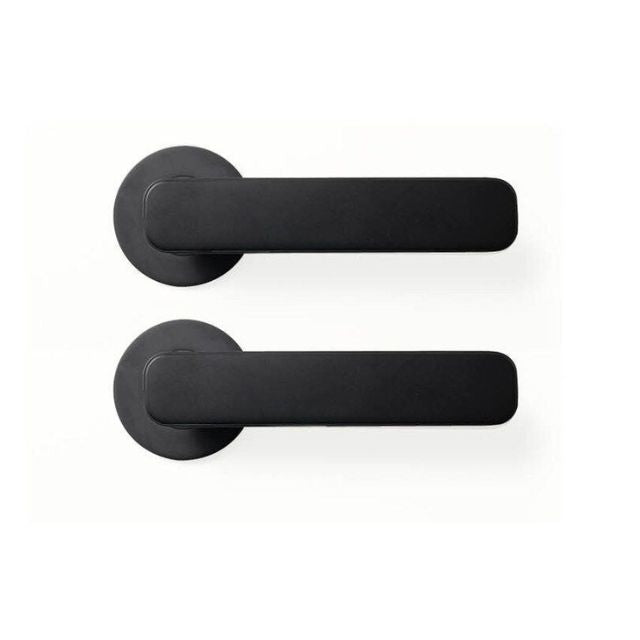
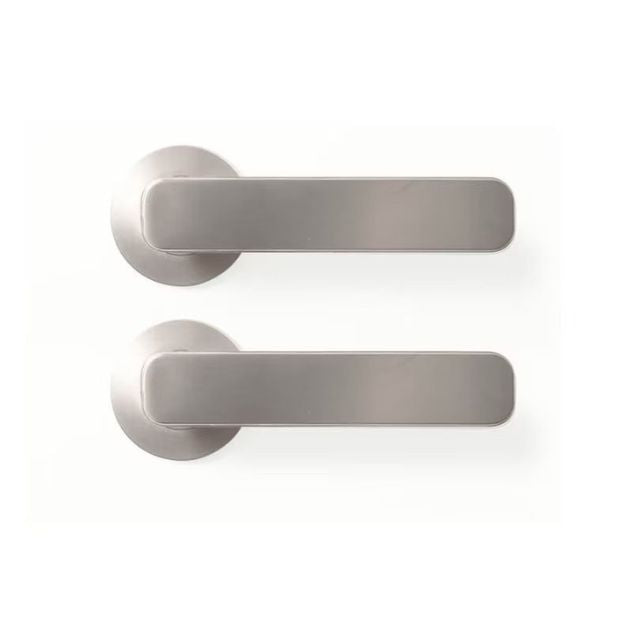
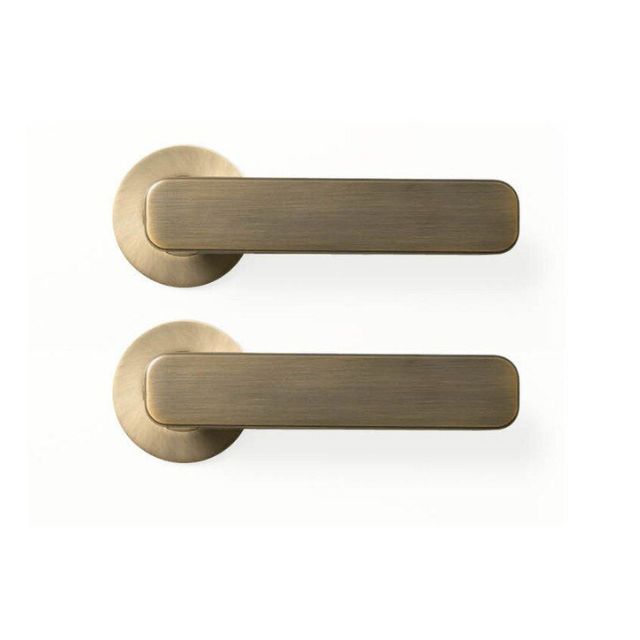
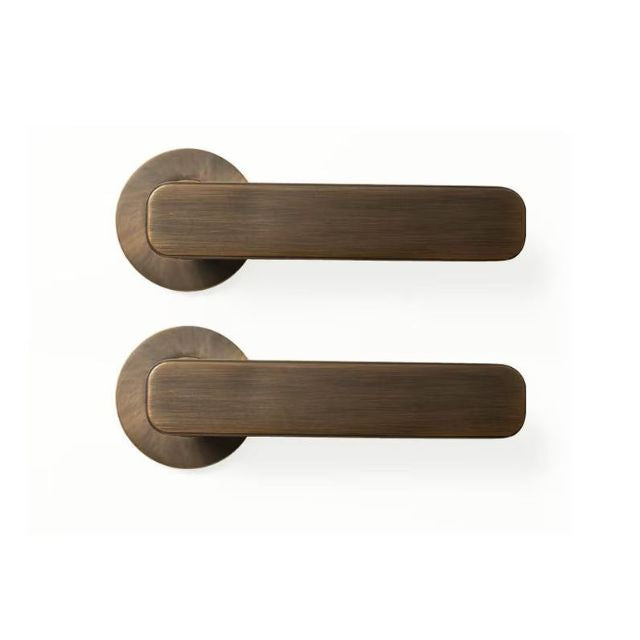
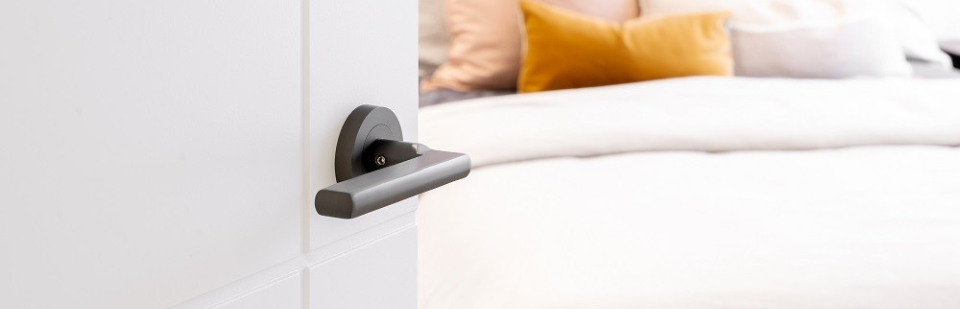

Momo Aspen is a solid brass door hardware range with a flat face and a stepped edge, made as a 600mm entrance pull handle and as a dummy lever. The flat face gives a clean, modern surface, and the stepped edge adds a fine line of relief that catches the light. It comes in bronze, matte black, brushed nickel, brushed brass and satin brass. This guide explains the two products, what the numbers mean for fit, which finishes are made, and how to plan, fit and care for them. The range sits within Momo architectural door hardware, and the wider choice of pull handles across brands is on pull handles.
The Aspen is built around a flat face. Both the pull and the lever are made of solid brass with a flat front surface and a stepped edge, so the profile reads as a crisp, architectural shape with a thin line of shadow at the edge. There is no knurling and no ornament, and the finish carries the look. It suits a modern house with clean lines, and it works as well on a painted door as on timber.
The flat face is the feature to consider. It shows fingerprints more than a textured surface, and it gives a smooth, even reflection, so a brushed or satin finish suits it best. The stepped edge gives a fine detail that lifts the bar from a plain slab to a considered piece.
The Aspen pull handle is 600mm long and 40mm wide and projects 48mm from the door, with fixing centres of 525mm. It is a long, confident bar made for a front door, and it is sold as a single pull for an entry door and as a back to back pair, where one pull sits on each face and the two clamp the door between them. The 40mm width is wide for a pull, which gives the flat face real presence, and the 48mm projection is moderate, so the bar sits close to the door and leaves room for the fingers.
The fixing centres of 525mm are the distance between the two fixing points, and they are the figure the door maker uses to drill the holes. A 600mm pull with 525mm centres sits with about 37mm of bar beyond each fixing, which gives a balanced look. If the door is new, give the door maker the centres, the length and the grip height in writing, so the holes are drilled in the workshop.
The Aspen dummy lever is a handle that does not operate a latch. It is 150mm long and 30mm wide and projects 59mm from the door, with 41mm fixing centres and a 60mm backset position that matches the working handles on interior doors. It suits a wardrobe, a linen cupboard, a pantry or the fixed leaf of a pair of doors, where the door needs a handle to push or pull but no latch. It matches the Aspen pull, so a house can carry the same design from the front door to the cupboards.
A dummy lever is a single handle. Order two if you want a lever on each face of the door, and fit a catch so the door stays shut, such as a magnetic catch or a roller catch.
The Aspen pull suits doors 35 to 50mm thick, which covers most timber entrance doors, and the dummy lever suits the same range. If the door is thicker than 50mm, the fixings will not reach through, so check the door before you order. The pull needs holes drilled through the door for the fixings, so the position of any lock matters. If a lock sits near the pull, check that the holes do not clash with the lock body, and leave a comfortable gap between the grip and the lock so a hand fits between them.
The projection is the number to check beside a wall, a sidelight or a letterbox. A handle that projects 48mm or 59mm needs about that much clear room, and a pull set too close to glass can strike it when a hand wraps around the bar. Hold the pull against the door before drilling and check the clearance.
The Aspen is made in bronze, matte black, brushed nickel, brushed brass and satin brass. Bronze is a deep, warm brown that suits timber and traditional doors. Matte black is neutral and gives the strongest contrast on a pale door. Brushed nickel is a soft, cool silver. Brushed brass and satin brass are warm golds that suit timber, cream paint and Hamptons style homes. All are applied over a solid brass body.
Because the face is flat, the finish does most of the work. A brushed or satin finish hides fingerprints better than a polished one and gives a soft, even reflection. Matte black is the most graphic. Choose by the other metal on the door and in the house: the lock, the hinges, the house number and the lighting. See matte black, brushed nickel, brushed brass and bronze for the wider choice in those finishes.
A single pull is fixed to the outside face of the door only. It is an entry pull, fixed from the back of the door with threaded bolts, so the face stays clean. A back to back pair is two pulls, one on each face, fixed through the door with bolts, so the pair clamps the door, gives the same look on both faces and gives a very firm fixing. A back to back pair suits a door that is used from both sides, such as a door to a courtyard. Check how many pulls come in the pack before you order. If you want a pull on each face and the product is a single, order two.
A pull is a handle, so the door still needs a way to latch and to lock. A roller latch holds the door closed without locking it, and it is operated by a push or a pull from either side. A euro mortice lock with a cylinder locks the door with a key, and a deadbolt adds a solid bolt for security. Choose by how the door is used. Plan the lock position before the pull, so the lock has clear space beside the grip and the escutcheon sits a hand width from the pull. See deadbolts and entry door lock sets.
A front door is the most seen door in the house, so it repays planning. Decide the pull, the lock, the hinges, the house number, the letterbox and the knocker as a set, and choose one finish for all of them. Decide the height of the pull and the position of the lock together, since the two sit close and the hand moves between them. Order the fixings with the pull, and give the door maker the specification before the door is made. If the door has a sidelight, check the clearance between the pull and the glass.
If the door is already hung, mark the centres with a level and drill from the face where the handle will sit, so any break-out falls on the back. Use a template to keep both holes aligned, and drill a small pilot hole first. For a back to back pair, the holes must line up exactly on both faces, so drill from one face through to the other with the door supported. The usual grip height is around the middle of the pull at hip height, and the pull is centred on the door stile so it sits clear of the frame.
A dummy lever is fixed to the face of the door with screws through the rose. Mark the two fixing holes at the 41mm centres, drill a small pilot hole in each, and drive the screws until the rose sits flat. A hollow core door needs a solid timber block behind the rose to carry the fixing, so check the construction of the door before you drill. Mark the height from the working handle on the next door, and fit the dummy at the same height. Because the lever does not turn, a loose fixing is the only thing that will make it feel poor.
Hinges and stops are not part of the Aspen range, but they should match. Choose hinges and stops in the same finish as the pull and the levers, so the door reads as one piece. A bronze pull pairs with a bronze or dark brass hinge, a brushed nickel pull pairs with a stainless steel or satin chrome hinge, and a matte black pull pairs with a black hinge. See hinges and door stops for matching parts.
Wipe the pull and the lever with a soft damp cloth and dry them. A flat face shows fingerprints, so wipe it more often than a textured surface. Keep abrasive pads, polishes and acidic or bleach-based cleaners away from the finish. Tighten the bolts and screws once a year, since timber moves with the seasons. Near the coast, rinse the pull with fresh water now and then so salt does not sit on the surface. Bronze and brass finishes will darken a little with handling, and that is part of how they age.
Does the pull lock the door? No. A pull is a handle, so it pairs with a lock, a deadbolt or a roller latch.
Is the Aspen suitable for an external door? Yes, the pull is made for entrance doors. Choose the finish with the exposure in mind, since a covered porch is easy on a finish and a door in full weather wears faster.
Does the dummy lever include a latch? No. A dummy set is a single lever with fixings and no latch.


