
*View accurate shipping rates and availability






5 Items
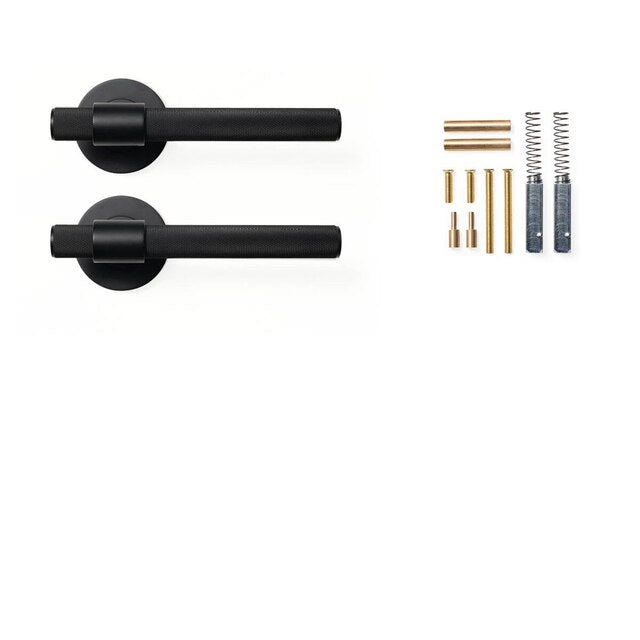
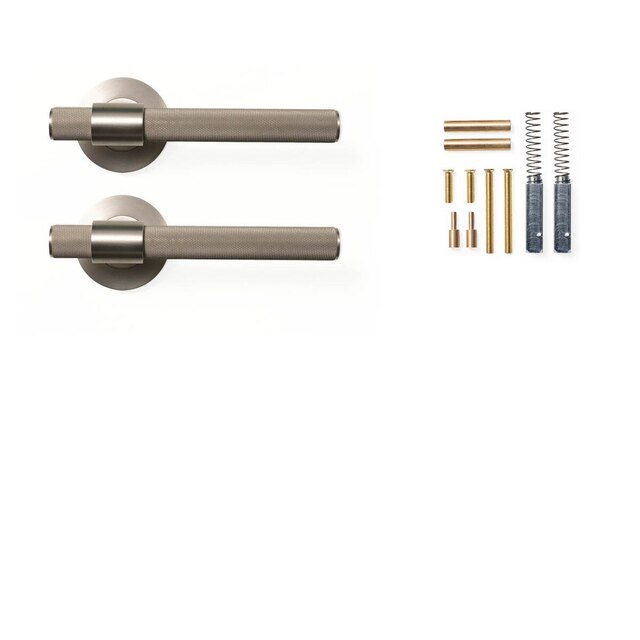
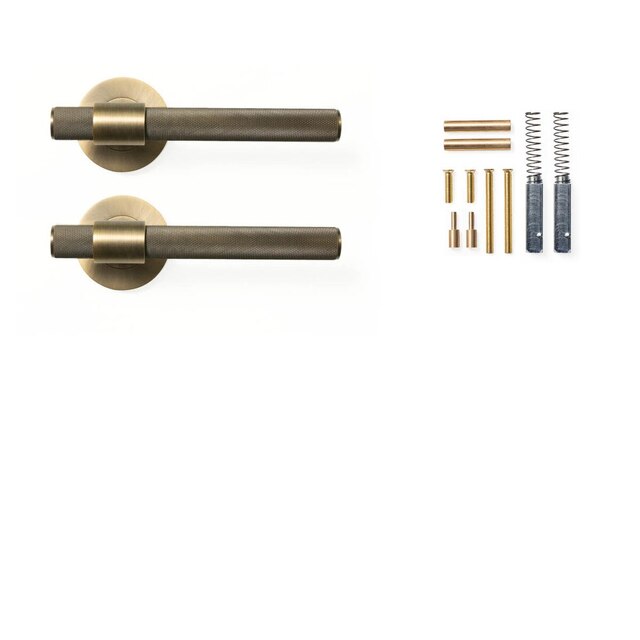
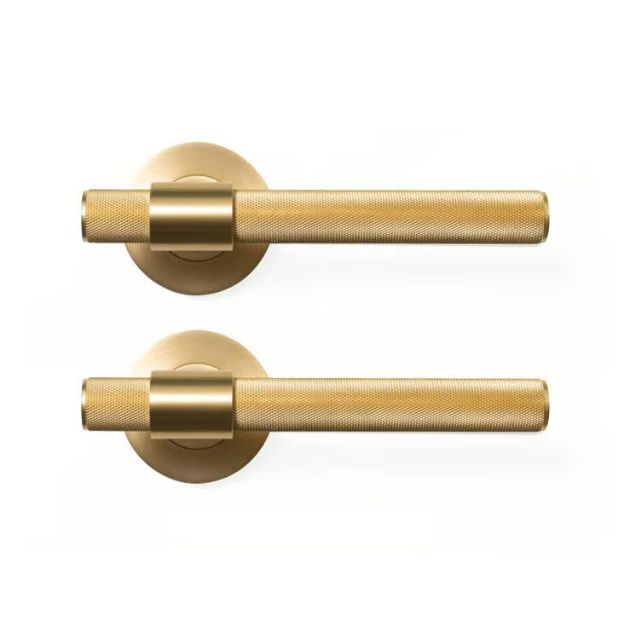
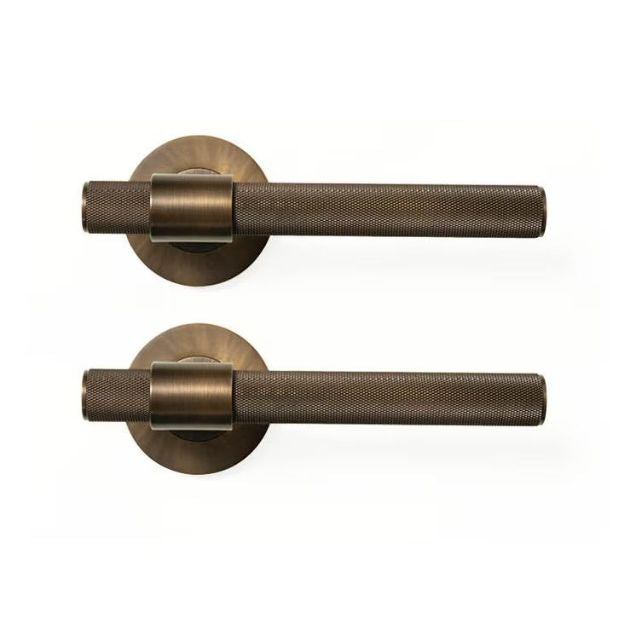
The Momo Belgravia knurled dummy lever is a solid brass handle for doors that need a handle but no latch, with the same knurled texture and brushed clasp as the Belgravia entrance pulls. It is a bold lever, 170mm long and 62mm wide with a 68mm projection, in bronze, matte black, brushed nickel, brushed brass and satin brass. This guide explains what a dummy lever is for, what the sizes mean for fit, how the knurl and the clasp look and feel, how to match the lever to the working handles in a house, and how to plan, fit and care for it. The range sits within Momo Belgravia door hardware, and the entrance pulls that match are on Momo Belgravia knurled door pull handles.
A dummy lever is a handle that does not operate a latch. It is fixed to the face of the door and gives you something to push, pull or shut the door with, without turning or locking anything. It suits a door that never needs to latch: a wardrobe, a linen cupboard, a pantry, a walk-in robe or the fixed leaf of a pair of doors. Its job is partly practical and partly visual. It gives the door a handle to move it, and it makes the door match the working doors beside it, so a row of doors looks like a set.
A dummy is simpler than a working lever. There is no latch, no spindle through the door and no lock, so fitting is quick, and the door can be held shut by a magnetic catch, a roller catch or its own fit.
The Belgravia lever is bold. The bar carries a knurled texture, a diamond pattern cut into the metal, which gives the grip a firm hold and a distinctive, workshop look. A brushed clasp at the base, the plain collar where the lever meets the door, gives a clean contrast to the texture. The lever is wide and deep, so it reads as a substantial piece on the door, and it suits a house that wants a confident handle.
It is made in solid brass, with the finish applied over the metal, so it has real weight in the hand. The knurl catches light in many small facets, which gives the surface a rich, varied sheen, and it hides fingerprints better than a smooth surface.
The Belgravia dummy lever is 170mm long and 62mm wide and projects 68mm from the door, with 41mm fixing centres and a 60mm backset position that matches the working handles on interior doors. It suits doors 35 to 50mm thick. The size is large for a dummy lever, which is part of its character, and it needs a door with enough face to carry it. On a narrow door or a thin stile, check that the 62mm width and the 170mm length leave room for the edge of the door.
The projection of 68mm is the number to check beside a wall or a cabinet: a handle that projects 68mm needs about that much clear room when the door opens, and a stop is a sensible addition where the lever could meet the wall. See door stops for matching options.
The three numbers to check before you order are the door thickness, the height at which the handle will sit and the position of any working handle beside it. If the door is thicker than 50mm, the fixings will not reach through, so check the door before you order.
The Belgravia is made in bronze, matte black, brushed nickel, brushed brass and satin brass. Bronze is a deep, warm brown that suits timber and traditional doors, and the knurl gives it a rich, aged look. Matte black is neutral and gives the strongest contrast on a pale door. Brushed nickel is a soft, cool silver that suits stainless steel and chrome tapware. Brushed brass and satin brass are warm golds that suit timber, cream paint and Hamptons style homes. All are applied over a solid brass body.
Choose the finish to match the working handles beside the dummy, since the two are seen together. If the house uses another brand for the working handles, compare the finish side by side before you order, since finish names differ between brands. See matte black, brushed nickel, brushed brass and bronze.
The most common mistake with a dummy is a poor match to the working handle beside it. Three things must agree. The finish should be the same tone. The shape and length should be similar, since a short dummy beside a long lever looks wrong, and the Belgravia is a large lever, so it suits a house where the working handles are also bold. The height should be the same, so the handles line up along the wall. If the working handles are another brand, hold a sample of the dummy against them in the room before you decide, and check the tone in daylight and under artificial light.
If the front door carries a Belgravia pull, the knurled dummy inside echoes it, and the finish carries through the house.
Mark the height from the working handle on the door beside the dummy, and fit the dummy at the same height from the floor. The usual handle height is about 900 to 1100mm, and about 1050mm is common on new doors. For a pair of doors, set both levers at the same height and the same distance from the meeting edge, so they read as a pair. Check the position with a level and a tape, and mark the fixing holes with a pencil before you drill. On a door with a panel, place the lever clear of the panel moulding so the rose sits flat.
A dummy lever is fixed to the face of the door with screws through the rose. Mark the two fixing holes at the 41mm centres, drill a small pilot hole in each, and drive the screws until the rose sits flat on the door. A hollow core door needs a solid timber block behind the rose to carry the fixing, so check the construction of the door before you drill. Tighten the screws evenly, and check that the lever does not wobble. Because the lever does not turn, it is fixed, and a loose fixing is the only thing that will make it feel poor. If the door is a double door and you want a lever on each face, fit one on each side, aligned on the same centres.
Because a dummy has no latch, the door needs another way to stay shut. A magnetic catch is the neatest, with a small magnet in the door edge and a plate on the frame. A roller catch holds the door with a spring roller. A ball catch is the traditional choice. For a fixed leaf, a flush bolt at the top and bottom holds the door in place. Choose the catch to suit the door and the weight, and fit it before the lever so the position can be adjusted.
A pair of doors usually has one working leaf and one fixed leaf. The working leaf carries the latch and the working handle, and the fixed leaf is held shut by flush bolts and opened only when both doors are needed. A dummy lever on the fixed leaf matches the working handle on the other, so the pair looks symmetrical. Mirror the working handle: if the working lever is on the right of the meeting edge at hip height, the dummy sits on the left at the same height and the same distance from the edge.
Hinges, stops and catches are not part of the Belgravia lever range, but they should match. Choose hinges and stops in the same finish as the lever, so the door reads as one piece. A bronze lever pairs with a bronze or dark brass hinge, a brushed nickel lever pairs with a stainless steel or satin chrome hinge, and a matte black lever pairs with a black hinge. A magnetic catch is usually hidden in the door edge, so its finish matters less, but a visible catch plate on the frame should be in a matching tone. See hinges for matching parts.
A few errors come up often with dummy levers. The first is choosing a lever that does not match the working handle beside it, in length, finish or surface. The second is fitting the dummy at a different height from the working handle, so the row looks uneven. The third is ordering one lever when a lever on each face was wanted. The fourth is fitting a dummy on a door that needs a latch, such as a bathroom door. The fifth is forgetting a catch, so the door swings open. Check each before you order.
Wipe the lever with a soft damp cloth and dry it. A knurled surface holds dust and skin oils in its pattern, so lift them with a soft brush and a damp cloth. Keep abrasive pads, polishes and acidic or bleach-based cleaners away from the finish. Tighten the screws once a year, since timber moves with the seasons. Bronze and brass finishes will darken a little with handling, and that is part of how they age.
Does the dummy lever include a latch? No. A dummy set is a single lever with fixings and no latch.
Do I need one or two? A dummy set is a single lever. Order two if you want a lever on each face of the door.
Can a dummy go on a bathroom door? No. A bathroom door needs a working privacy lock, so choose a working lever from another range that matches the finish.


